Introduced in 1837 as a replacement for the Baker rifle, the Brunswick two-grooved rifle had a distinctly different system to its predecessor: that of the rifling and the mechanically fitted projectile that was fired through it. Mechanically fitted projectiles were not a new invention in 1837, there being evidence for their use back into the 1700s (Bosler and later Staudenmayer utilizing the system), but this was the first time the British army took the concept on board. The Belted ball was in essence a regular round ball with a large ring running pole to pole around the whole sphere. On loading the ball was aligned with two notches at the mouth of the barrel, which corresponded with the rifling grooves. Despite being patched (the patch hiding the belt from view), the ball was still able to be slotted in position, as the ‘belt’ was marked with a black band on the patch. David Harding’s book Smallarms of the East India Company, Vol. 3 Ammunition and Performance, covers this system in fantastic detail.
One of the problems inherent with the system lies in the way the ball and belt fits into the grooves. The grooves twist is a spiral along the inside of the barrel, but if the ball is pictured in position at the breech, on top of the powder charge, it can be imagined that the belt fits in one groove that is twisting up over the top of the ball and the over twisting down beneath the ball. These two grooves twist the ball slightly in opposite directions. The loading procedure may also see the rifling cut into the ball around the belt, is something that other mechanically fitted projectiles generally do not experience. This will have, on occasion. resulted in a difficult loading procedure. Indeed, during the trials of rifles at Enfield in 1852, the Brunswick was noted to be difficult to load, ‘the force required to ram down the ball being so great as to render a man’s hand much too unsteady for accurate shooting’. The ball came in two formats, 0.704 in calibre infantry version, for use by the Rifle Regiments and a larger 0.796 in calibre Naval version, supplied in 1840, in a quantity of just 100.
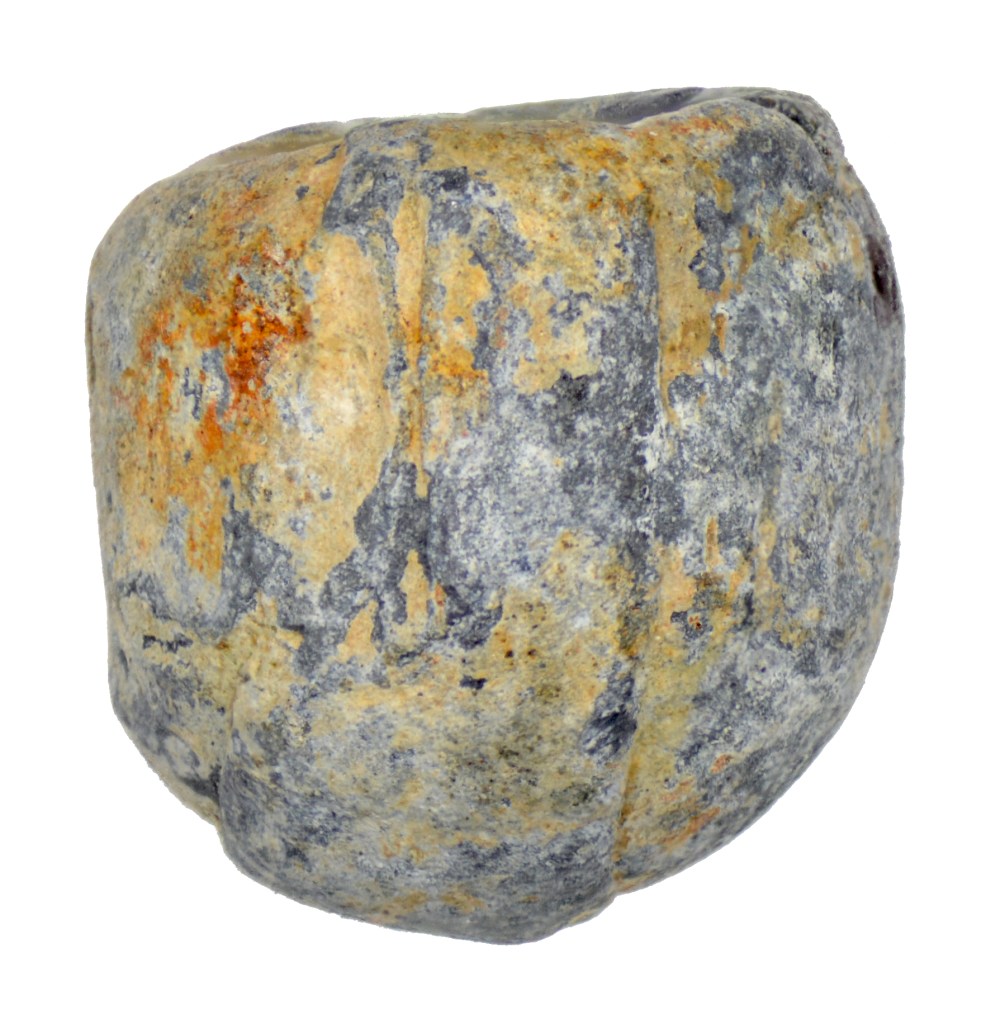
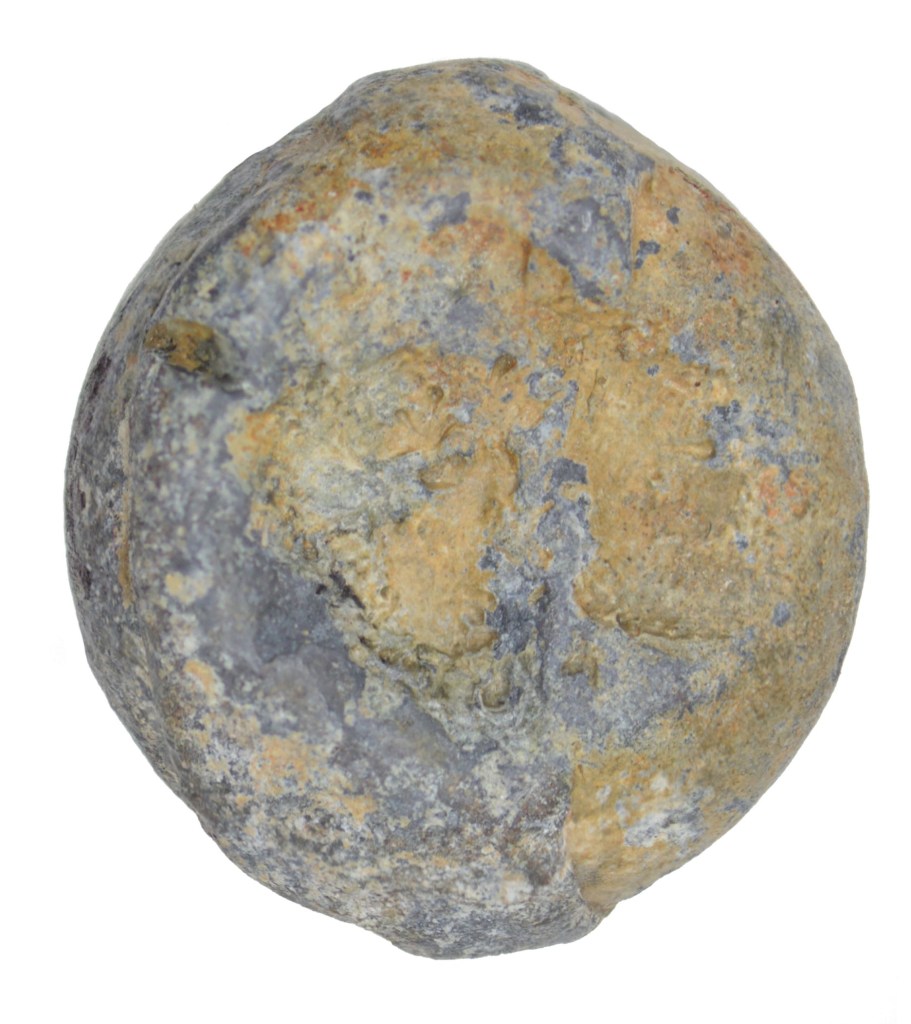
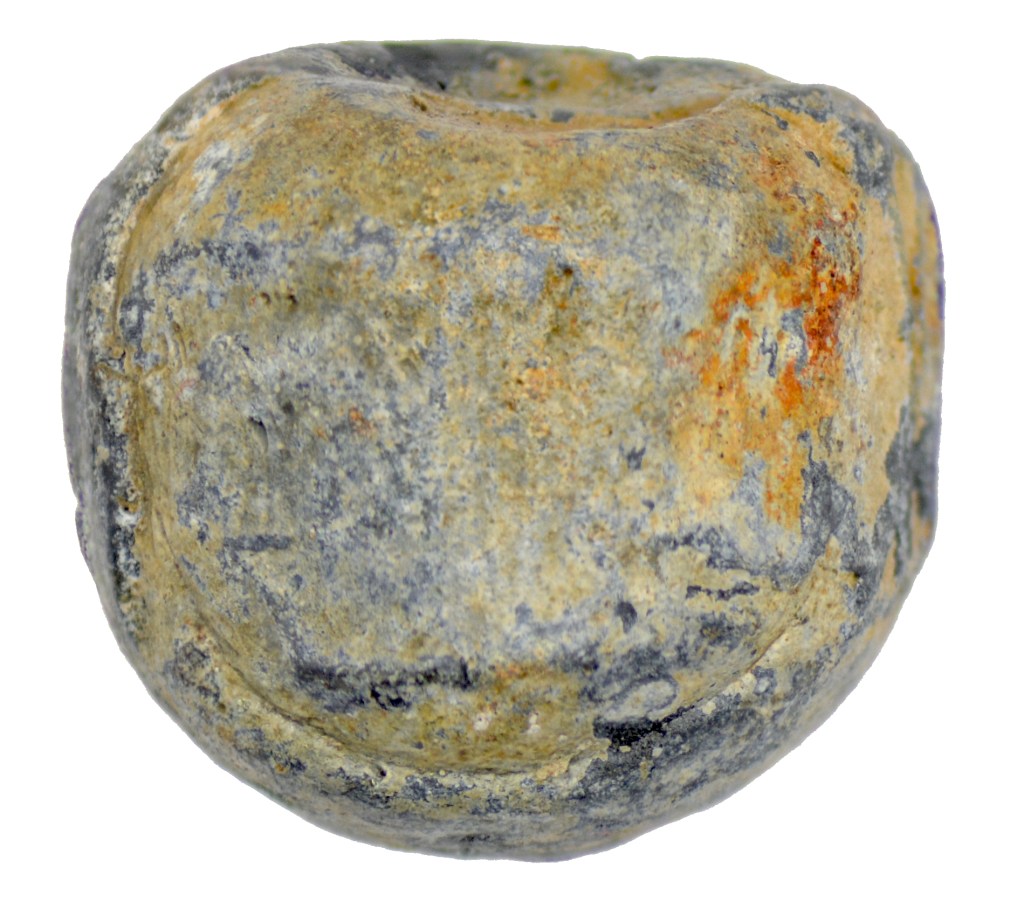
Belted balls came in a calico tied ‘patch’ (with the appearance of a small linen bag tied at the top). The loading procedure not only left the rifling incised on the ball, but the ramrod head is often visible, having caused a significant ‘flat’ on the top of the shot. Often the impression of the cord tying the patch closed is also visible, impressed into the flattened area.. Finally, the shooting of the belted ball sees the belt fully bitten into by the rifling and often the central ball segment of the shot set up to fill the bore of the rifle. The shape of the belted ball after firing is somewhat different to the original shape.
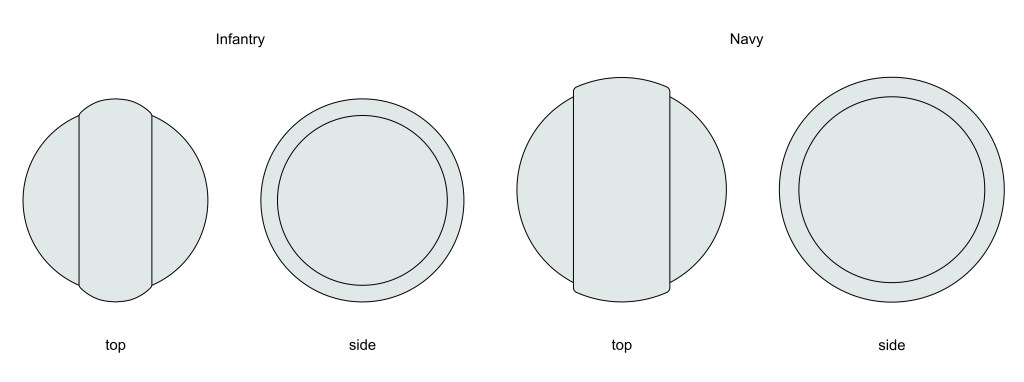
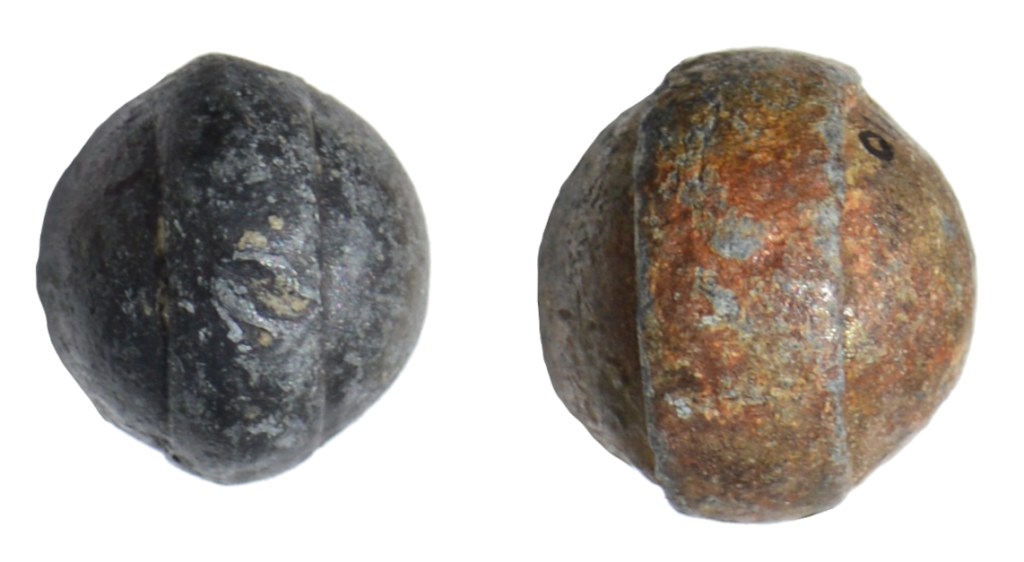
Both infantry and navy balls together.
Official weight and dimensions (from British Military Firearms 1650-1850, Roads. For detailed analysis of ball size, see Smallarms of the East India Company, Vol. 3 Ammunition and Performance, Harding)
Infantry belted ball
- Weight: .557 gn (36.1 g)
- Diameter (across ball): 0.696 in (17.7 mm)
- Diameter (across belt): 0.766 (19.4 mm)
Naval ‘heavy’ belted ball
- Weight: not found: not found
- Diameter (across ball): not found
- Diameter (across belt): not found
Infantry belted ball
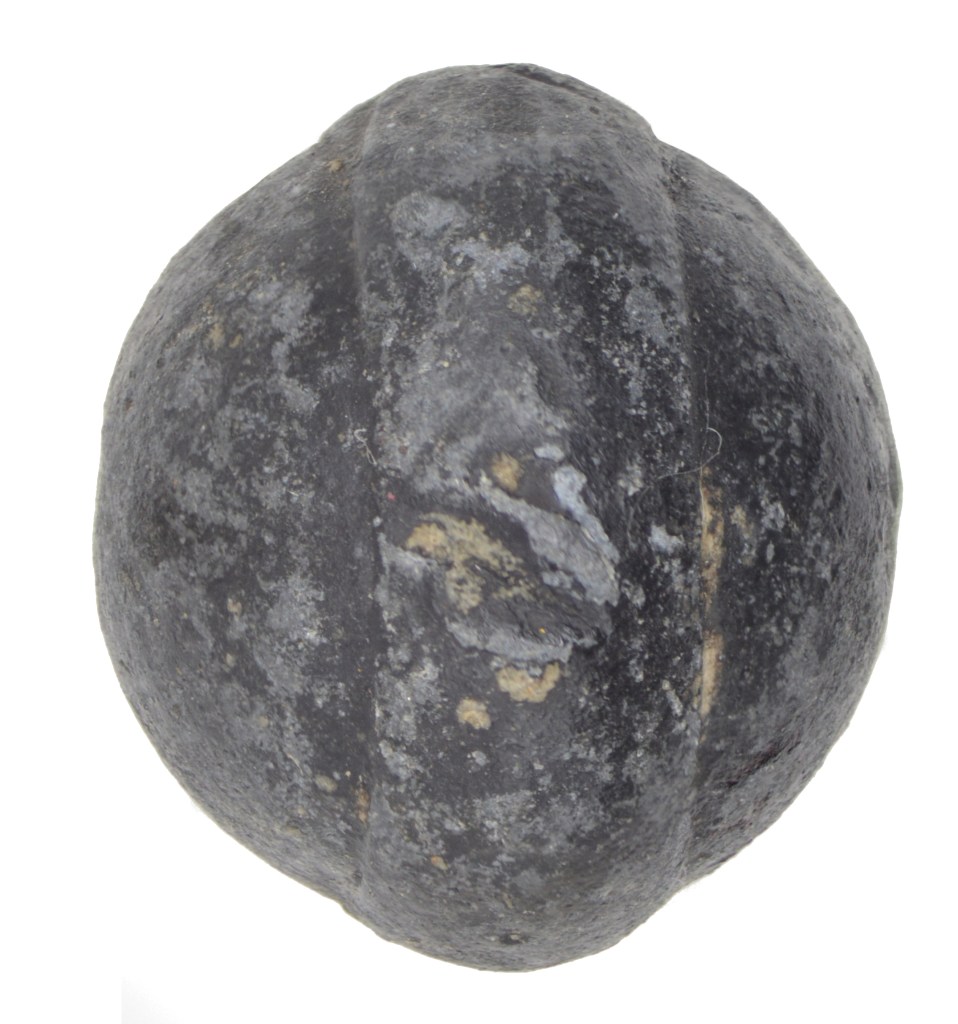
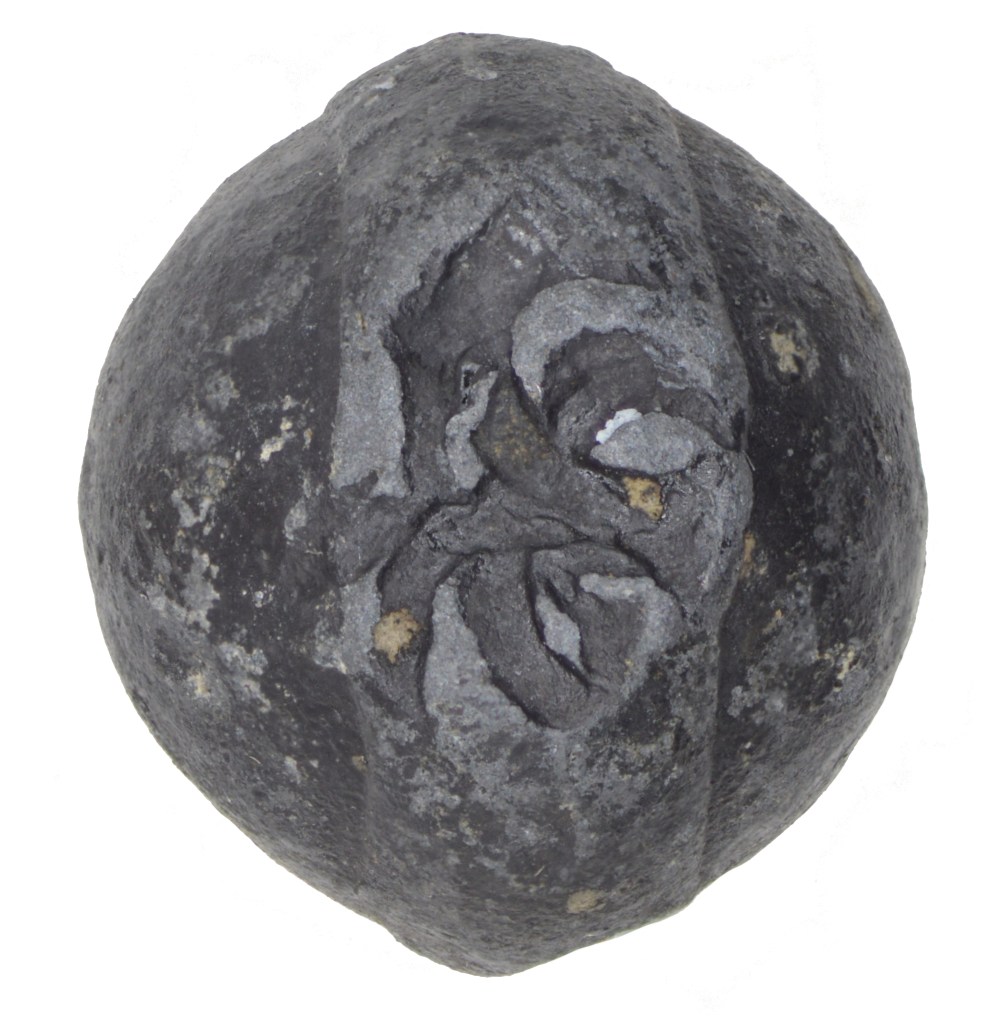
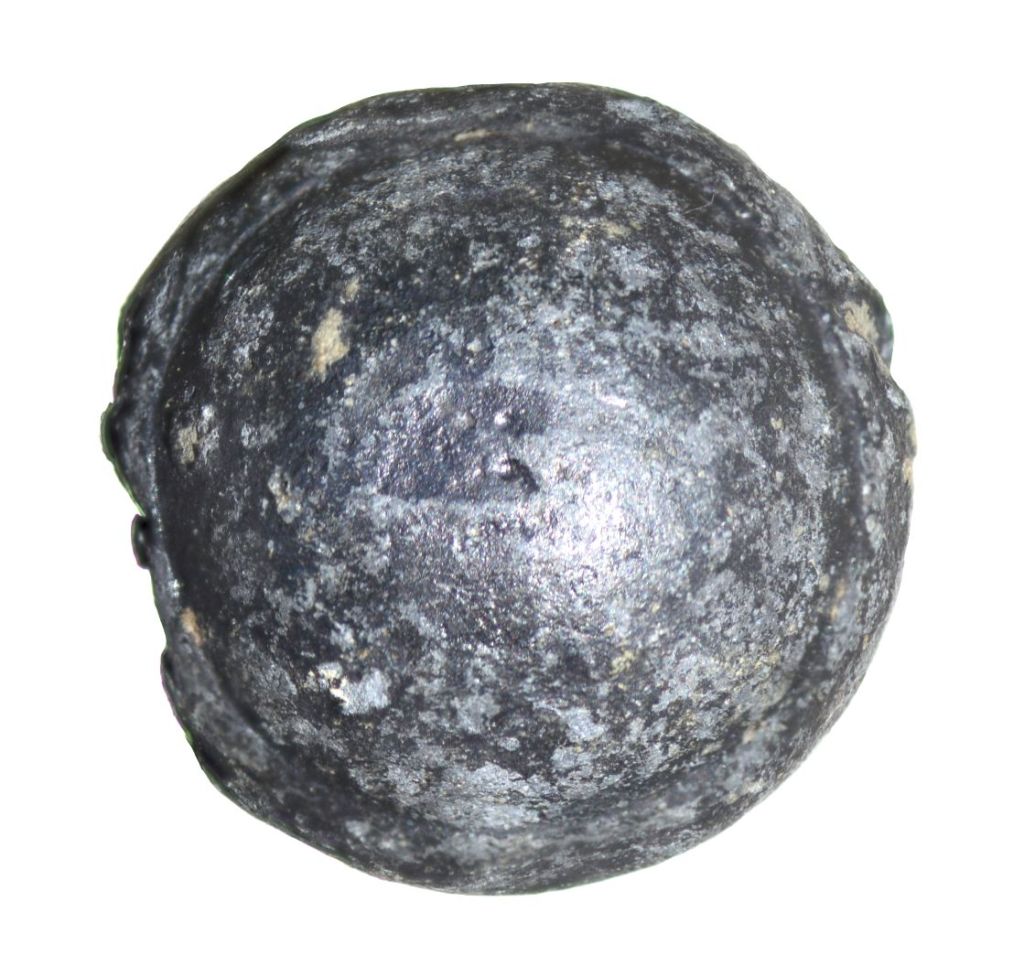
Side view, top view (showing repeated ramrod impacts and the imprint of the twine, used to close the calico patch) and side view . The ‘bite’ caused by the rifling is visible at the .top and base of the belt in side view.
- Weight: 547 gn (35.5 gn)
- Diameter (across ball): 0.691 in (17.6 mm)
- Diameter (across belt): 0.759 in (19.3 mm)
Naval belted ball
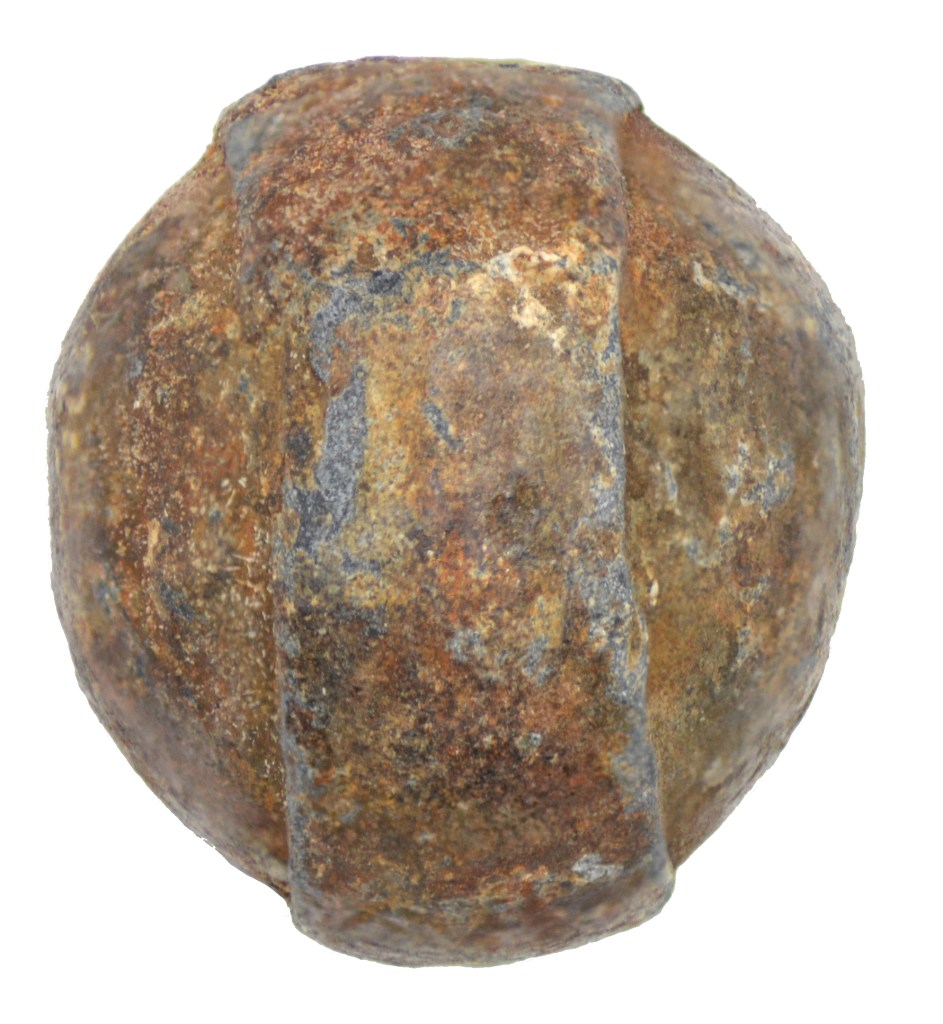
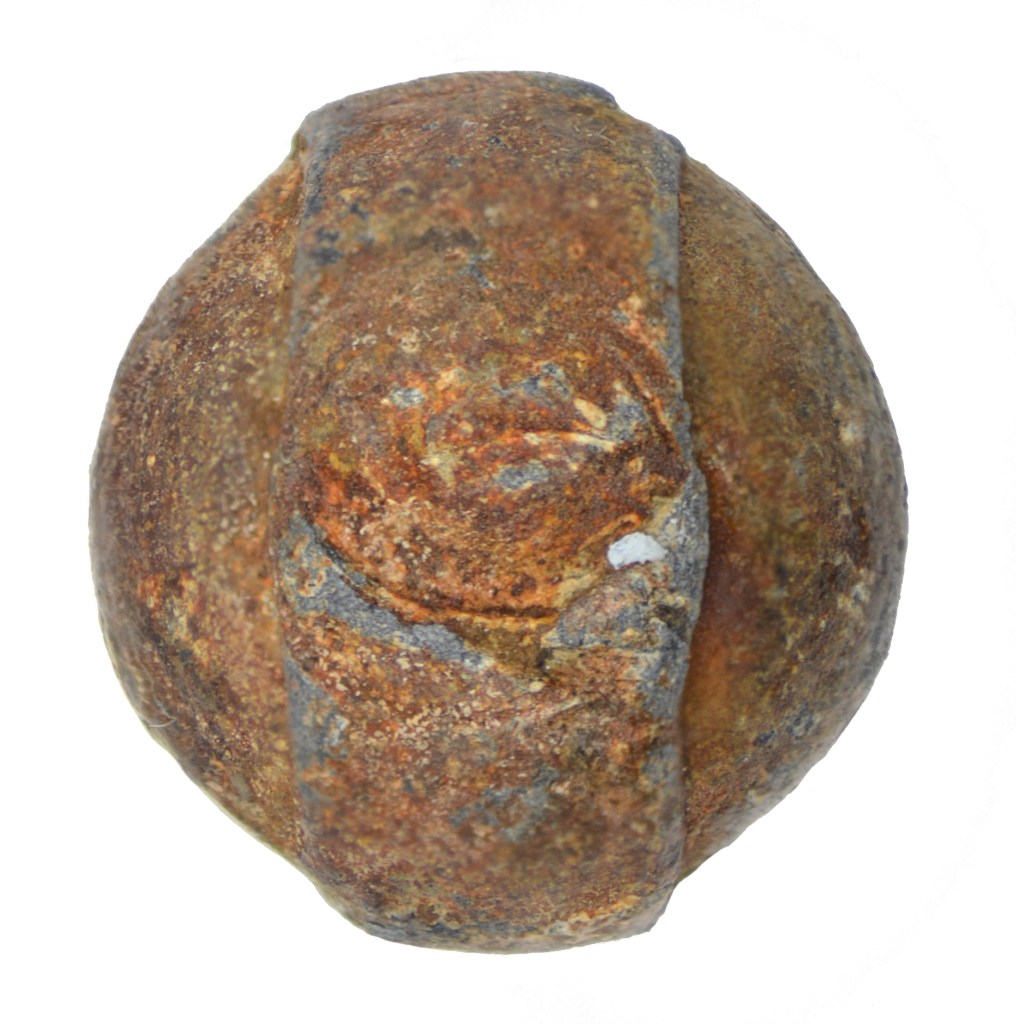
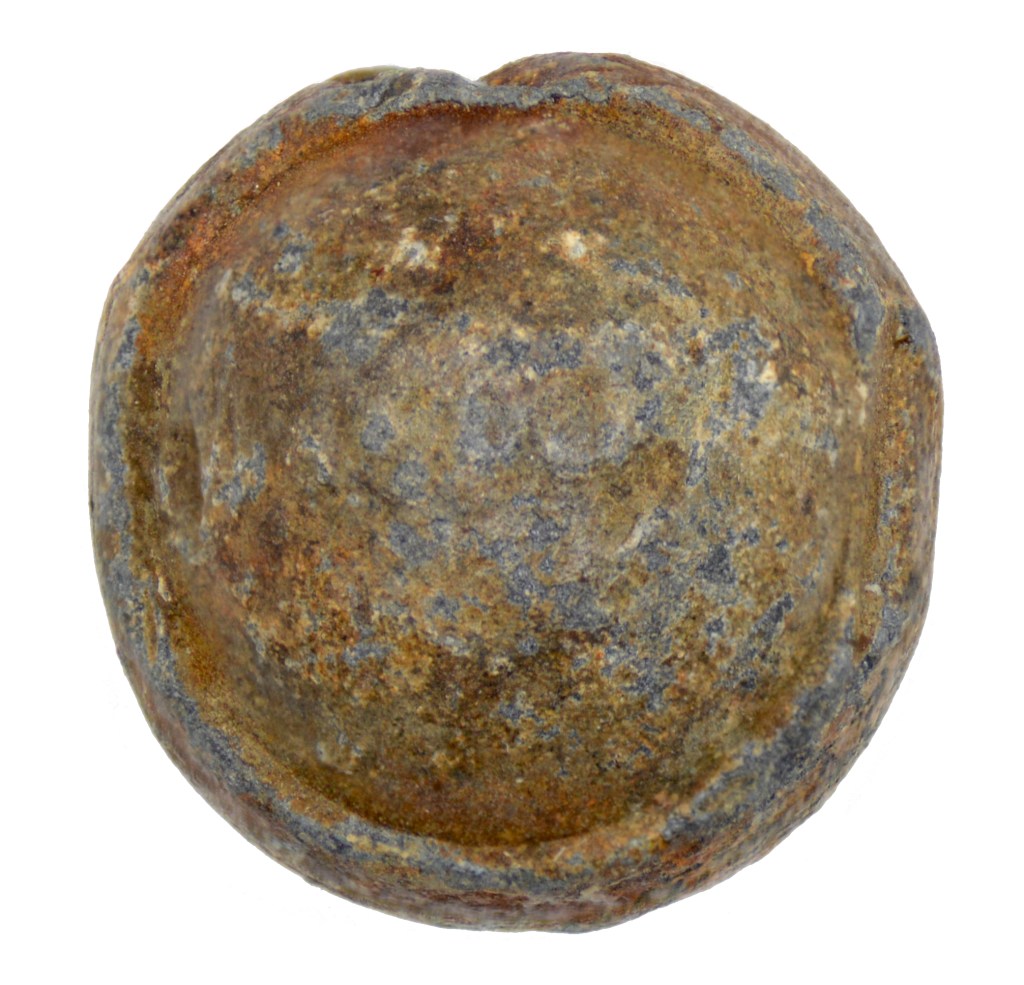
- Weight: 826 gn (53.5 gn)
- Diameter (across ball): 0.780 in (19.8 mm)
- Diameter (across belt): 0841 in (21.3 mm)
Note the much more squared edge to the belt than on the infantry version. The ramrod has once again flattened the top of the ball and with it, pressed the twine for closing the calico patch into the belt.
Naval belted ball
- Weight: 794 gn (51.5 gn)
- Diameter (across ball): 0.749 in (19 mm)
- Diameter (across belt): 0846 in (21.5 mm)
Note the flat front of this example, ramming enhanced by minor impact damage. The pressure of the firing has turned this into an elongated projectile rather than a ‘ball’.
Naval belted ball
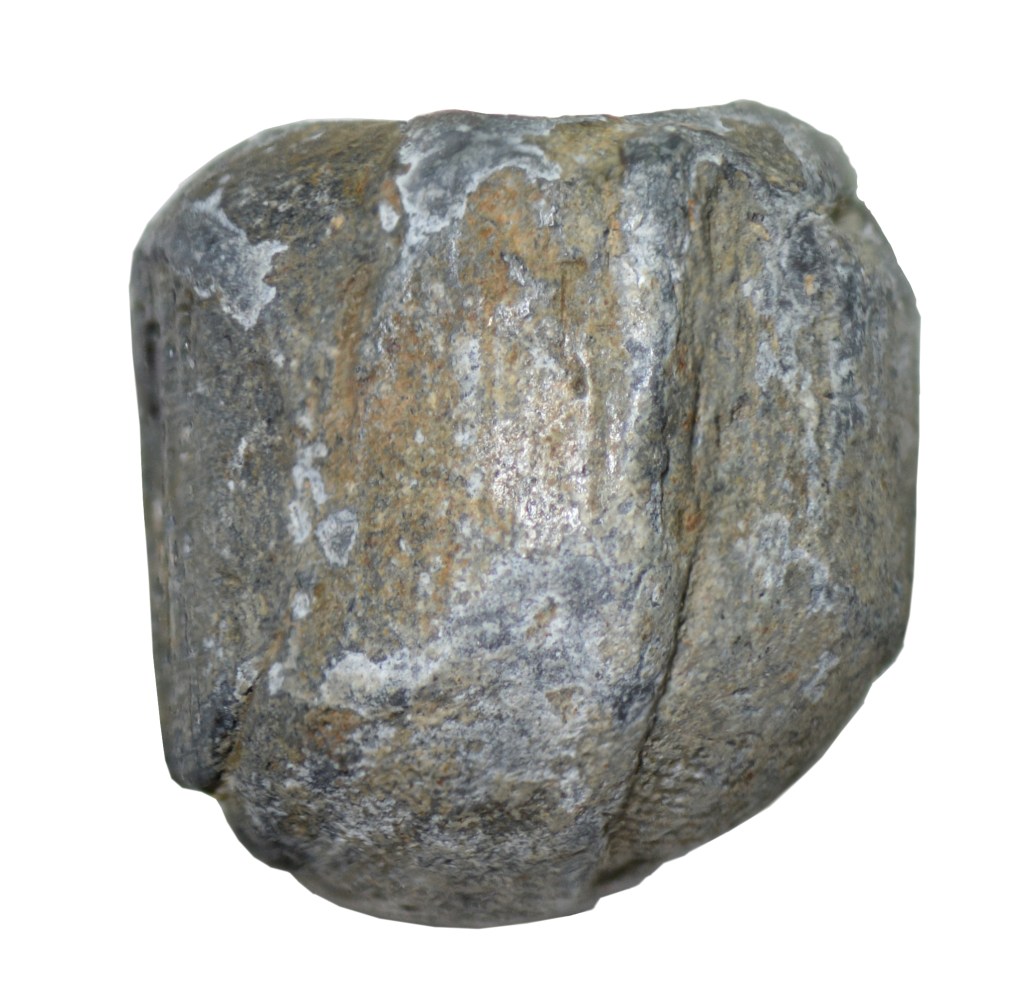
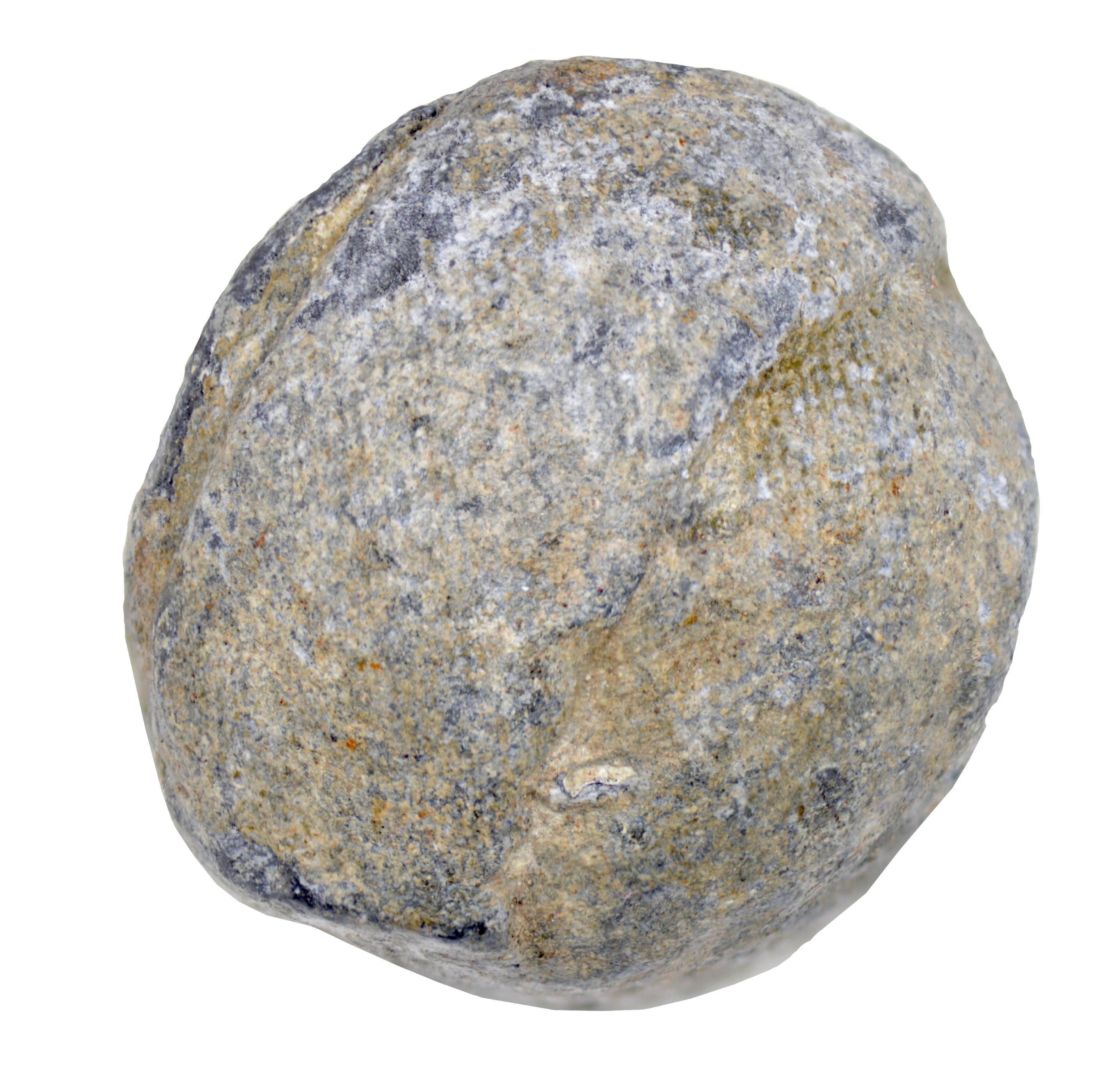
This example of a naval belt ball shows very clearly how the belt is adjusted to fit the rifling on loading and firing. The rifling in this weapon was significantly thinner than the belt, no doubt causing some trouble with the loading of the ball. The calico patch, the impression of which was fixed upon the ball at the moment of firing, is clearly visible in the second picture.
