August 2026
This projectile was created for a rifle featuring ratchet-groove rifling. But not just any old ratchet-grooved rifle: a muzzle-loaded, mechanically-fitted ratchet-grooved rifle. Ratchet rifling went through phases of popularity in the 19th century, particularly in the 1860s and 1880s (used in both muzzle and breech loaded rifles). The likely date for this bullet is roughly the 1850s to the 1860s, when the elongated mechanical fit projectile reached its peak of popularity.
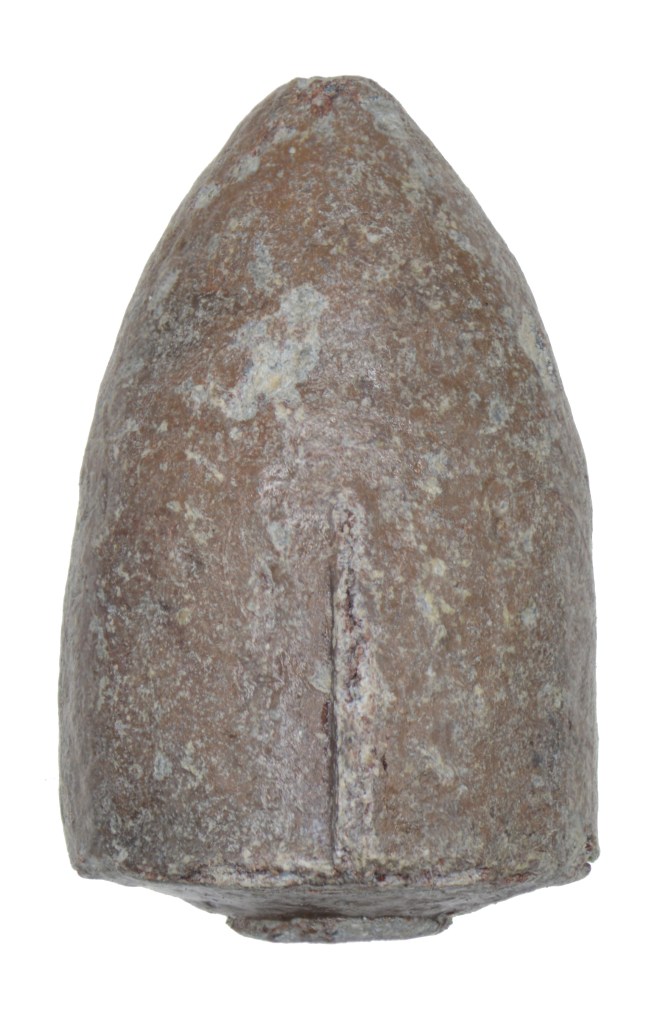
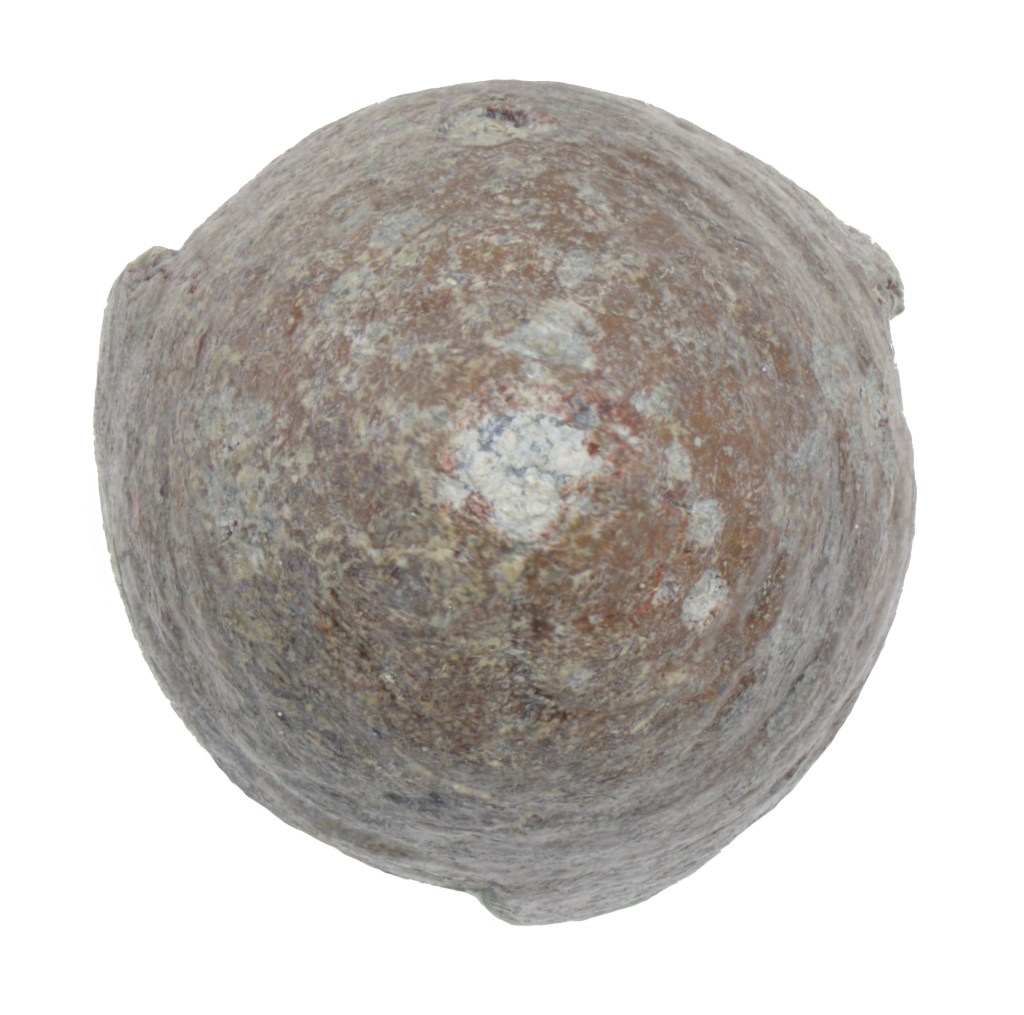
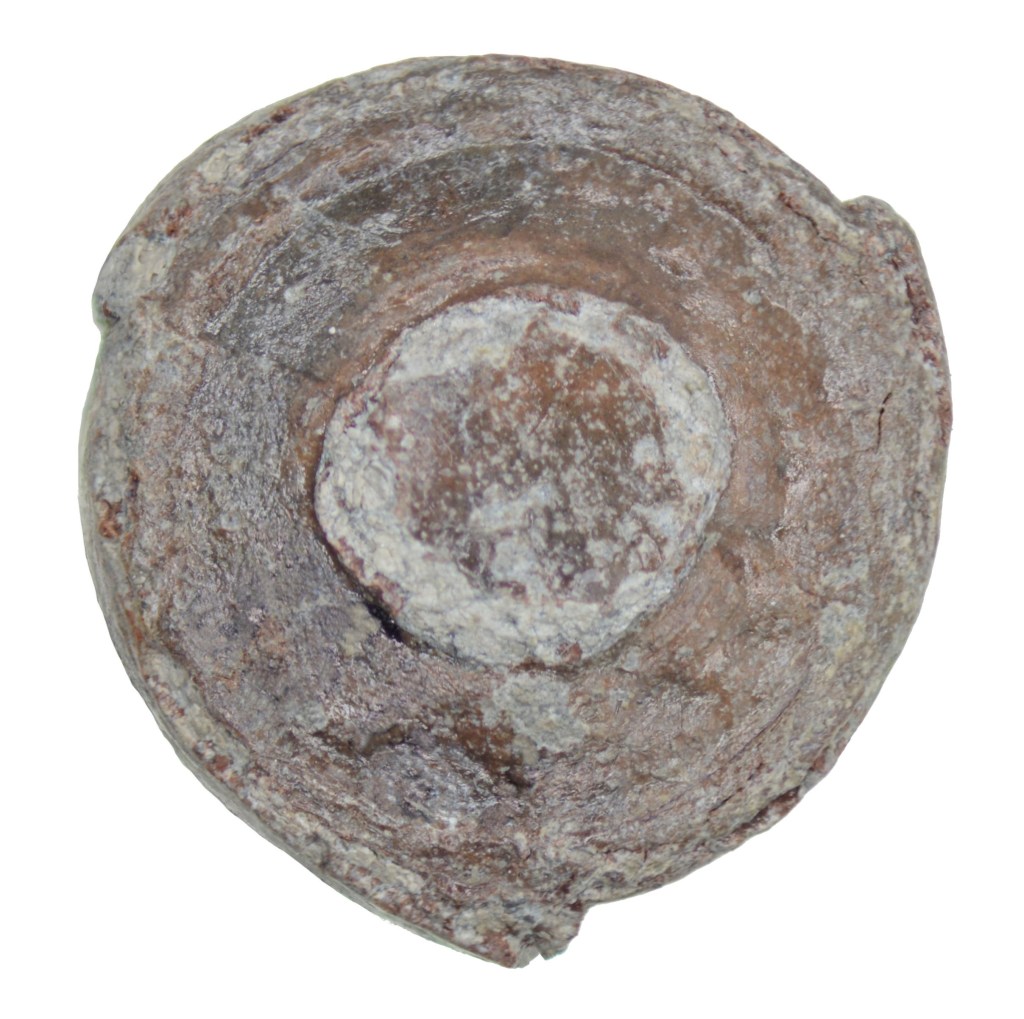
- Weight: 530 gn (34.3 g)
- Diameter across body: 0.594 in (15.1 mm)
- Length: 0.972 in (24.7 mm)
The distinctive three groove ratchet rifling shows up well in the plan views. The base of the projectile, on the right, shows the stub of the sprue, from the mould ingate. The seam of the mould can be seen running from 10 o’clock to 4 o’clock on either side of the sprue stub.
July 2026
For July, here are two identical bullets of an unusual type, that I have not encountered elsewhere. They are both cylindro-conical, featuring one cannelure, which is bridged by four studs, indicating that these are mechanically fitted projectiles. Both feature a ring around the tip, characteristic of having been rammed home quite heavily, as well as showing rub-back from firing and minor impact damage.
Specimen 1
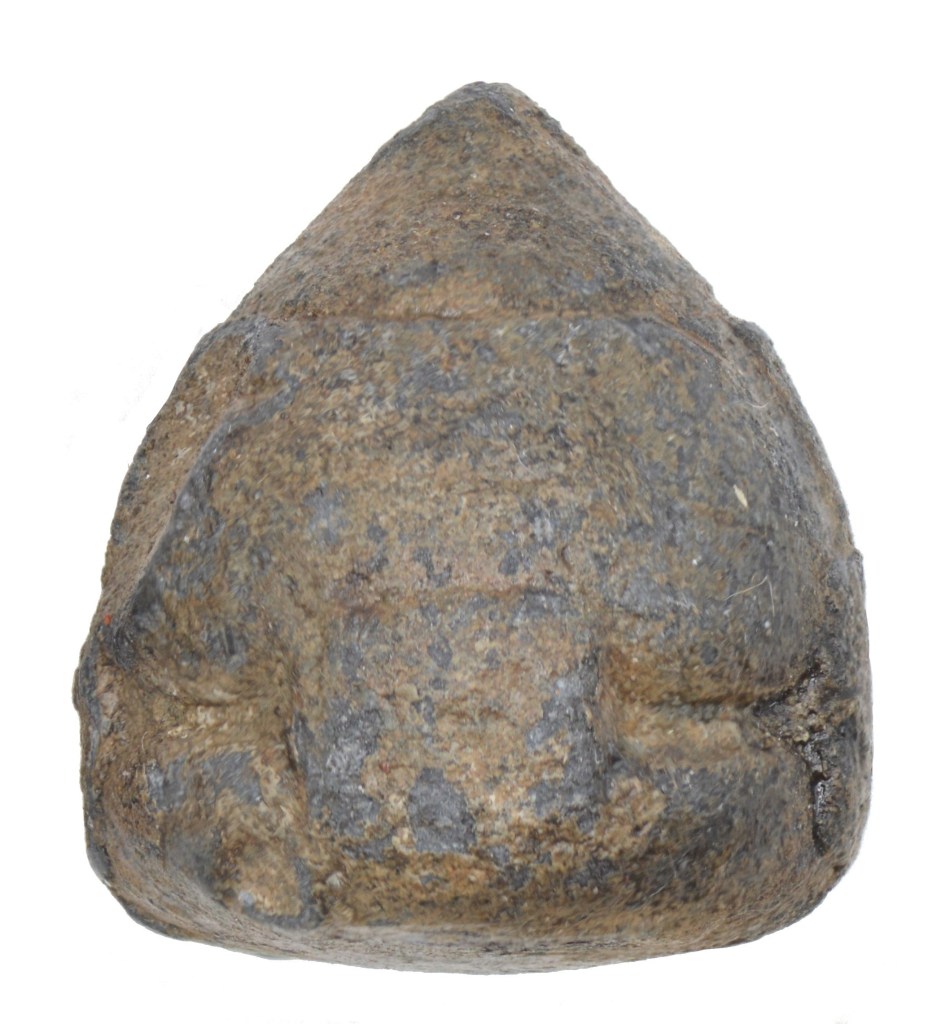
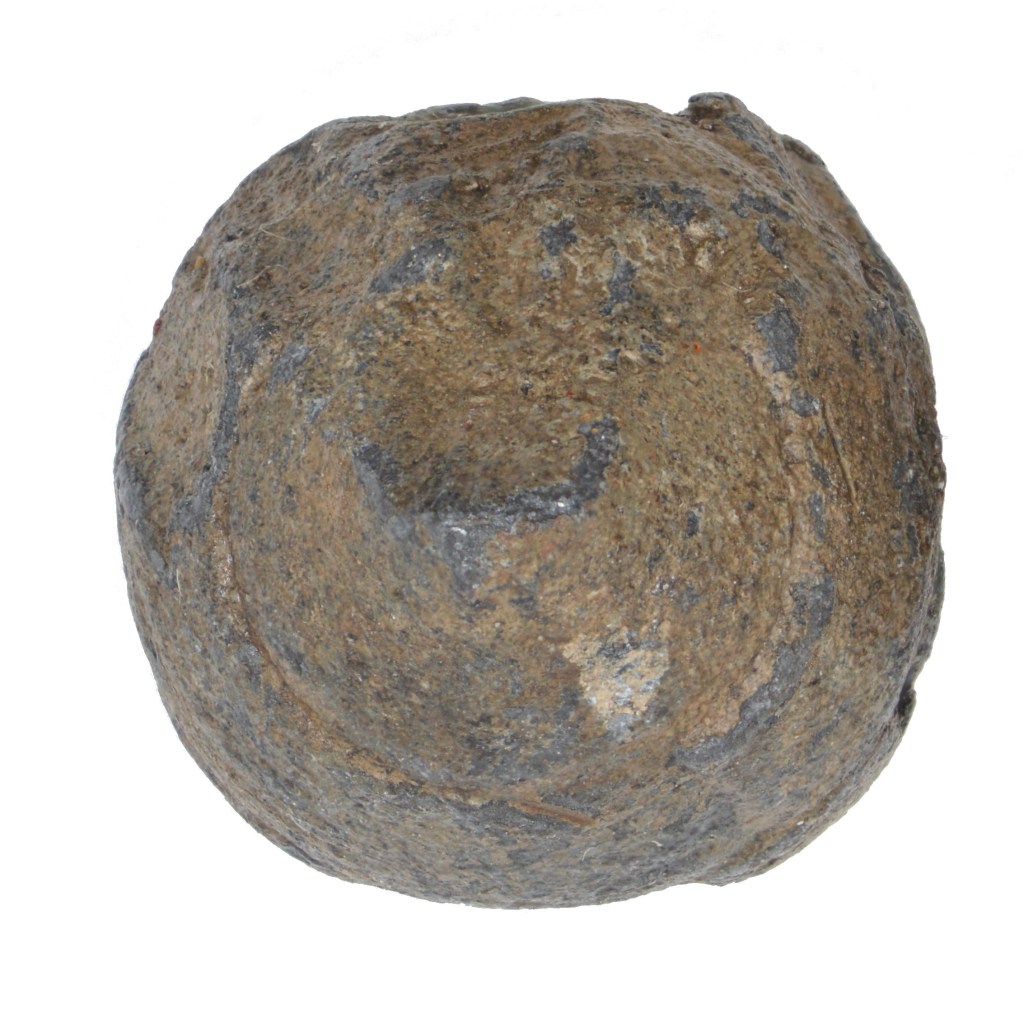
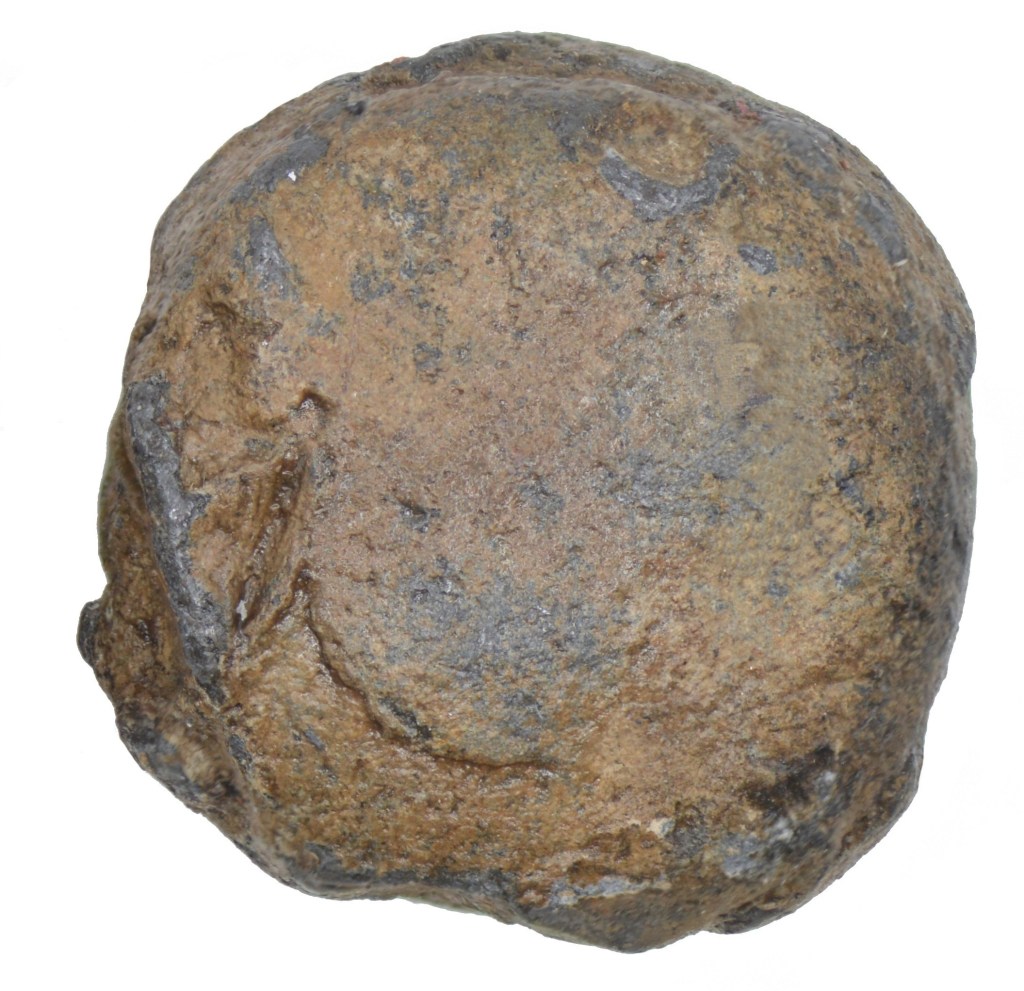
- Weight: 455 gn (29.5 g)
- Diameter across body: 0.641 in (16.3 mm)
- Diameter across studs: 0.683 in (17.34 mm)
- Length: 0.758 in (19.2 mm)
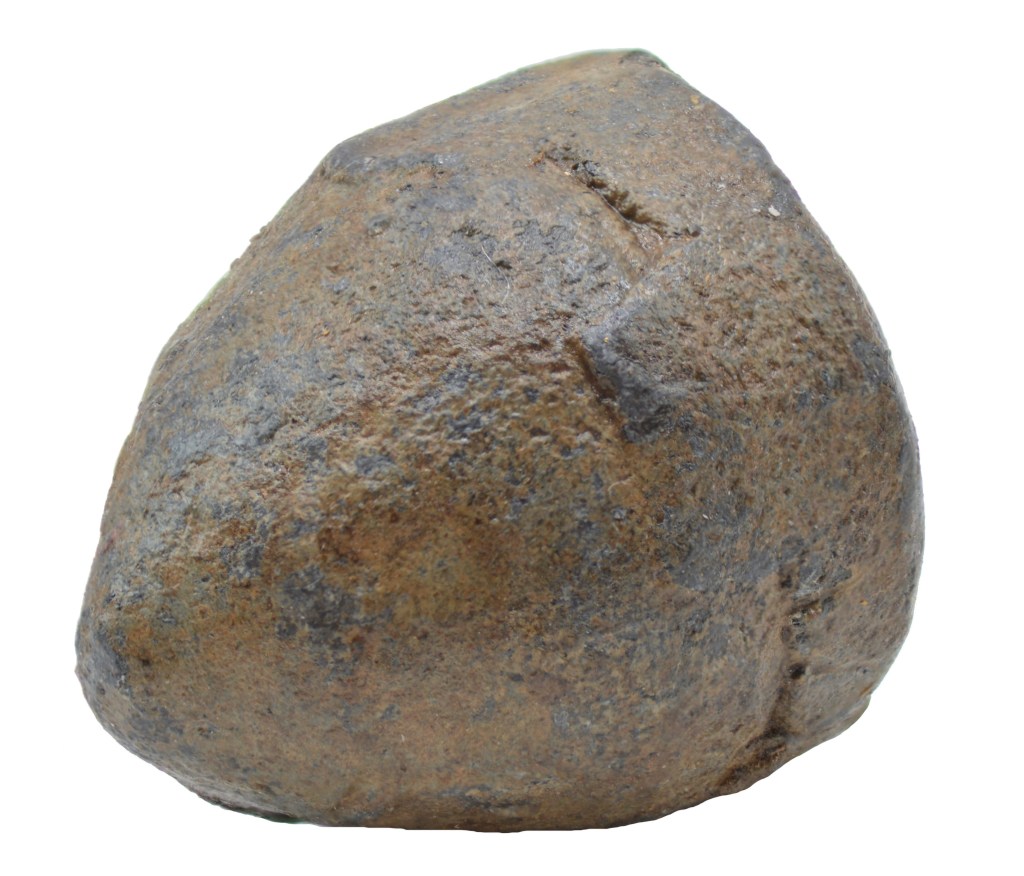
The studs are visible in the left hand image (bridging the single cannelure) as well as the ramrod impression, just below the tip. The other photographs show the top and flat base.
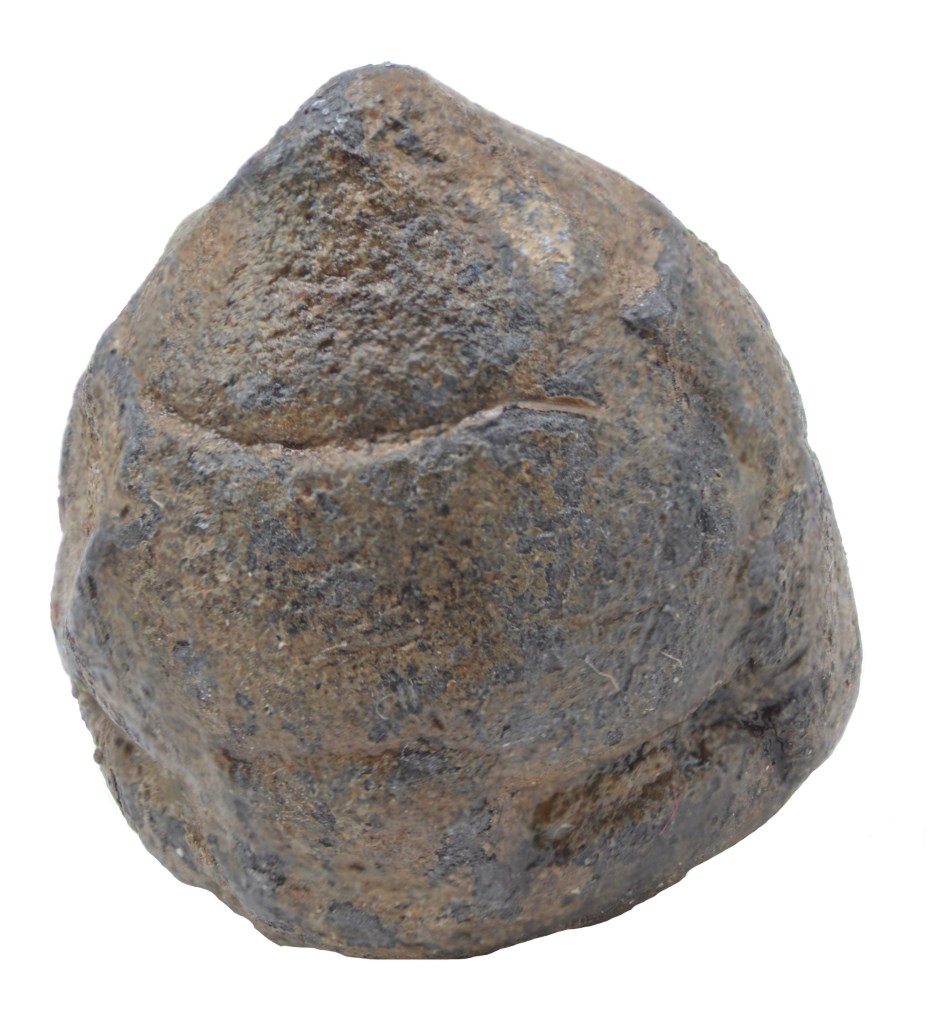
This oblique photograph shows the studs and cannelure a little more clearly.
Specimen 2
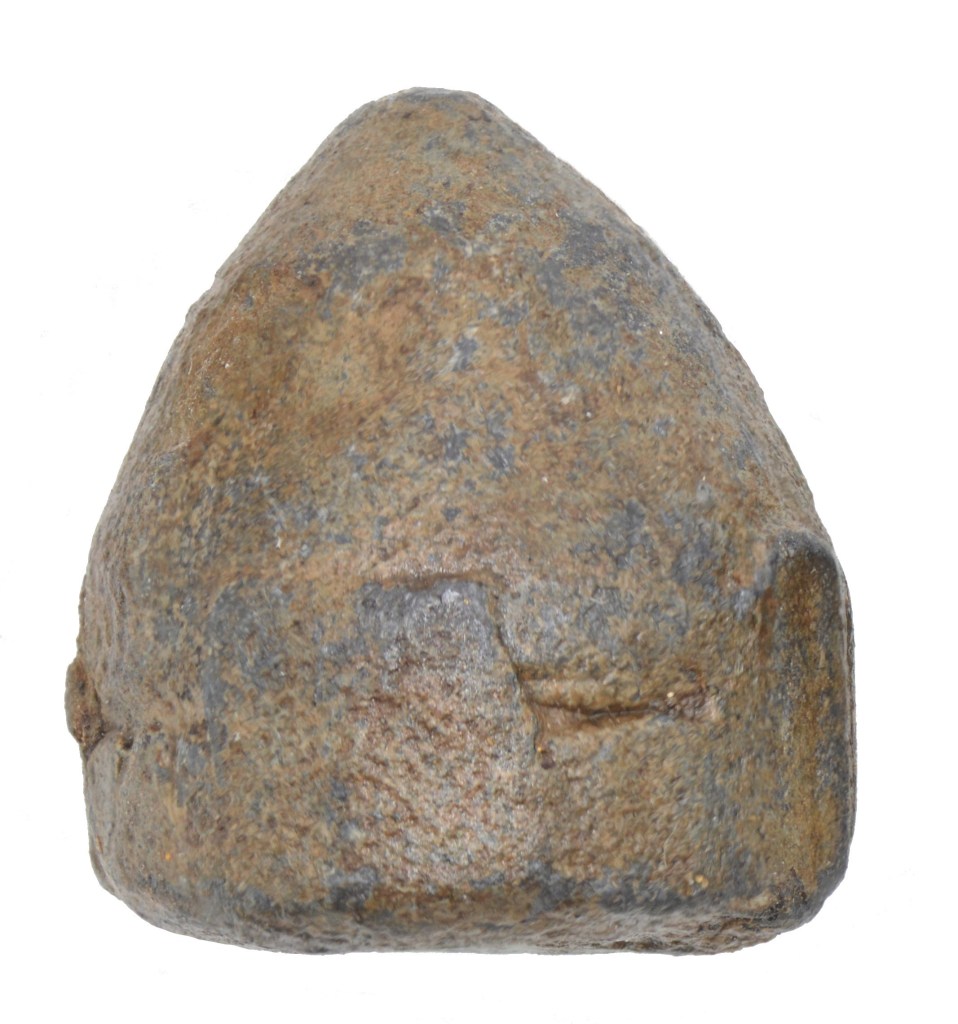
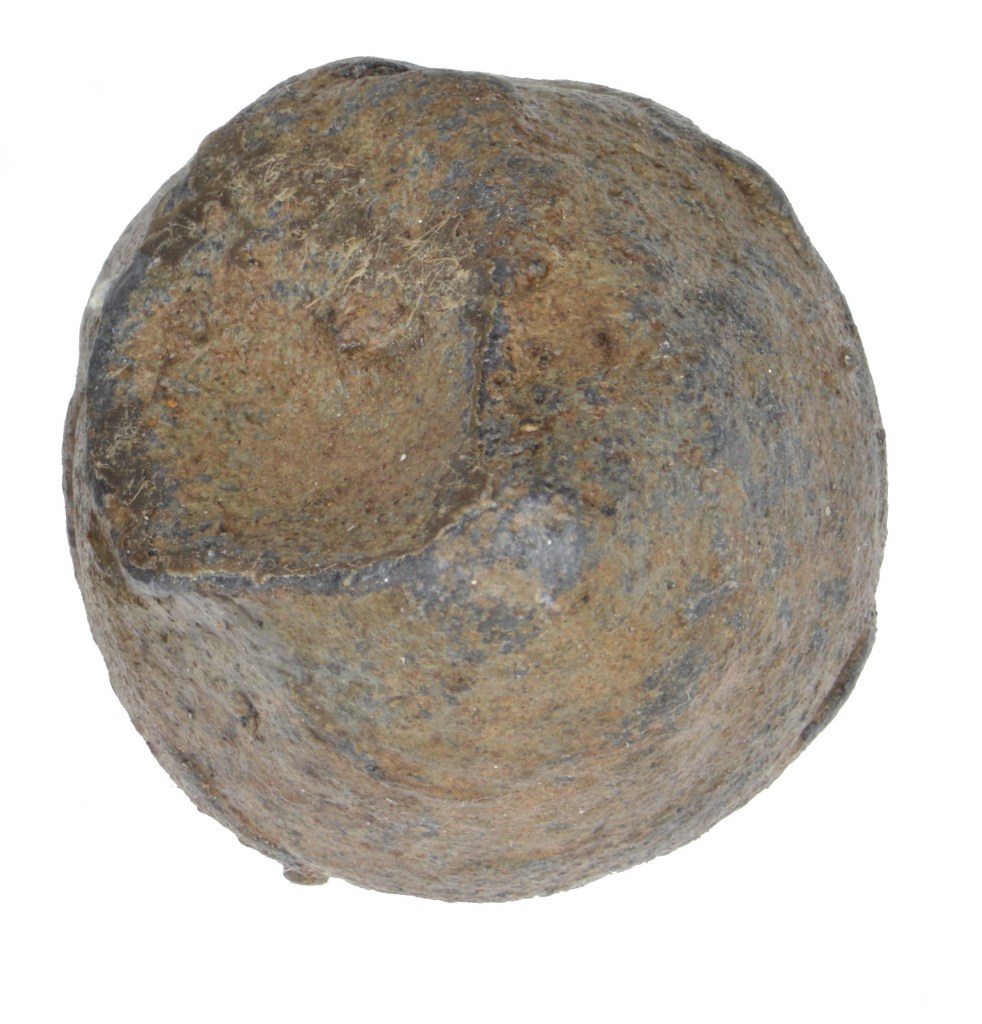
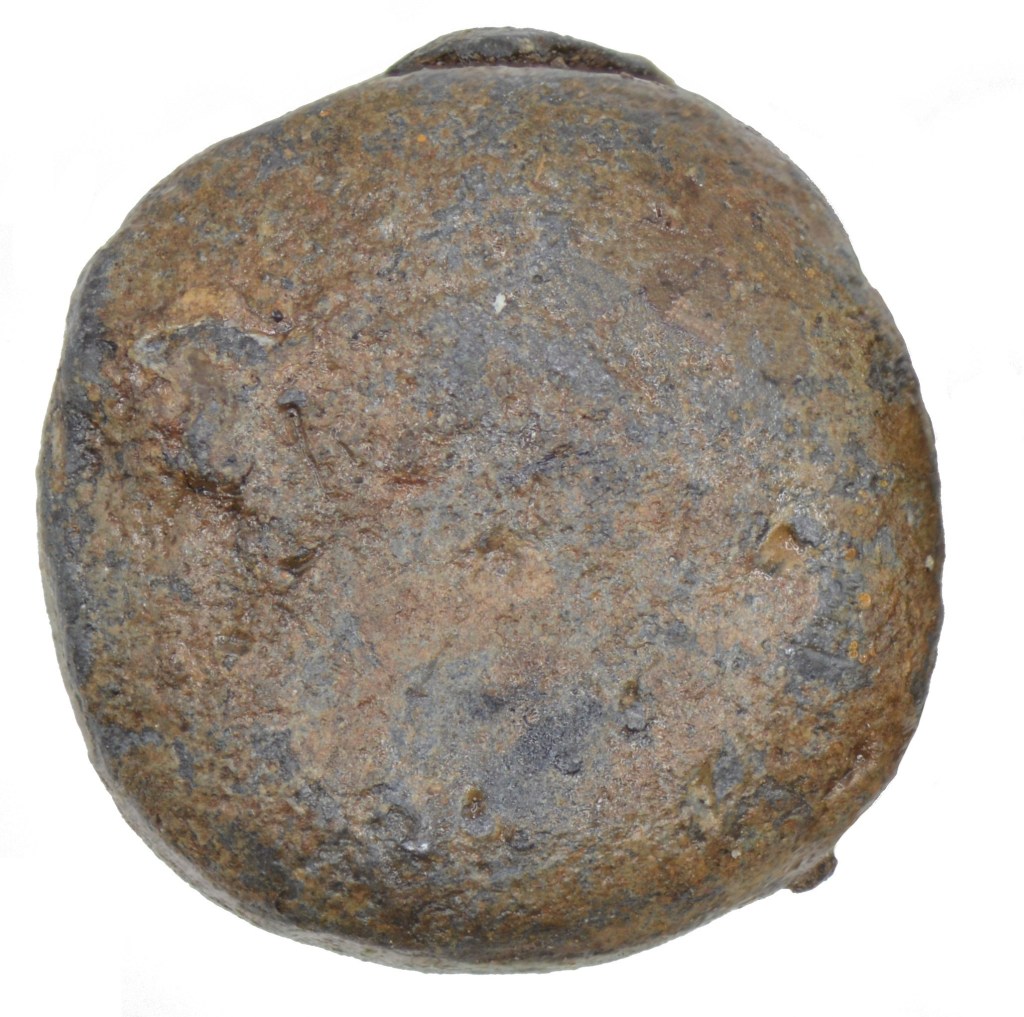
- Weight: 451 gn (29.2 g)
- Diameter across body: 0.637 in (16.2 mm)
- Diameter across studs: 0.672 in (17.1 mm)
- Length: 0.745 in (18.9 mm)
The studs are again visible on the left hand photograph of this second specimen. Impact damage to the nose is visible in the central photograph.
The mid 19th century seems a likely date for these two bullets, but the rifle that fired them, currently remains a mystery.
June 2026
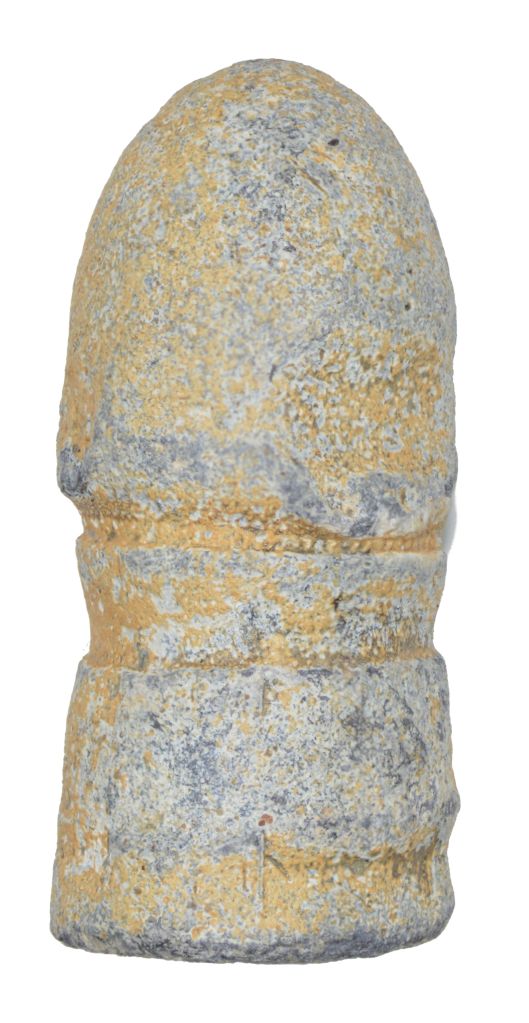
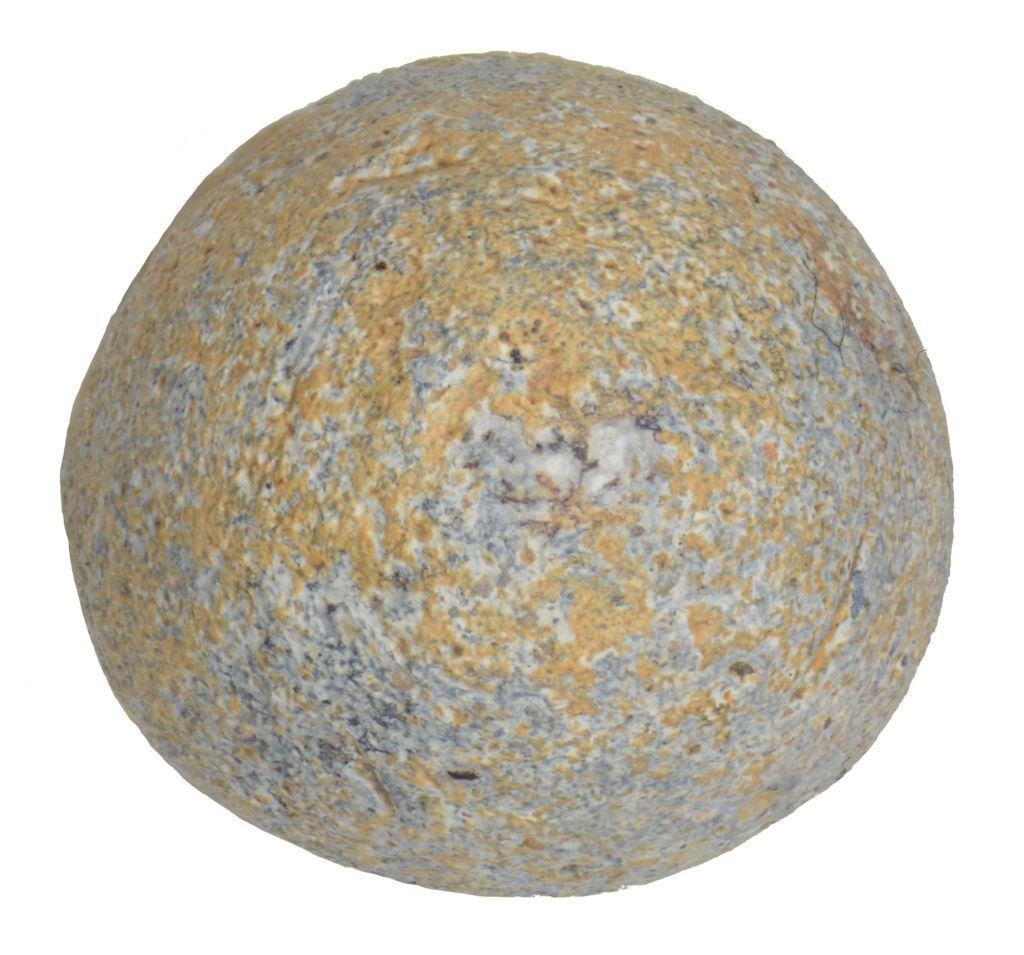
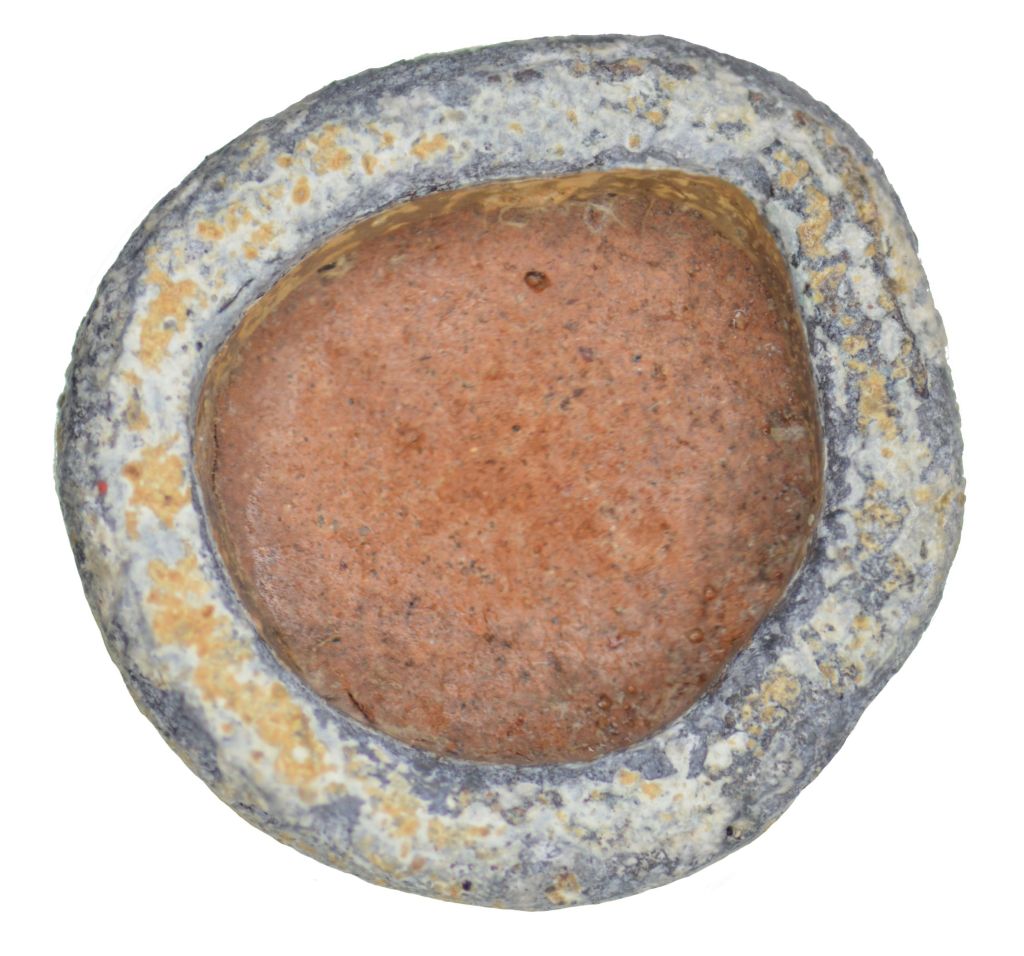
- Weight: 474 gn (30.7 g)
- Diameter: 0.544 in (13.8 mm)
- Length: 1.211 in (30.6 mm)
This month we have a most unusual bullet. It has a distinct waist in its centre, with two knurled cannelures, but these are at points where the diameter of the bullet varies. A third ‘cannelure’ is located near the base, but this is more of a plain saw-tooth type. The base cavity is filled with a clay plug, of the type used in later versions of the 4th pattern Enfield bullet and the Snider (placing it approximately in the 1863 to mid 1870s period). The plug has been pushed into the cavity, suggesting it has been fired and three groove rifling is visible on the outer surface. These grooves, however, rise and fall with the contours of the bullet’s irregular outer surface, which poses a bit of an improbable circumstance. Rifling marks are cut on to surfaces parallel with the bore and do not rise up and down over the bullet, like railway tracks going over a hill. Perhaps the bullet was originally a mechanically fitted projectile with studs cast down the side. There is also the possibility that the bullet has suffered damage, post firing. The clay plug is intact and shows no sign of cracking or compression, which perhaps it might if the bullet had been rolled and squashed. Its weight is not dissimilar to that of the Snider bullet.
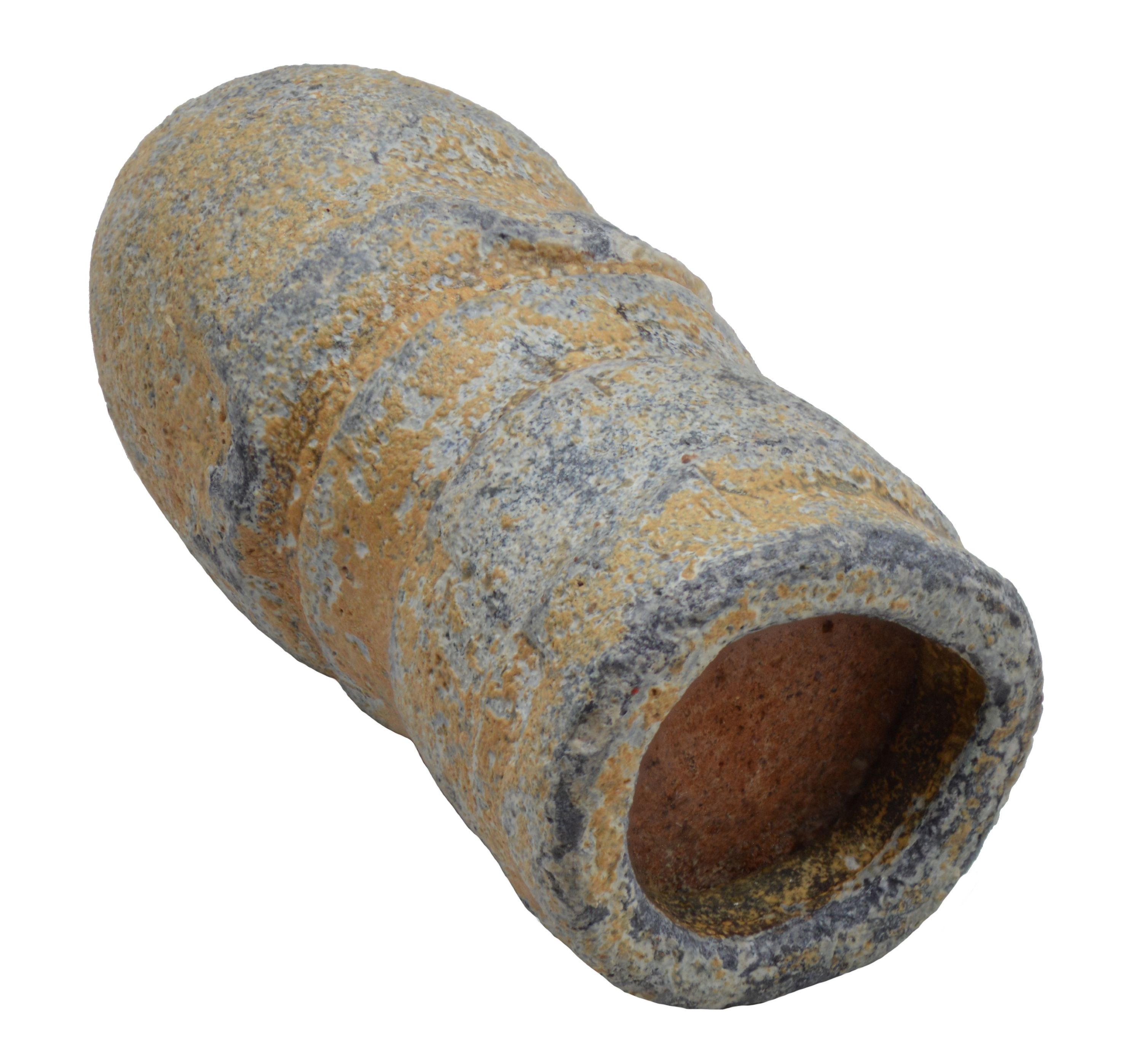
The clay plug, pushed into the base cavity.
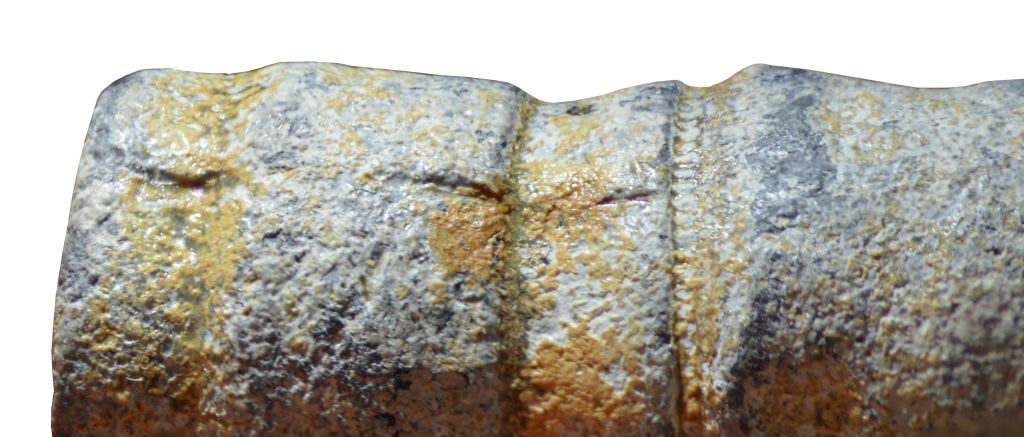
The rifling following the contours of the cannelures. One explanation is that this is a mechanically fitted projectile and the rifling marks are cast studs.
May 2026 (2)
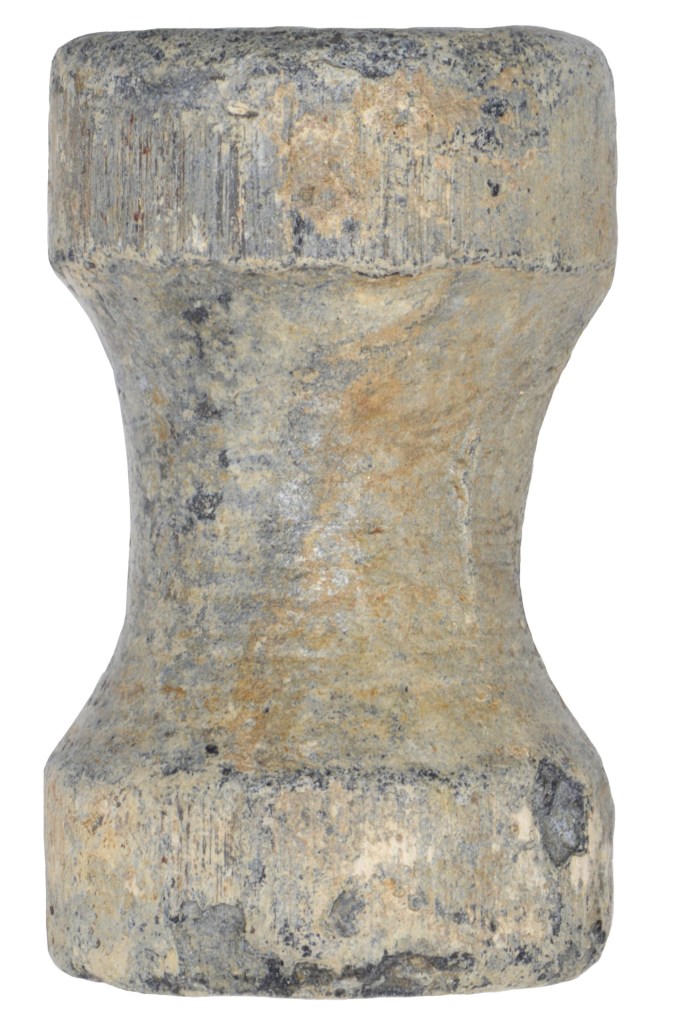
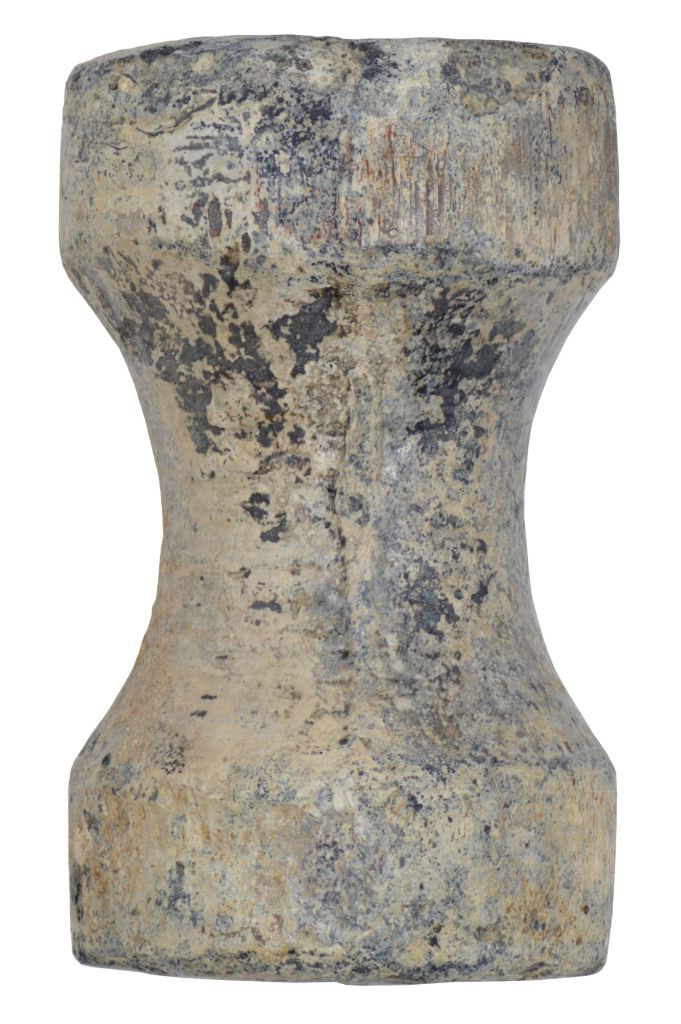
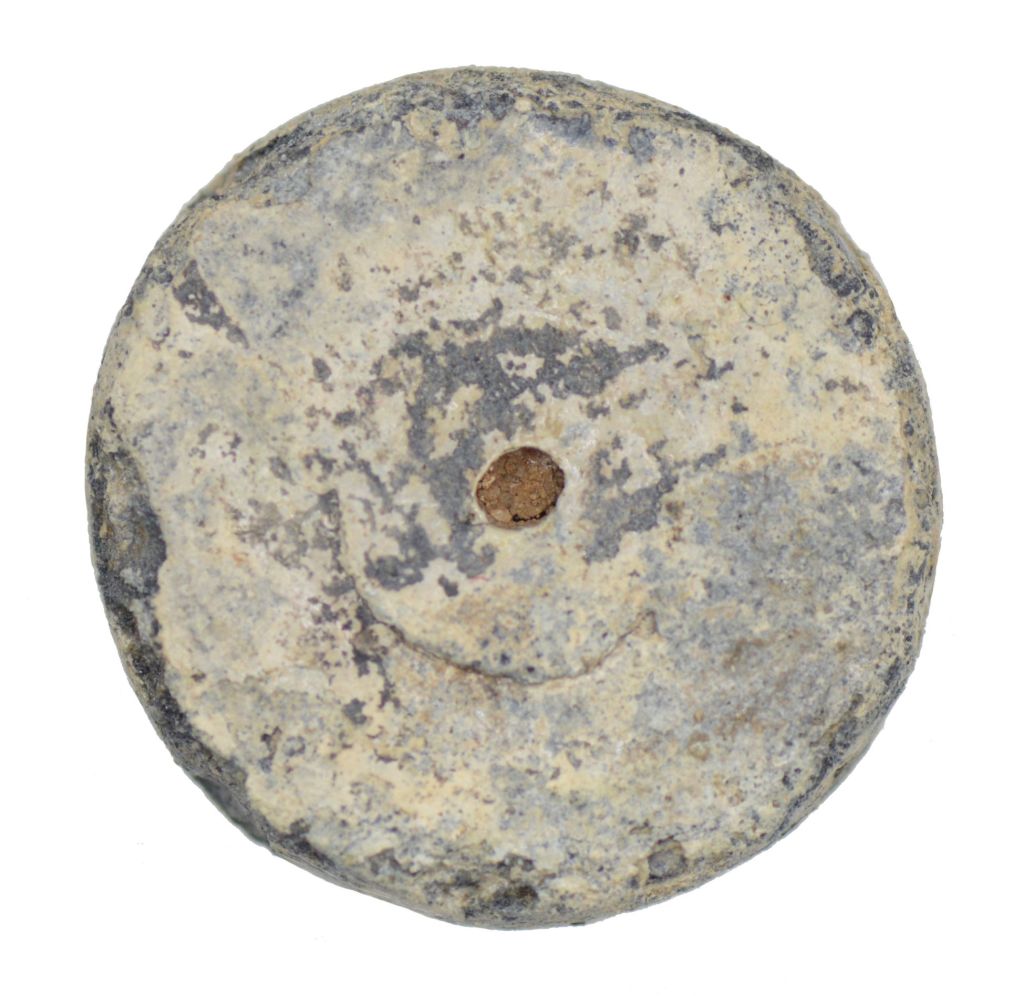
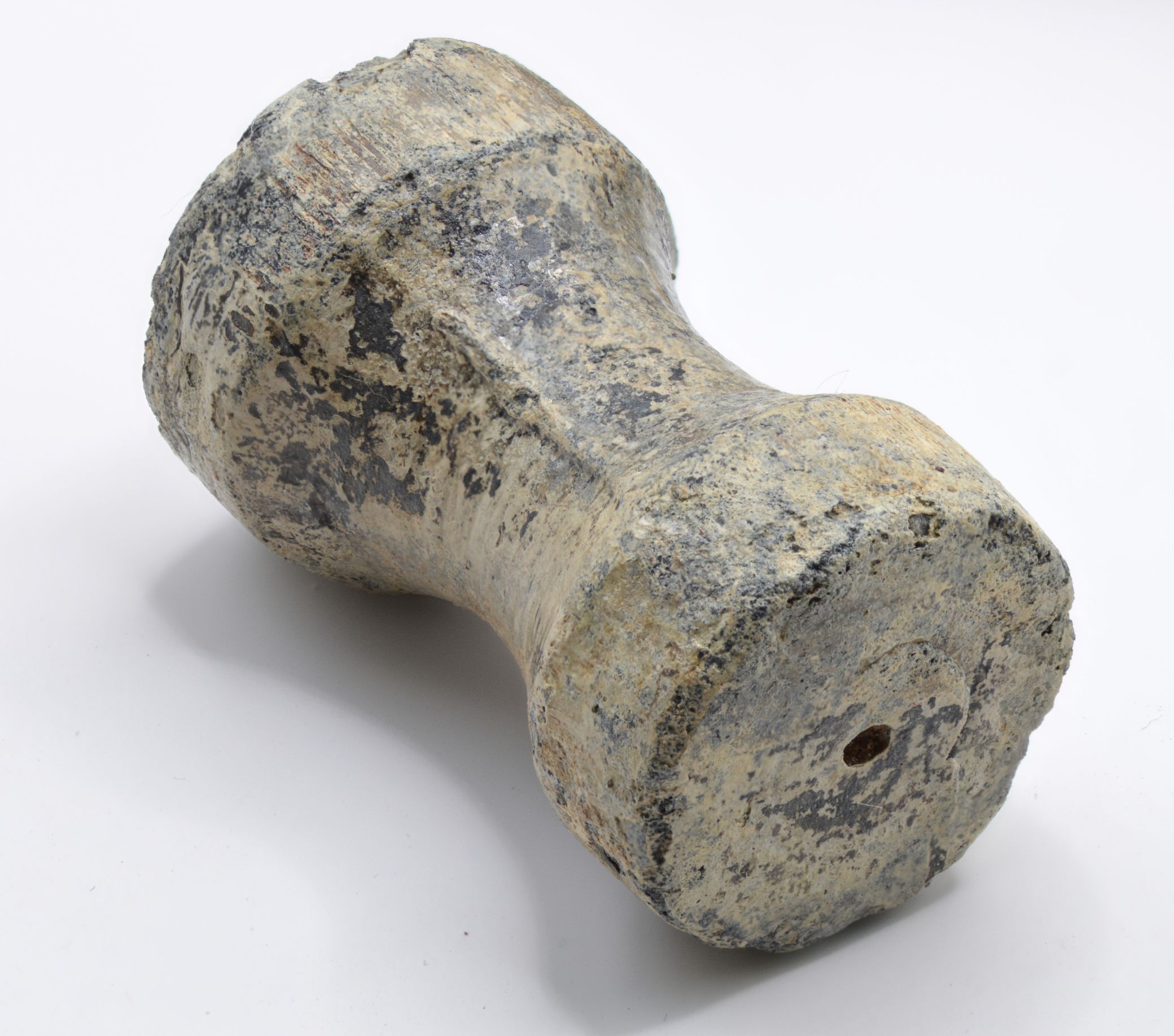
To celebrate the launch of the website, this month we are having not just one special bullet, but two! This one is a truly huge piece of bobbin shot, from the English Civil Wars (and therefore dates from circa 1642 to 1651). Intended to pierce plate armour, both breastplates and helmets, this has been fired, but shows no signs of impact damage. At a diameter of 0.766 in (19.4 mm) this is big (much bigger than the average bobbin) and was made for a musket calibre weapon. Most bobbin shot is of carbine and large pistol calibre, intended for use by fighters on horseback, who can approach the enemy quickly, discharge at close range and then retreat or continue to fight with other means. Musket calibre bobbin, therefore, is somewhat unusual. Rub-back and barrel fouling scrapes are visible on the outer surfaces and the seam, from casting, is visible in the central image.
- Weight: 1211 gn (78.4 g)
- Diameter: 0.766 in (19.4 mm)
- Length: 1.271 in (32.2 mm)
May 2026 (1)
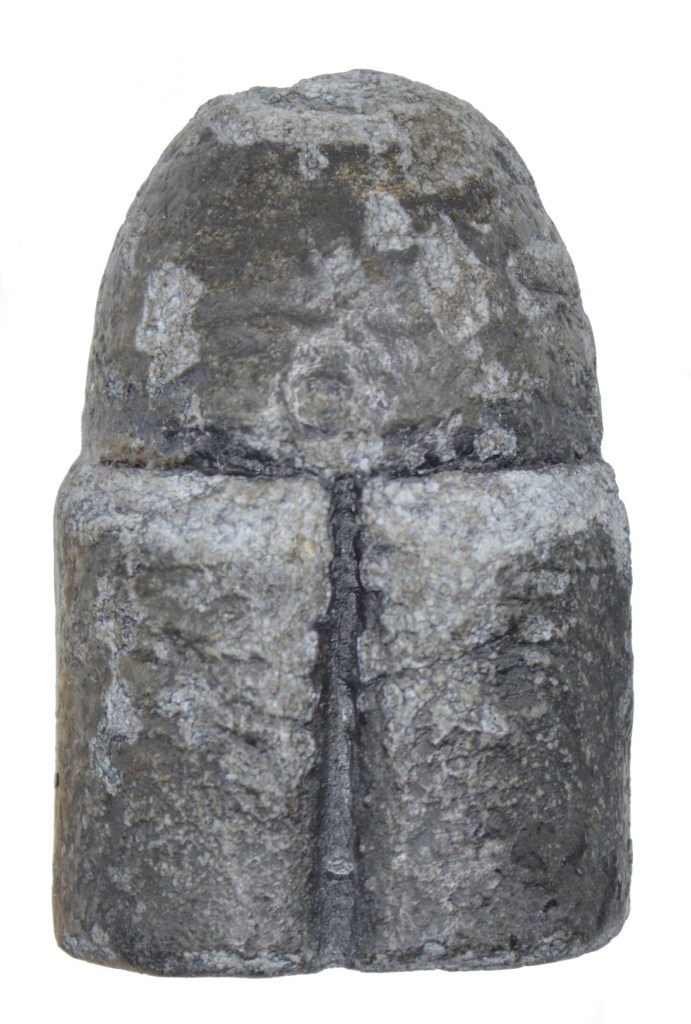
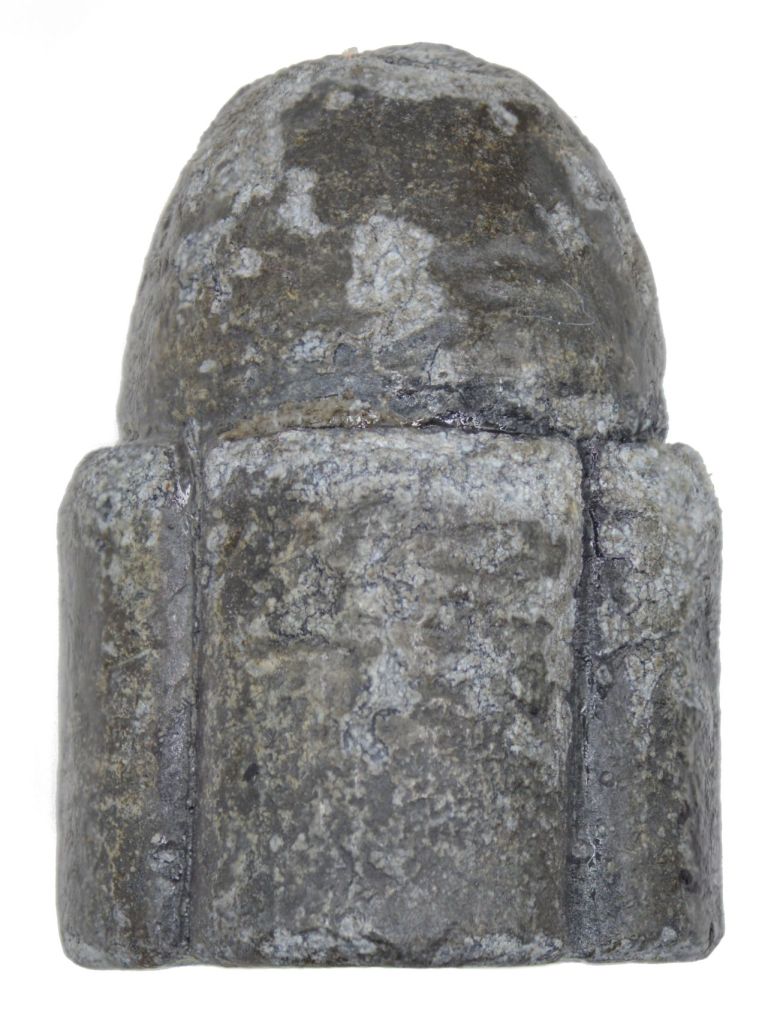
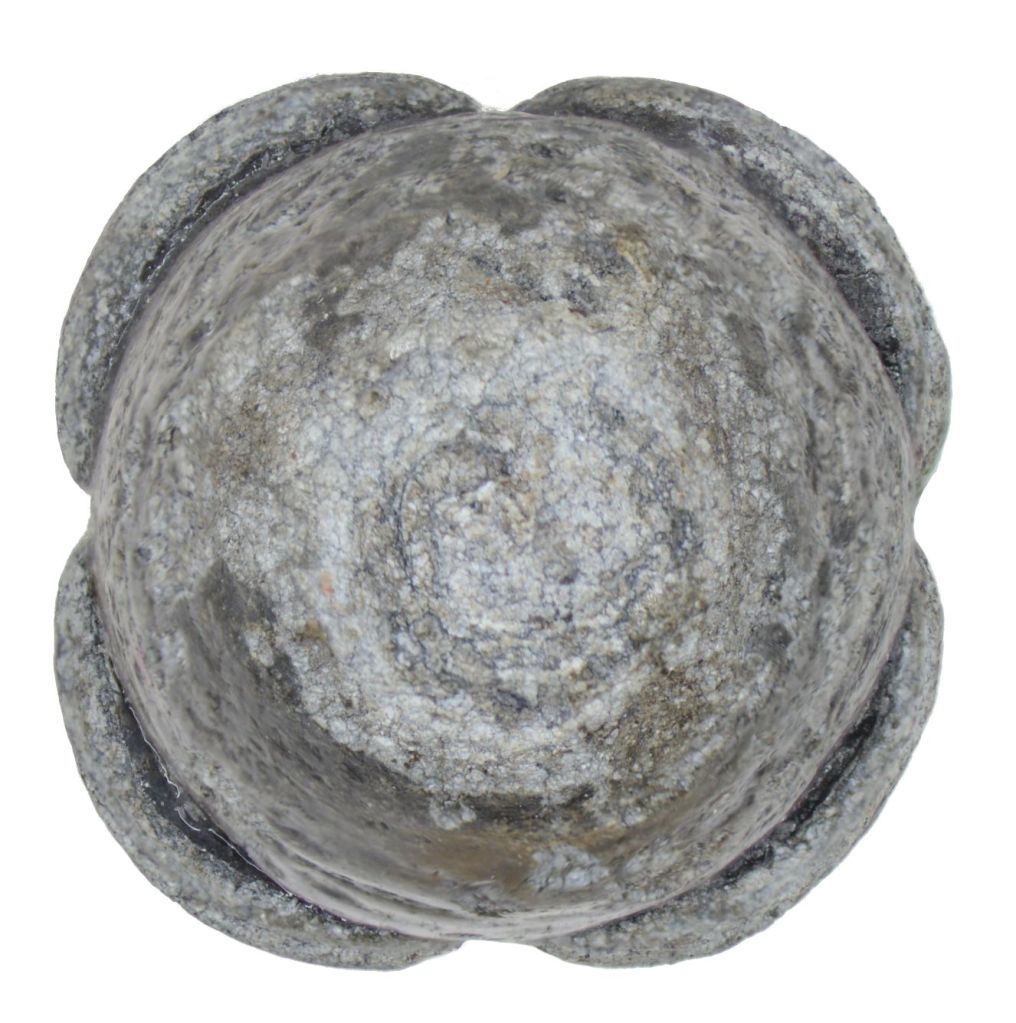
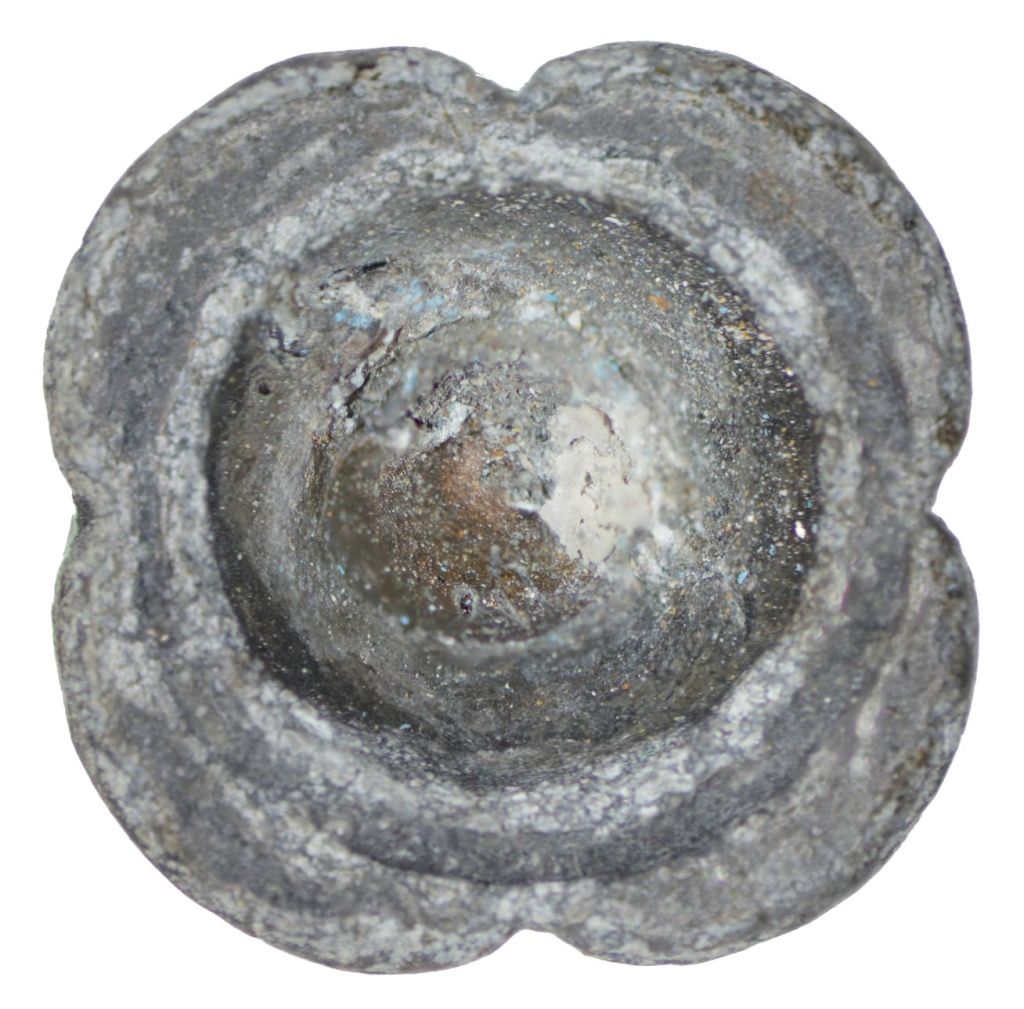
On this page I would like to share some photographs of interesting and unusual bullets, many of which I have no details for whatsoever. The first bullet is a perfect example of this. What it is and where it originated, I currently have no idea. Despite this, it is a wonderful Victorian era specimen of a mechanically-fitted, muzzle-loaded projectile. The ‘studs’ on the side are the biggest I have seen in relation to gaps between (corresponding with lands and grooves in the rifle barrel). There is no possibility of this bullet stripping when fired (slipping out of the rifling whilst in the barrel), these studs are well and truly fixing the bullet in place. An idea of the rifling in the rifle barrel can be gained by looking at the plan views.
There is a conoidal hollow in the base of the bullet, very similar to that of the 1st pattern P53 Pritchett bullet. Mechanically fitted bullets don’t, in theory, need an expansion hollow in the base, they are already in the rifling grooves. There is no obvious cast line visible.
Mechanically fitted projectiles reached their peak in popularity in the 1850s to 1860s, but were soon overtaken by breech-loading rifles.
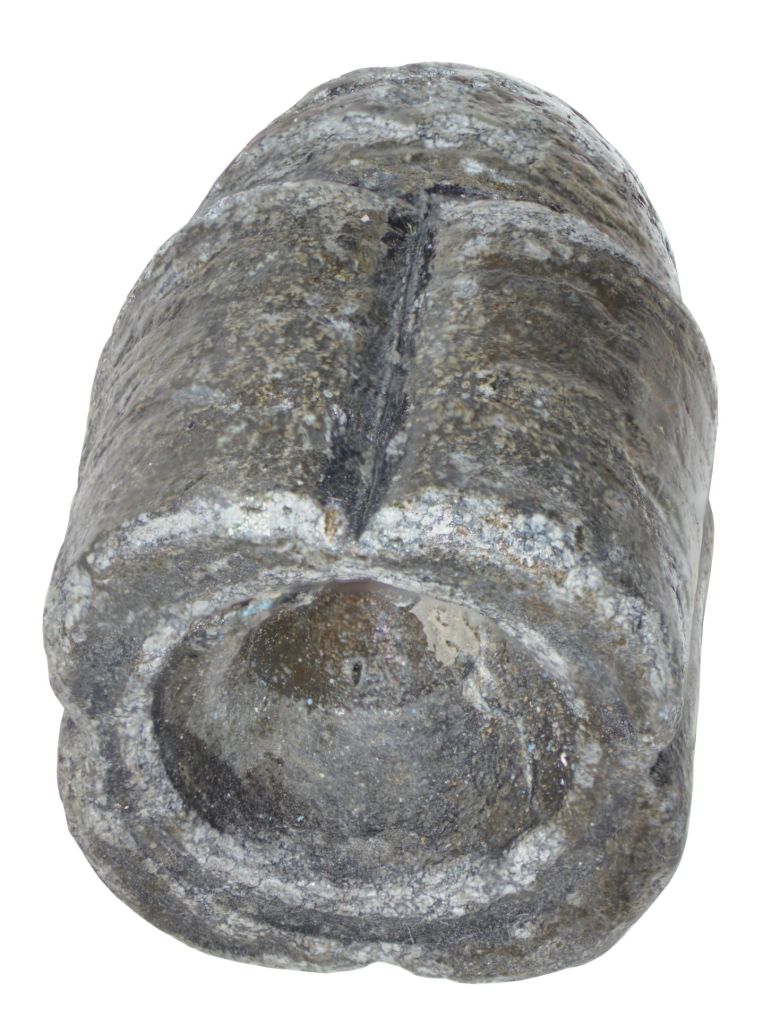
- Weight: 866 gn (56.1 g)
- Diameter across studs: 0.763 in (19.4 mm)
- Diameter across grooves: 0.675 in (17.2 mm)
- Length: 1.058 in (26.9 mm)
