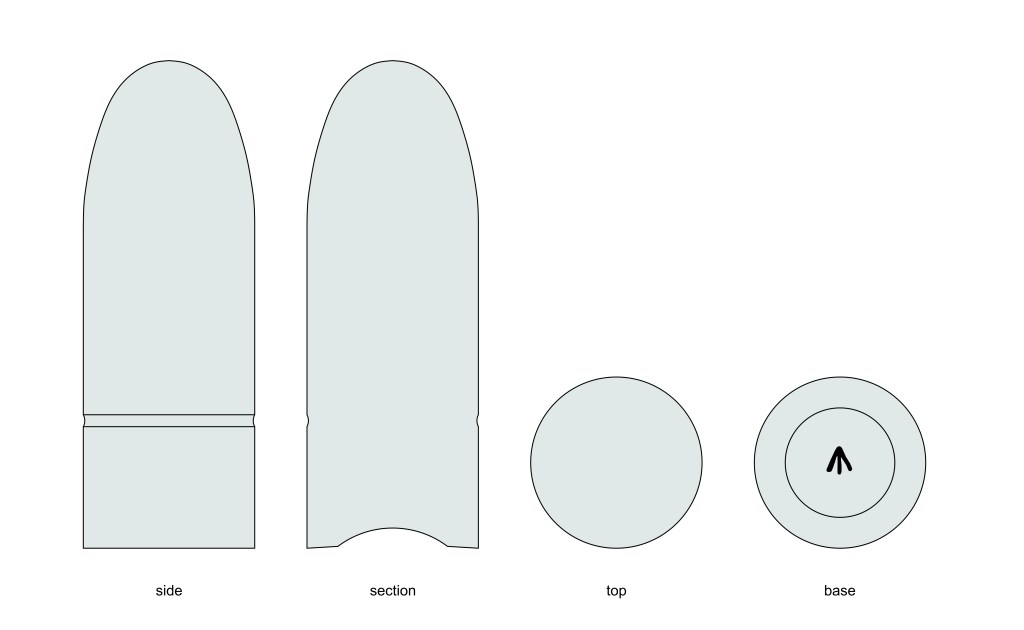
Official weight and dimensions:
- Weight: 1422 gn (92.1 g)
- Diameter: 0.644 in (16.4 mm)
- Length: 1.830 in (46.5 mm)
The 0.65 inch ten barrel Gatling machine gun was adopted by the Navy in 1875. There were only 28 of the machine guns ever produced for service and as few as 437,000 cartridges manufactured (according to Labbett, British Small Arms Ammunition 1864-1938) which for a machine gun is somewhat paltry. The mark 1 (the only mark issued) 0.65 in cartridge case was rolled, along the same lines as the Snider or Martini-Henry cases, and the bullet was patched. In retrospect, this delicate cartridge may seem odd for a machine gun, but in its time it worked and the rolled ammunition was cheaper than a solid drawn alternative. Cartridges were manufactured in bulk up to 1878, with a small order placed in 1884, presumably for comparative trial purposes. The 1 inch Nordenfelt, which was approved in 1880, quickly replaced the 0.65 Gatling as the Navy’s preferred heavy machine gun.
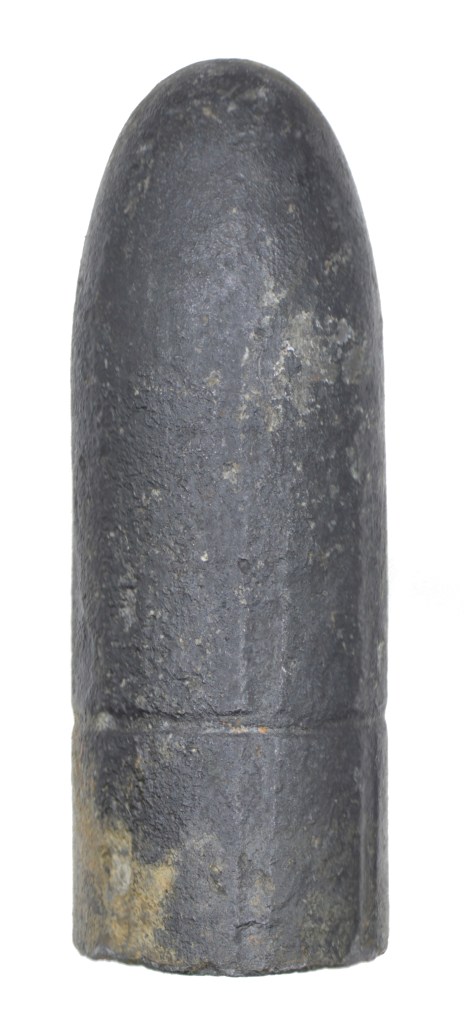
The bullet shape is very similar to that of the Martini-Henry (with a concave base) and even the rifling is similar to Henry’s, featuring 7 grooves; this was the period in which the Martini-Henry was the main rifle in use and the format was obviously in fashion. No documentation has arisen to suggest this is Henry rifling, and perhaps it was different enough to avoid credit and patent issues.
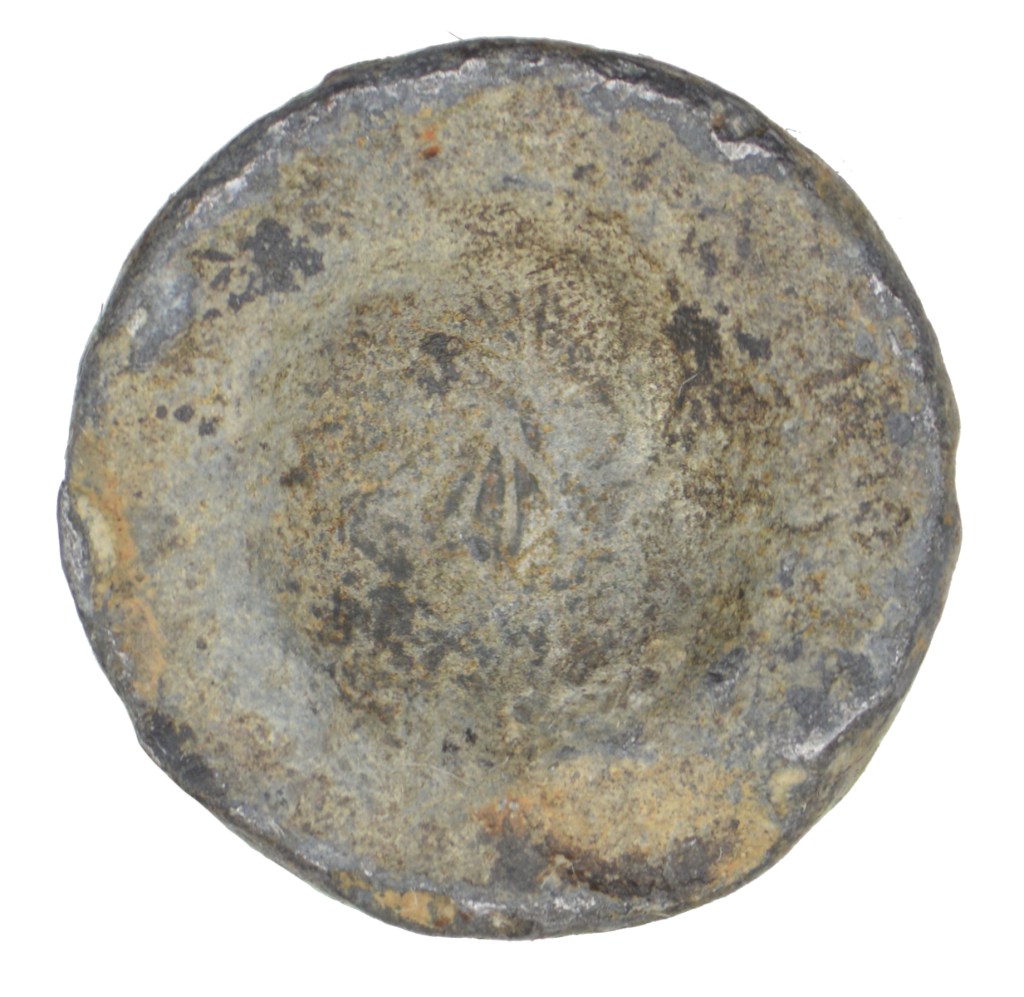
The cannelure is not knurled and broad arrow stamps on the base are standard (no machine numbers are visible).
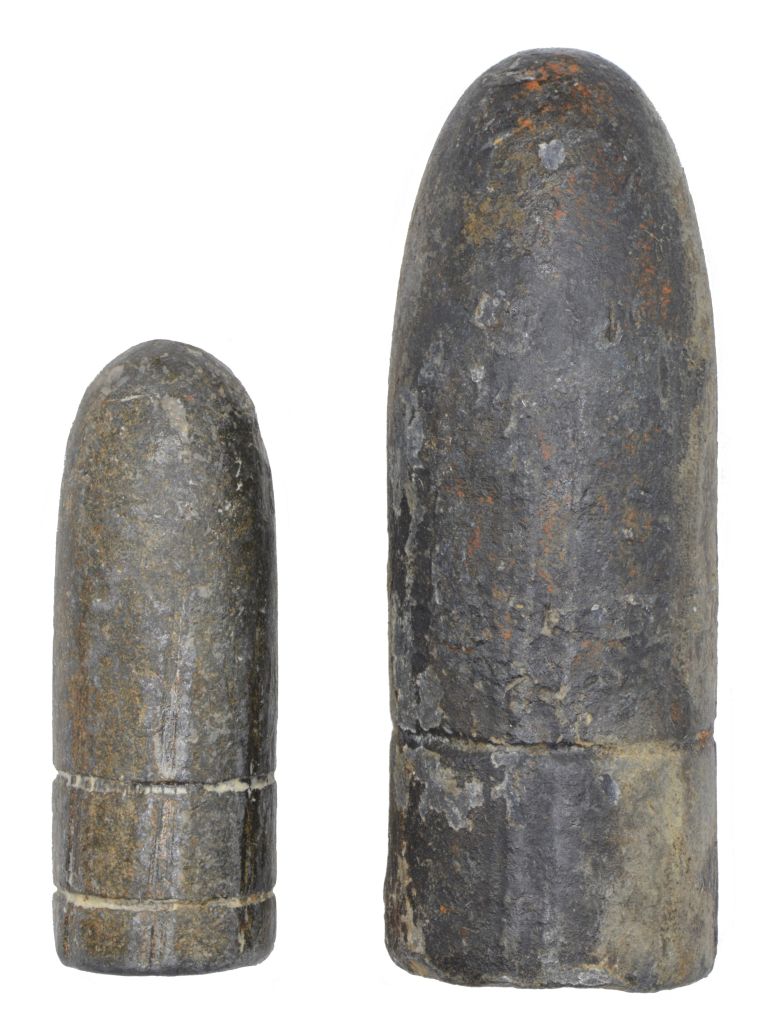
Martini-Henry mark 3 bullet on the left and a Gatling mark 1 bullet on the right.
0.65 in Gatling, fired
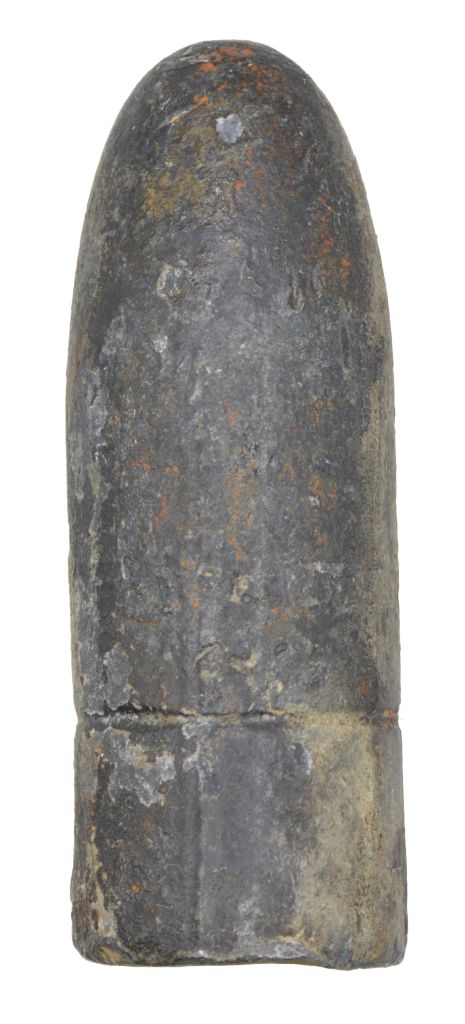
- Weight: 1406 gn (91.1 g)
- Diameter: 0.647 in (16.4 mm)
- Length: 1.816 in (46.1 mm)
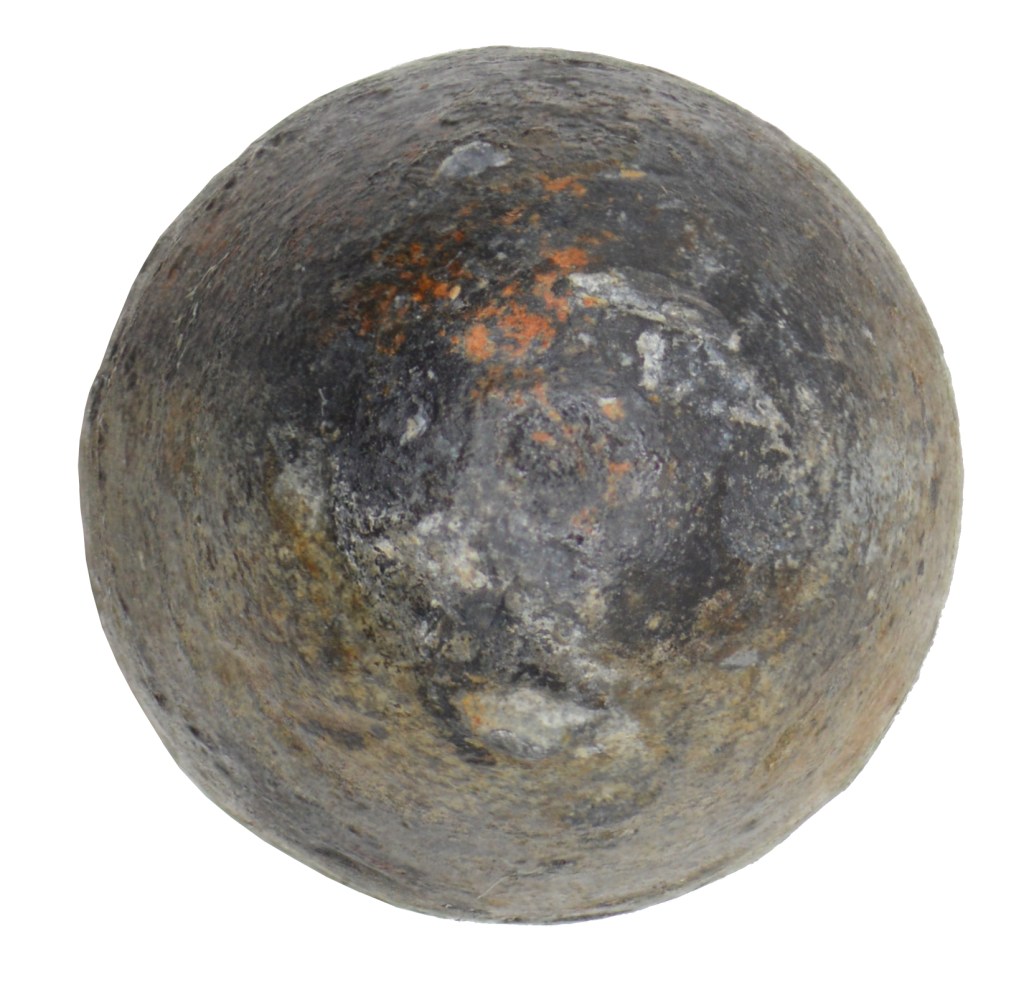
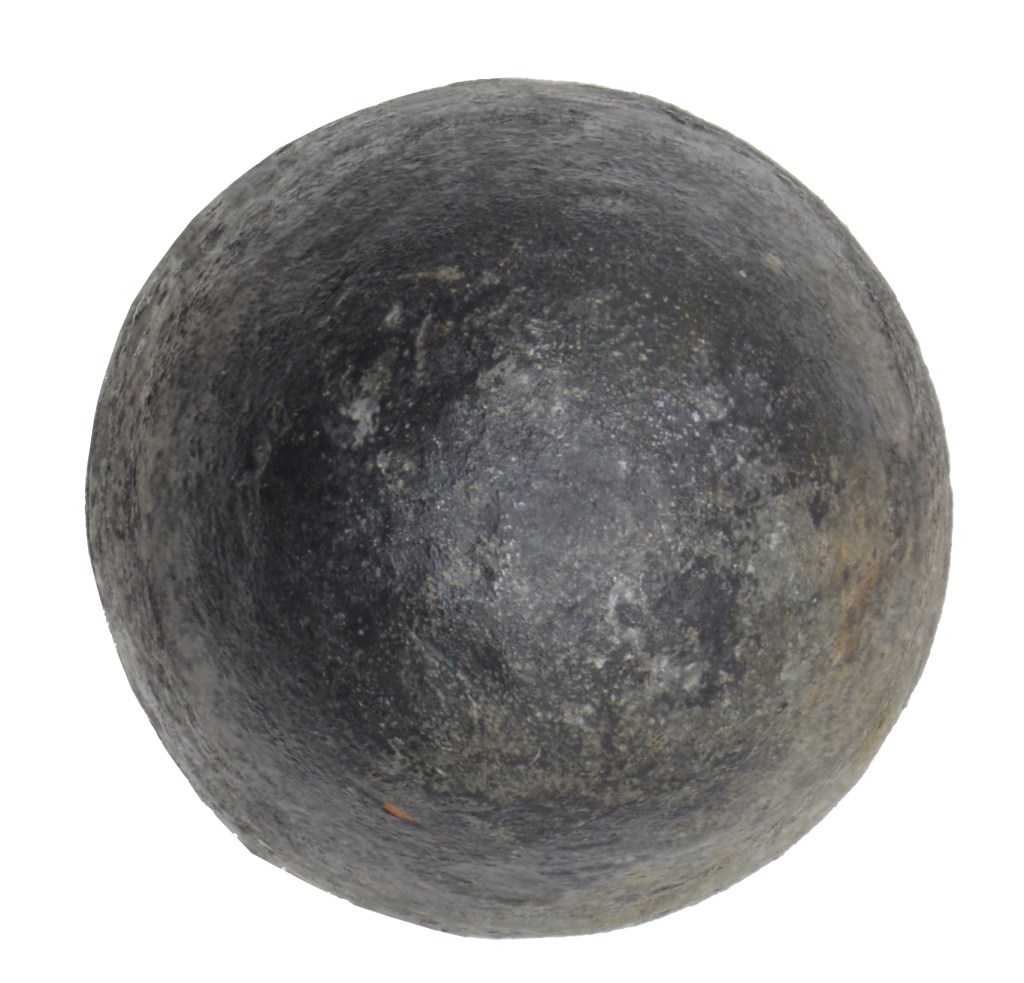
Seven rifling grooves, one cannelure (not knurled) , concave base and broad arrow stamp visible in the centre of the base.
0.65 in Gatling, fired
- Weight: 1407 gn (91.2 g)
- Diameter: 0.647 in (16.4 mm)
- Length: 1.827 in (46.4 mm)
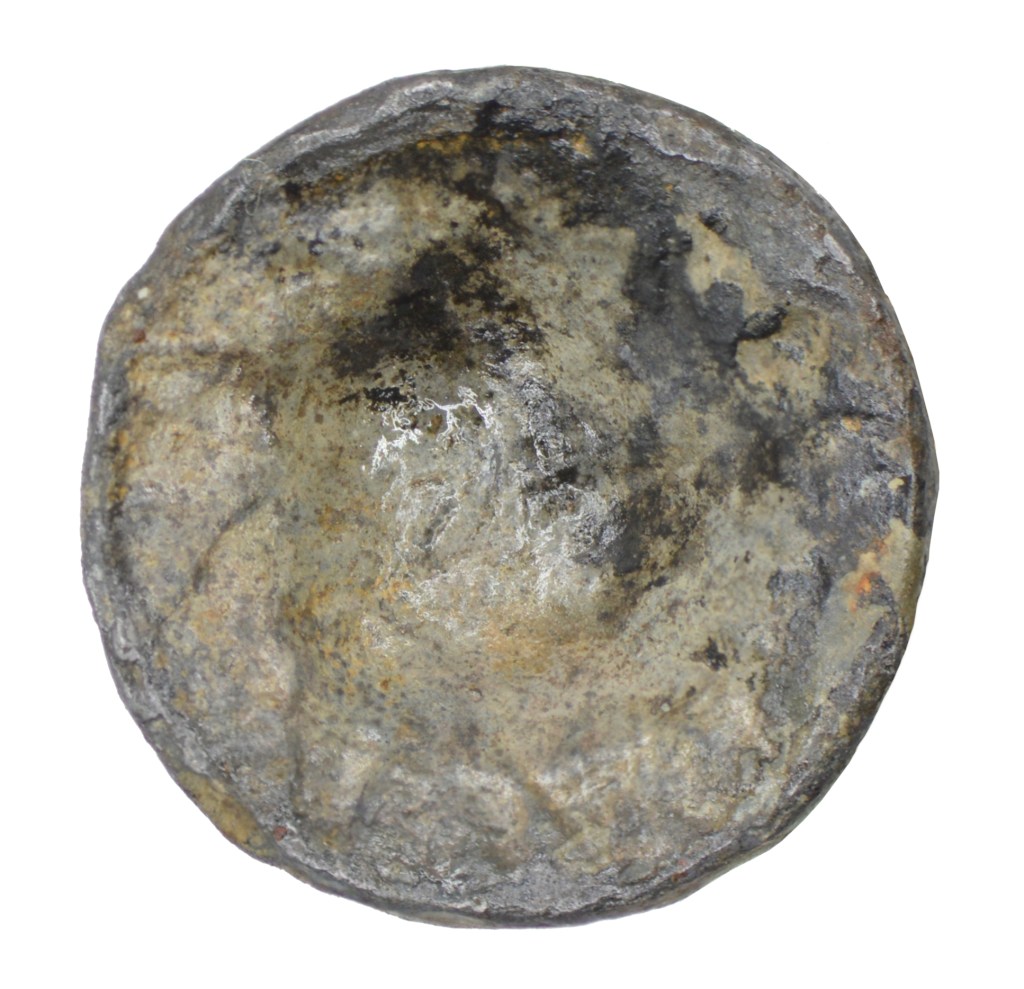
The broad arrow is just visible on the base of this bullet as well as patch marks (the patch is twisted into the base) from the ignition.
