The Whitworth 0.451 rifle (referred to as a small bore in the 1860s) was renowned for its accuracy and therefore popular with target shooters. It was taken on by the military in 1862, for an extended trial period which saw over 8000 rifles approved for service, distributed around the empire for assessment. The rifle was designed to take a mechanical fit bullet, which was hexagonal in plan – the rifling made up of facets rather than lands or grooves. The issue that hindered its adoption on a general scale was its propensity to fouling and the subsequent difficulty in loading the close-fitting bullet. A non-mechanical fit bullet, which was cylindrical (rather than hexagonal) was later manufactured and found to load and shoot well. In 1865 the tip of the bullet was made to be more rounded than earlier versions, to streamline the manufacturing process. Bullets were patched with a felt wad fixed at the base.
All of the bullets for the Whitworth rifle taken on by the military had hollow bases, with a truncated cone (slightly rounded at the top). For the commercial market there seem to have been numerous slight variations on the general form of bullet.
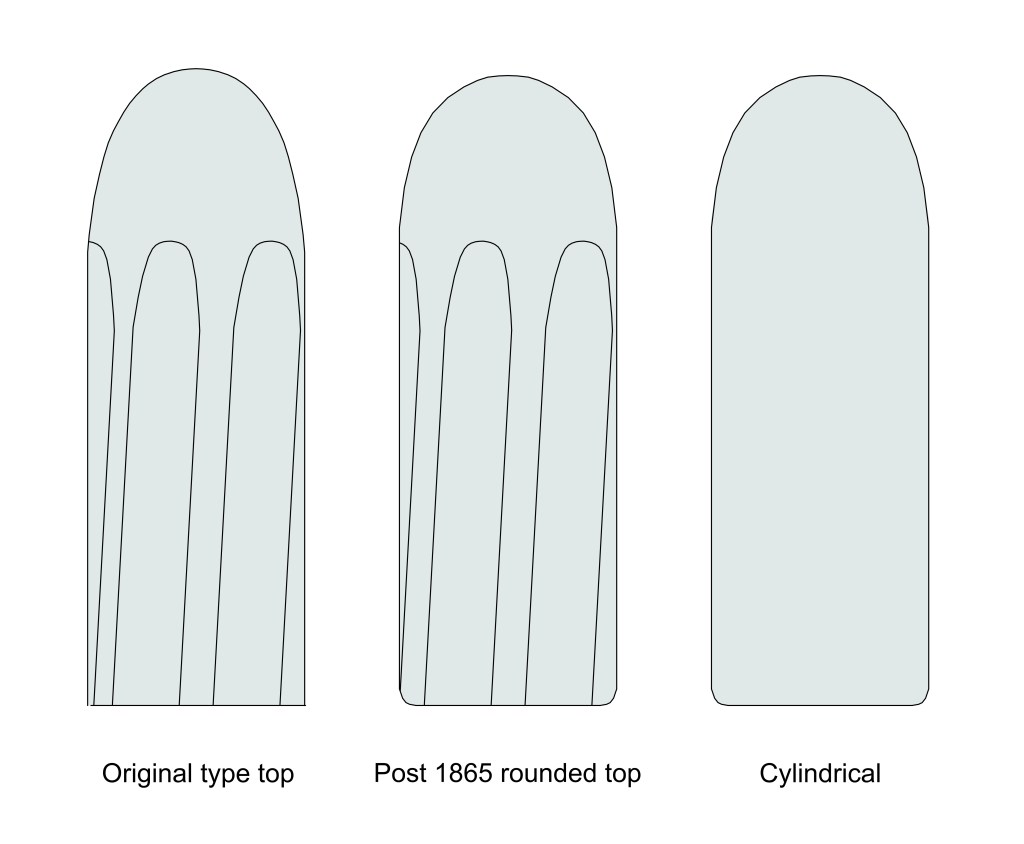
This illustration shows the earlier form of the top of the bullet on the left, as slightly more cylindro-conical, while the two examples on the right are slightly more rounded. The difference is subtle and it is likely that in factory fresh examples the difference was more pronounced.
Official weight and dimensions: (from The British Soldier’s Firearm 1850-1864, Roads 1964).
- Weight: 530 gn (34.3 g)
- Diameter (across facets): 0.442 (11.2 mm)
- Length: 1.292 (32.8 mm)
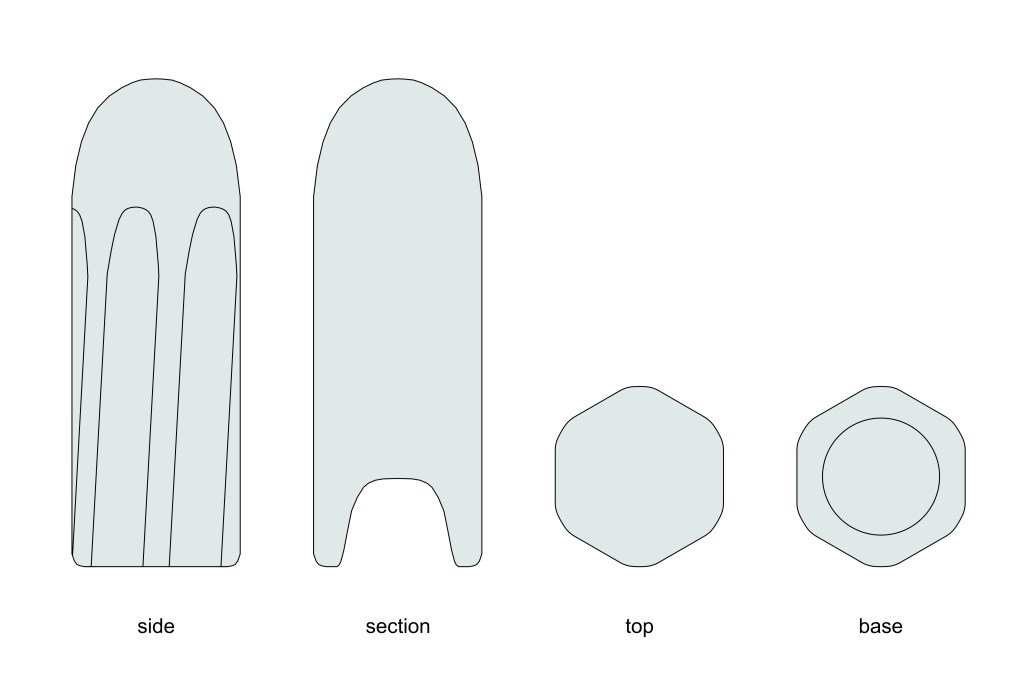
This illustration shows the rounded nose bullet. The section shows the base cavity and the plans highlight the hexagonal form.
Whitworth bullet, flat base, unfired.
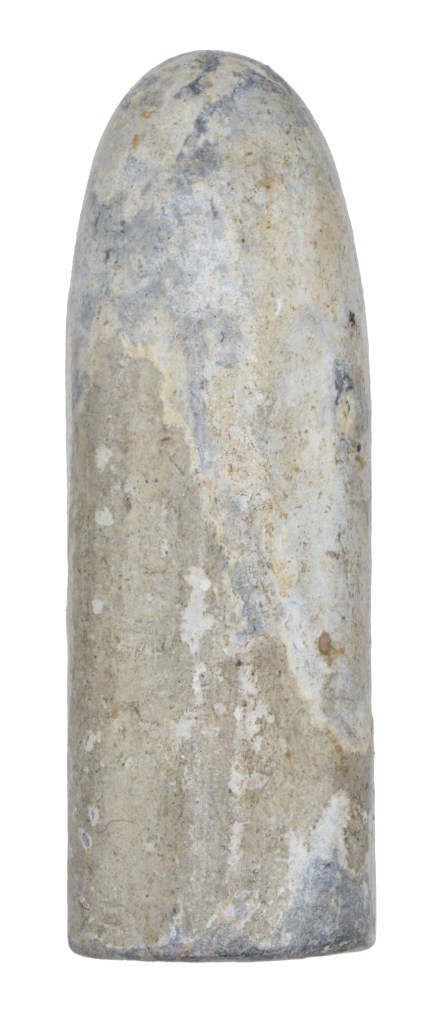
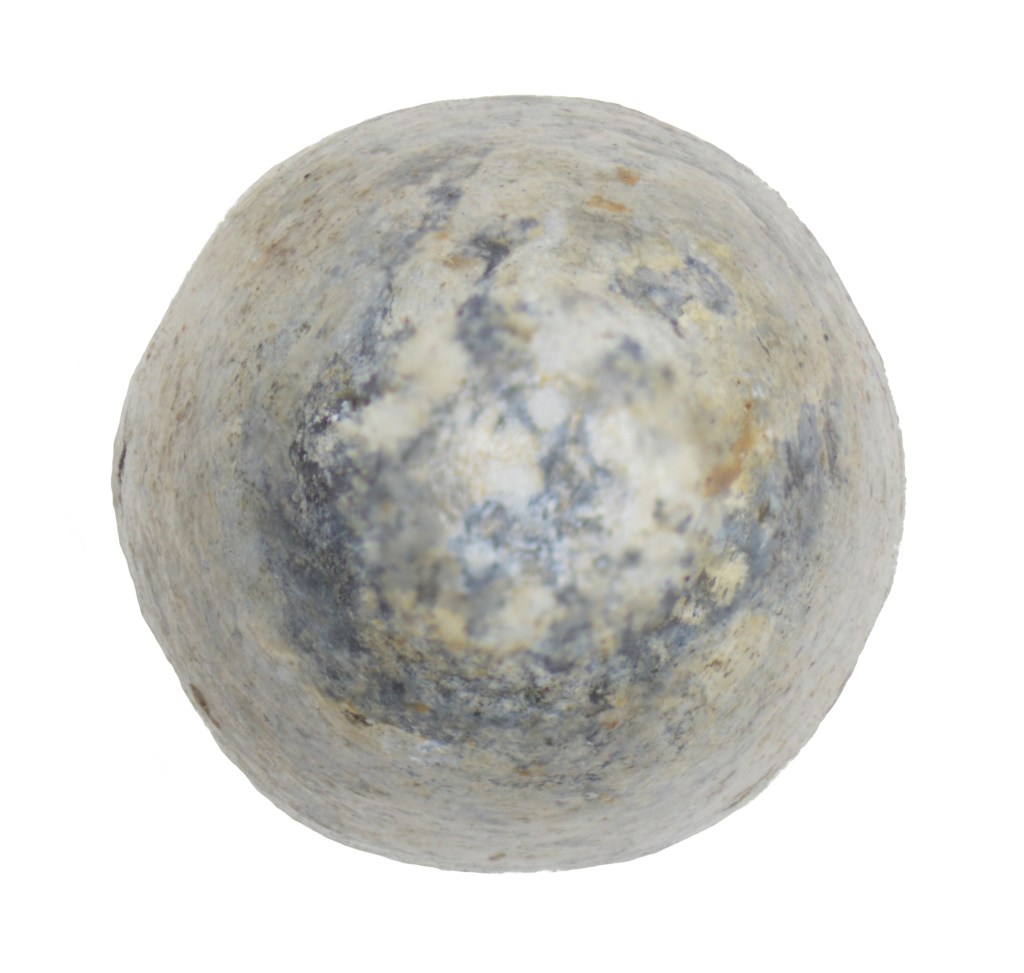
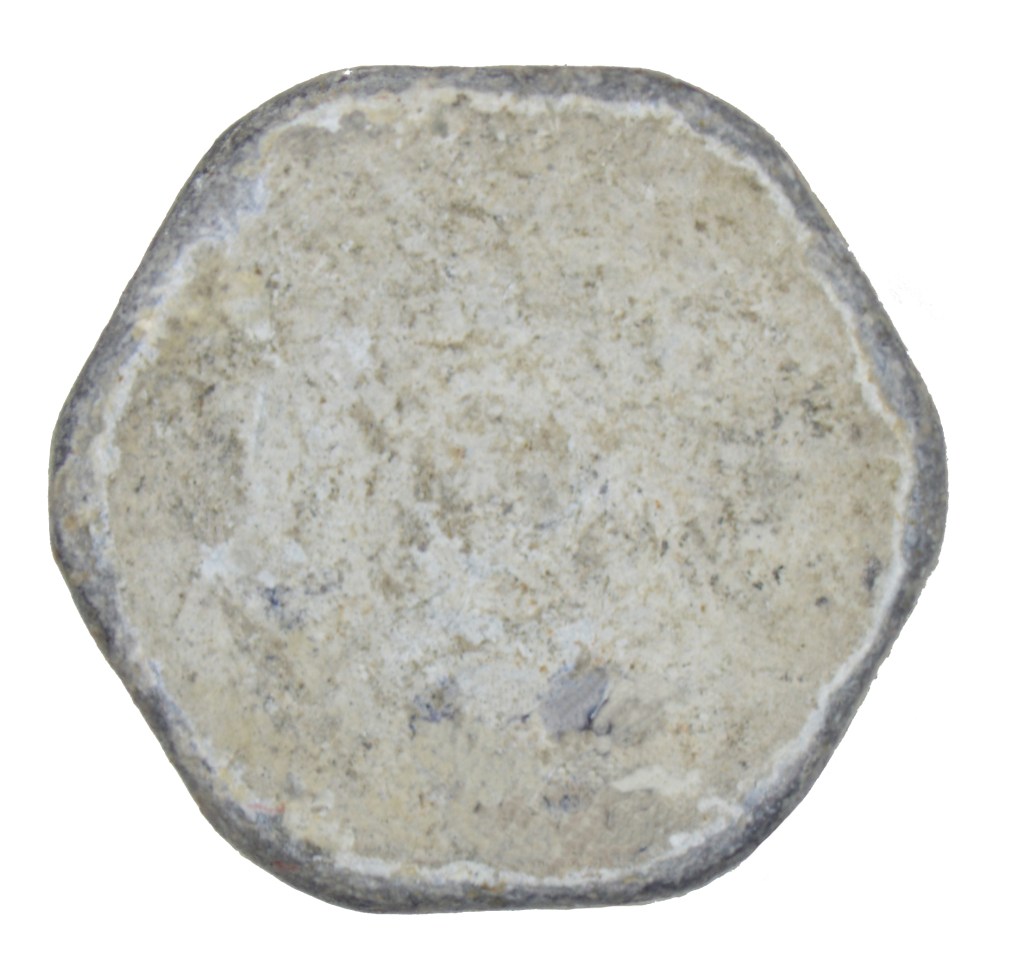
- Weight: 521 gn (34.4 g)
- Diameter across flat facets: 0.447 in (11.3 mm)
- Diameter across ridges between facets: 0.472 in (12 mm)
- Length: 1.324 in (33.6 mm)
This unfired example shows the slightly extended nose of the earlier bullet, but the flat base suggests that it was not a military pattern projectile, instead made for commercial use.
Whitworth bullet, base cavity, fired.
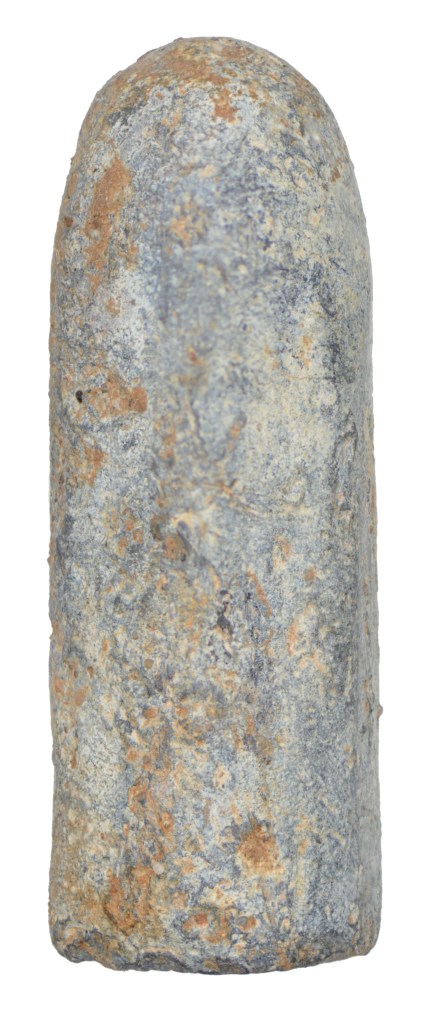
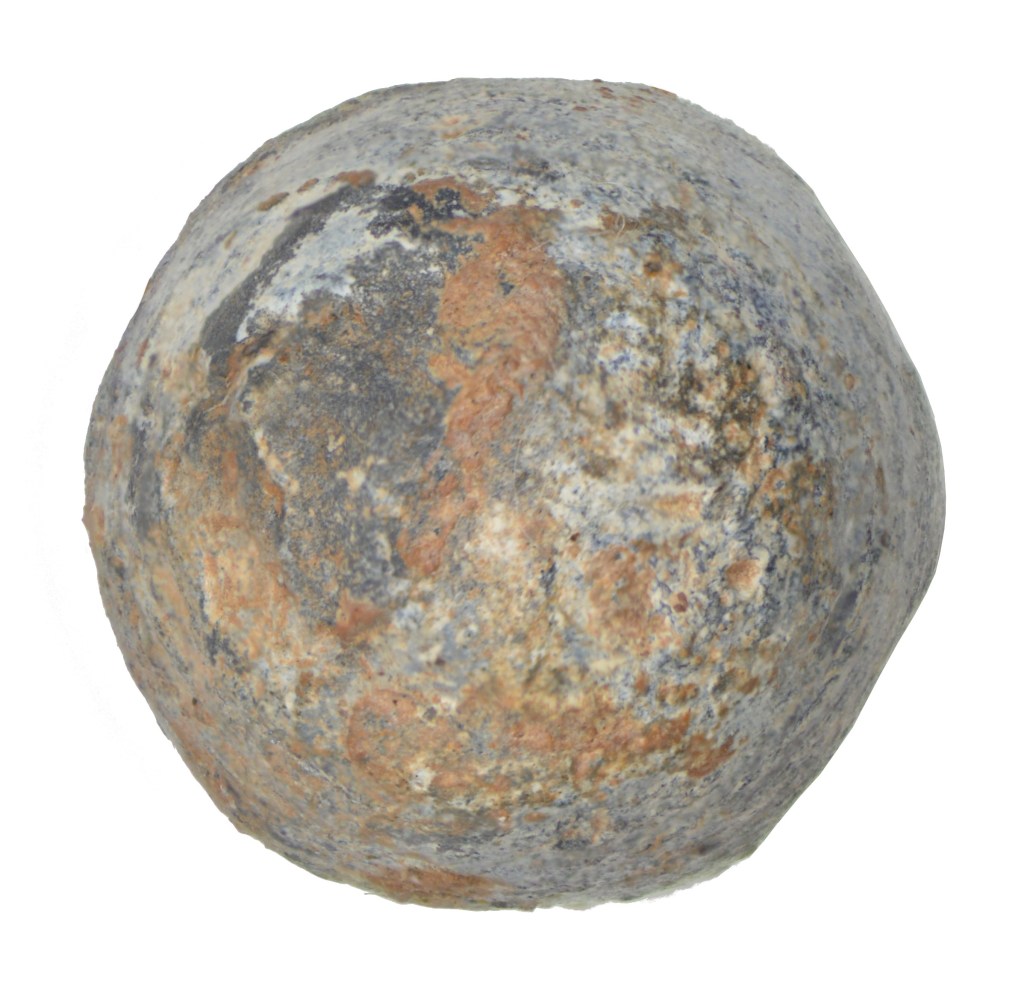
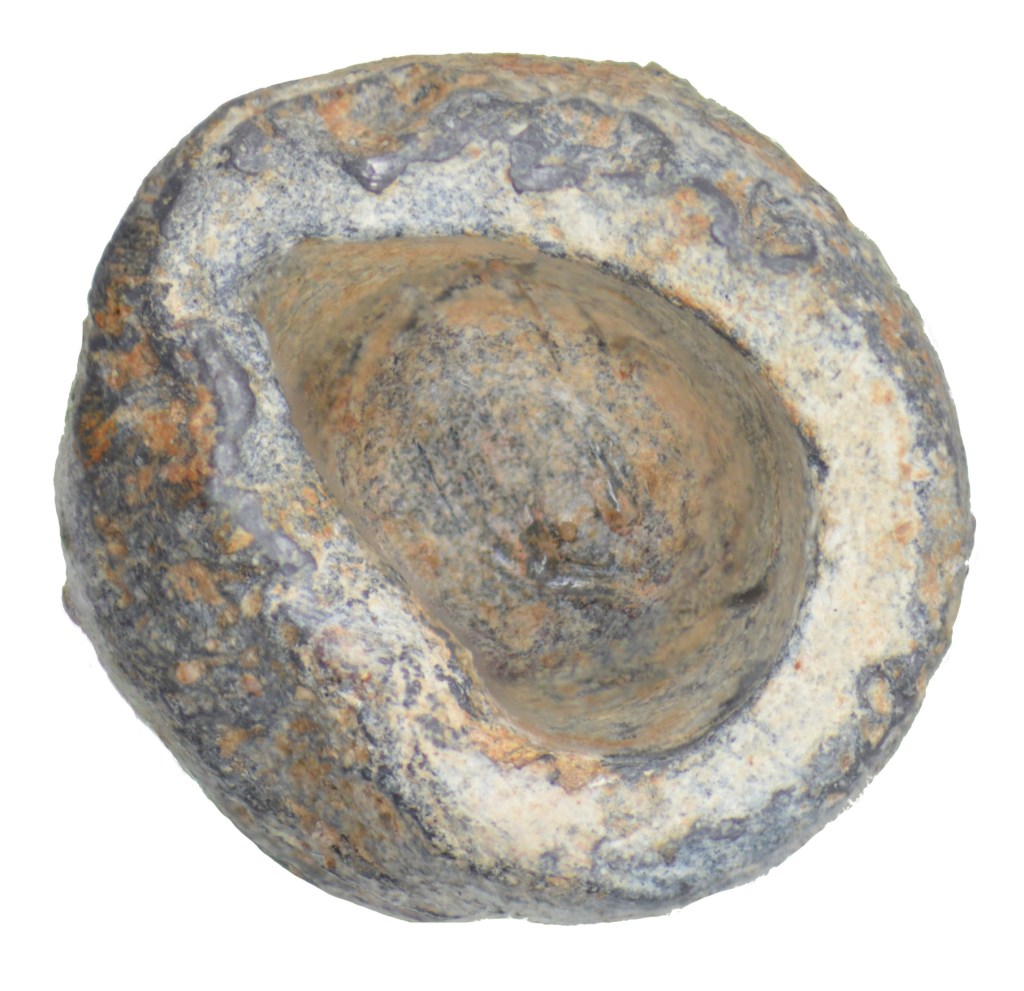
- Weight: 522 gn (34.8 g)
- Diameter across flat facets: 0.451 in (11.4 mm)
- Diameter across ridges between facets: 0.483 in (12.3 mm)
- Length: 1.308 in (33.2 mm)
This example exhibits the hollow base and the post 1865 rounded nose. The facets here are well formed, especially at the top where they merge into the decreasing diameter, at the nose of the bullet. This would suggest this was formed as the mechanical fit variety.
Whitworth bullet, base cavity, fired.
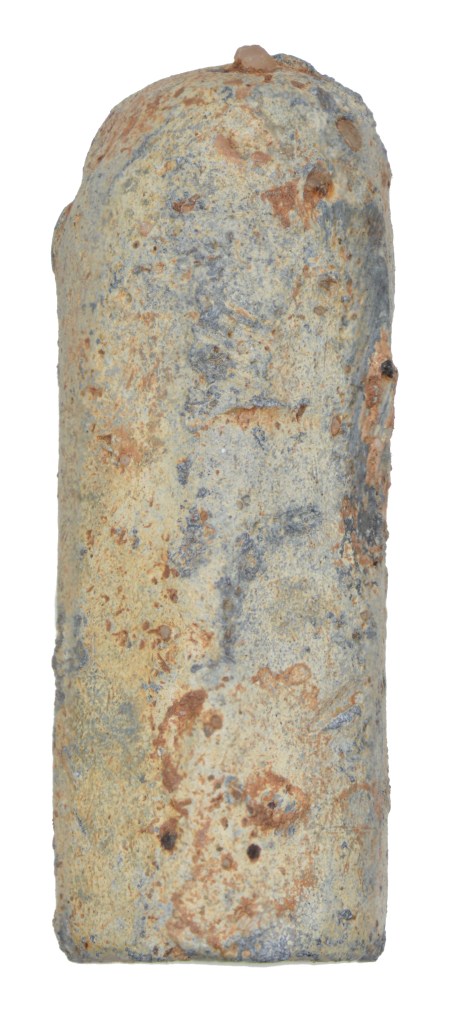
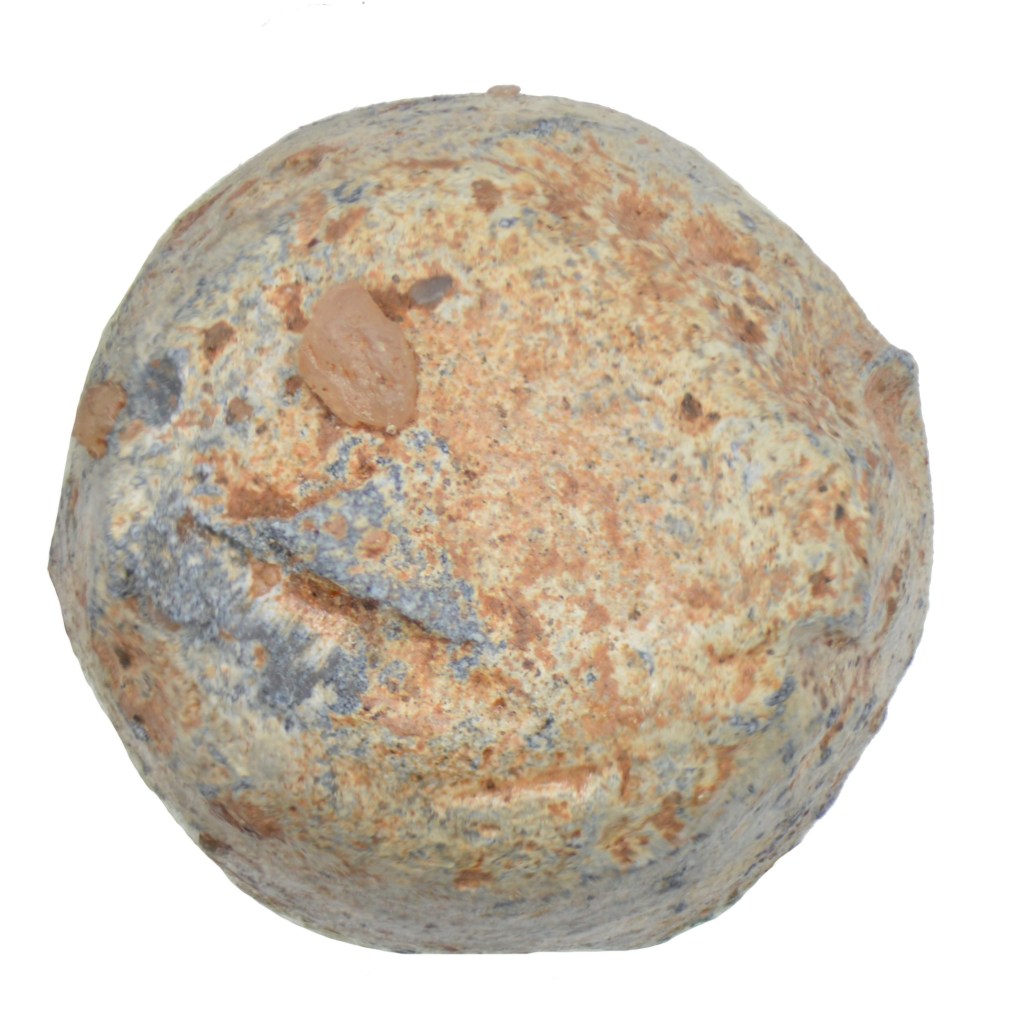
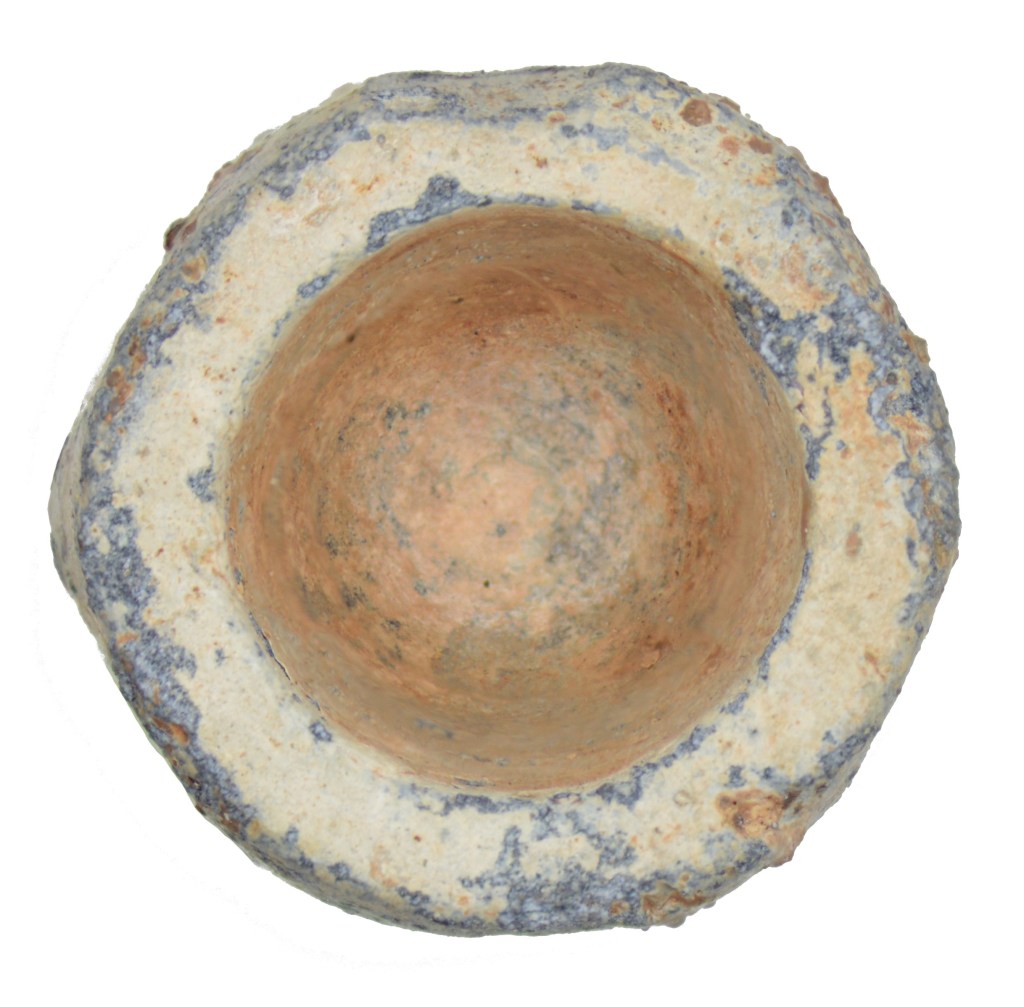
- Weight: 523 gn (33.9 g)
- Diameter across flat facets: 0.451 in (11.4 mm)
- Diameter across ridges between facets: 0.476 in (12.1 mm)
- Length: 1.249 in (31.7 mm)
The facets on this example blend seamlessly into the top part of the bullet (unlike the text-book rounded top visible in the example above), suggesting that this may have originally been a cylindrical projectile. The hexagonal rifling has therefore been picked up on firing.
Whitworth bullet, base cavity, fired
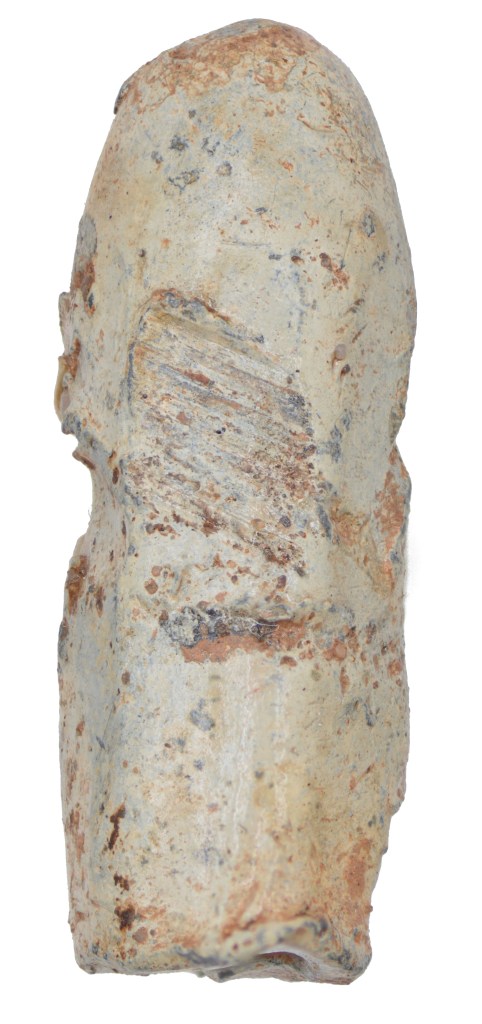
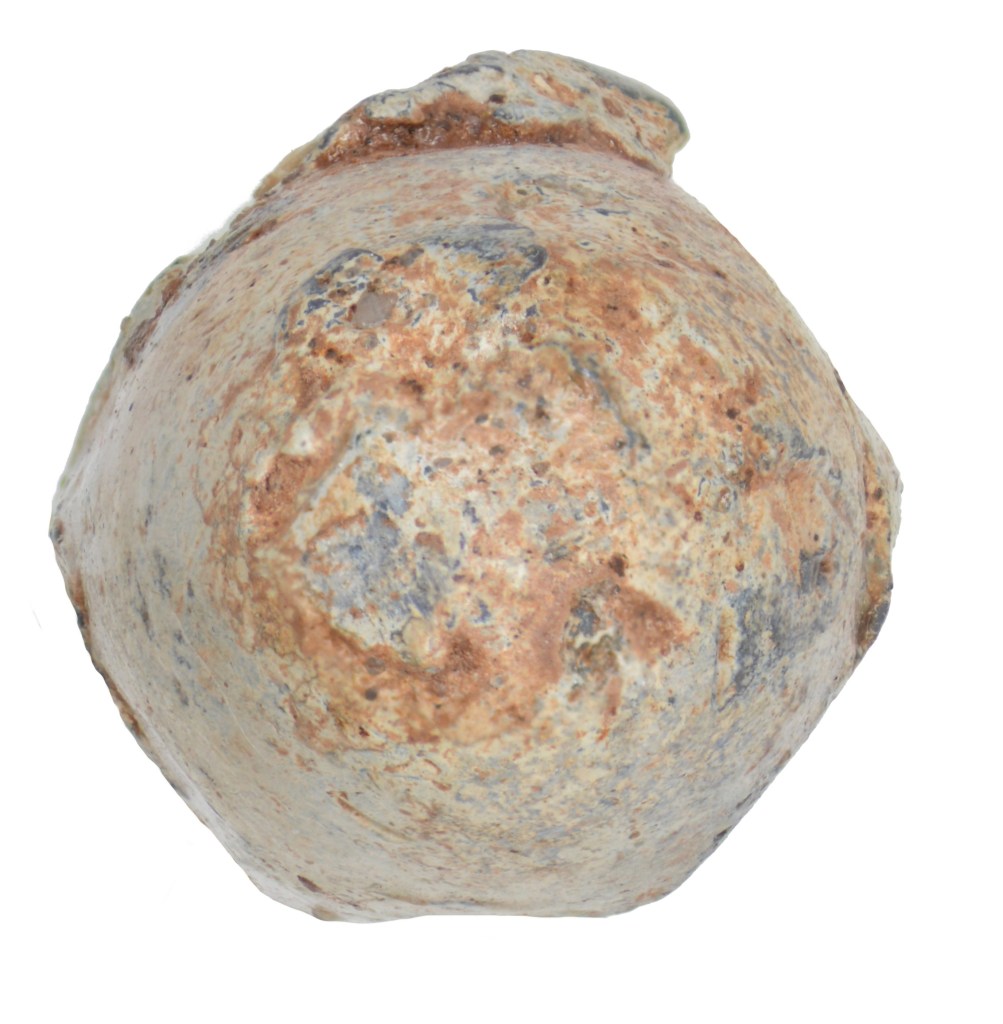
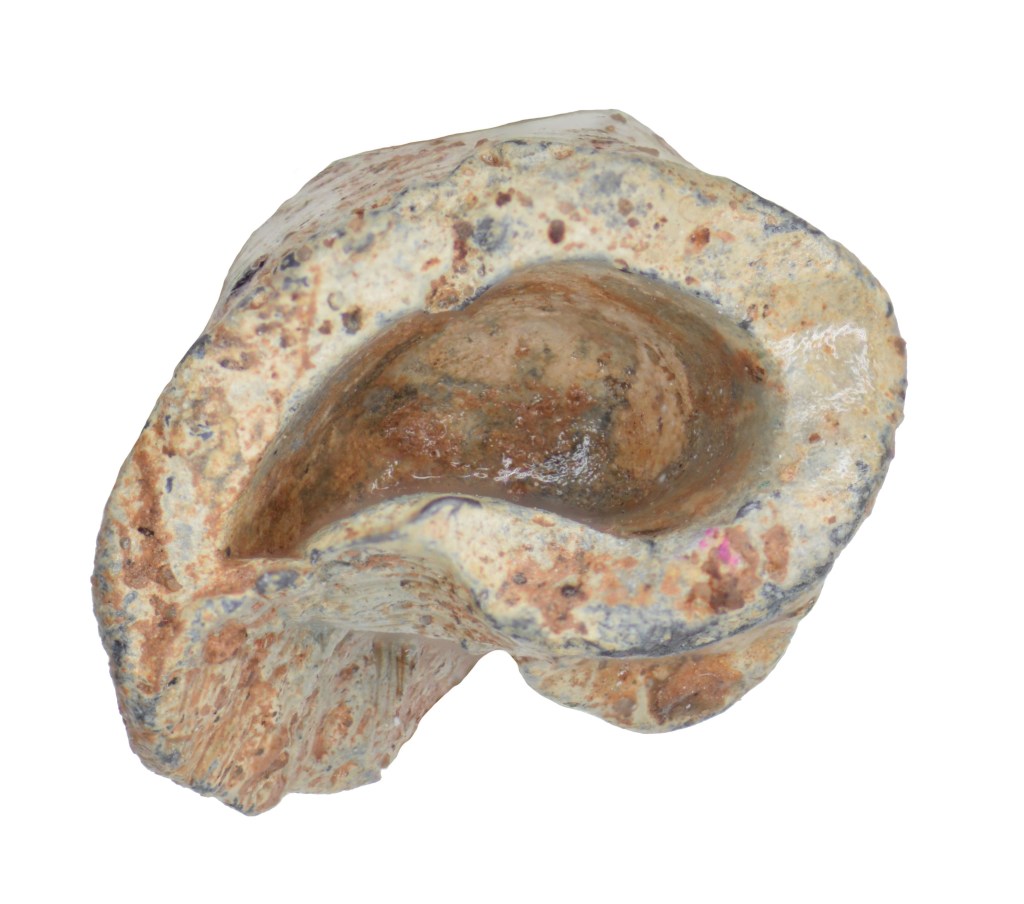
- Weight: 524 gn (33.9 g)
- Diameter across flat facets: n/a
- Diameter across ridges between facets: n/a
- Length: 1.294 in (32.9 mm)
This poor bullet has suffered numerous side impacts. The nose suggests the earlier, less rounded format and the rifling is so perfect it appears to have been the mechanical fit version.
