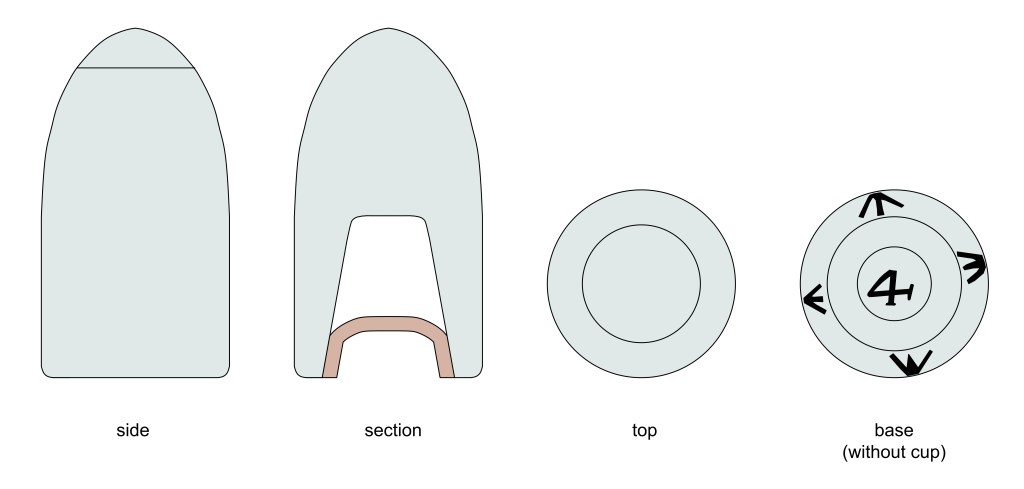
The 2nd pattern (1855 iron cup) saw a reversion to the iron cup system and a new cavity shape was created, in the shape of a deep truncated cone. Stamps were now uniformly added to the dies, relating to the press they were made on, to allow a tracing process should there be a problem with a batch of bullets. These were made only for a few months in 1855.
Official weight and dimensions (information from A Treatise on Military Small Arms and Ammunition 1884).
- Weight: 530 gn (34.3 g)
- Diameter: 0.568 (14.4 mm)
- Length: not known, but given the extended base cavity, longer than the 1st pattern.
2nd pattern iron cup 1855, unfired.
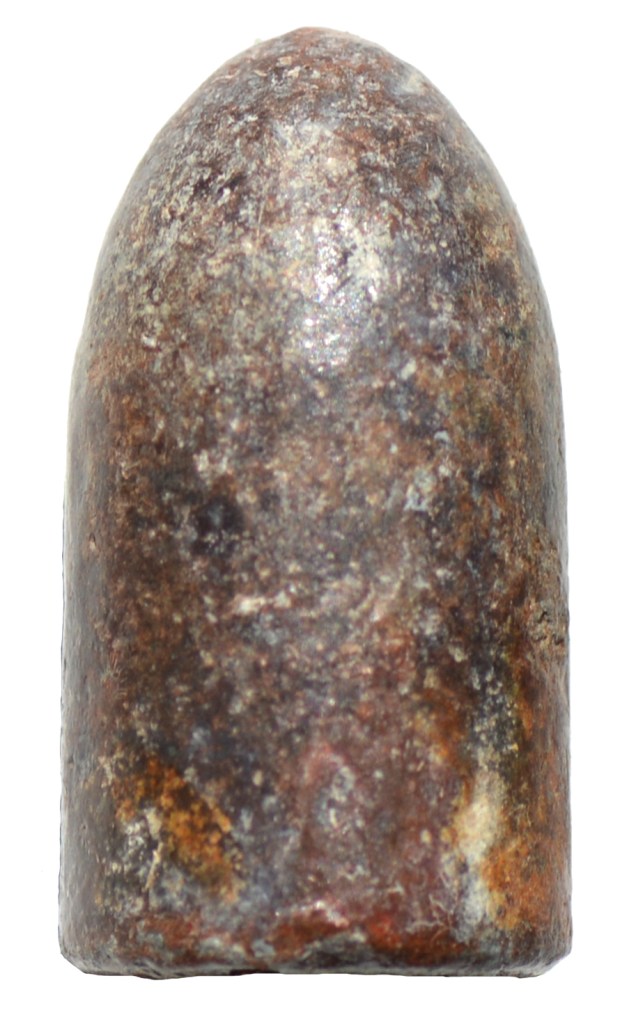
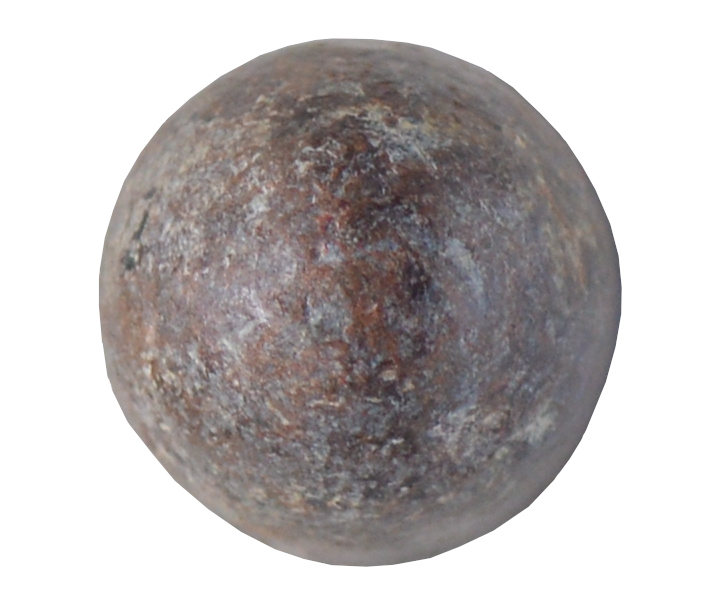
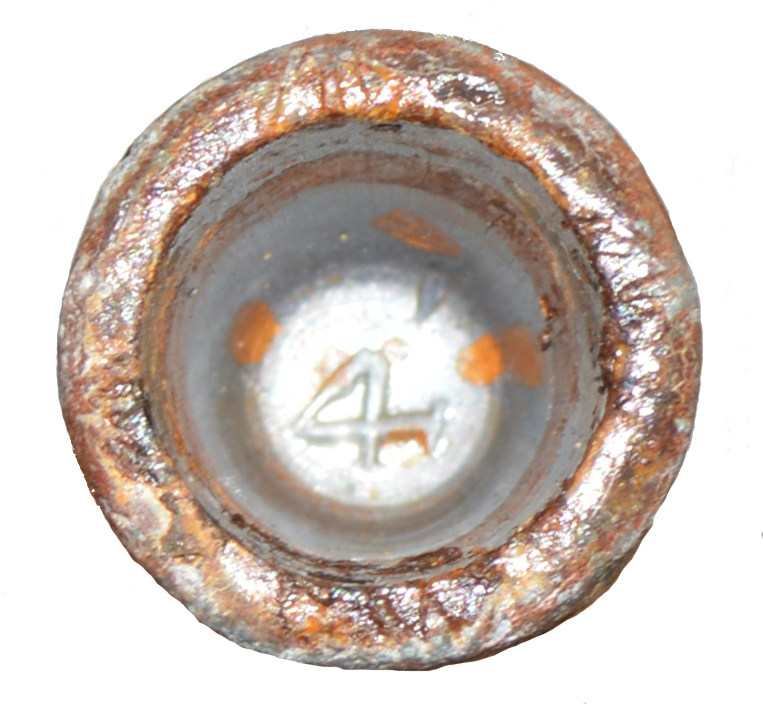
- Weight (without cup): 513 gn (33.2 g)
- Weight (with cup): 528 gn (34.2 g)
- Diameter: 0.571 in (14.5 mm)
- Length: 1.065 in (27 mm)
Clearly visible on this unfired specimen is the ejector ring mark on the tip, the ‘4’ in the base cavity and the four broad arrows around the rim of the cavity.
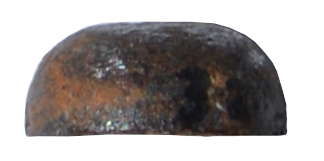
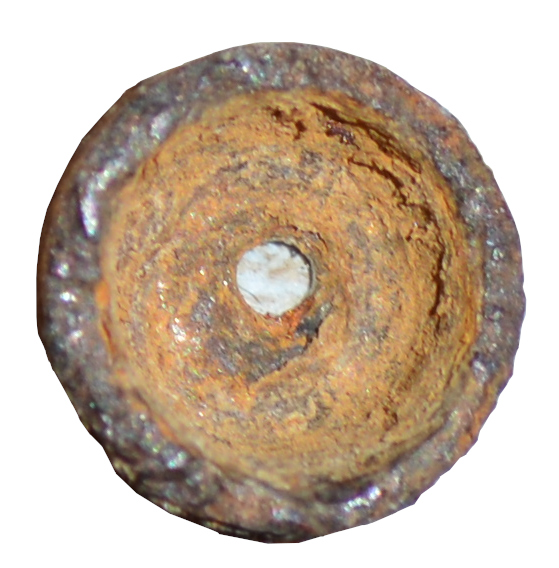
The iron cup 15 gn in weight and 0.4 in (10 mm) wide and 0.190 in (4.8 mm) deep. The hole in the centre is not original, but part of the process of extracting the rusty cup from the bullet.
2nd pattern iron cup 1855, fired.
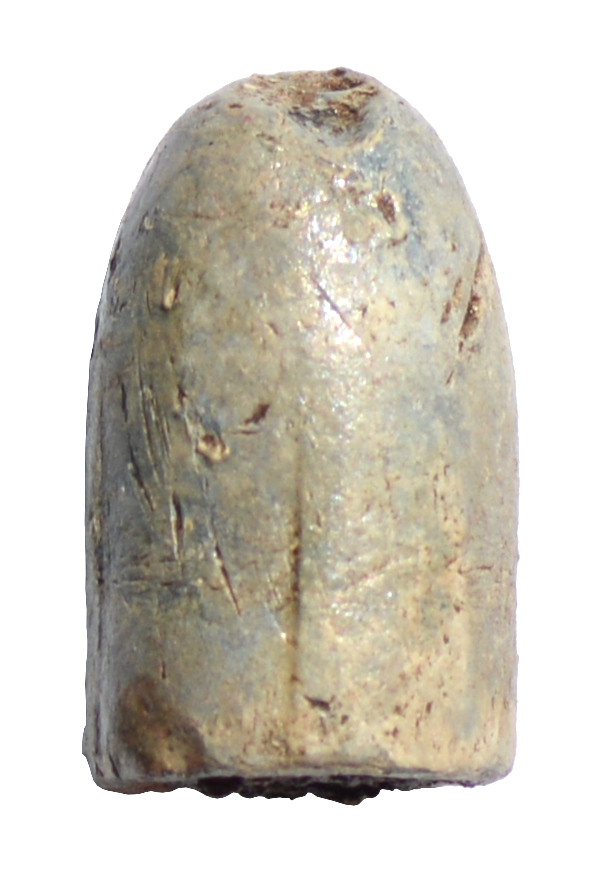
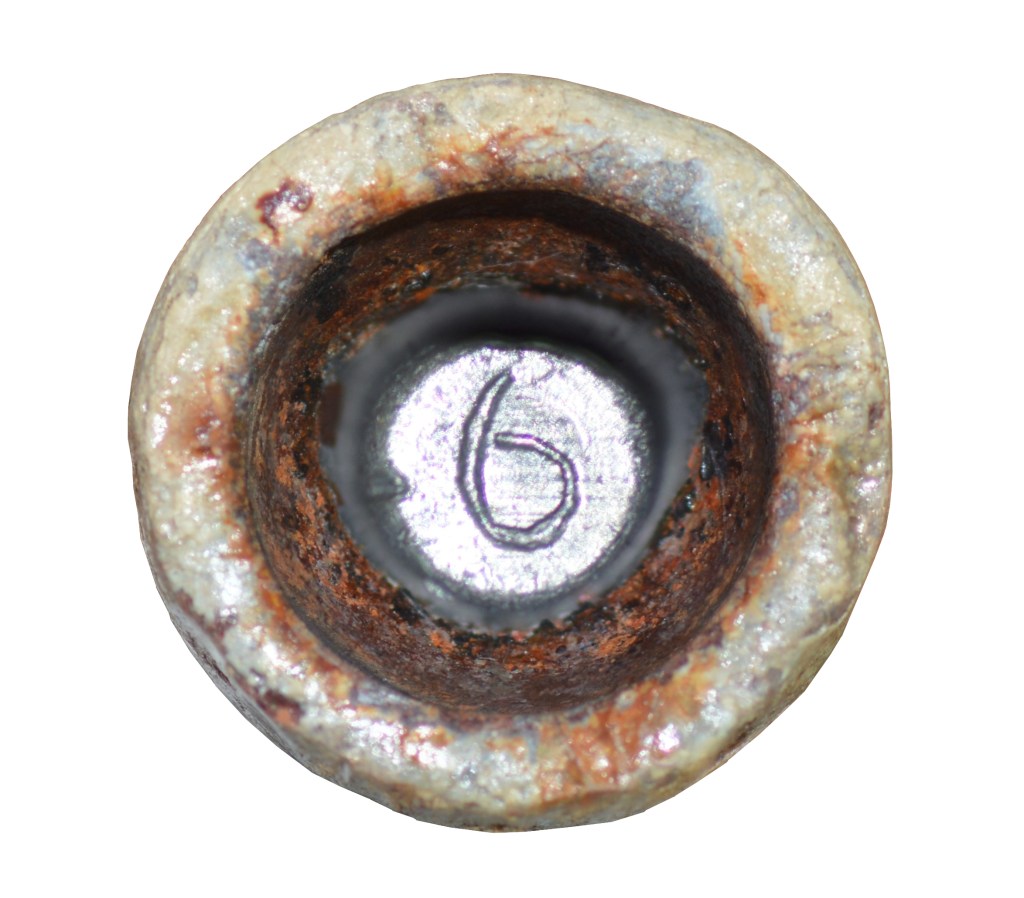
- Weight (without cup): 515 gn (33.3 g)
- Weight (with cup): 532 gn (34.4 g)
- Diameter: 0.580 in (14.7 mm)
- Length: 0.975 in (24.8 mm)
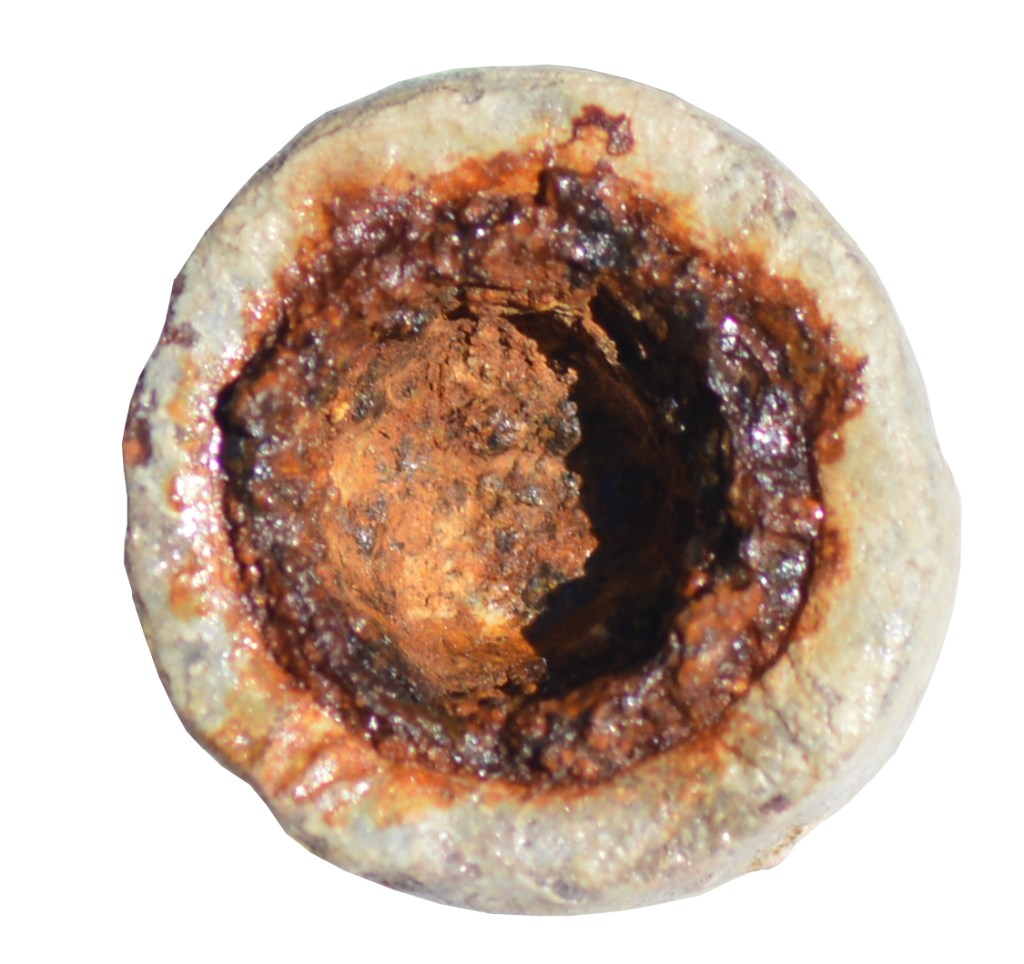
This photos of this fired example show the base prior to the removal of the cup and after the removal, revealing the ‘6’ in the cavity. There are four broad arrows around the rim.
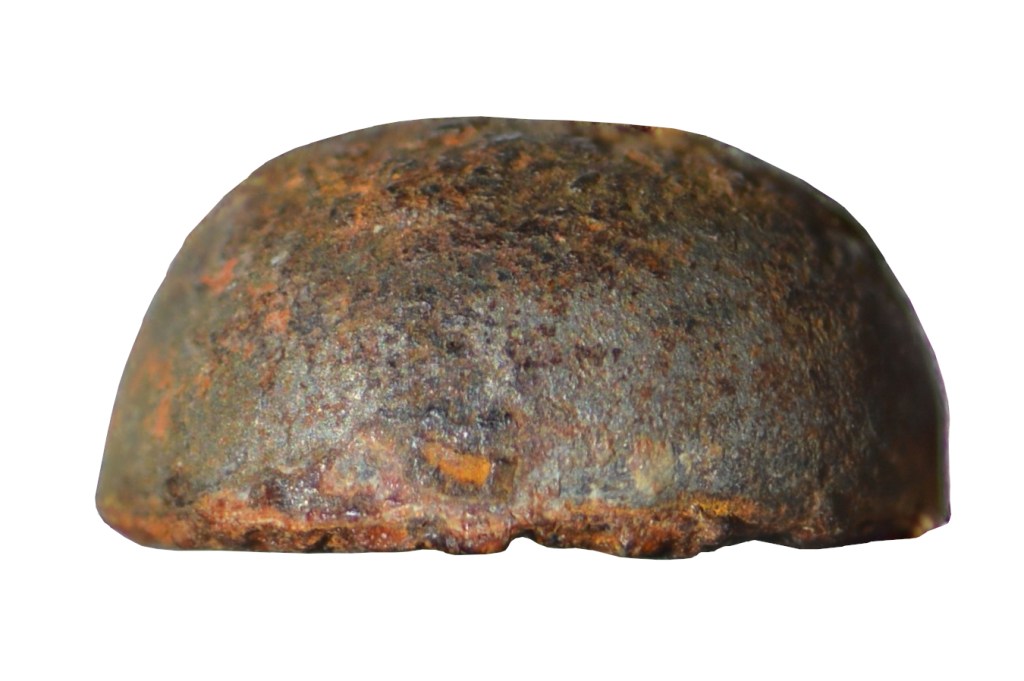
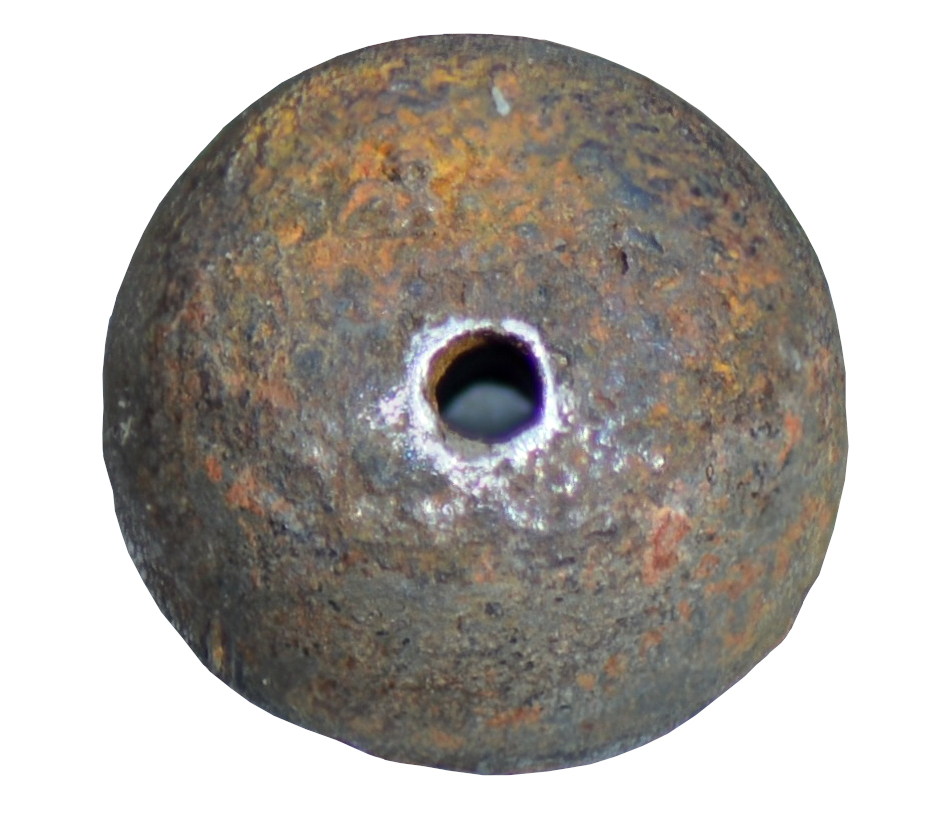
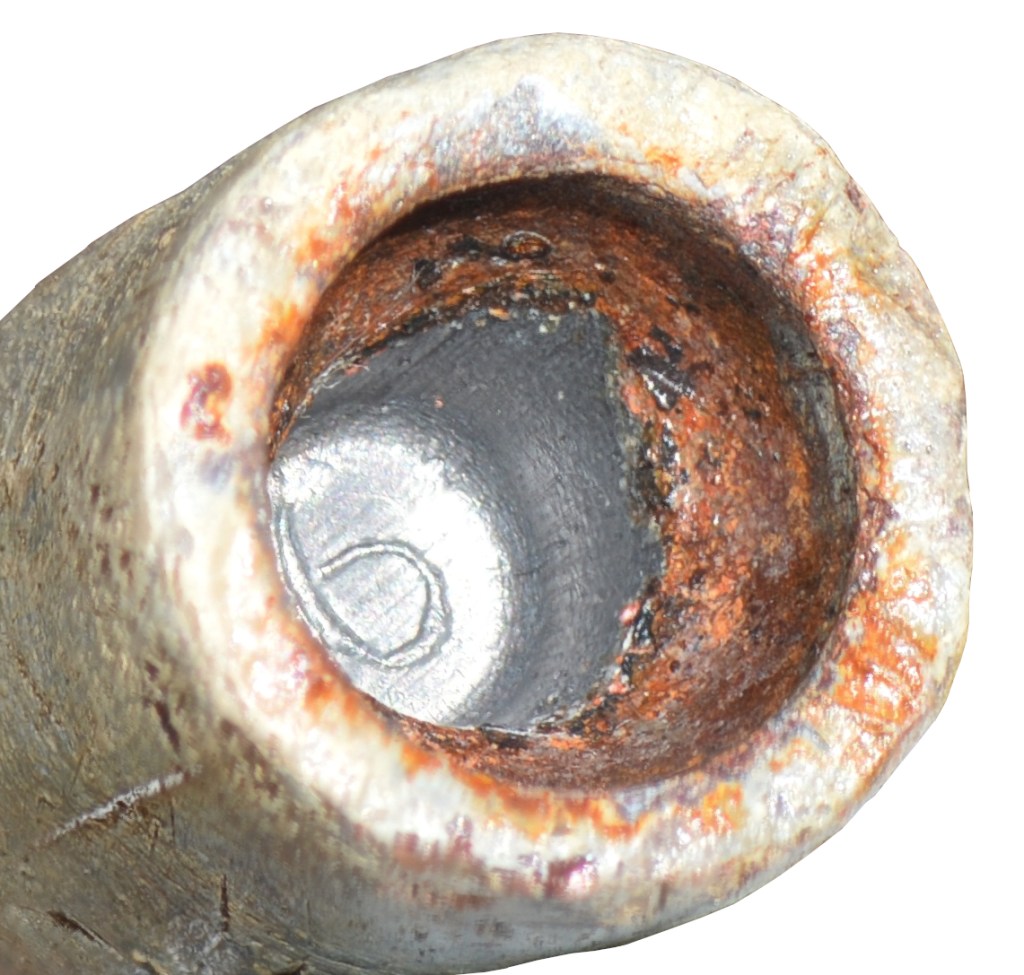
The iron cup appears to be slightly more hemispherical than the previous version. The third photograph shows the clear impression that the cup has made in the cavity, despite not pushing very far into it.
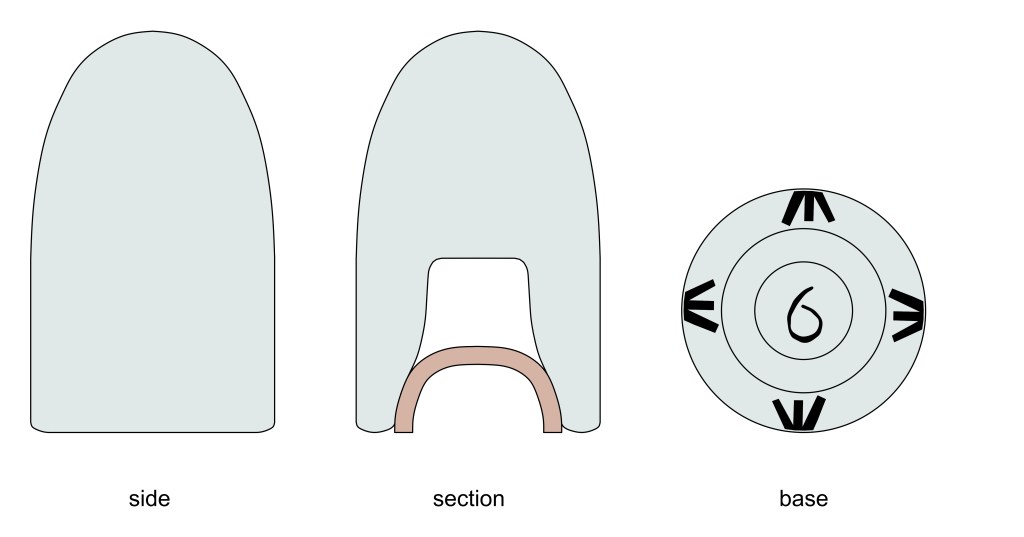
It can be seen from these drawings that the iron cup has not advanced into the cavity, on firing. What does appear to have happened is that the whole rear end has been compressed forwards, before the inertia of the bullet has been overcome, hence the swelling of the internal cavity and the overall shorter length of the bullet.
2nd pattern iron cup 1855
