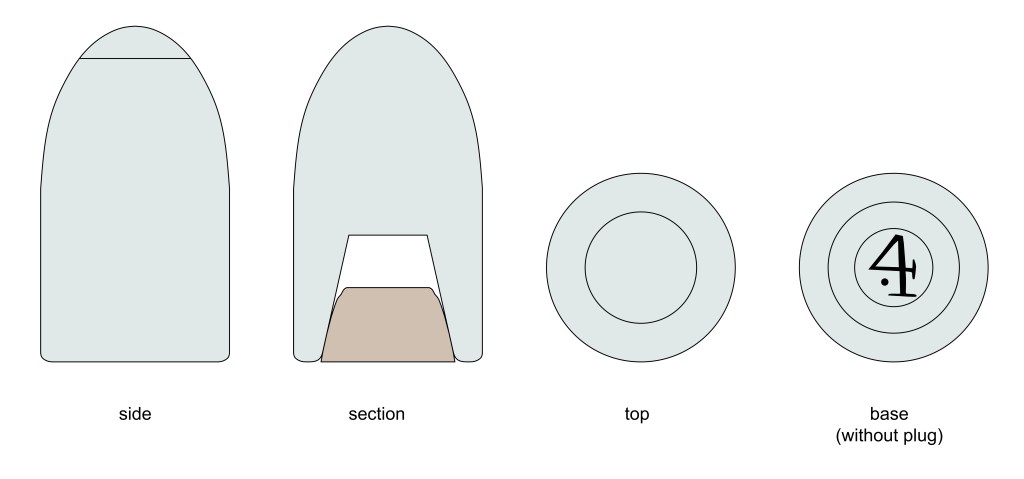
The 3rd pattern P53 bullet was an attempt to improve the iron cup system: it was found that wooden plugs performed better and pushed evenly into the cavity (iron cups had been observed being wedged in at odd angles, suggesting their progress into the cavity was not uniform around the edge). The cavity was not quite as deep as in the iron cup bullet, but the stamps were retained. This was introduced at the end of 1855.
Note the wooden plug in the cavity in the illustration above. On this example there are no broad arrows on the rim of the cavity.
Official weight and dimensions (information from A Treatise on Military Small Arms and Ammunition 1884).
- Weight: 530 gn (34.3 gn)
- Diameter: 0.568 in (14.4 mm)
- Length: 1.05 in (26.6 mm)
3rd pattern wooden plug, fired
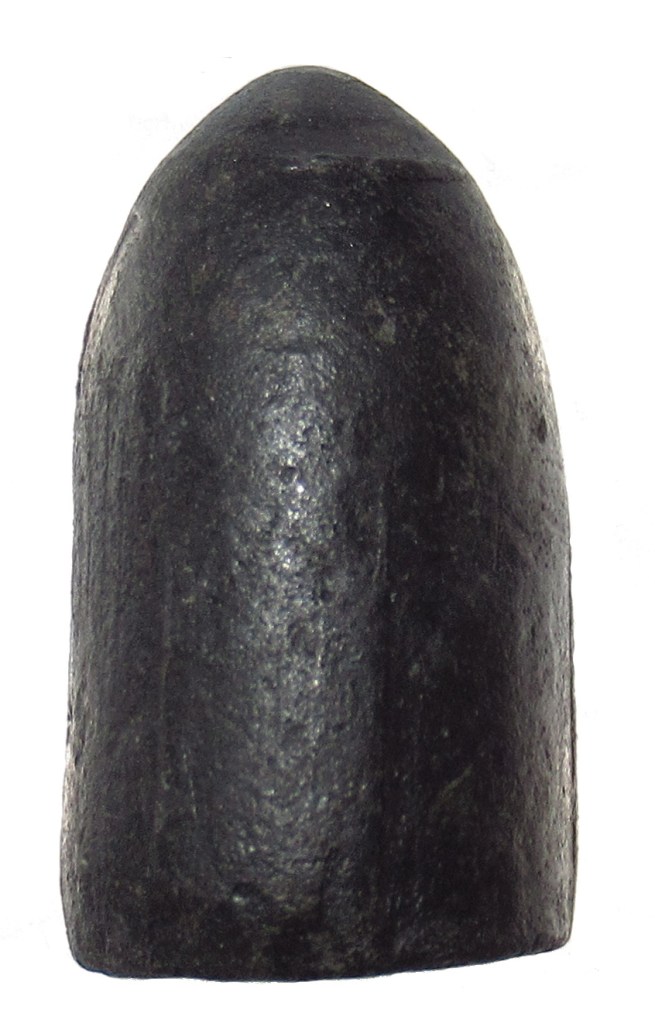
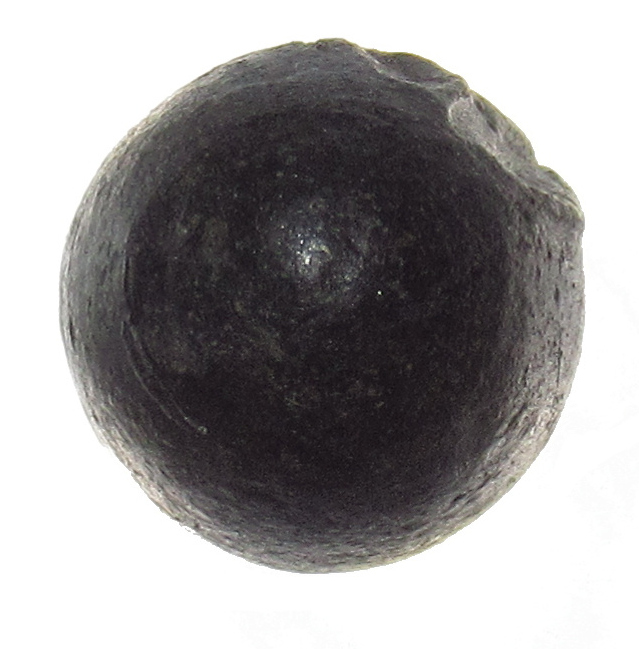
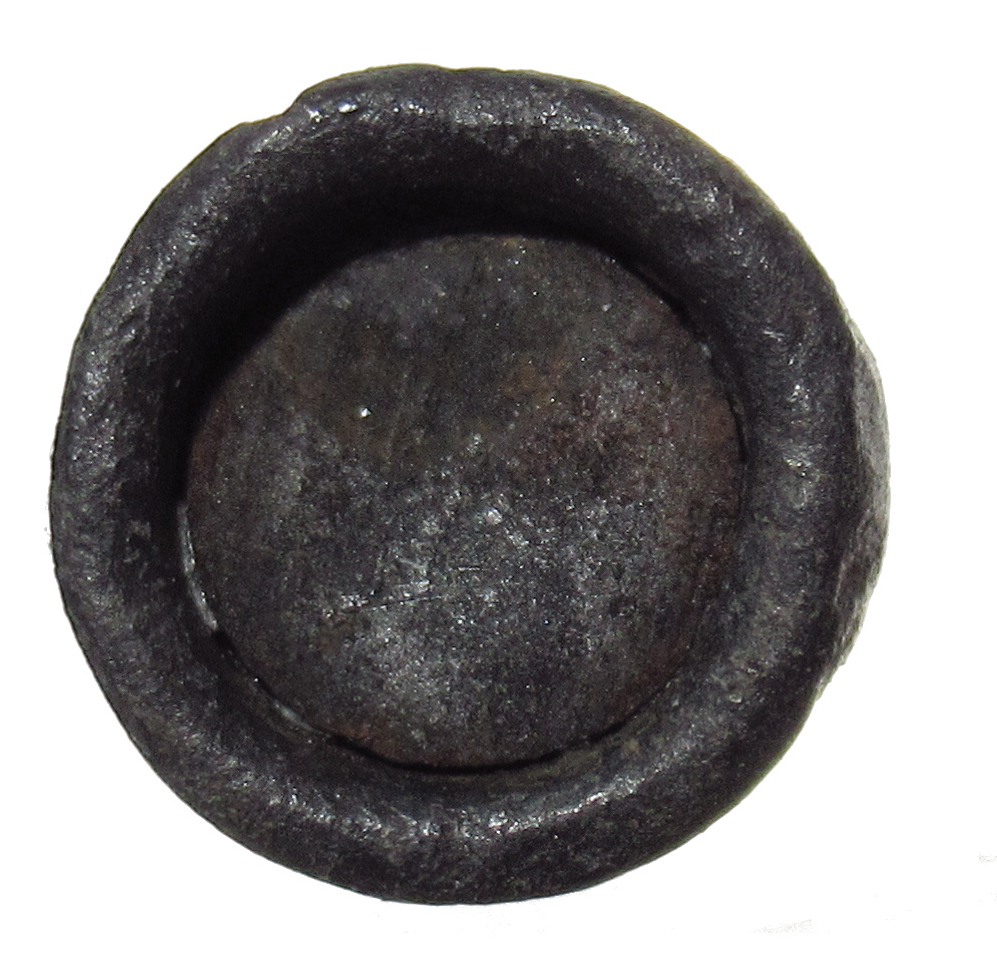
This fired 3rd pattern bullet has a wooden plug, pushed into the cavity to a depth of .1 in (2.6 mm). This highlights the difference between the expansion benefits to the bullet of the wooden plug over the iron cup (see the fired bullet on 2nd pattern P53 iron cup page). There is slight ram rod damage to the tip of the bullet.
- Weight (with plug): 528 gn (34.2 g)
- Weight (without plug): 522 gn (33.8 g)
- Diameter: 0.585 in (14.8 mm)
- Length: 1.033 in (26.2 mm)
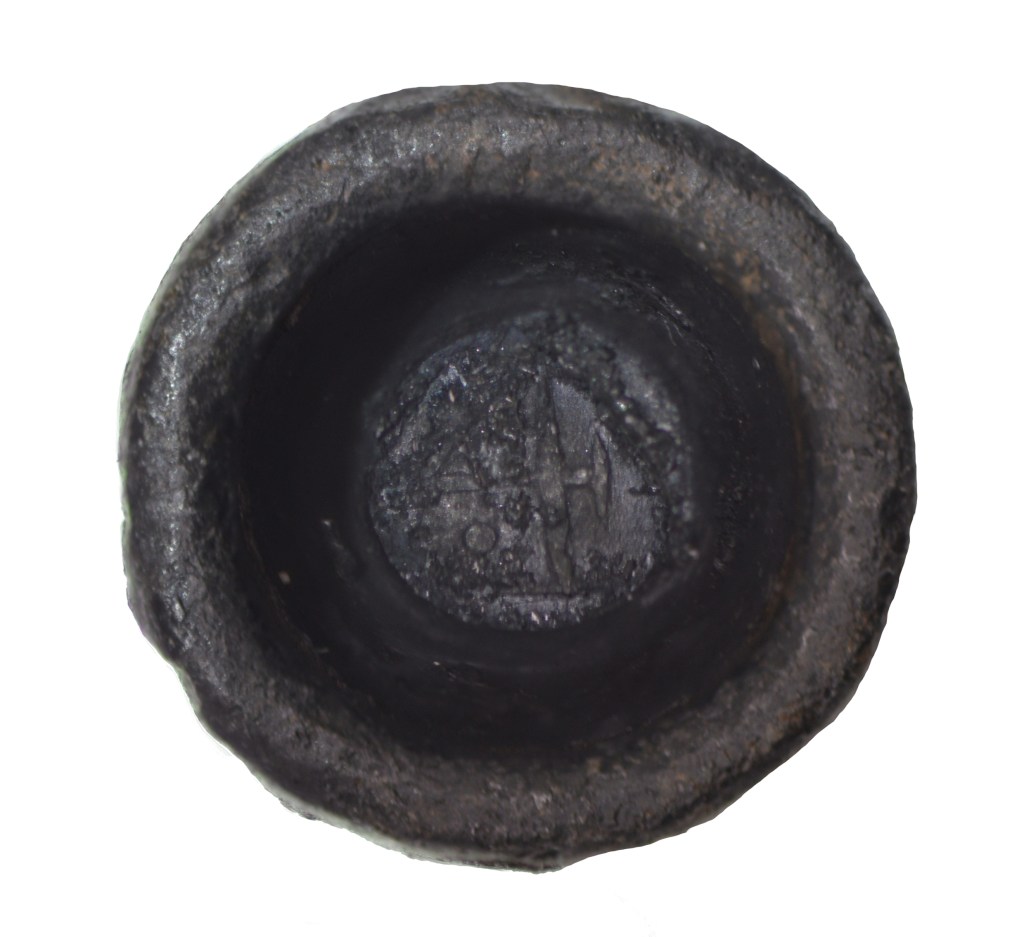
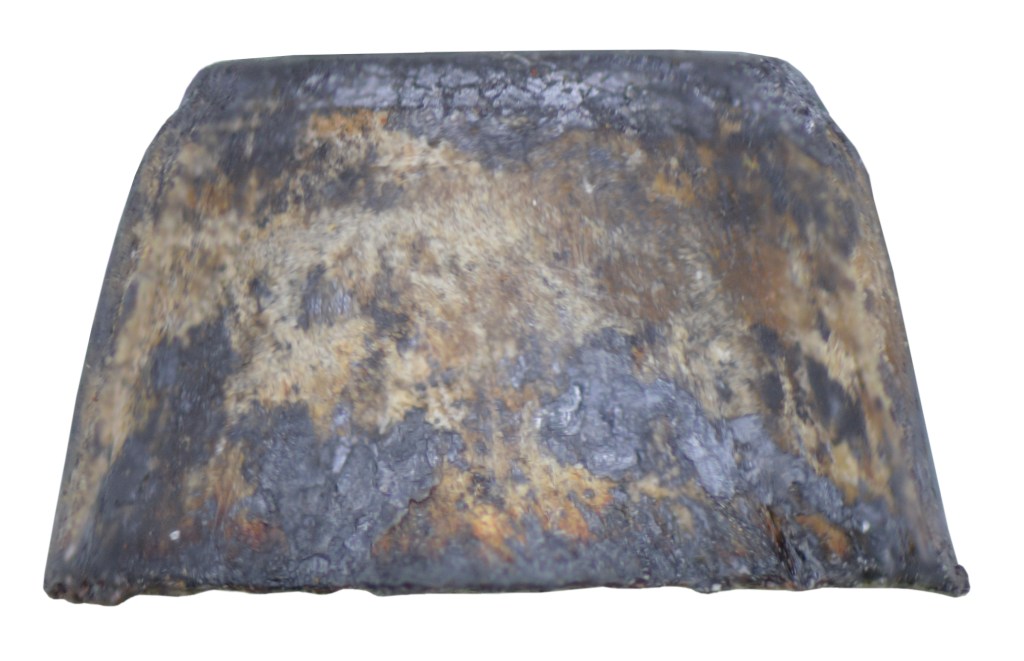
The same bullet as above, but with the wooden plug removed, showing the ‘.4’ in the cavity. There are broad arrows visible on the rim.
3rd pattern wooden plug, fired
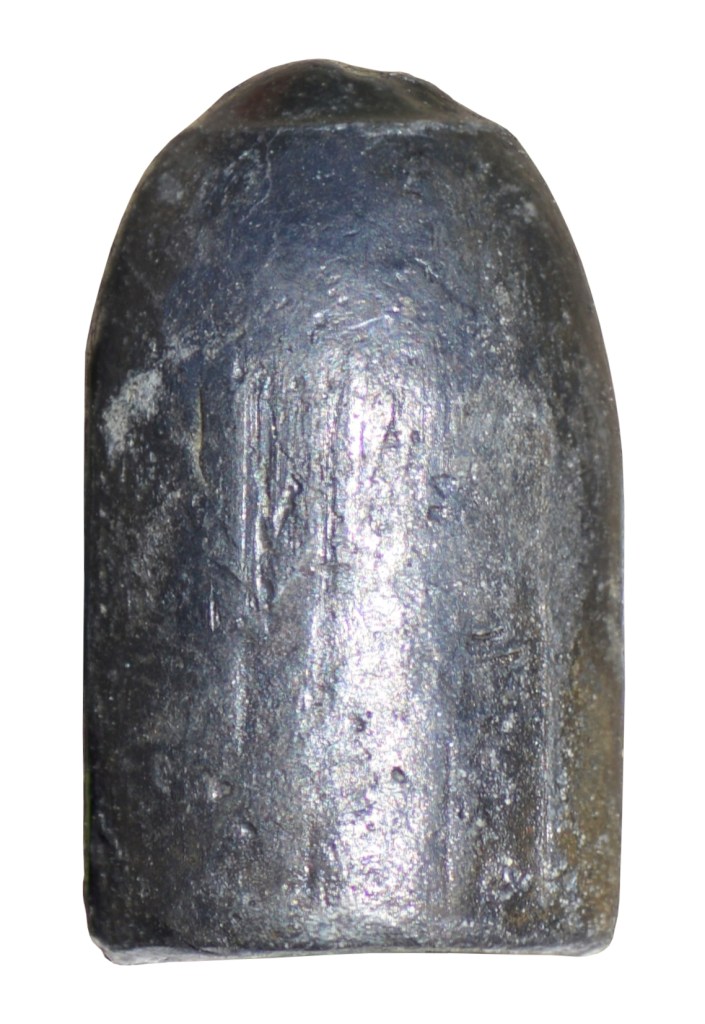
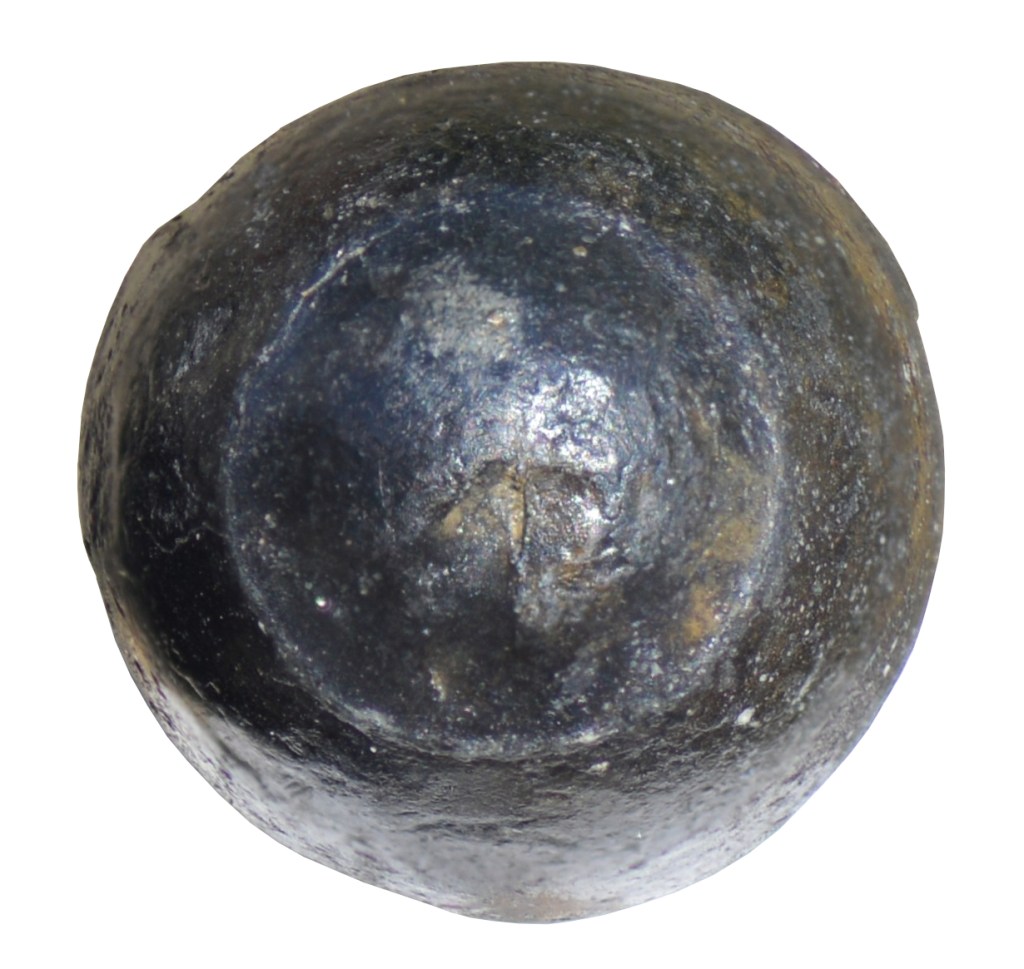
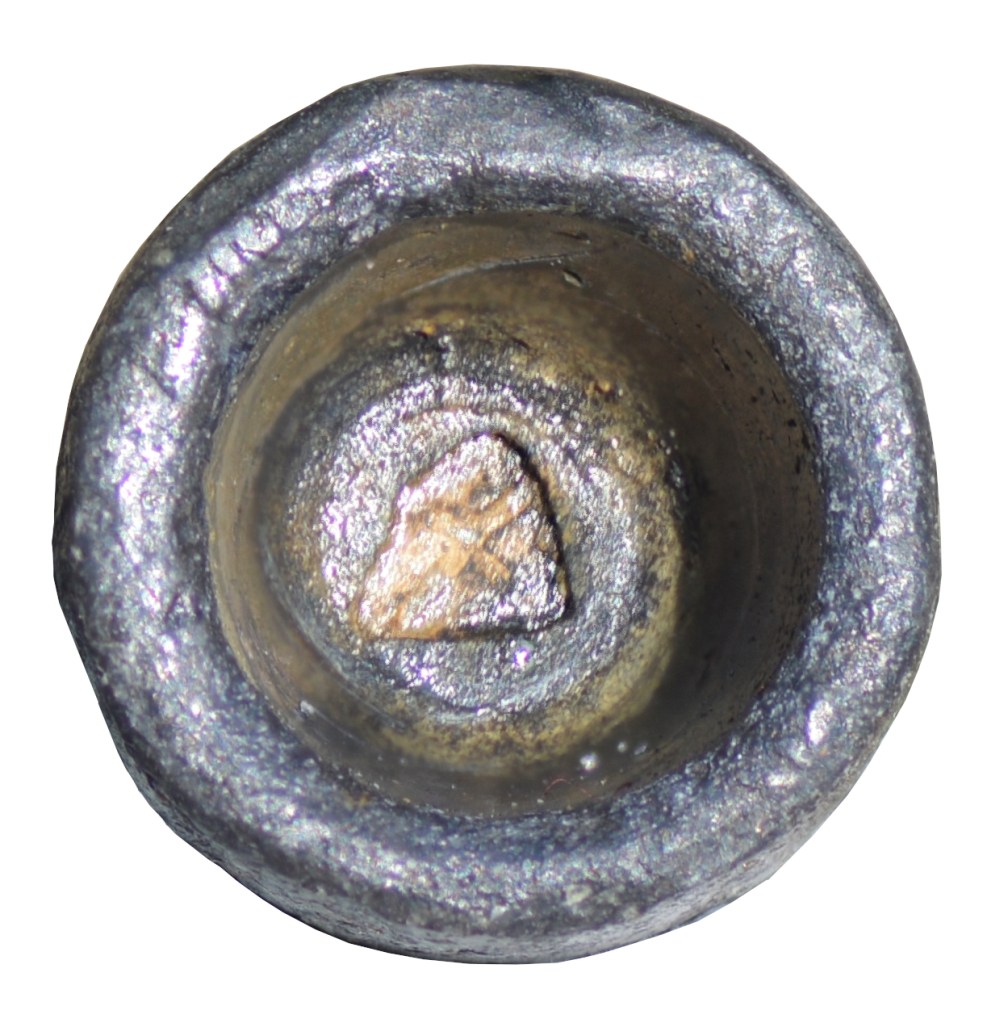
- Weight: 521 gn (33.7 g)
- Diameter: 0.587 in (14.9 mm)
- Length: 0.968 in (24.6 mm)
This bullet has suffered much more compression than the previous example. With only 1 gn of difference in weight, this bullet is almost 2 mm shorter. The ejection ring is clearly visible at the tip of the bullet, but is deeply impressed, overlain and squashed by the ramrod mark. The top view shows the the three rifling grooves quite clearly. The photo of the cavity shows a view typical of P53 bullets fired in 3 groove rifles. The plug has been pushed forwards so that it almost reached the top of the cavity. Simultaneously, the bullet was squeezed into the 3 groove rifling, leaving the triangular shape in the base. The points of the triangle align perfectly with the grooves of the rifling. There are broad arrows just visible on the rim of the cavity and a cross in the cavity itself, which would seem to be the partially erased remains of a ‘4’.
3rd pattern wooden plug, fired
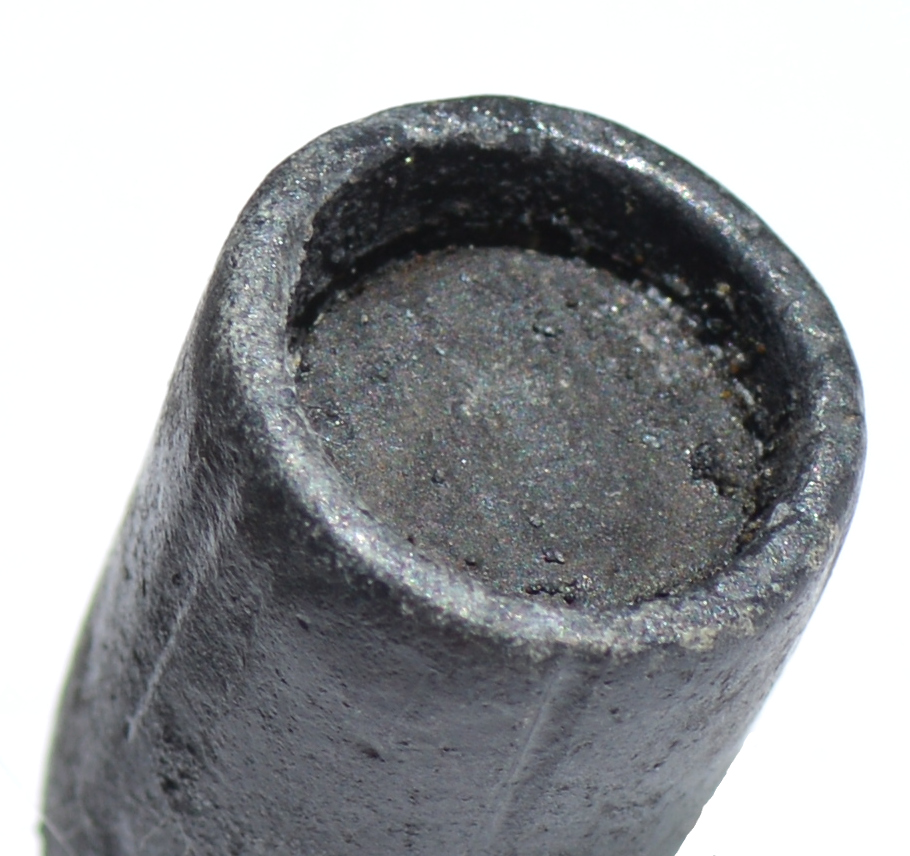
The cavity of this bullet shows the evenly aligned wooden plug, pushed into the base cavity – a normal occurrence with the 3rd pattern bullets. Though wooden plugs do occasionally survive, they more normally will rot away. The later clay plugs are not susceptible to rot, so if a P53 bullet has a large cavity, without an expansion agent, the chances are it will have originally had a wooden plug. The only caveat to this is if the bullet has been recovered from the sea, whereby both wooden plug and iron cup will rot.
3rd pattern wooden plug, fired
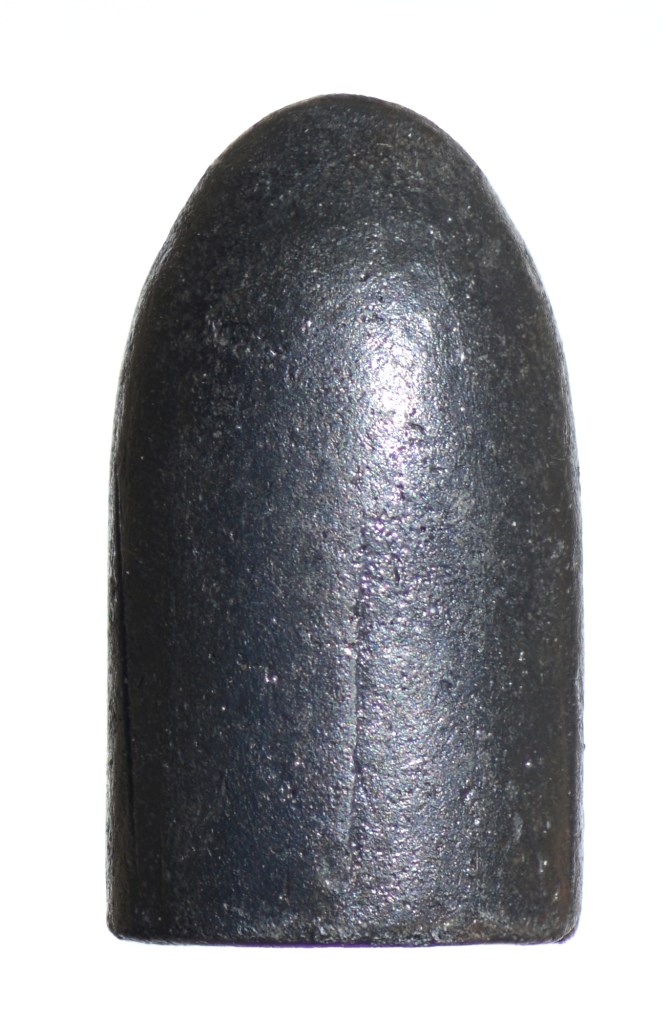
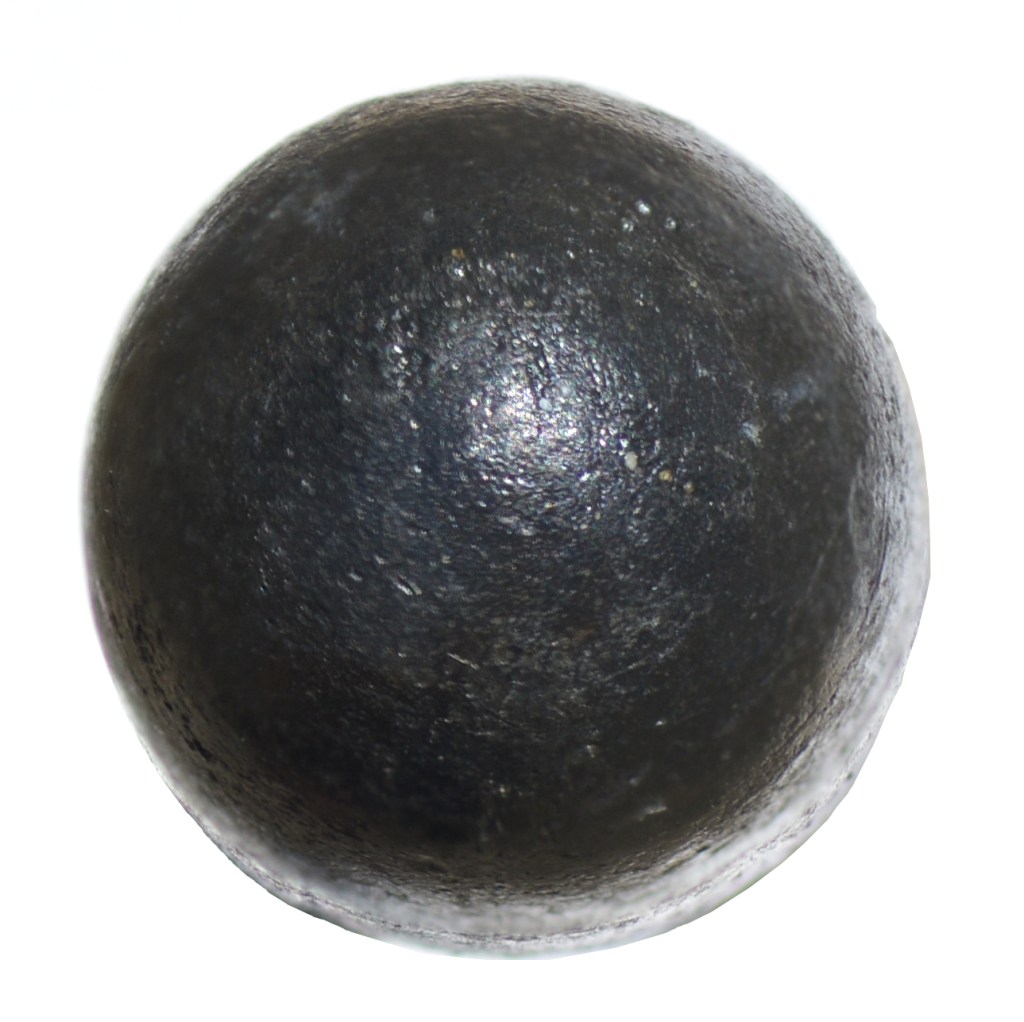
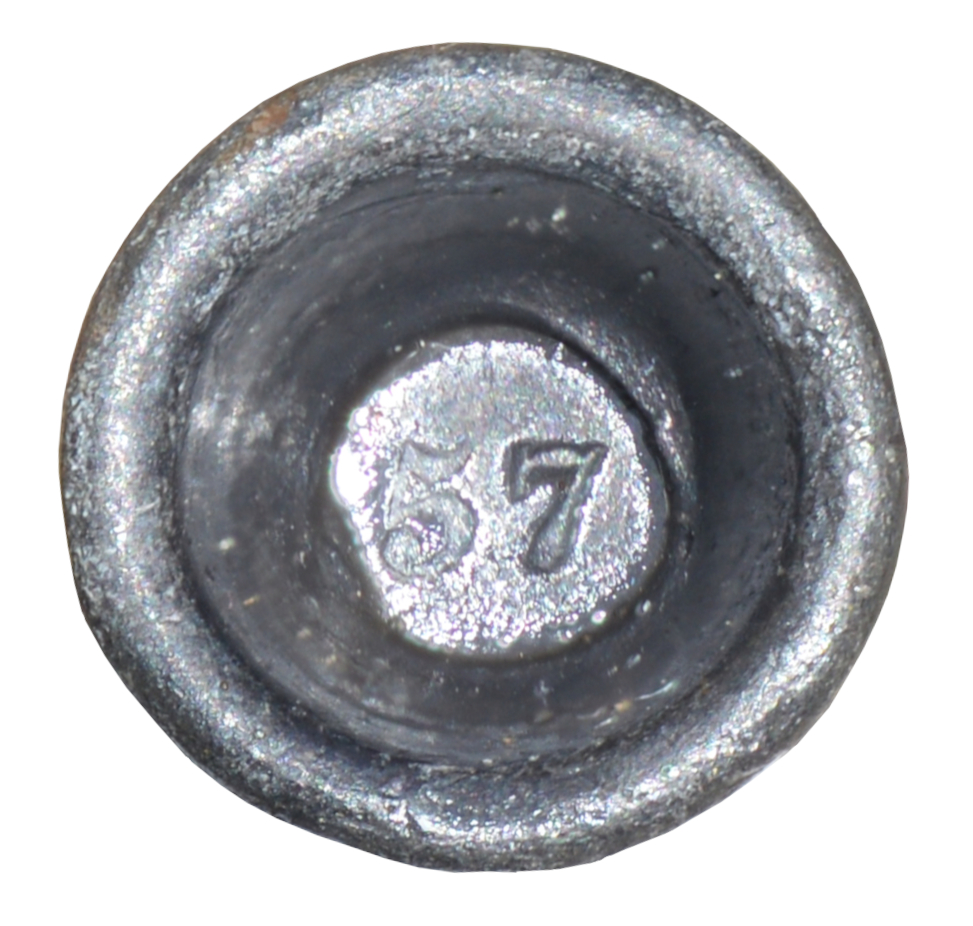
- Weight: 529 gn (34.3 g)
- Diameter: 0.579 in (14.7 mm)
- Length: 1.029 in (26.1 mm)
This is an excellent example of a commercially made 3rd pattern bullet, by Eley. Manufactured by compression at the Eley factory, the bullet features the normal ejector ring on the tip. The cavity shows the rounded triangular shape formed by the plug and rifling working together and has a clear ’57’ stamped in the centre. This stamp was not merely to indicate that the bullet was for use in the .577 Enfield rifle. By the time Eley began to produce P53 ammunition, in February 1860 (according to Eley Cartridges, by C. W. Harding) the 4th pattern of bullet had already been introduced for use (February 1859), featuring a reduced diameter of 0.550 in. Eley therefore, were manufacturing the former/3rd pattern bullets, marking them with ’57’, while any new (4th) pattern bullets were marked with ’55’. I practice, the change over from one type of ammunition to the next did not happen overnight; sometimes stores of ammunition were used up in training, sometimes they were recalled. In this instance it appears Eley may have been manufacturing the 3rd and 4th patterns of ammunition contemporaneously from 1860, which introduces a level of complexity to dating of recovered bullets.
3rd pattern wooden plug 1855
