The Deane and Adams revolver was approved for service in its breech loading form 1n 1868, initially made up from converted percussion revolvers. The Colt revolver was not accepted for conversion and Adams’ long standing competition with Samuel Colt appeared to have been won. The revolver was officially termed as 0.450 calibre, the former ’54 gauge’ reference being dropped. Later marks of the revolver were manufactured from new. The ammunition was supplied as a Boxer cartridge, but differing from the Snider cartridge, introduced only a few years earlier, the 0.450 Adams cartridge was not made of coiled brass. Although it featured an iron washer and primer cap rivet, along the lines of the Snider, the bulk of the case was made from drawn brass and the bullet was held in place by 2 or 3 neck stabs. There were three marks of Adams cartridge in total. Marks 1 and 2 differed only the the washer on the head of the case – iron for mark 1 and brass for mark 2. The bullet in these marks was identical. By 1883 the bulk of the orders for ammunition waned, as the Enfield revolver began to supersede the Adams. A minor revival of the system occurred in 1909 when the mark 3 Adams cartridge was approved, a solid drawn case filled with cordite, approved for the Royal Irish Constabulary. The bullet for the mark 3 appears to be slightly less rounded than the mark 1 and 2 version, the example examined also has a smaller cavity and is pressed in place around the lower cannelure of the bullet, rather than using neck stabs.
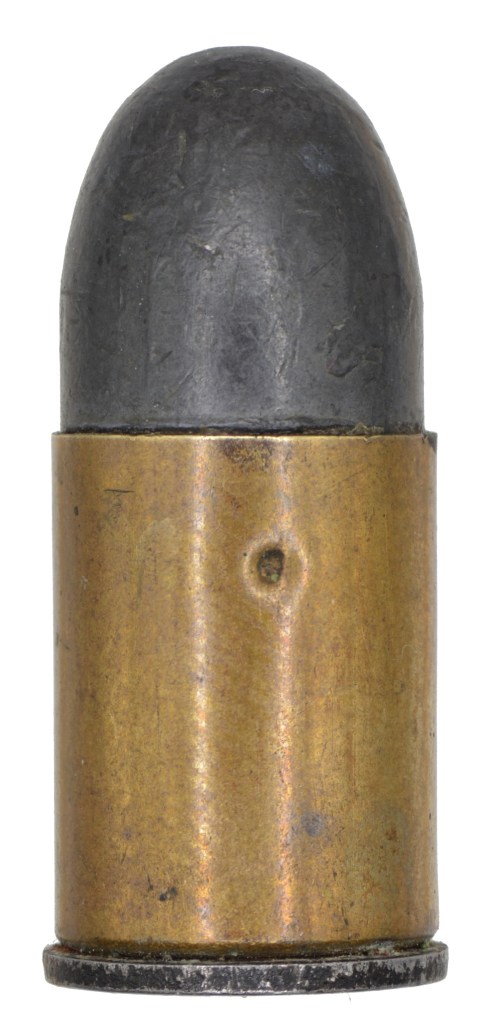
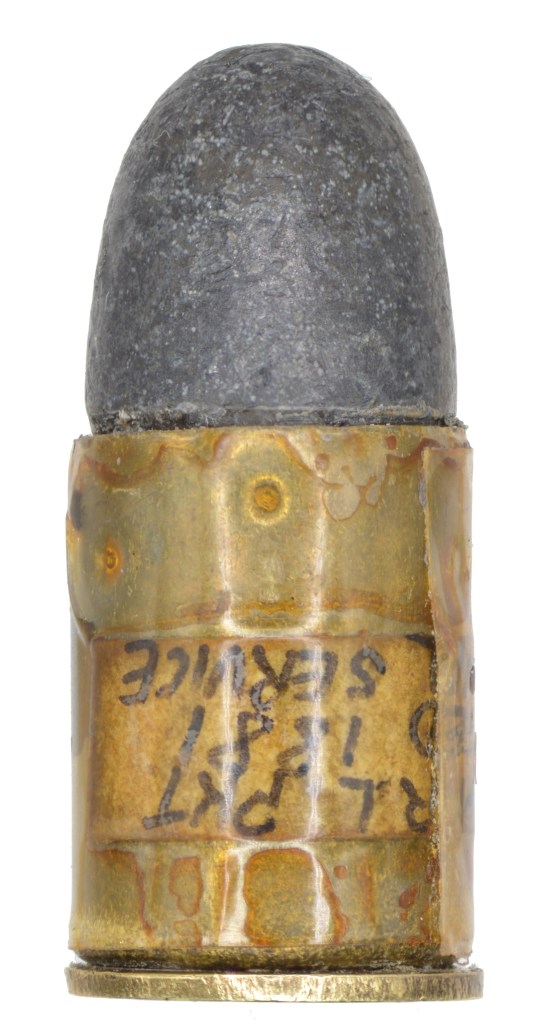
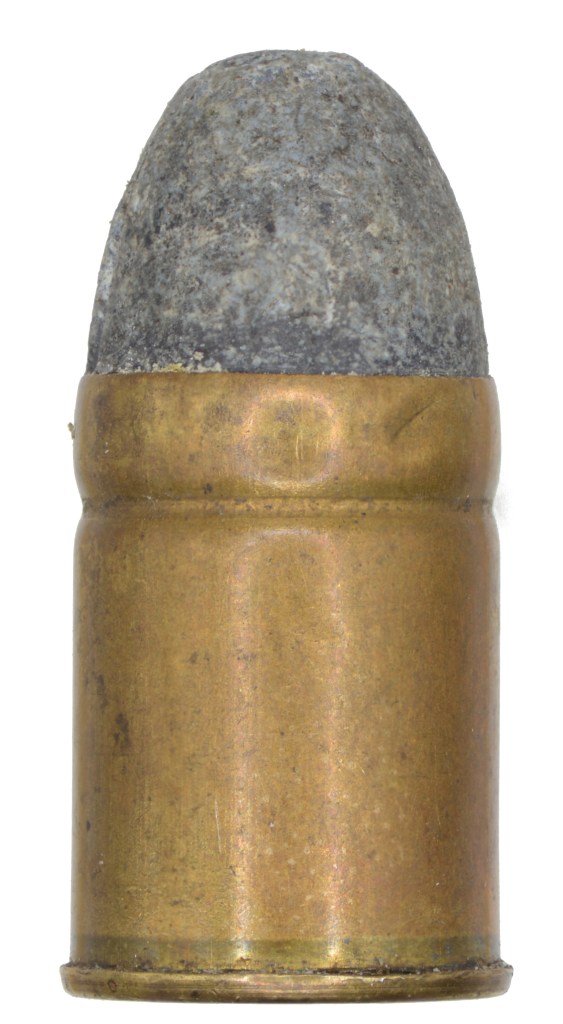
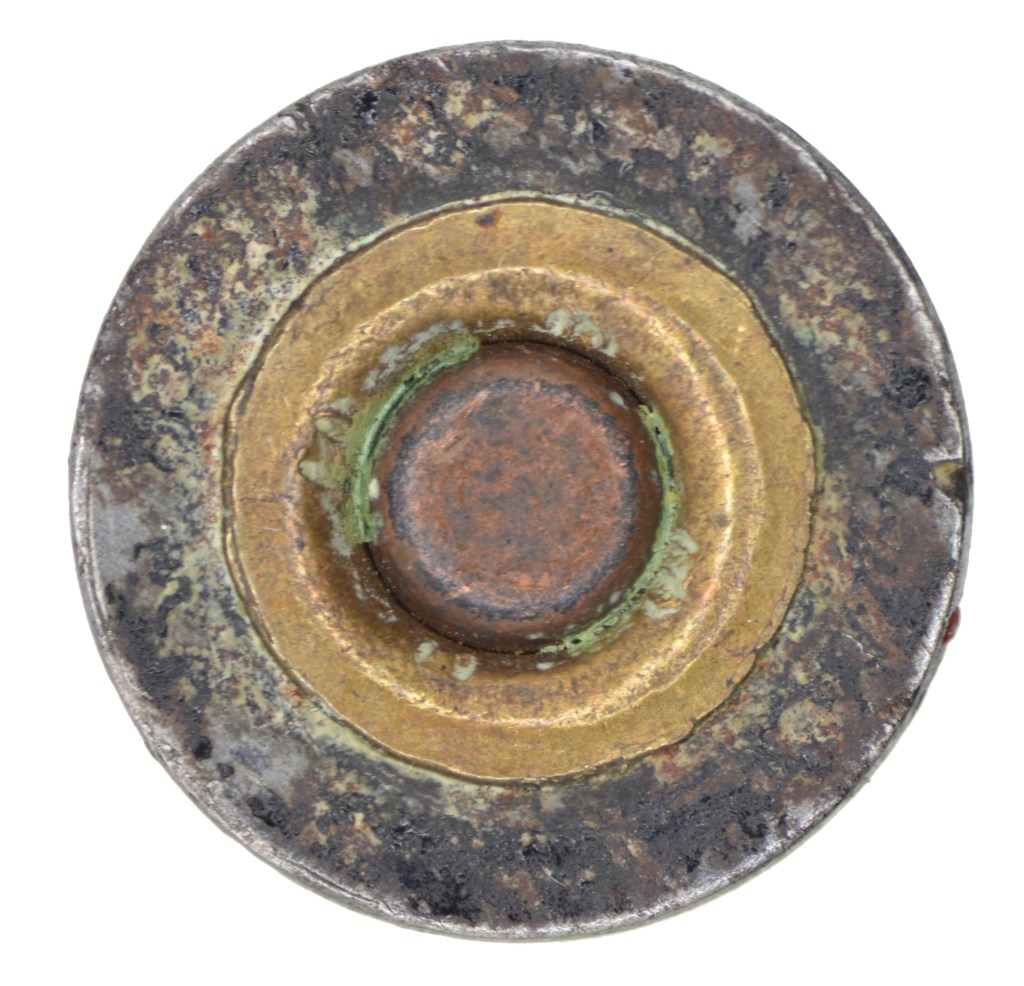
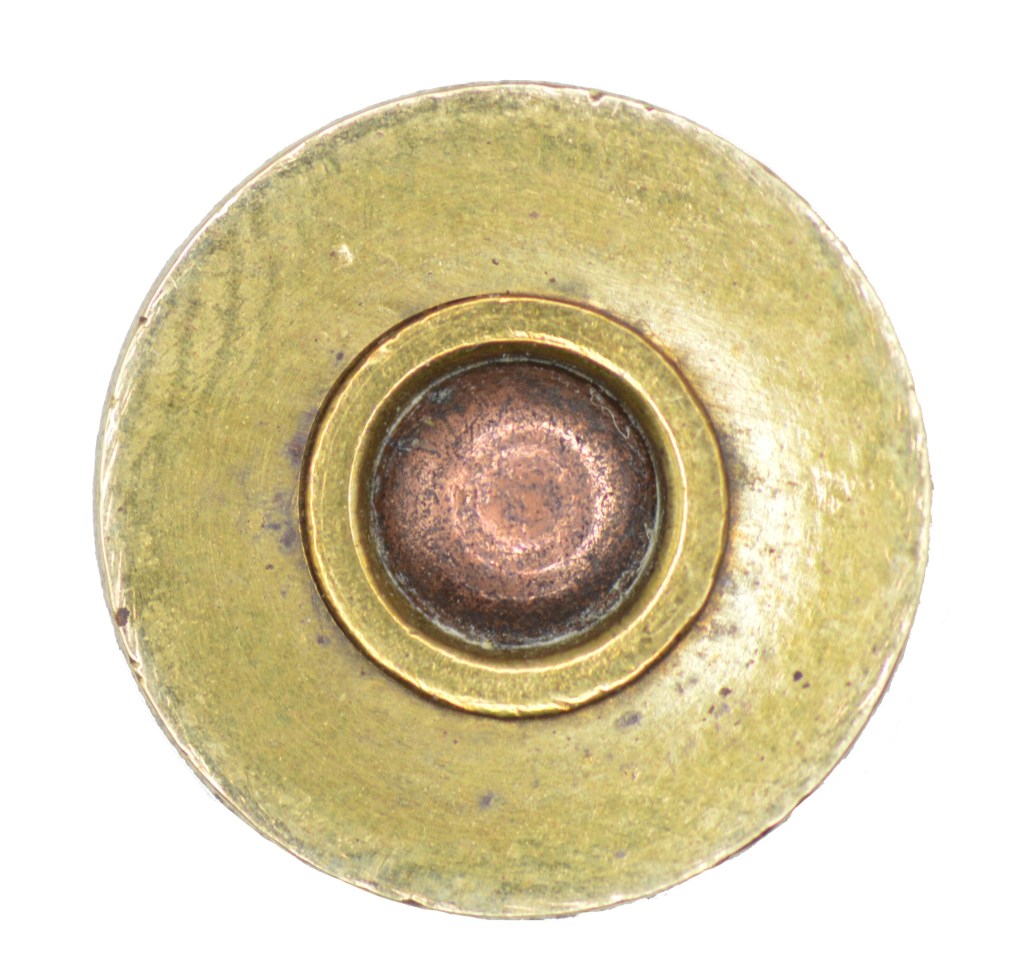
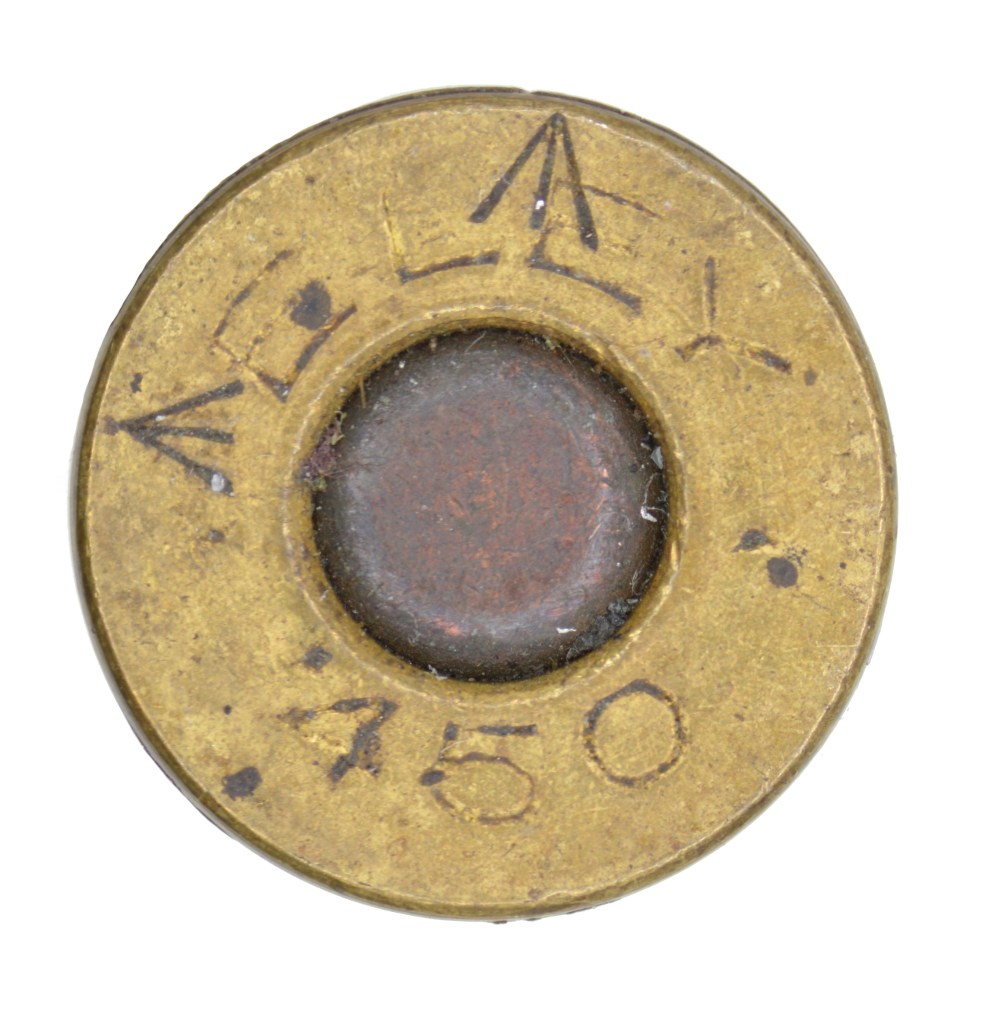
Mark 1, 2 and 3 cartridges above. The first two marks have no headstamp, while the mark 3, on the right is commercial stamp, with broad arrows overlain. Note the neck stabs on the mark 1 and 2 and the deep groove on the mark 3, seating the case into the lower cannelure.
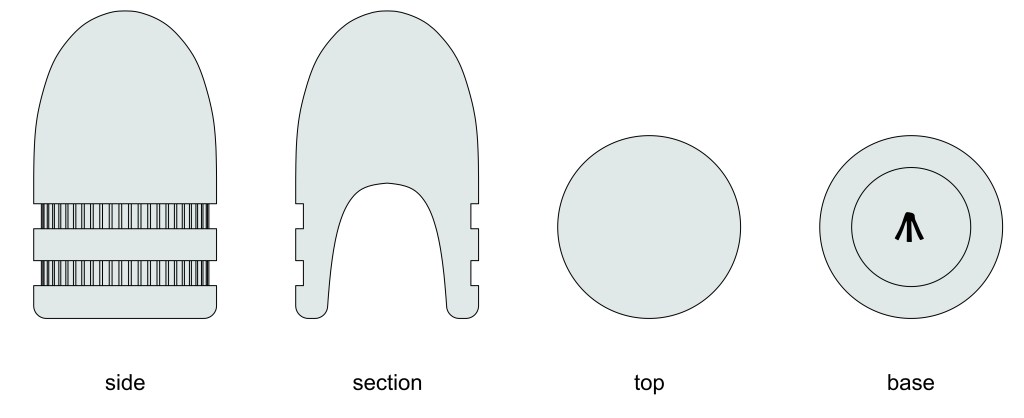
The illustrations above show the bullet for the mark 1 and 2 Adams cartridge. Some examples examined to not seem to have knurls in the upper cannelure.
Mark 1 and 2 official weight and dimensions:
- Weight: 225 gn (14.6 g)
- Diameter: 0.455 in (11.5 mm)
- Length: 0.765 in (19.4 mm)
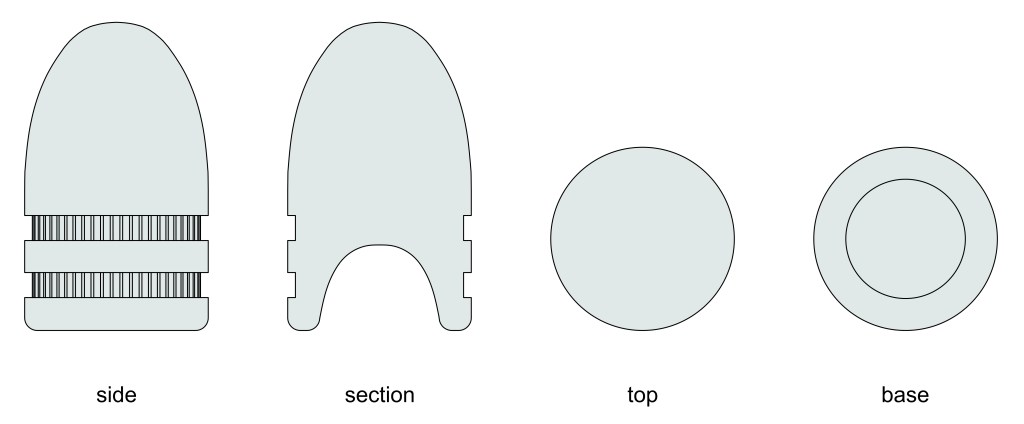
This illustration below shows the bullet from the mark 3 cartridge, from an examined specimen. The cartridge headstamp shows the commercial production variety, overstamped with a broad arrow. There is no broad arrow mark in the cavity of the bullet, which is smaller than the mark 1 and 2. The nose of the bullet is also a little more tapered than the earlier marks.
Mark 3 official weight and dimensions (from British Small Arms Ammunition, 1864-1938, Labbatt, page 154):
- Weight: 225 gn (14.6 g)
- Diameter: not known
- Length: not known
Mark 1 bullet, unfired.
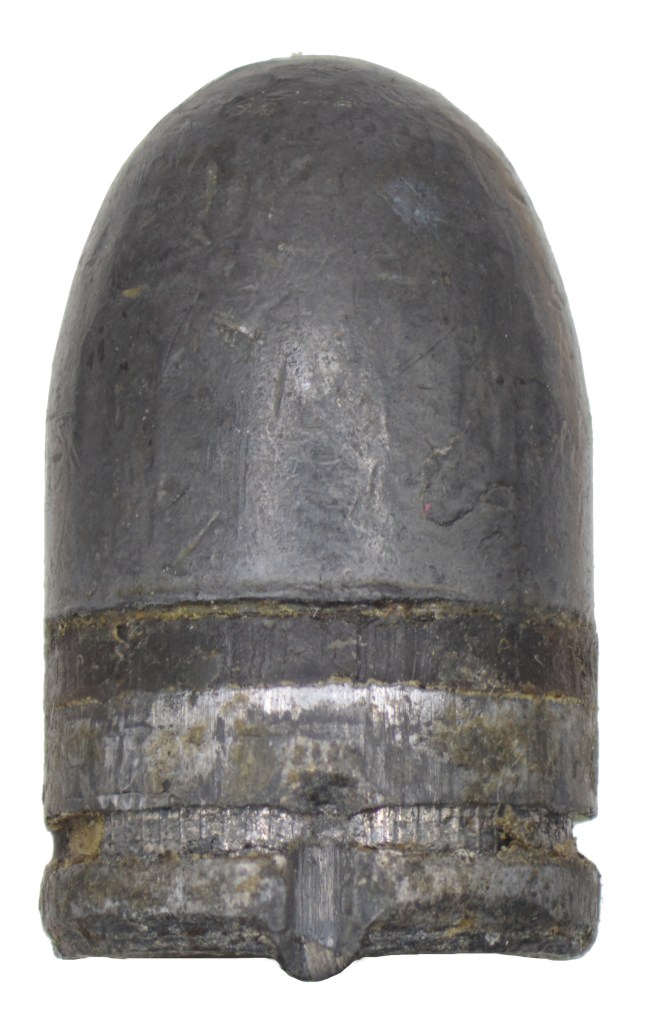
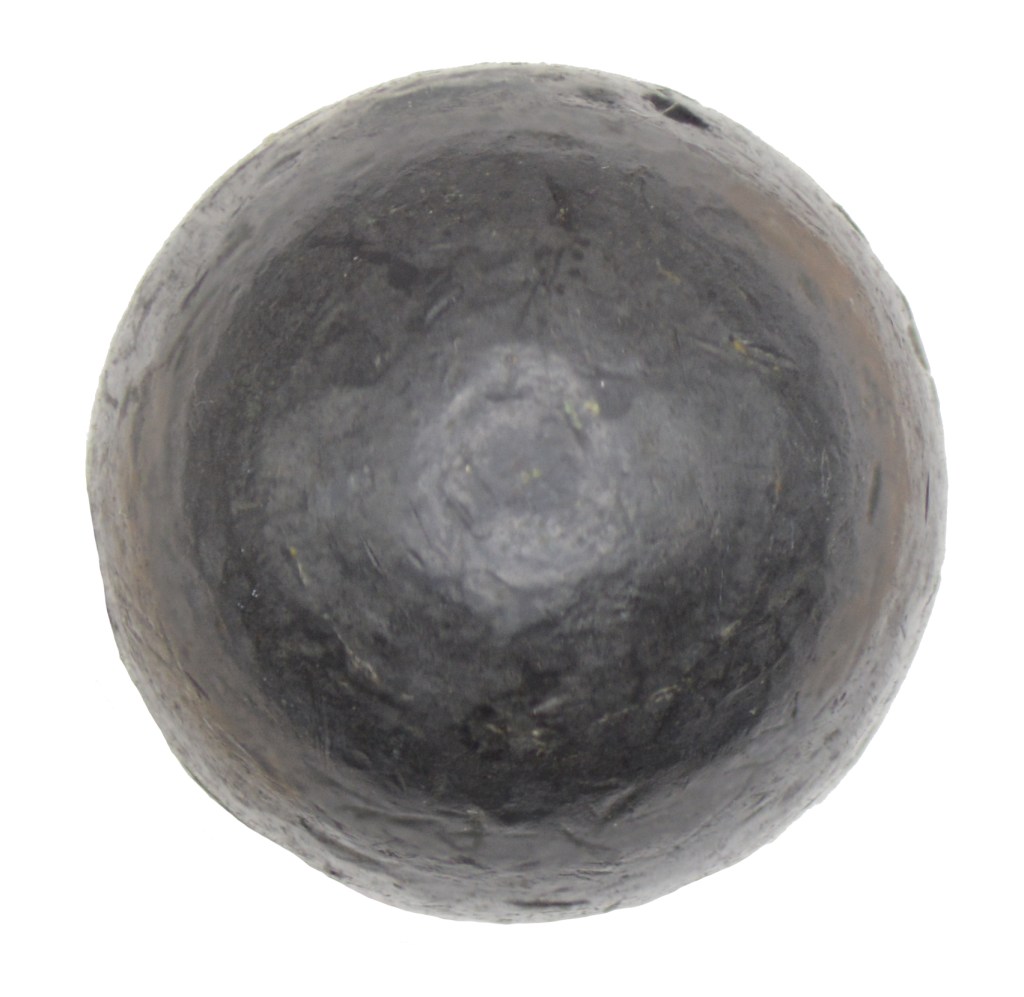
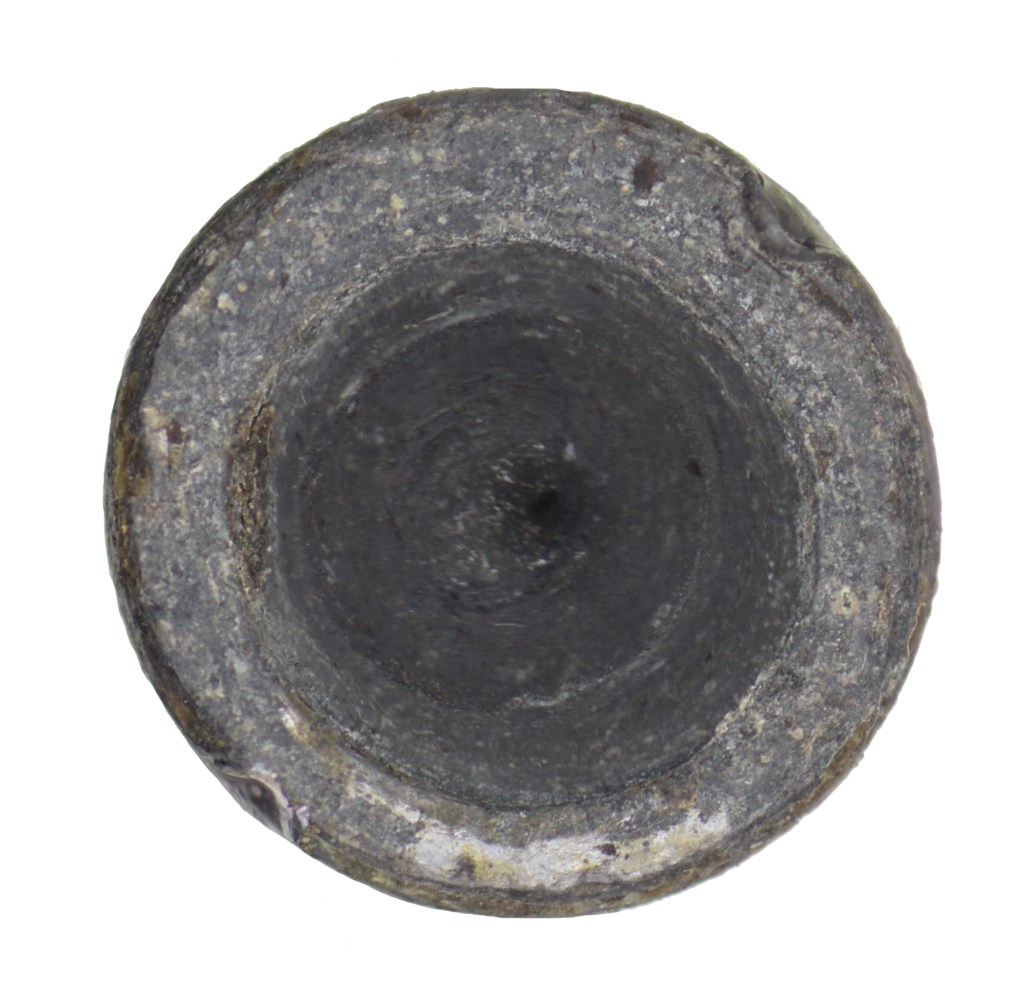
This bullet was from a mark 1 case and has not been fired – the original lubricant is still visible within the cannelures. There is no broad arrow in the base cavity, and the bullet is retain by two neck stabs. The removal of the bullet from the case, during deactivation (note this was done by a professional) has caused the scrape visible in the lower part of the bullet.
- Weight: 229 gn (14.8 g)
- Diameter: 0.451 in (11.5 mm)
- Length: 0.745 in (18.9 mm)
Mark 1 or 2 bullet, fired.
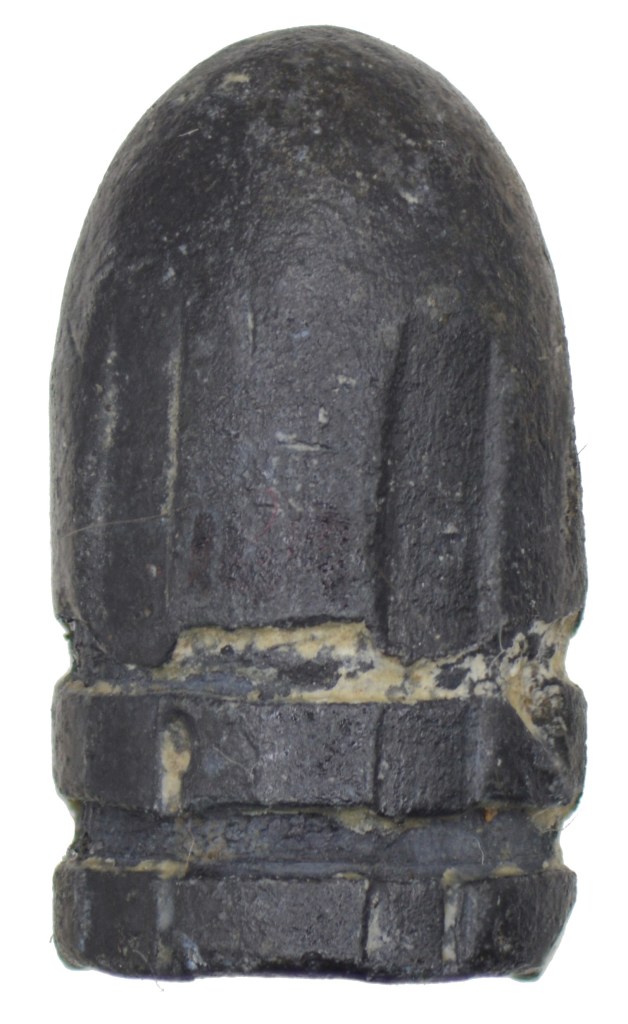
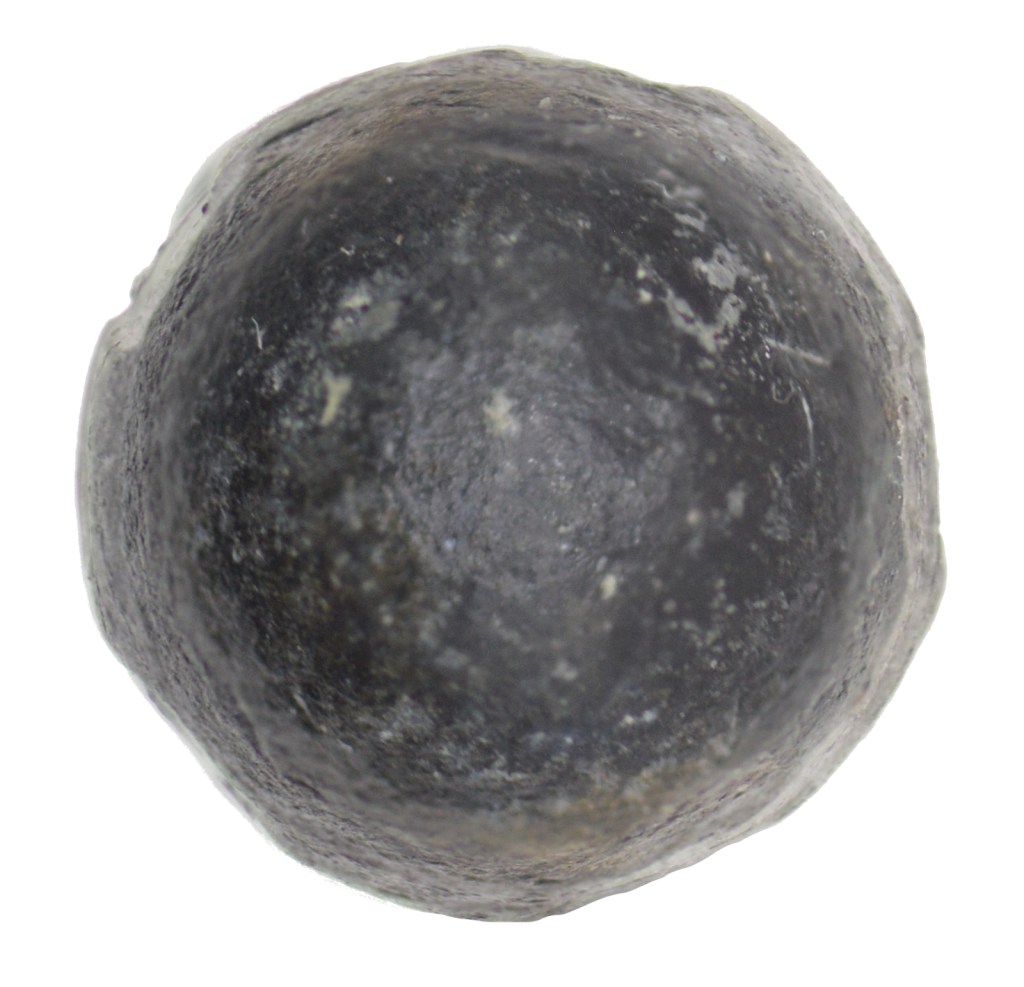
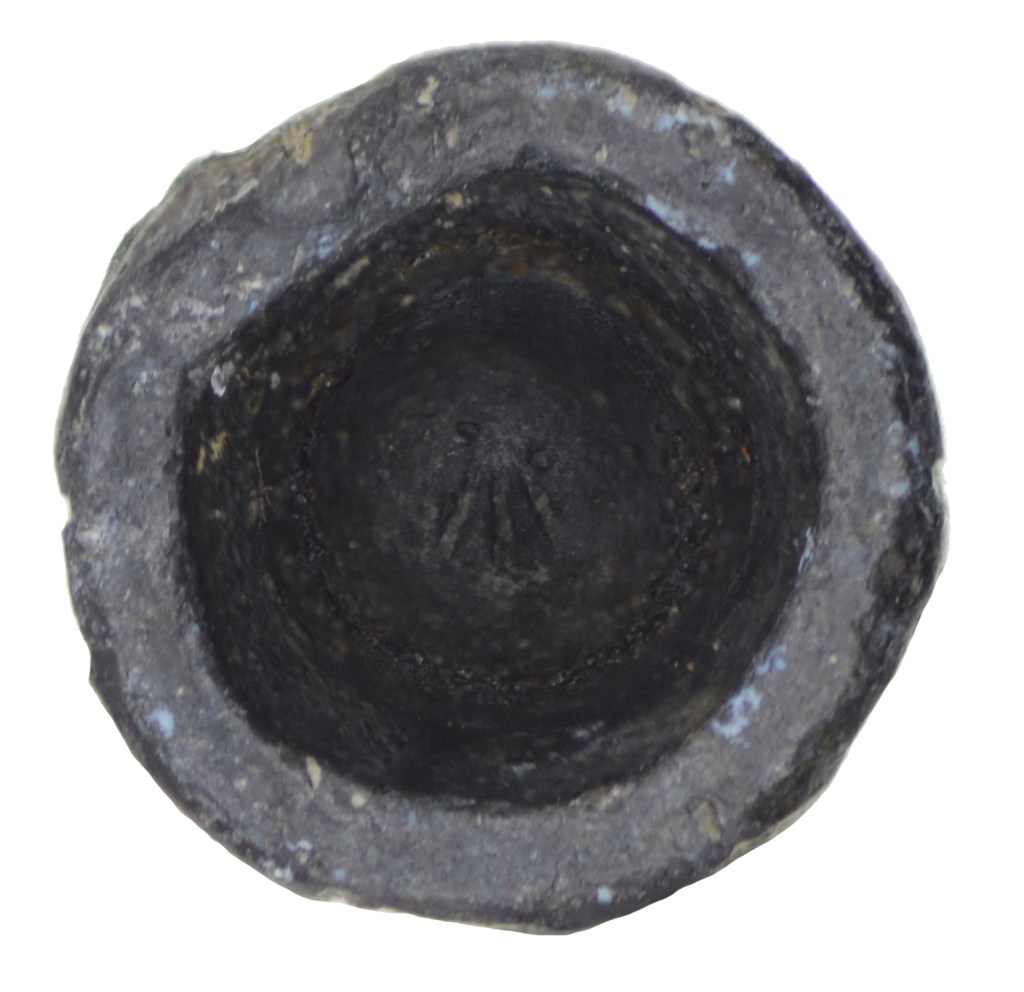
- Weight: 226 gn (14.6 g)
- Diameter: 0.444 in (11.3 mm)
- Length: 0.776 in (19.7 mm)
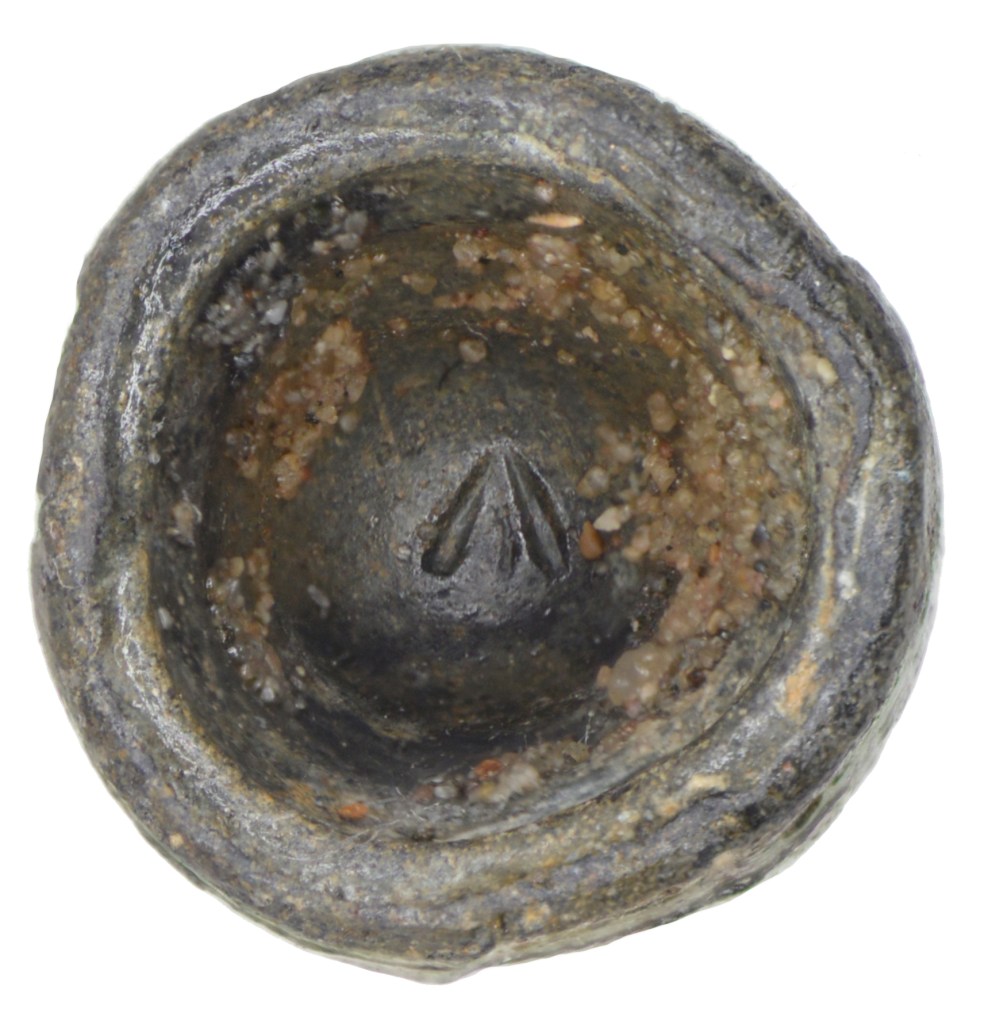
This mark 1 or 2 bullet was retained by three neck stabs, still visible after firing – one is located on the left of the side view, extending from above the lower cannelure, to the base of the bullet. The five groove, right hand rifling is consistent with the mark 2 Adams revolver, those made from scratch, rather than converted from earlier weapons. There is a distinct broad arrow in the base.
Mark 1 or 2 bullet, fired.
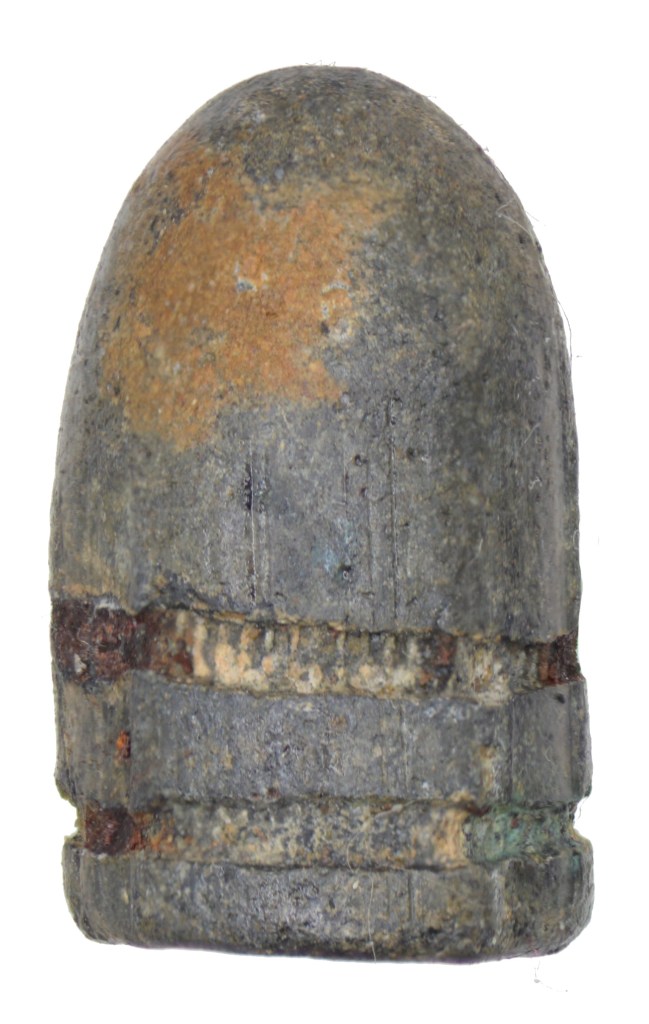
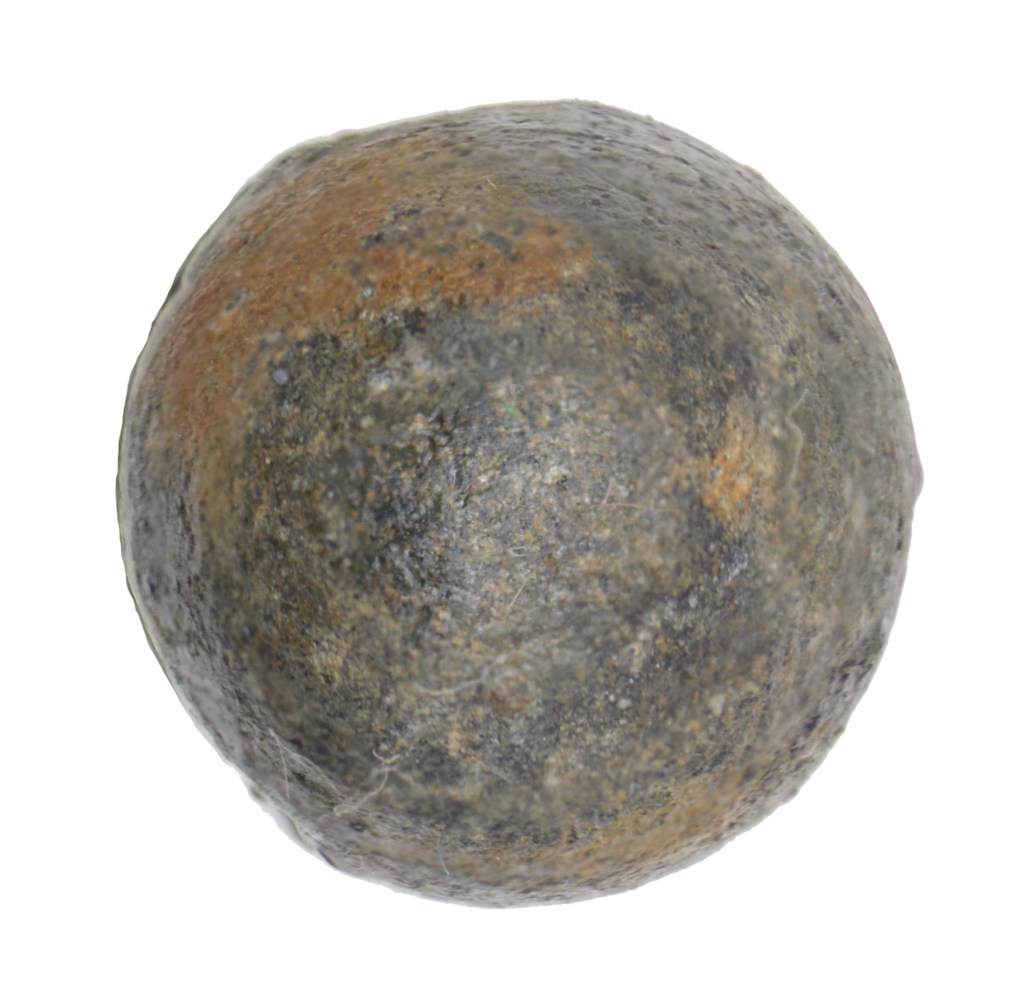
- Weight: 225 gn (14.6 g)
- Diameter: 0.457 in (11.6 mm)
- Length: 0.753 in (19.1 mm)
The three groove rifling on this bullet confirms it was fired in a converted Adams revolver. Three neck stab scrapes are visible and a clear broad arrow is present in the base cavity.
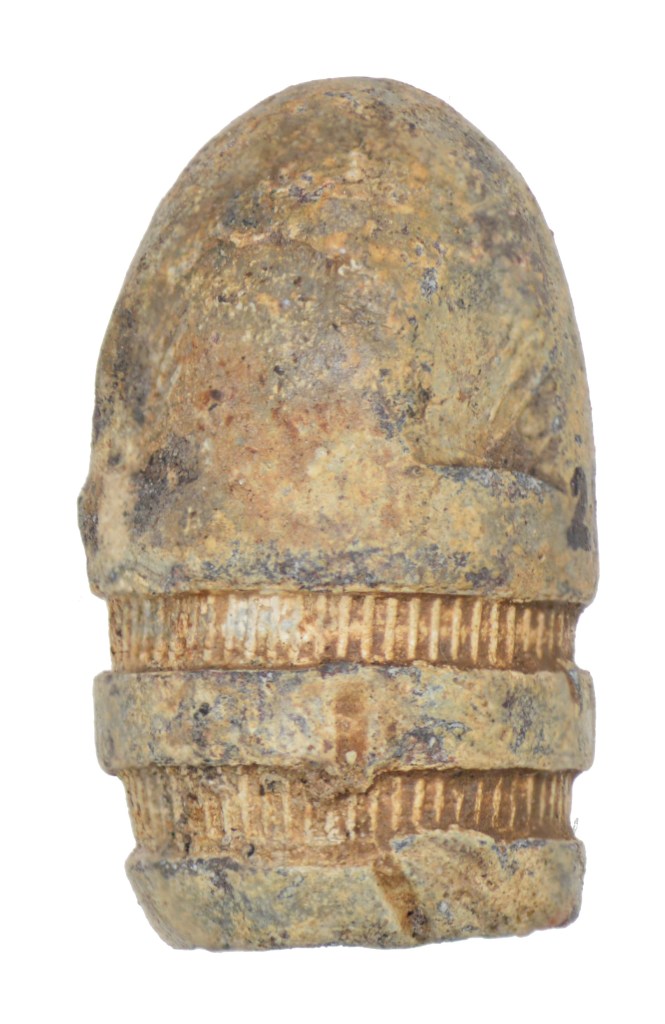
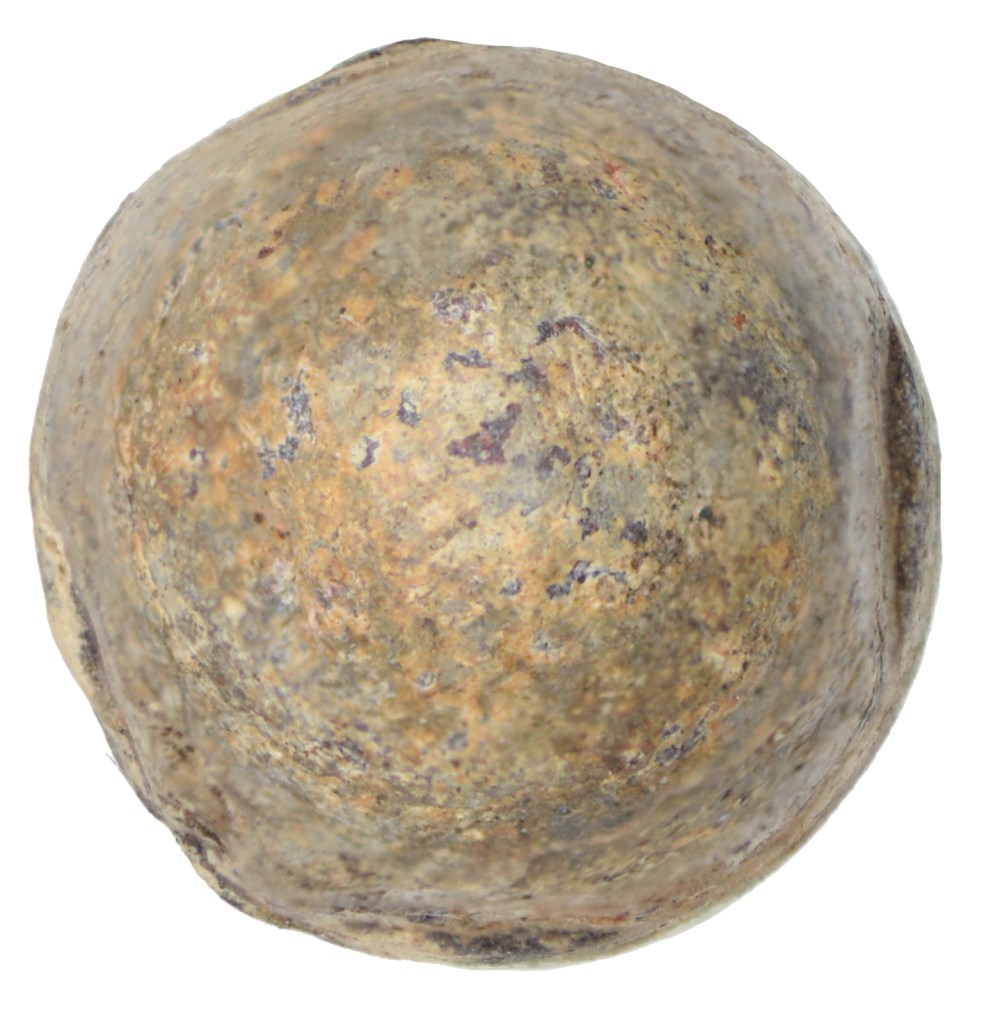
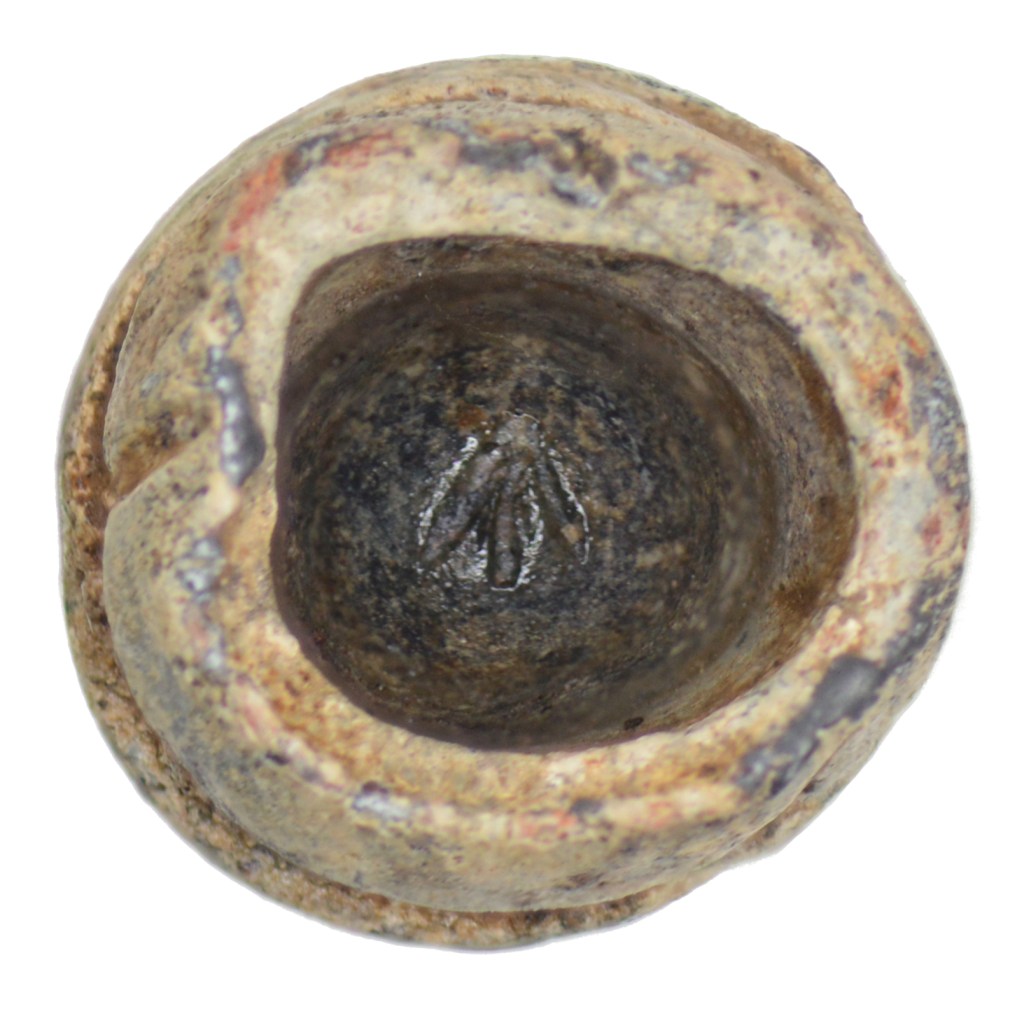
Mark 1 or 2 bullet, unfired.
- Weight: 222 gn (14.4 g)
- Diameter: 0.451 in (11.5 mm)
- Length: 0.766 in (19.5 mm)
Although this is a fieldwork recovered bullet, it has not been fired. The case has been forcefully removed, as witnessed by the neck stab scrape extending and an unusual angle beneath the lower cannelure and the two sets of pliar marks around the nose of the bullet. Why somebody would do this is unclear. There is a broad arrow stamp in the base cavity.
Mark 3 bullet, unfired.
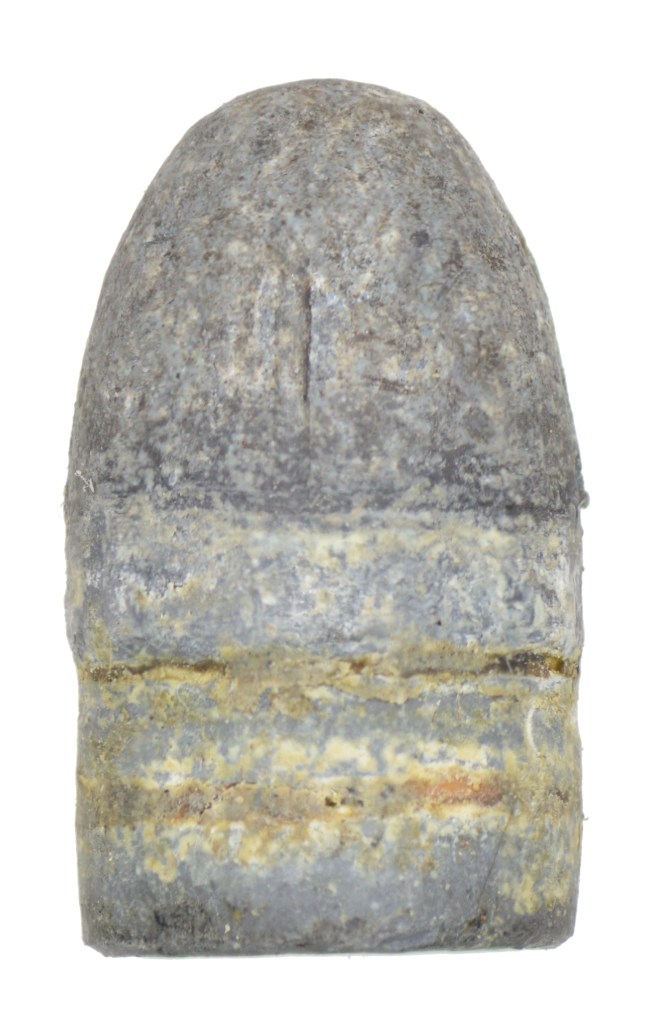
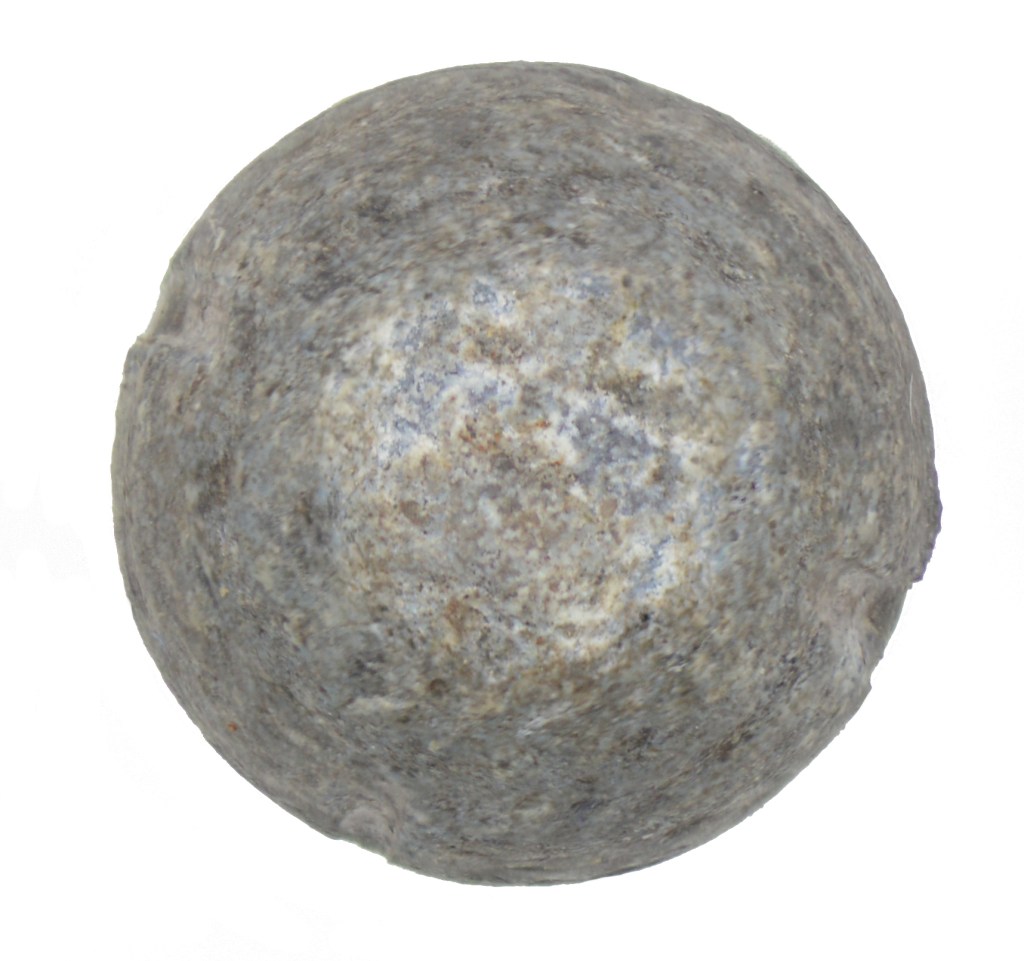
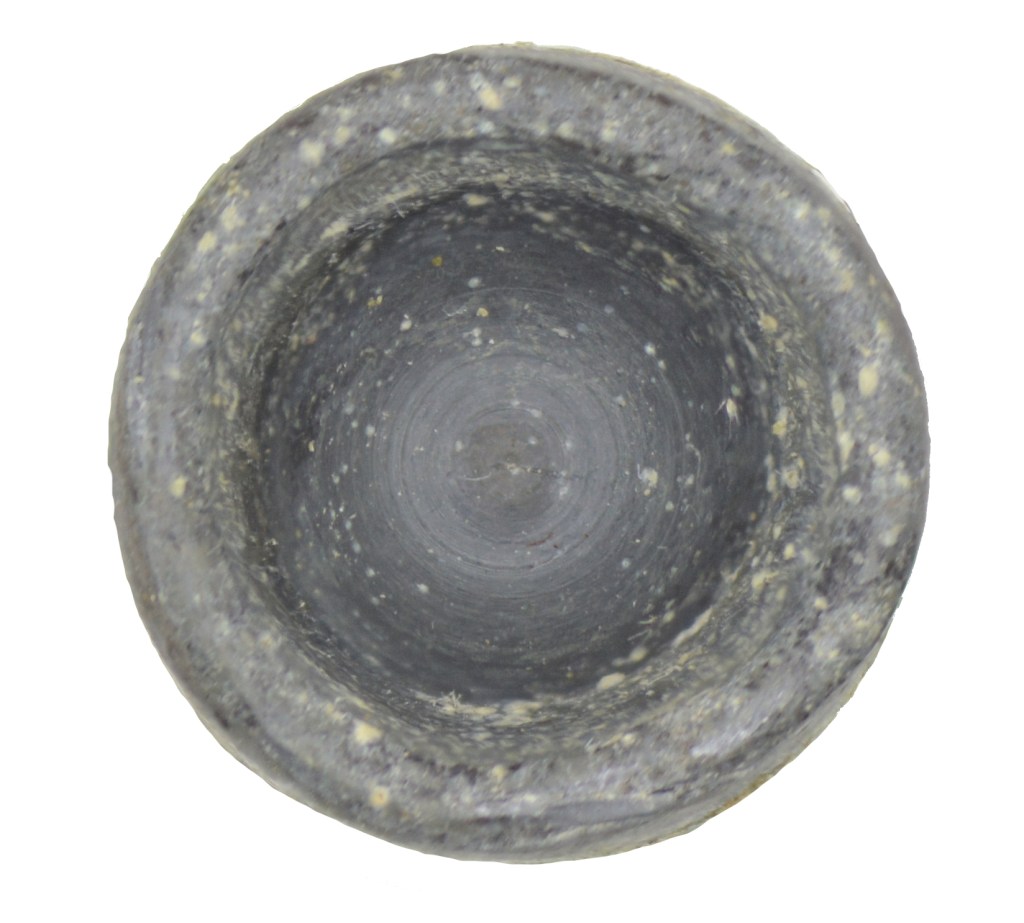
- Weight: 227 gn (14.7 mm)
- Diameter: 0.446 in (11.3 mm)
- Length: 0.746 in (18.9 mm)
This Eley made mark 3 bullet has a slightly more tapered nose and a shallower base cavity than the previous marks. There is no broad arrow stamp is present in the base cavity. The original lubricant remains in the cannelures (obscuring the knurling) and the case has left a distinct ‘tide mark’ on the bullet, above the upper cannelure.
Adams breech loaded revolver
