The term ‘carbine’ covers a wide variety of arms, generally of shorter length and smaller calibre than the musket (0.650 in calibre, firing a 0.615 in projectile), for use by cavalry, yeomanry, sergeants, artillery, sappers, miners and cadets. The smoothbore carbine continued in use up until the introduction of the P53 series of rifled carbines and it seem very few smoothbore carbines were upgraded to rifled carbines during the 1850s, with the exception of the Paget.
Weight and dimensions of carbine shot (from Smallarms of the East India Company, Volume 3 Ammunition and Performance, by David Harding):
- Weight: 352 gn (22.8 g)
- Diameter: 0.615 in (15.6 mm)
- Bore: 20
Carbine ball, fired
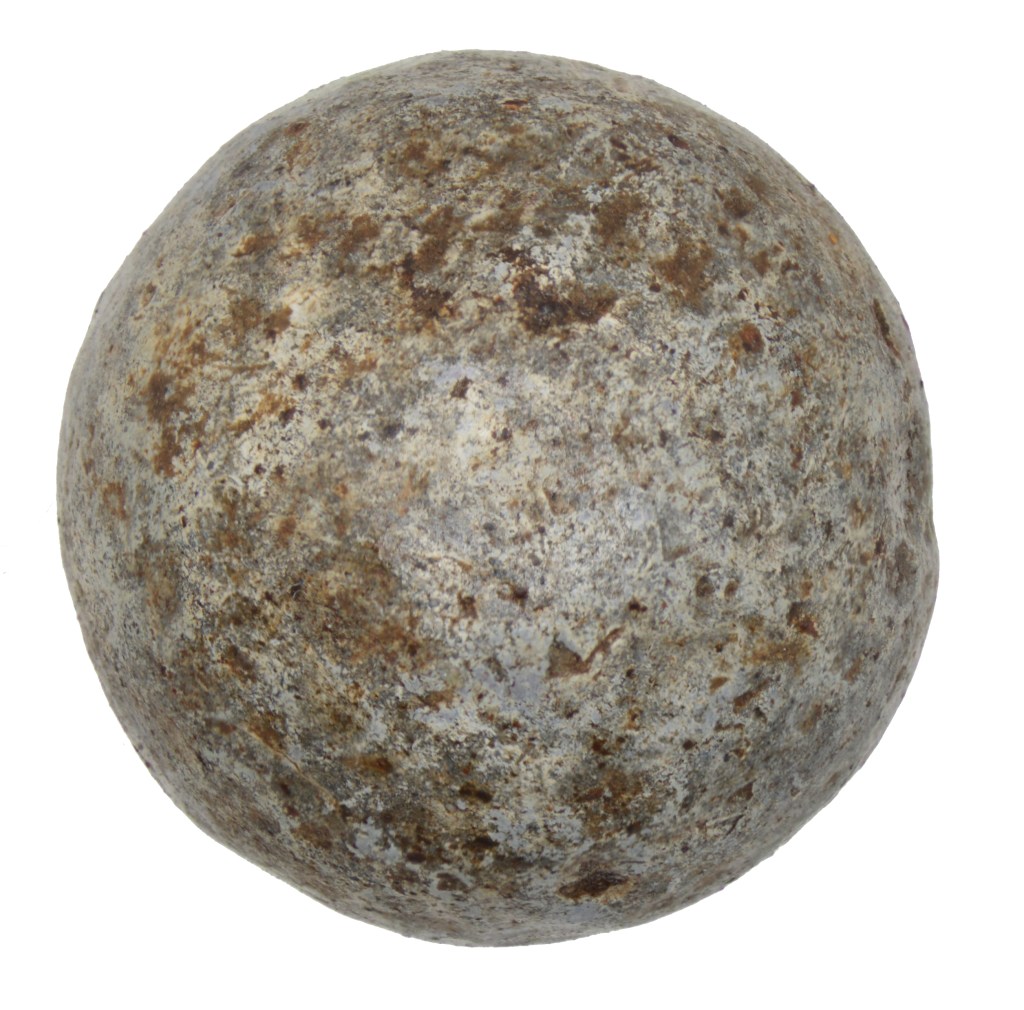
- Weight: 343 gn (22.2 g)
- Diameter: 0.621 in (15.8 mm)
Despite being found with other fired shot, this example exhibits no features whatsoever on its surface: no sign of set-up or a casting seam.
Carbine ball, fired
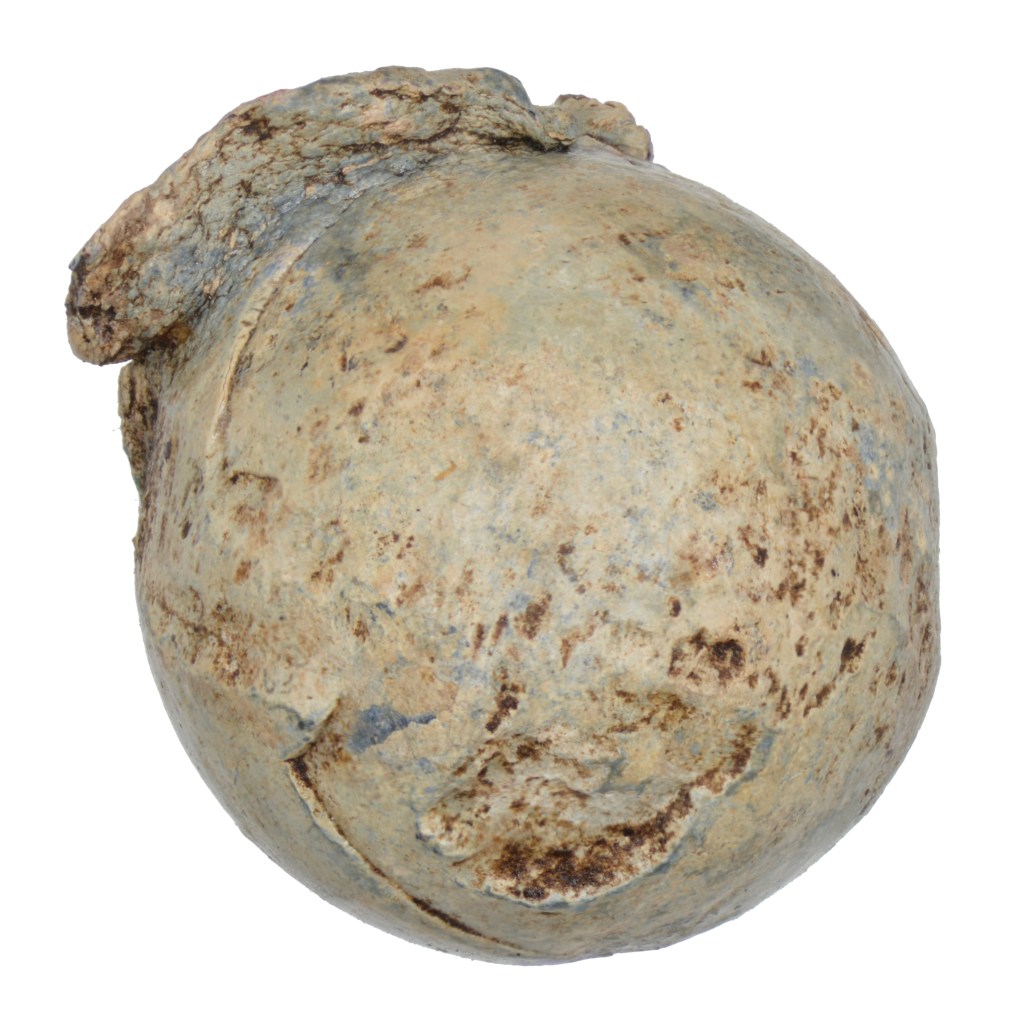
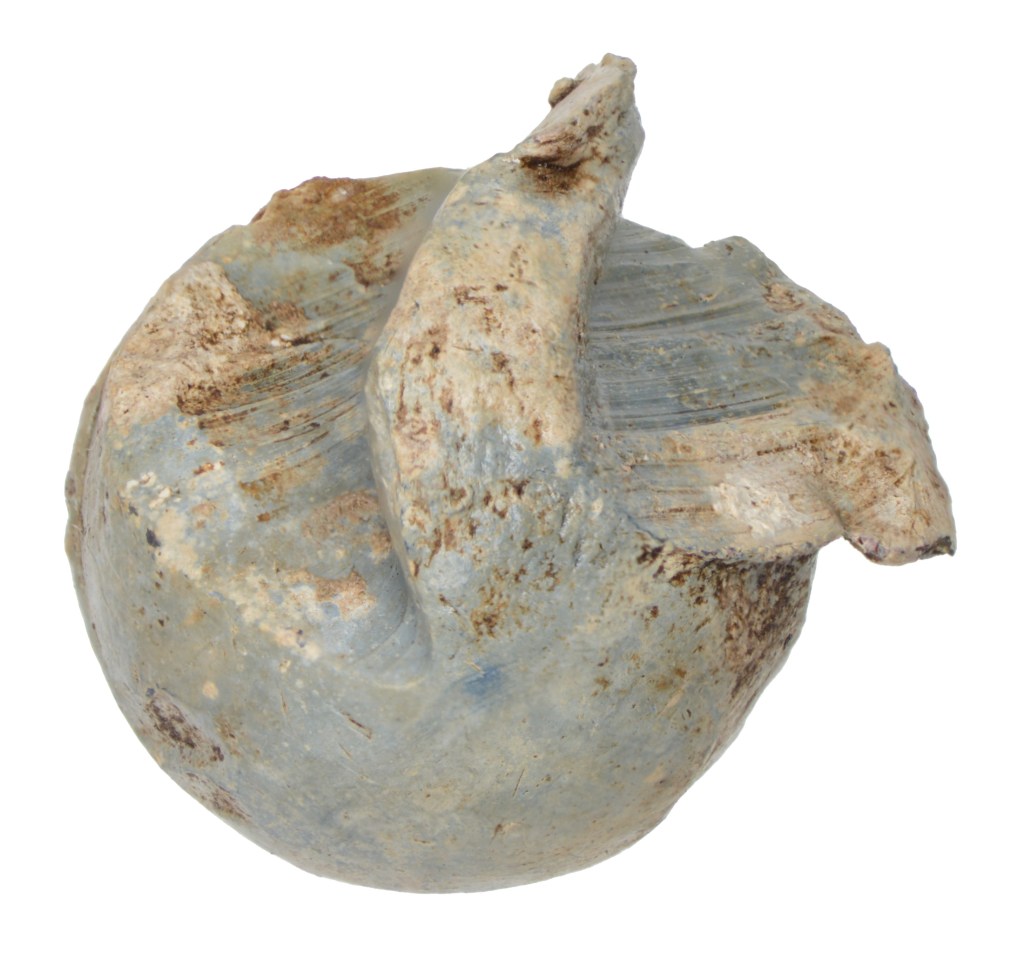
- Weight: 344 gn (22.3 g)
- Diameter: 0.635 in (16.1 mm)
This example has struck a wooden post and has deformed, becoming perhaps a little wider in the process. The image on the left shows a casting seam and a neatly nipped sprue (cut with rounded nipper blades). Set-up is also visible on the right of the ball (the flat surface where the ball has scraped along the inside of the bore of the carbine). The image on the right shows striations from impact with the wood grain.
Carbine ball, fired
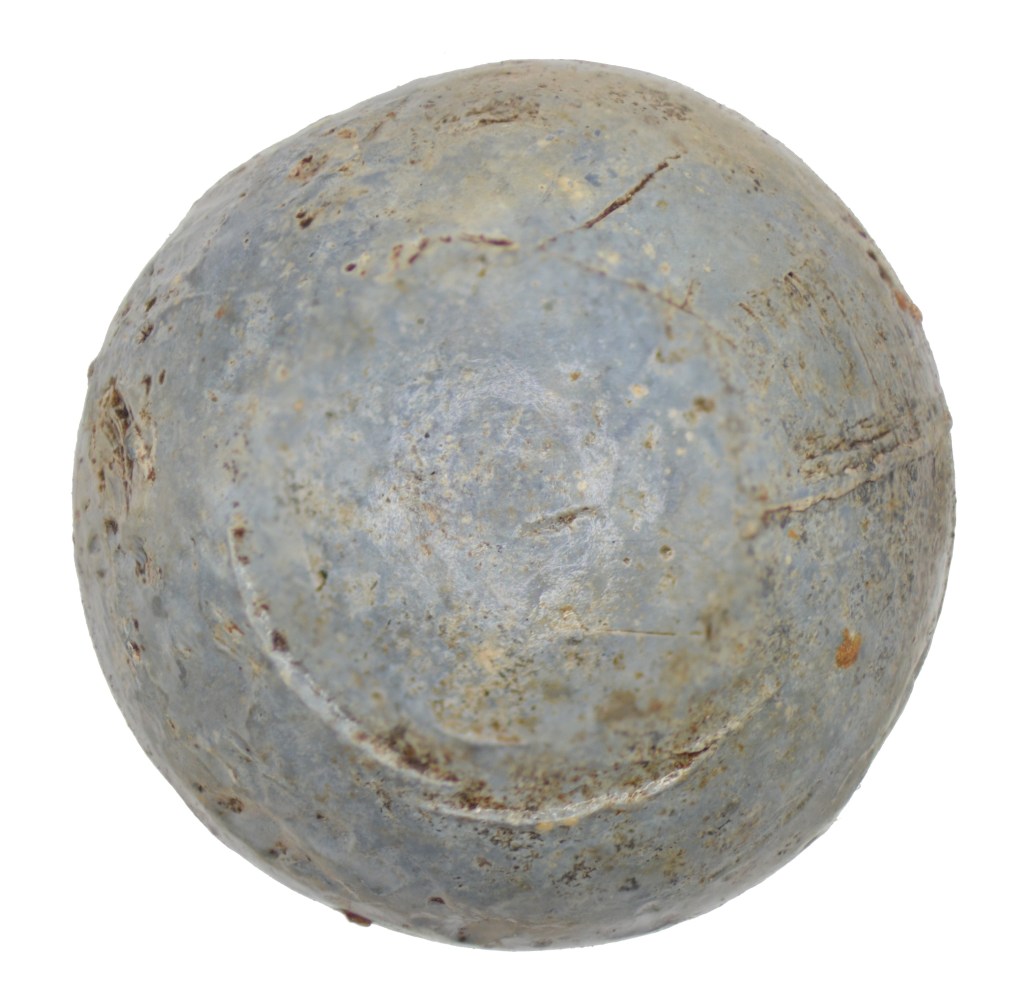
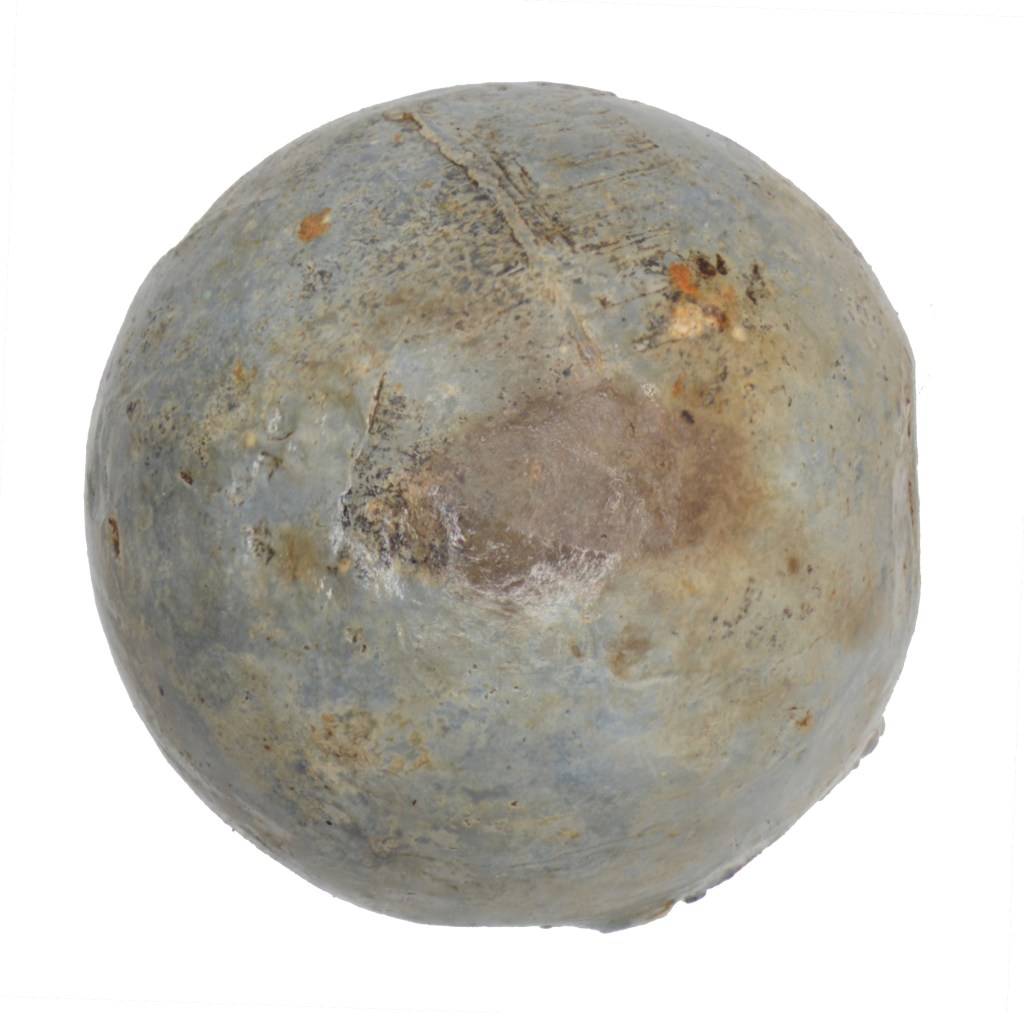
- Weight: 347 gn (22.5 g)
- Diameter: 0.621 in (15.8 mm)
This lovely carbine ball shows signs of the ramrod head on the top, visible in the left hand photograph, as three overlain curves (representing three separate blows of the ramrod). The image on the right shows how the ball has set-up on the right hand side, forming a vertical surface parallel with the bore. A remnant of the seam is visible on the top of the shot.
18th and 19th century smoothbore weapons
Carbine
