The term ‘Land Pattern Musket’ is used here to include the various iterations that the basic format cycled through: Long Land Pattern, Short Land Pattern, India Pattern and New Land Pattern. Although the calibre of the musket remained 0.753 (recorded in British Military Firearms 1650-1850 by Howard Blackmore), the specific weights and diameters of the shot were altered throughout its period of use, moving from 13 bore on it’s introduction in the 1720s, to 14 bore and to 14.5 bore in 1752 (Smallarms of the East India Company, Vol 3 Ammunition and Performance, Harding, page 2) relating to 0.710 in diameter ball down to 0.680 in ball. The change is size was due to the growing use of balled paper cartridges (the paper around the ball increasing the diameter of the projectile) and black powder fouling residue within the barrel reducing the size available, unless cleaned away regularly, making loading more difficult. The difference between the ball and the bore is known as windage and is a critical component of muzzle loaded projectiles – without windage, the projectile will not load through the muzzle. Too much windage, however and the powder charge and the blast created may blow past the ball. The illustration below indicates two different sizes of shot (0.710 in and 0.685 in) centrally placed in the bore of a 0.753 in Land Pattern Musket. The windage is shown as the area between each of the balls and the bore.
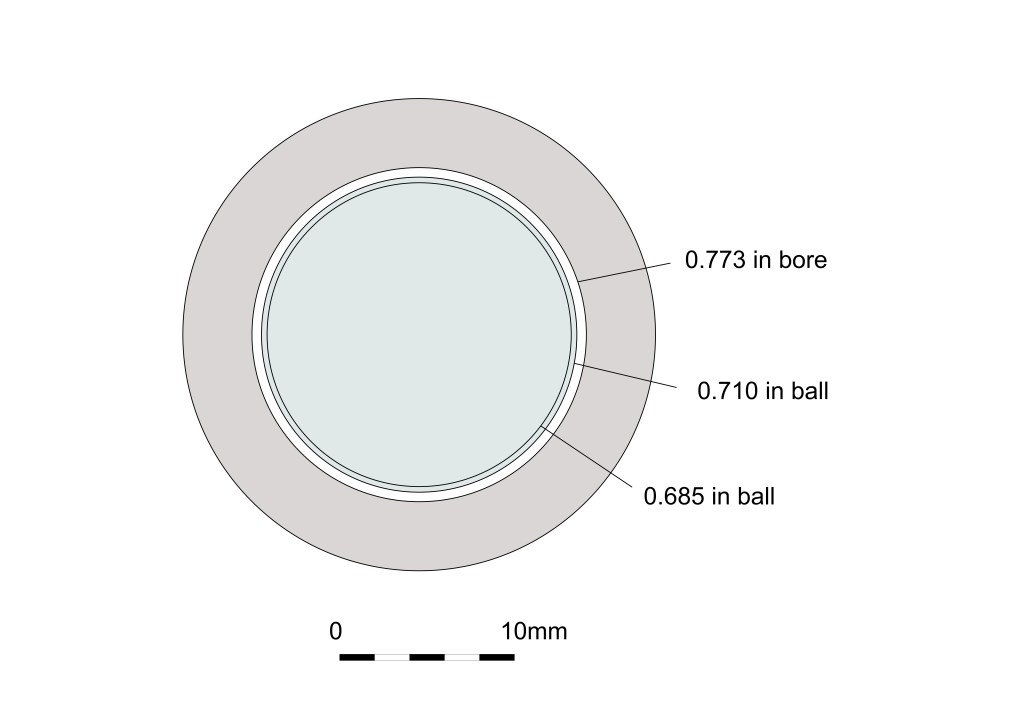
Whichever size of ball was then in use, casting the shot in moulds also introduced a minor fluctuation in the standard size and weights, due to contraction and air bubbles within the lead. From circa 1800 rolling machines were used at the Board of Ordnance arsenals, in which shot was placed after casting, to create a more uniform sphere (the rolling machines removed any trace of the seam and sprue). Napoleonic era musket shot will therefore be a near perfect sphere, without any visible irregularities. Finally, from 1839 balls were made by compression, making the diameter and weight consistent. By the late 1830s the flintlock musket was replaced by the percussion musket, which was the same overall system (firing the same size shot) but the flint lock method of ignition was replaced by the percussion lock and cap (initial versions were modified from flintlocks, while later versions were made as new). To summarise, there is no consistent and definitive weight or diameter for shot used in the Land Pattern Musket family, rather there is a breadth of weights and measurements within which the shot falls. In the 1830s the average weight and diameter of shot for the musket were: 487 grains and 0.685 in (Smallarms of the East India Company, Vol 3 Ammunition and Performance. This is also where you will find an excellent in-depth discussion on windage and shot size).
Not all recovered shot of this size can be definitively stated to have come from a Land Pattern or Percussion Musket however, as commercially produced muskets shooting 14 bore shot were common. The shot below came from military affiliated training grounds and as such can be said to be shot from a Service Musket (or musket bore carbine/pistol).
Weights and dimensions of musket shot (all dates should be considered approximate):
Early 18th century (circa 1722)
- Weight: 538 gn (34.8 g)
- Diameter: 0.712 in (18.1 mm)
- Bore: 13
Later 18th century (prior to 1752)
- Weight: 500 gn (32.4 g)
- Diameter: 0.694 in (17.6 mm)
- Bore: 14
1752
- Weight: 487 gn (31.5 g)
- Diameter: 0.685 in (17.4 mm)
- Bore: 14.5
1842 Pattern Percussion Musket (from the Artillerist’s Manual, 1854)
- Weight: 490 gn (31.7 g)
- Diameter: 0.689 (17.5 mm)
- Bore: 14.5
Musket ball, fired
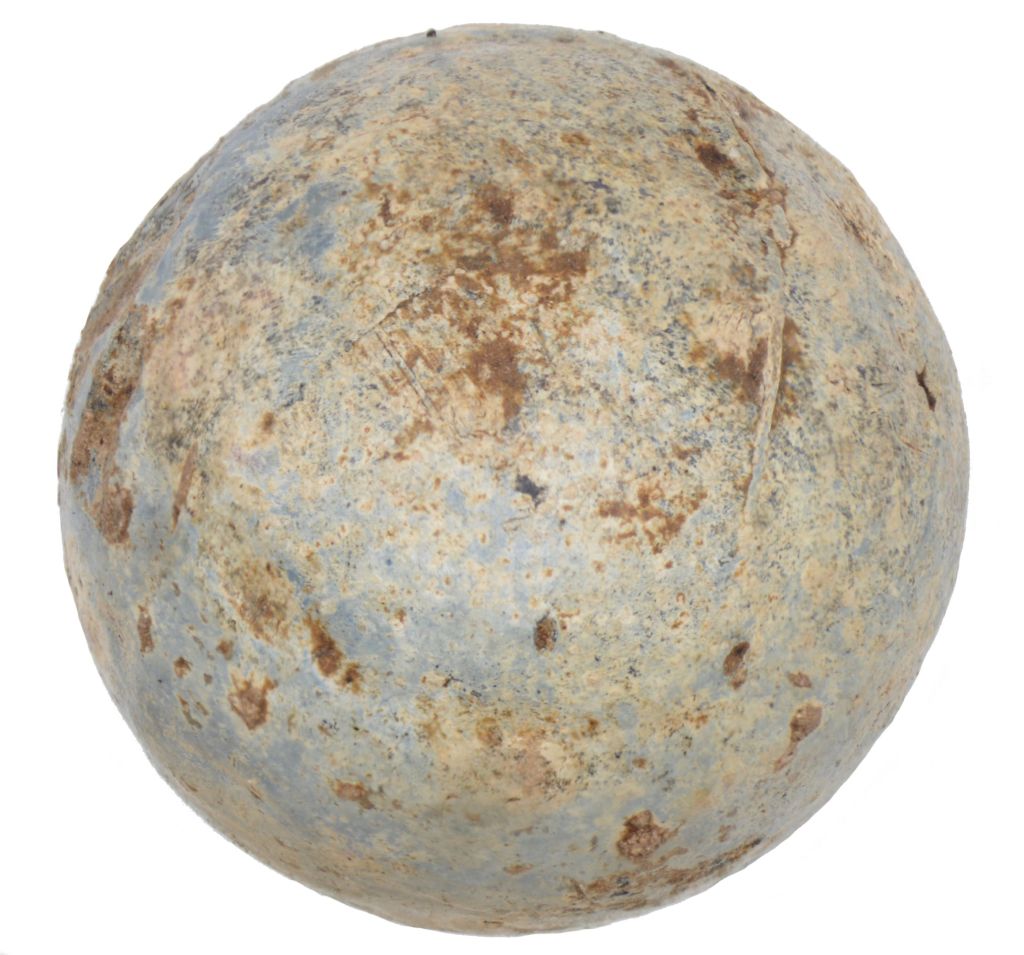
- Weight: 483 gn (31.3 g)
- Diameter: 0.697 in (17.7 mm)
Musket ball, fired
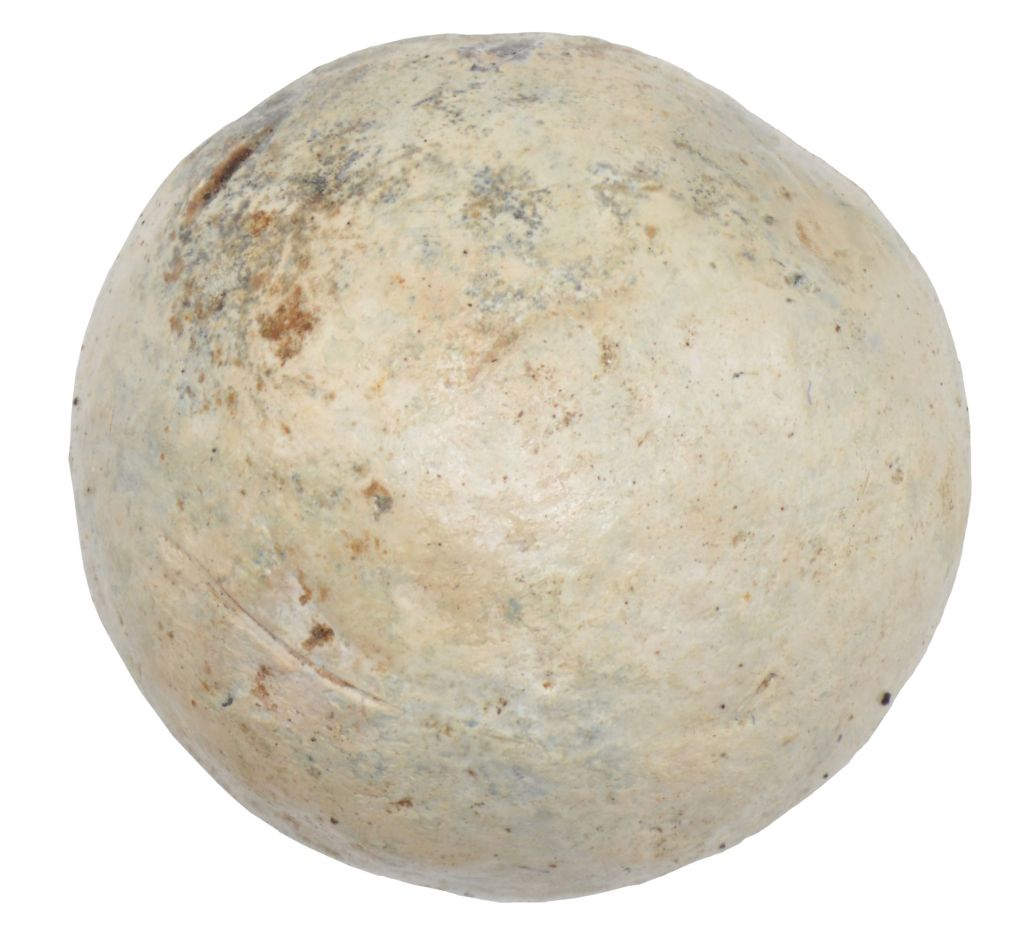
- Weight: 477 gn (30.9 g)
- Diameter: 0.700 in (17.8 mm)
Musket ball, fired
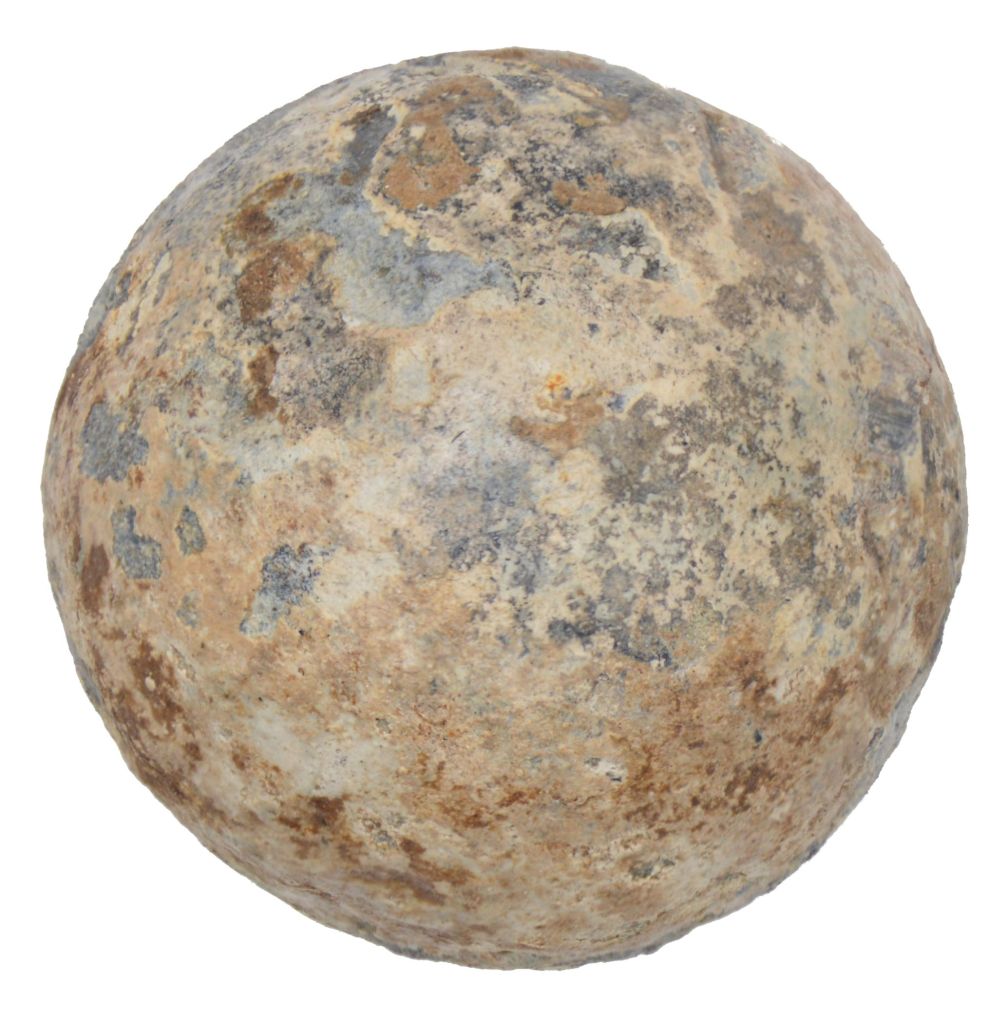
- Weight: 478 gn (30.9 g)
- Diameter: 0.695 in (17.6 mm)
Musket ball, fired and with impact damage
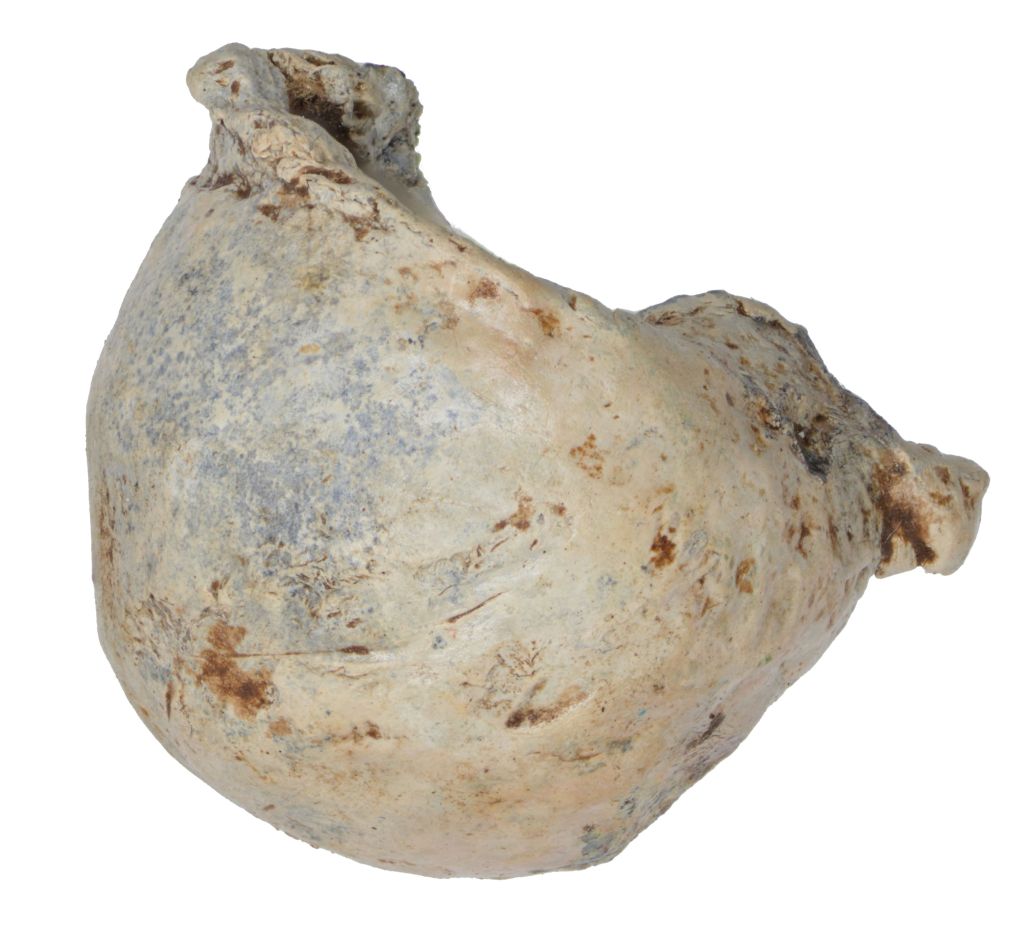
This piece of shot has made a significant impact with something, presumably a wooden target – the top of the image is the direction in which it was travelling as it left the barrel. The flat part of the surface at 9 o’clock is set-up, where the ball made contact with the inside of the musket barrel (and is parallel with it) as it was being projected, and has been forged into the shape of the bore. Set up does not necessarily occur around the entire ball, in fact it is very common to see barrel marks on only one side, as in this instance.
18th and 19th century smoothbore weapons
Musket
