John Jacob experimented with mechanically fitted projectiles while stationed in India and at great personal expense, created a system of rifles and shot which were, he believed, superior to any then available. He developed his four groove rifle as an extension of the two-groove Brunswick, creating a double-belted ball to shoot with it. William Metford also experimented with a double-belted ball, from 1840, and Jacob might be able to claim ignorance of this earlier parallel development, given his remote location to British developments, but it is possible he used the idea as a starting point. Jacob then went on to develop an elongated projectile with four studs, which despite being rejected for service in Britain, was later used to arm the 1st Regiment of Jacob’s Rifles, in 1858, with 32 bore double barrel rifles of his own design (British Military Firearms 1650-1850, Blackmore, page 203). His rifles were mostly manufactured by Daw of London and his ‘army’ version seemed to have come in two calibres: the earlier version of 24 gauge (.577 in calibre) and later version of 32 gauge (0.524 in calibre) (English Guns and Rifles, George page 303), although variations of calibre would have been likely for commercially made guns. Some projectiles had a hollow nose, for the insertion of a percussion tube, for both military and hunting applications. There seem to be a large variety of Jacob ‘type’ projectiles available on the collectors market today and some of these appear to be modern casts, but whether these have manufactured in original moulds is not clear. There were certainly were many of these rifles available in the late 1850s and for a short period they were undoubtedly quite popular.
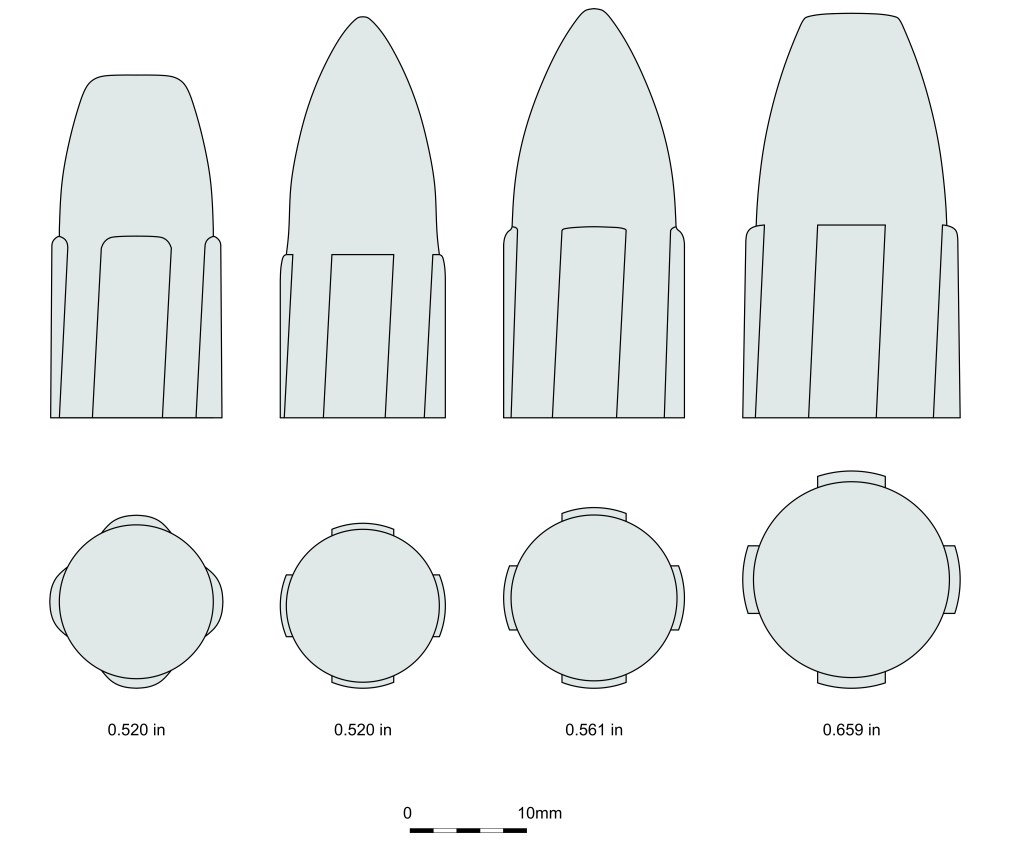
The illustration above shows two types of 32 gauge Jacob bullet on the left, followed by a 24 gauge bullet and on the right a 16 gauge bullet.
Official weight and dimensions of the two recognised Jacobs ‘army’ rifles (from The Rifle and How to use it, Busk 1859 and English Guns and Rifles, George 1947).
24 gauge
- Weight: 0.615 gn (39.8 g)
- Diameter: 0.577 (14.6 mm)
- Length: 1.437 in (36.5 mm)
32 gauge
- Weight: 525 gn (34 g) approx.
- Diameter: 0.524 in (13,3 mm)
- Length: 1.307 in (33.2 mm)
Jacob 24 gauge bullet, fired
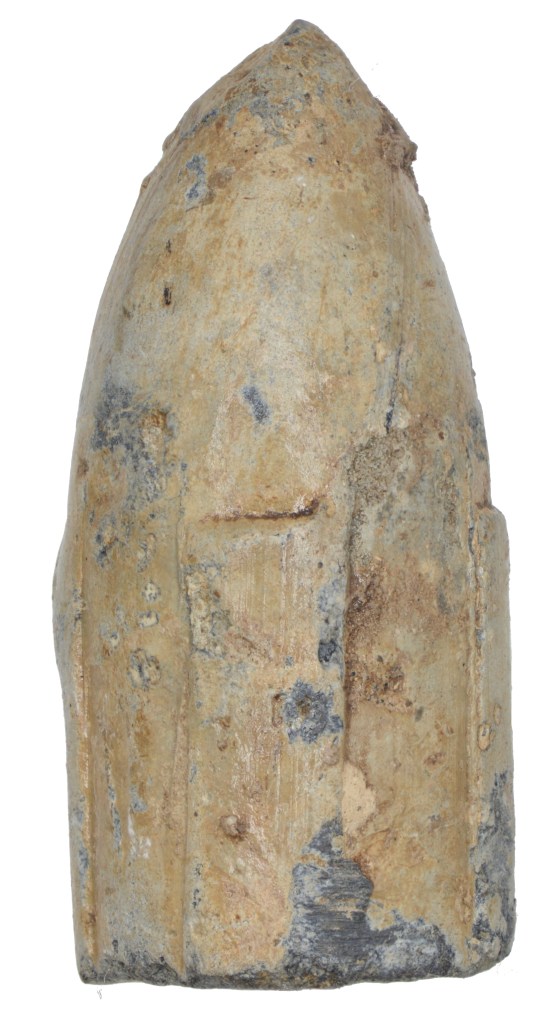
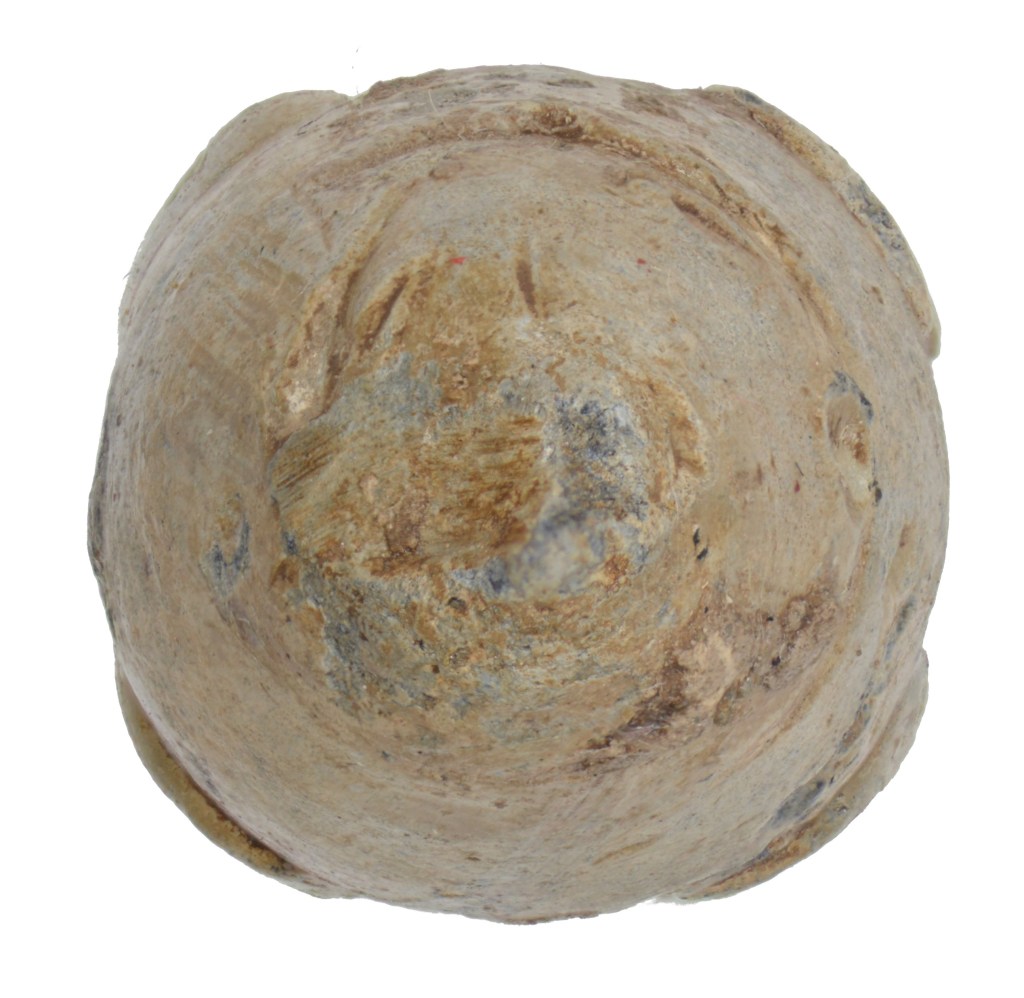
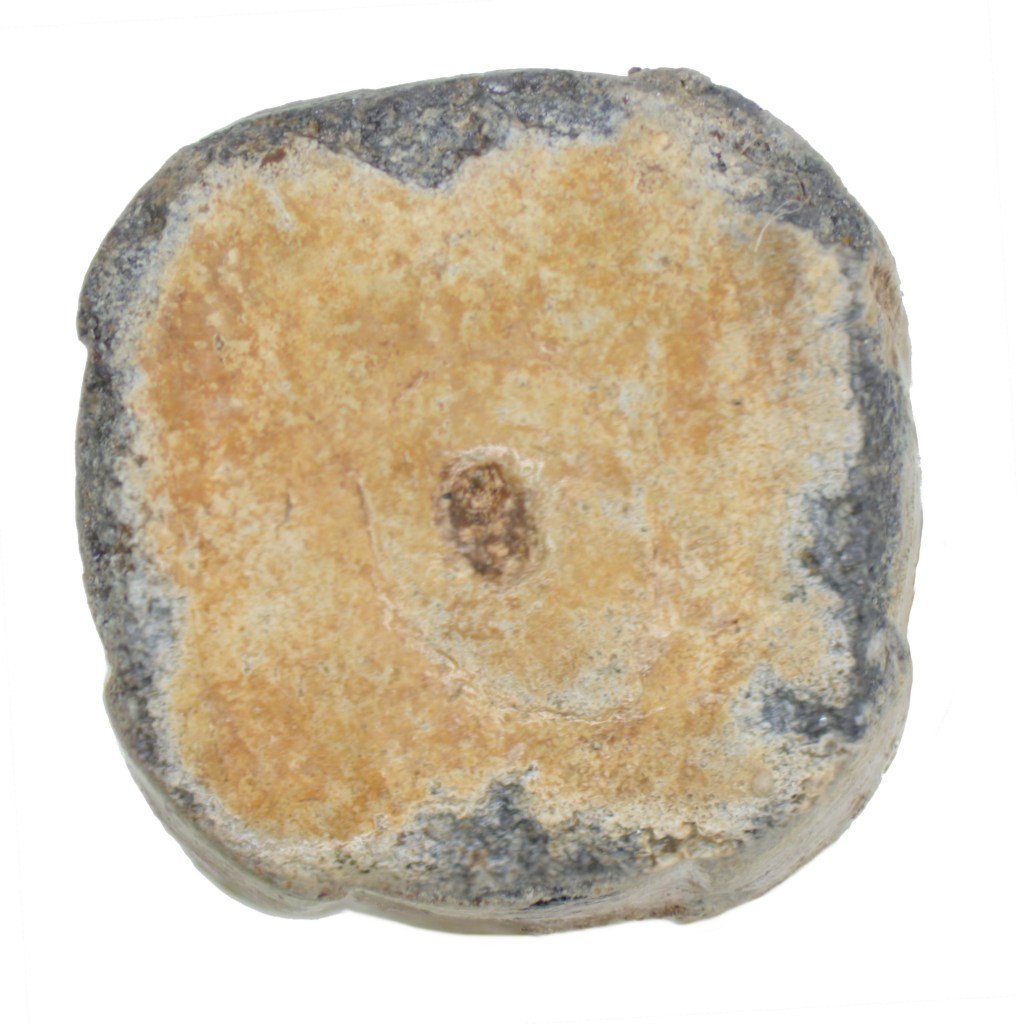
- Weight: 762 gn (49 g)
- Diameter: 0.579 in (14.7 mm)
- Diameter across studs: 0.639 in (16.2 mm)
- Length: 1.258 in (31.9 mm)
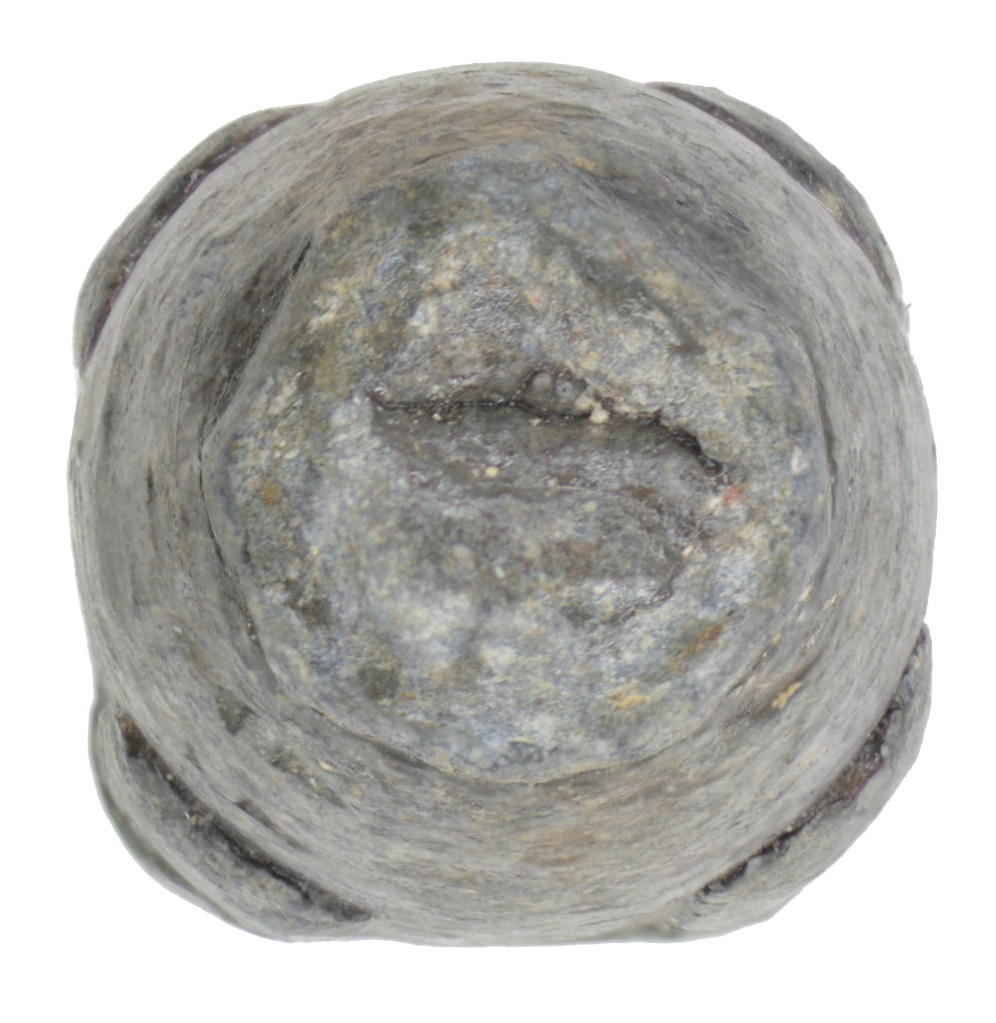
This 24 gauge Jacob bullet is good condition. The firing of the projectile has left small rifling marks parallel with the studs, visible either side of them in the photograph on the left. The ramrod head for the explosive projectile needed to be deeply recessed, (to avoid striking the fulminate of mercury detonator) and this example appears to show signs of ramming with such a ramrod, visible in the central photograph, as a ring circling at least fifty percent of the nose.
Jacob 24 gauge bullet, fired
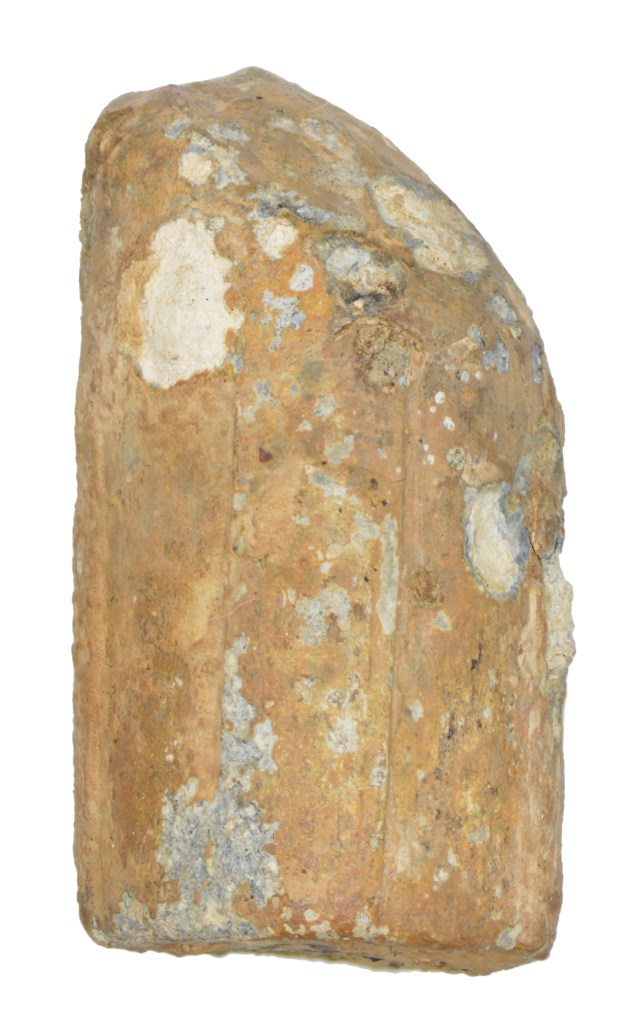
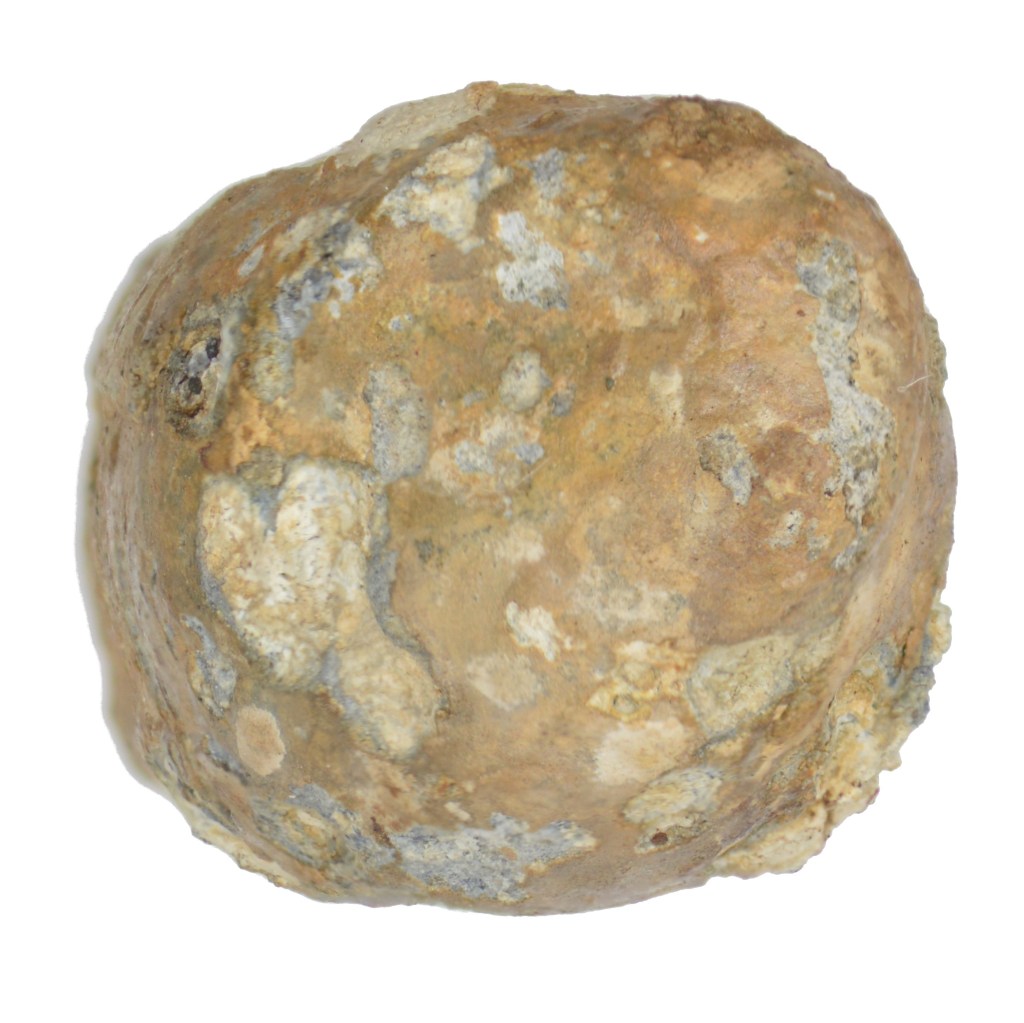
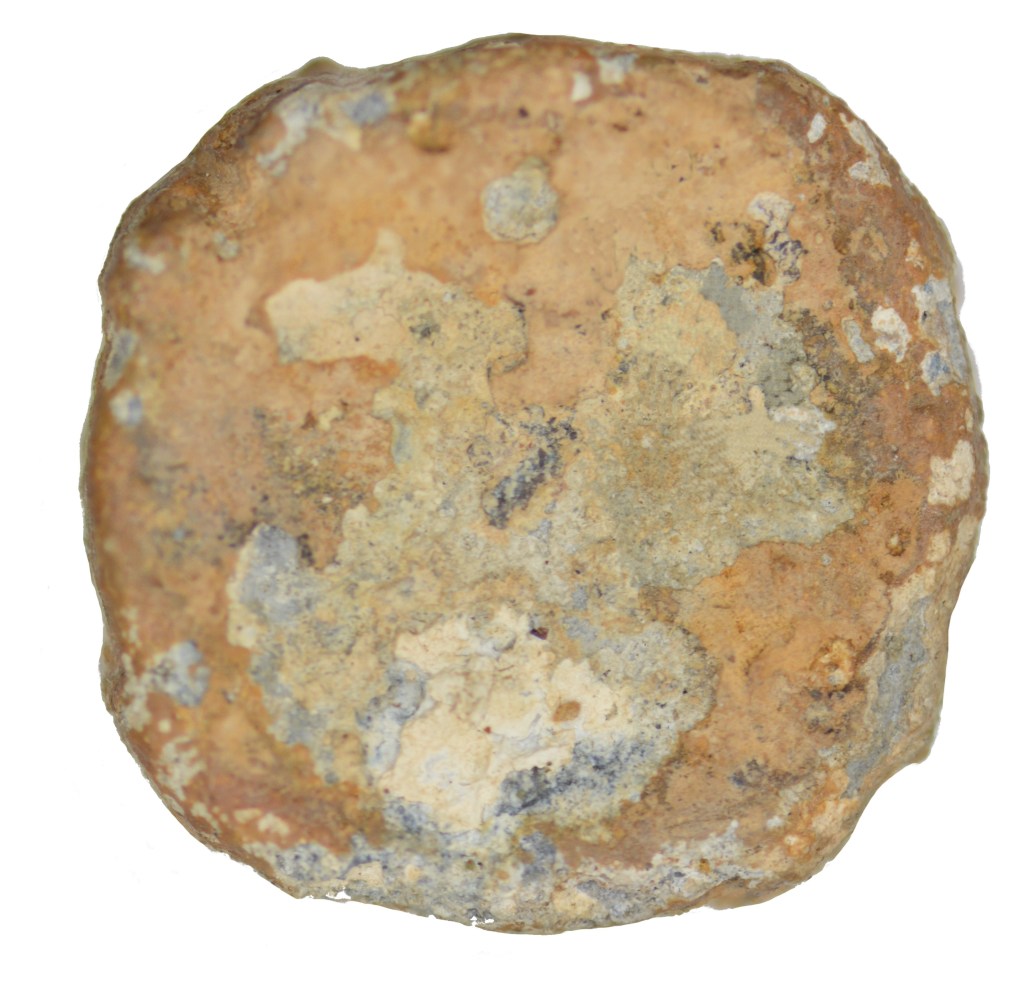
- Weight: 677 gn (43.8 g)
- Diameter: 0.579 in (14.7 mm)
- Diameter across studs: 0.610 in (15.5 mm)
- Length: 1.114 in (28.5 mm)
The 24 gauge bullet has suffered from impact damage, but is still recognisably a Jacob.
Jacob 32 gauge bullet, unfired
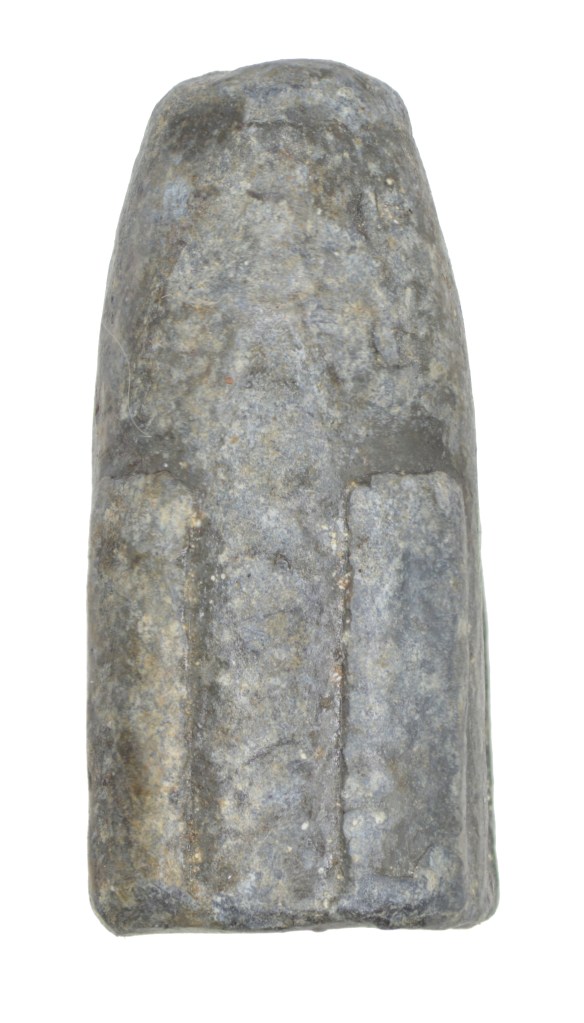
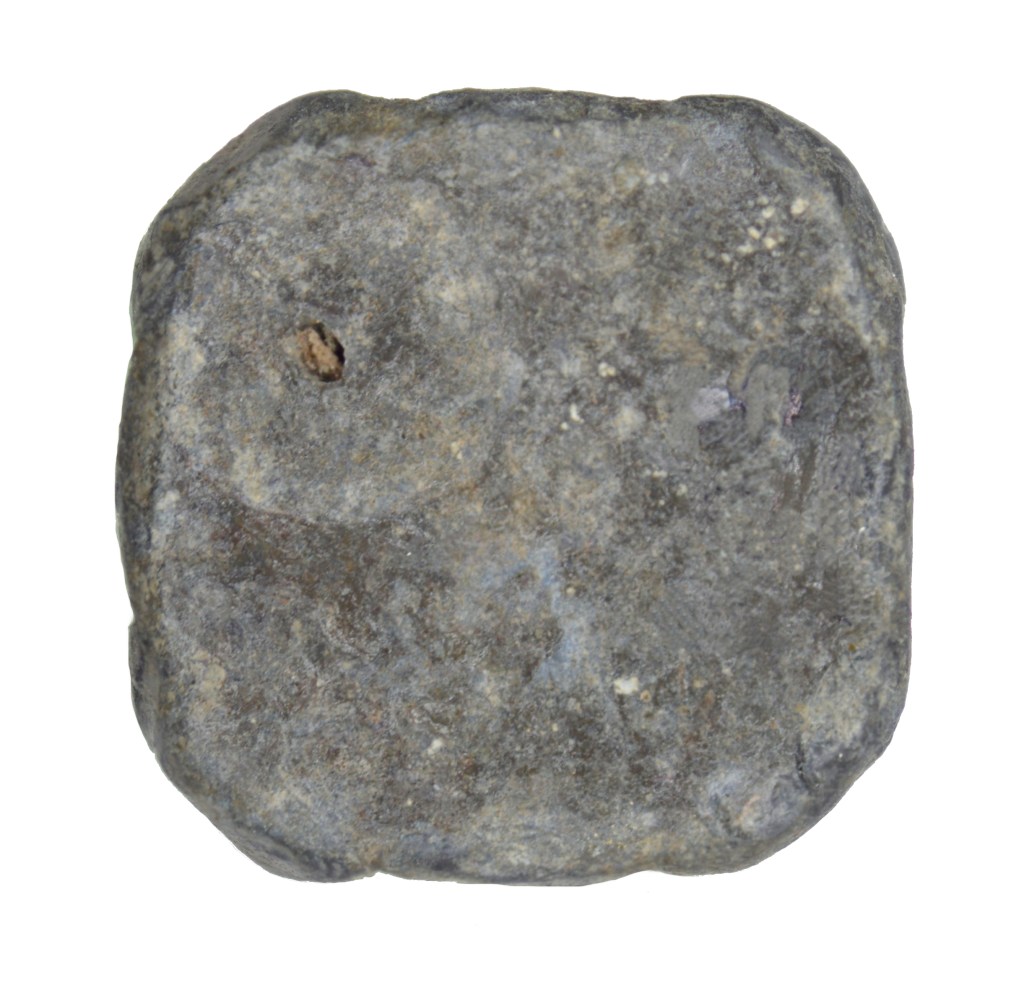
- Weight: 632 gn (40.9 g)
- Diameter: 0.519 in (13.2 mm)
- Diameter across studs: 0.584 in (14.8 mm)
- Length: 1.131 in (28.7 mm)
While this bullet cannot claim to have been dug up, it does appear to have been made in antiquity. This is the smaller of the two official Jacob bullets, although notably with a flat nose. It does not appear to have been fired, so the nose shape is intentional. Perhaps this was a mock explosive version. The ingate for the mould in which this was made is visible as the circle visible in the upper left corner of the photograph on the right.
Jacob 16 gauge bullet, unfired
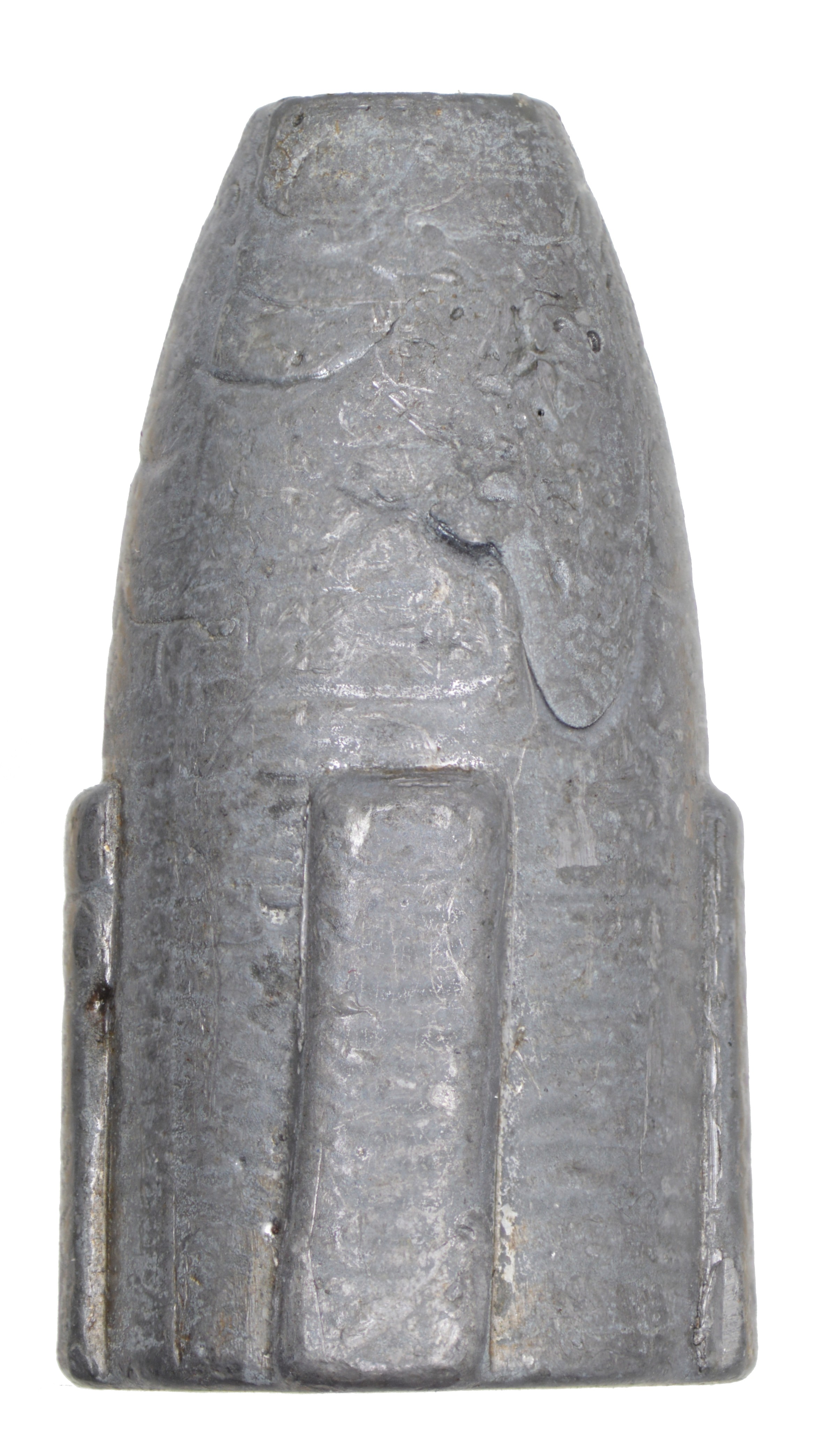
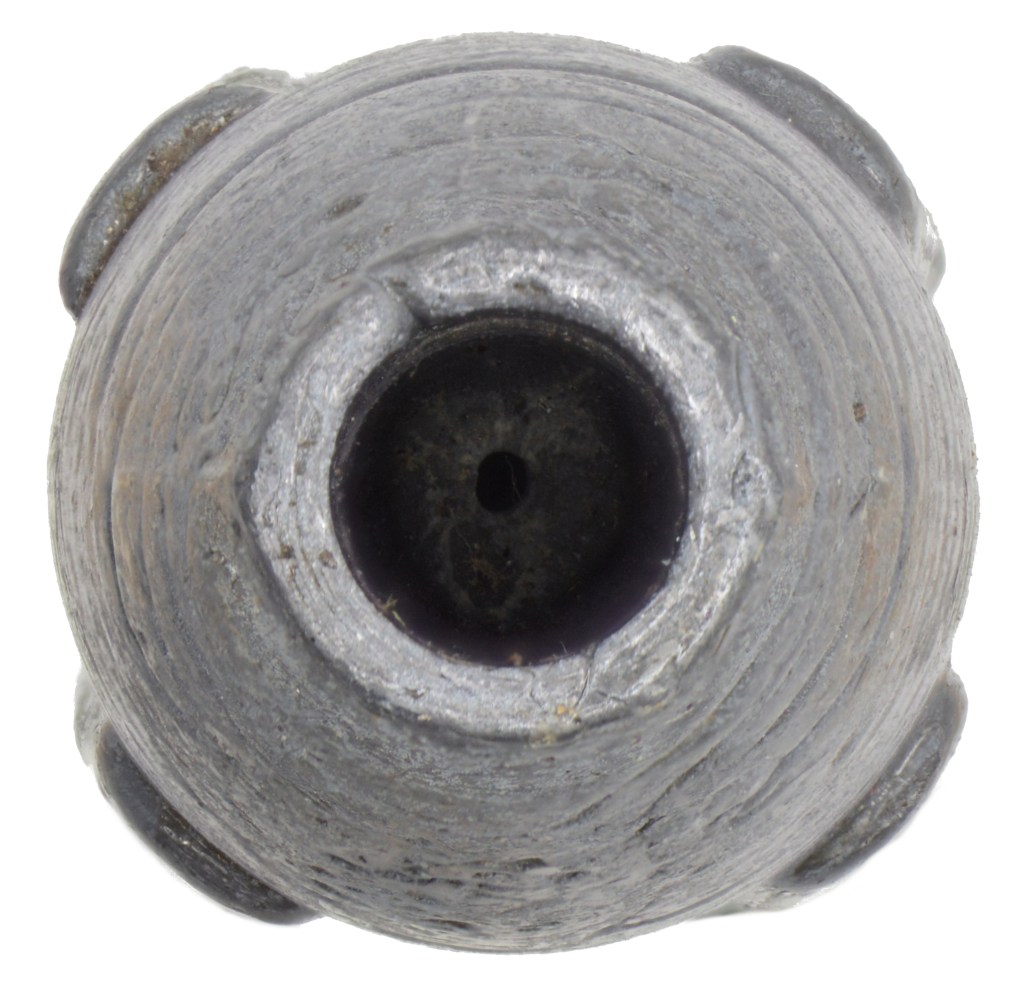
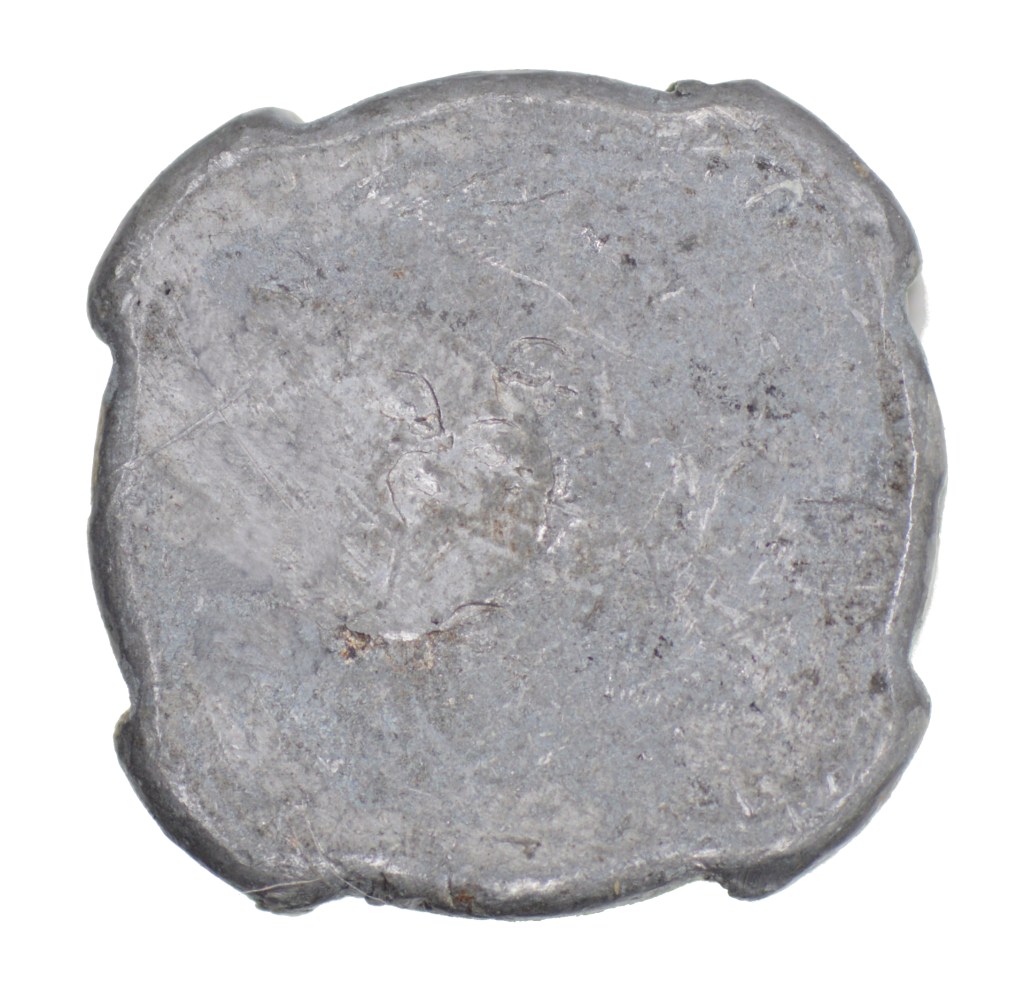
- Weight: 1062 gn (68.8 g)
- Diameter: 0.659 in (16.7 mm)
- Diameter across studs: 0.728 in (18.5 mm)
- Length: 1.369 in (34.8 mm)
This bullet is definitely not excavated and possibly not even original, due to its very clean state, but you never know. It sits outside of the two main Jacob rifle calibres referred to above, but there were likely many variations in calibre within the commercial gun world, The hollow nose was for the insertion of a percussion tube, turning the projectile into an explosive shell.
The images below show a variety of Jacob bullets, some of which are modern casts, some possibly original. Although only three calibres of rifle are represented, there is considerable variation in the bullet length and length of the studs.
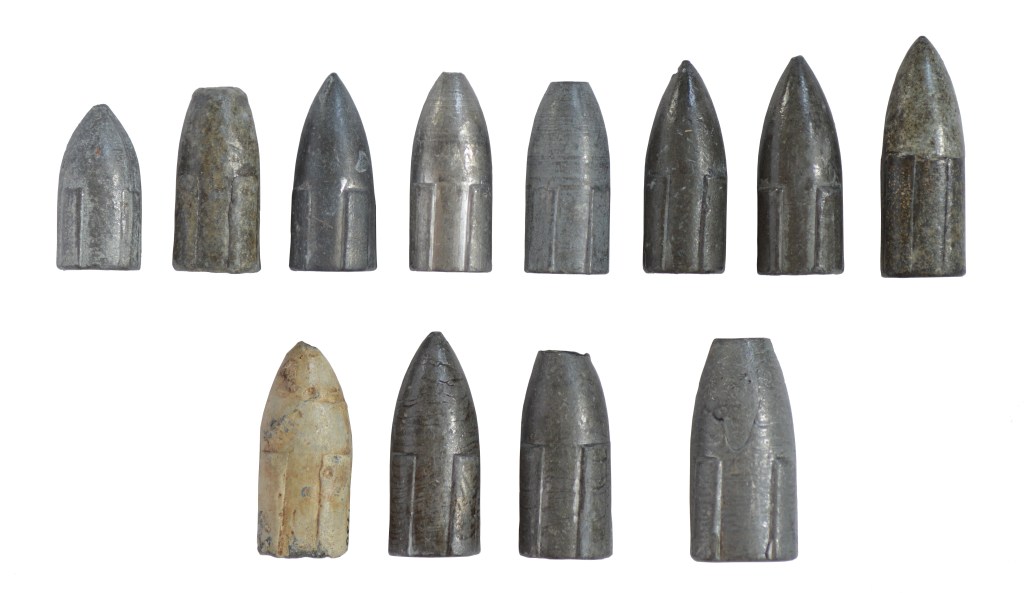
The upper row consists of bullets for the smaller calibre rifle (0.577 in) while the lower row consists of the 0.615 in bullets on the left and the single 0.659 in bullet on the right.
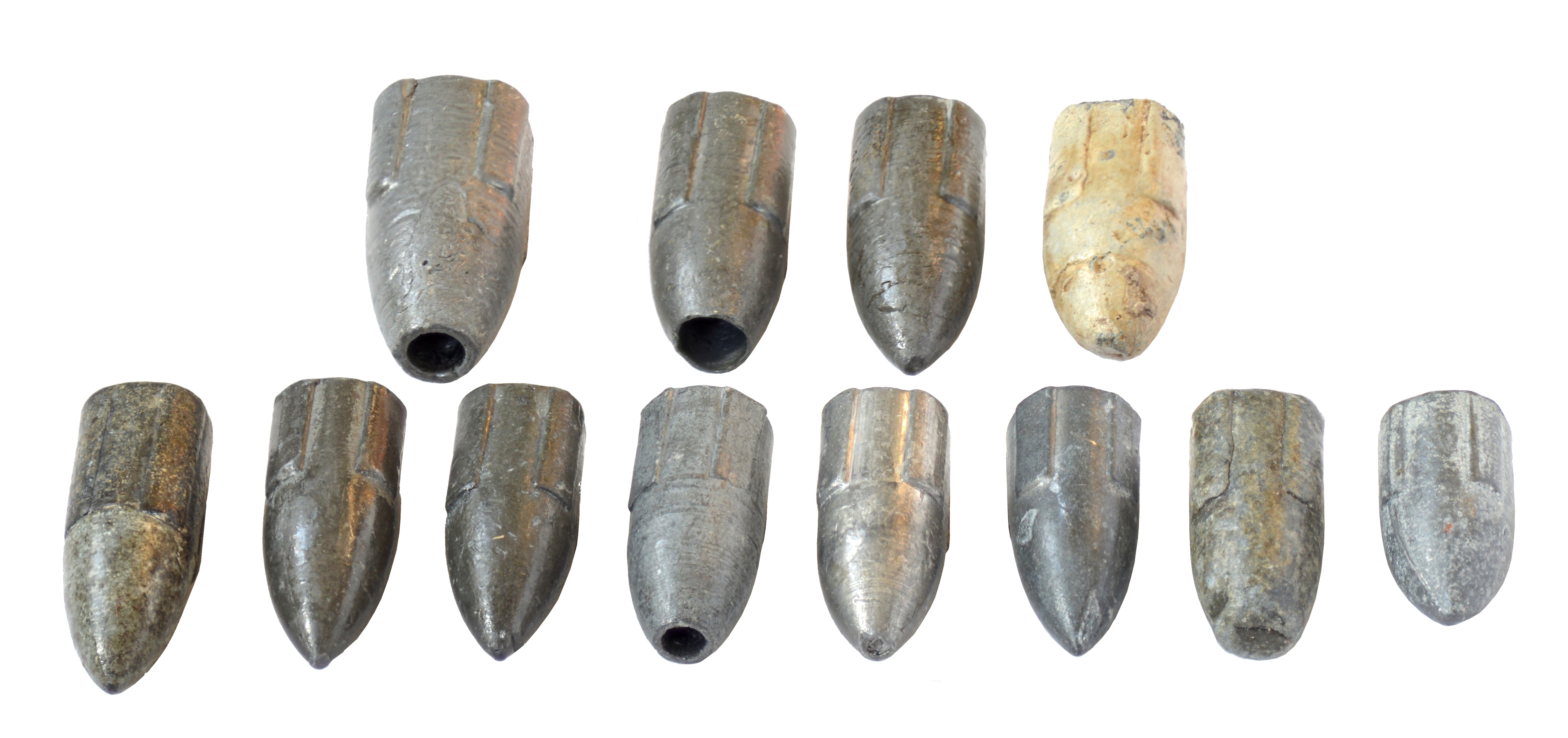
The same group viewed from the other direction, showing the hollow tips of three of the bullets.
Jacob bullets
