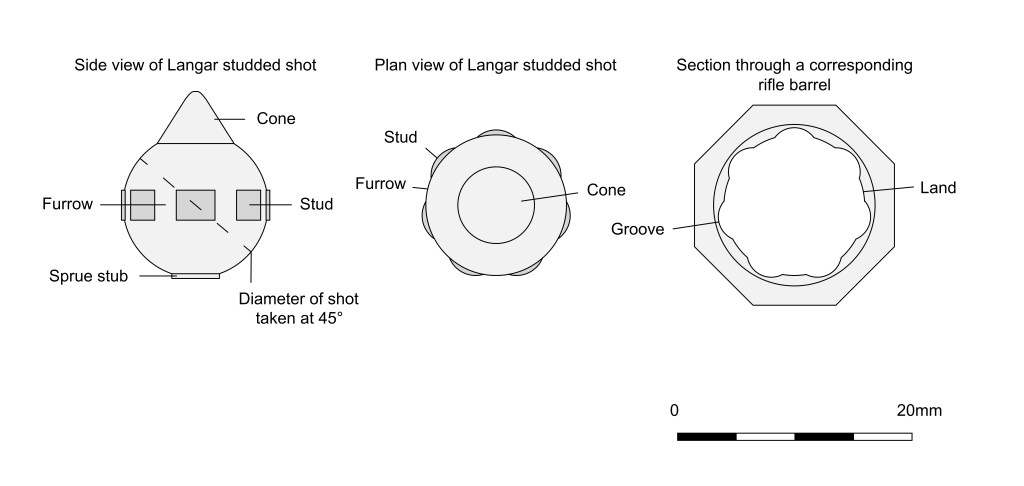
This shot was found by The Field Detectives and with the aid of the Royal Armouries Leeds, we went on a mission to identify it. The shape is unusual: a ball with a cone on top, a flat base and seven studs around the perimeter. A previously unrecorded form of shot, we managed to narrow down the manufacturer to Henry Staudenmayer, who worked from between 1799 and 1823. Other master gunmakers had promoted the mechanical fit system prior to this, so while Staudenmayer did not invent the format, he refined it to near perfection. For a full breakdown of the story, see the book available here.
A talk given at the Royal Armouries Leeds, with the Field Detectives (as part of the Winter Lectures 2024) is available here.
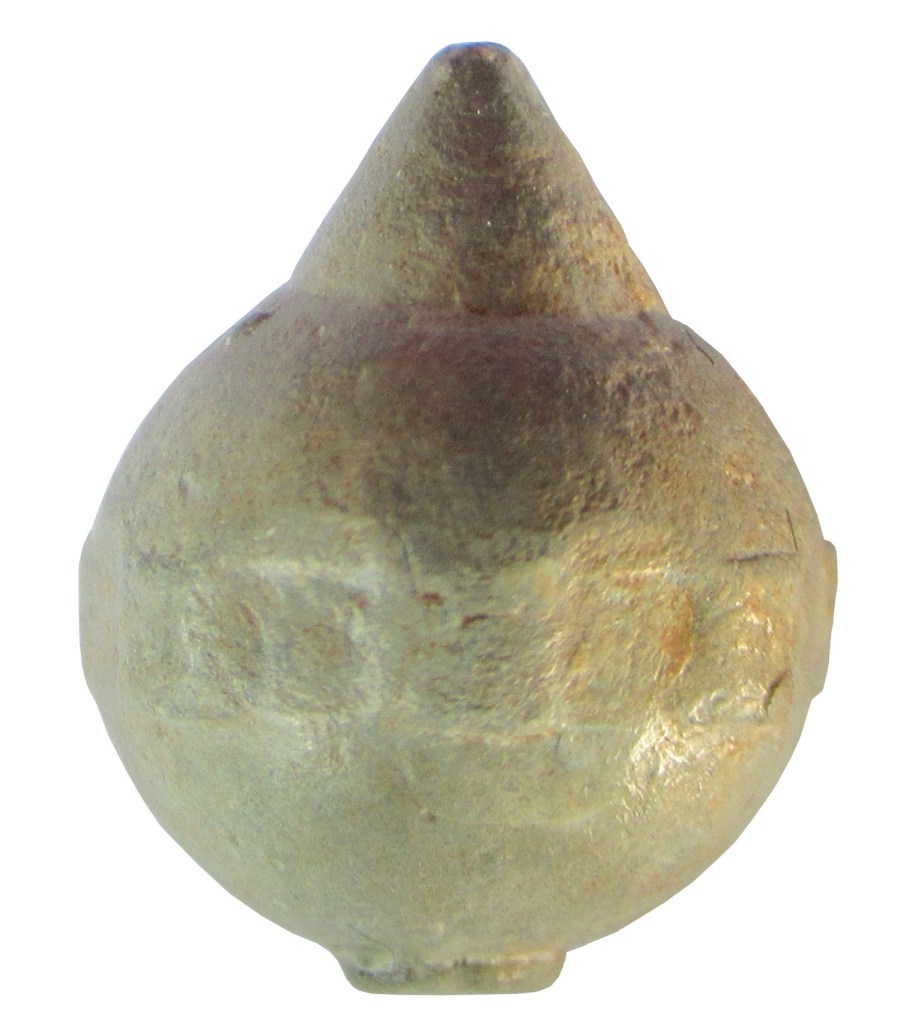
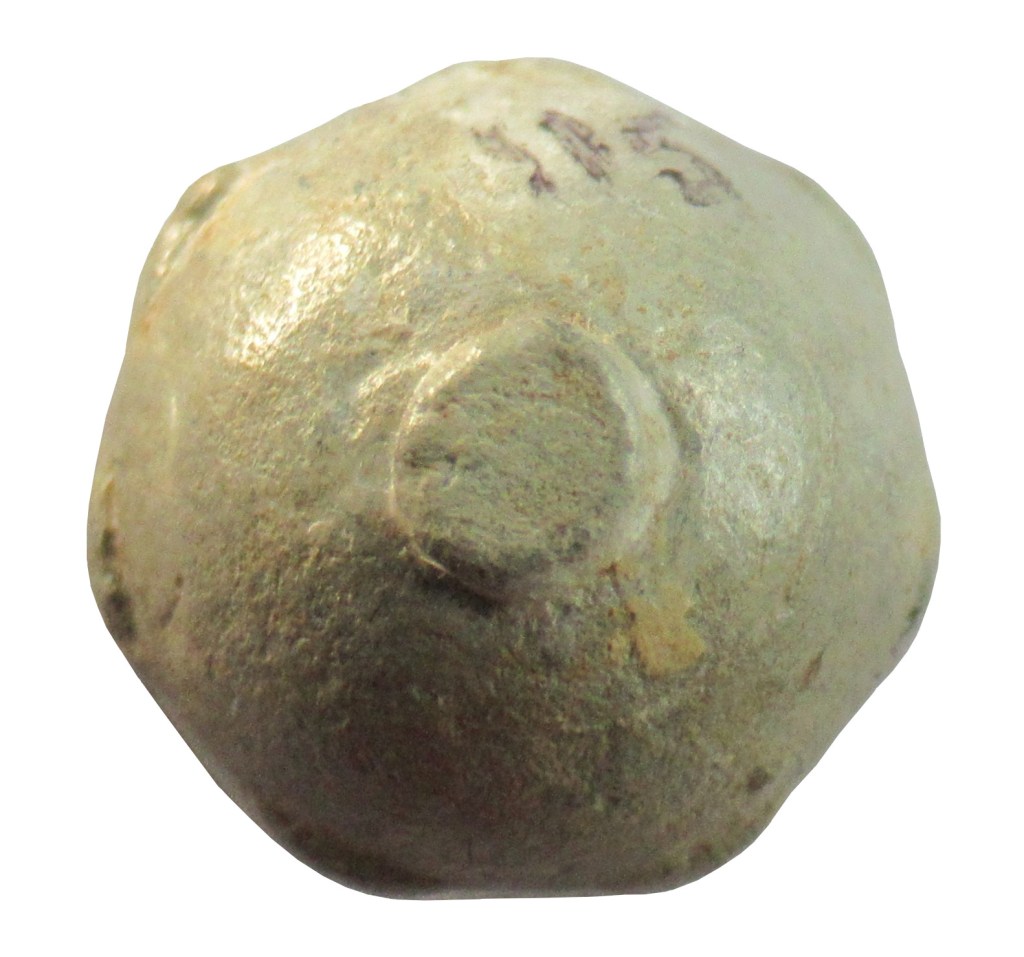
- Weight: 166 gn (10.7 g)
- Diameter: 0.480 in (12.2 mm)
- Length: 0.612 in (15.5 mm)
The cone on the top of the projectile matches a conical hollow in the ramrod, to aid with keeping the shot parallel with the bore on loading. There are seven studs, the mould of which was formed from a segment of the rifle barrel. The stub on the base is the sprue stub formed in the mould ingate. There are seven studs.
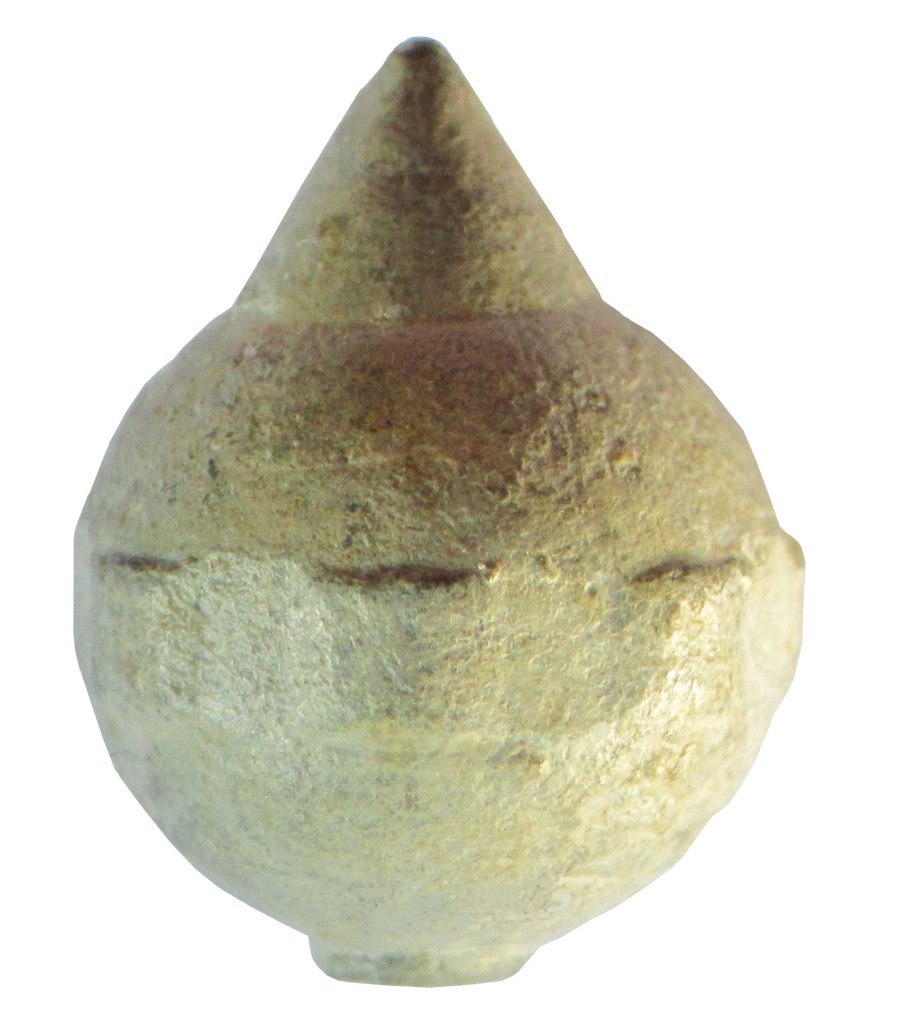
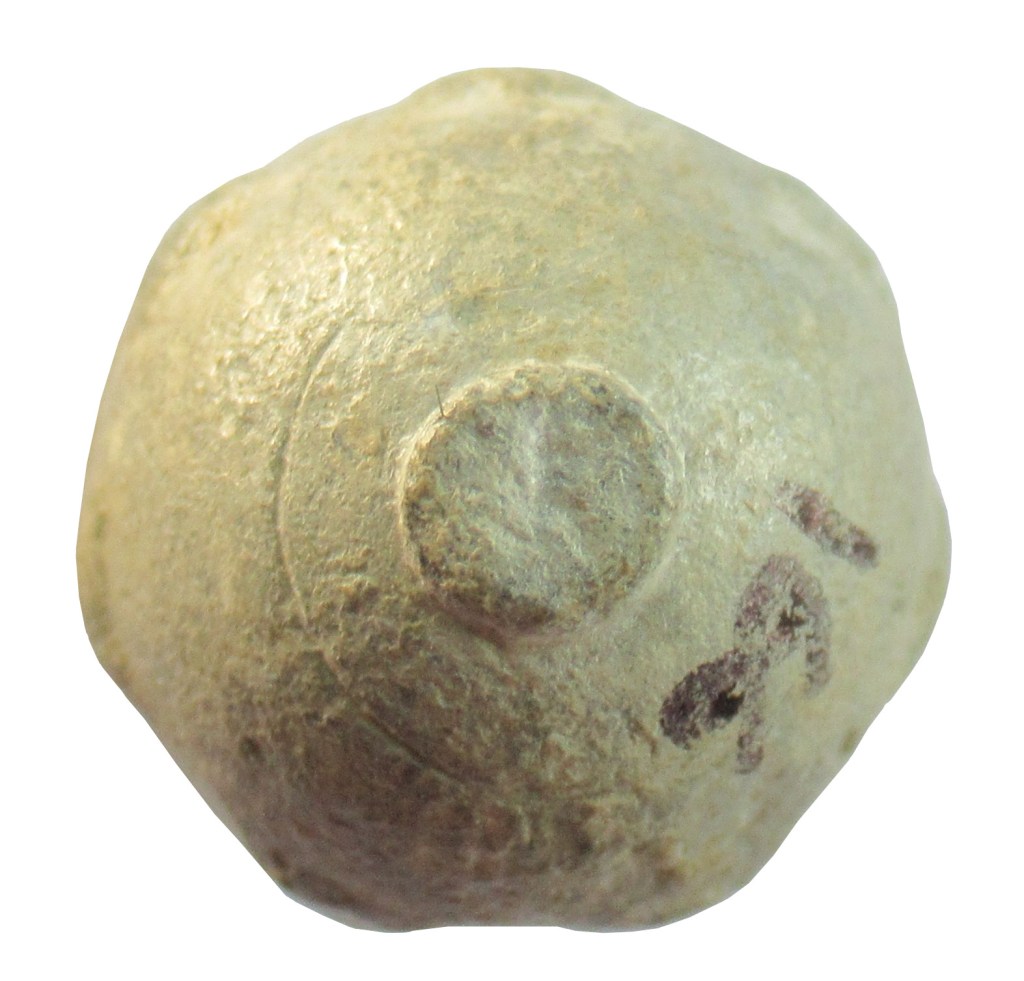
- Weight: 166 gn (10.7 g)
- Diameter: 0.476 in (12.1 mm)
- Length: 0.625 in (15.9 mm)
The circular mark on the base of this bullet is from contact with the breech air-duct, within the air rifle.
Langar studded shot
