The Brunswick two-groove rifle and its belted ball projectile come in for a lot of criticism, historically and in modern times, for being a flawed, even retrograde arm. However, at the time of introduction in 1837 it was perhaps not as open to criticism as later became, providing an improvement on the previous rifles available. The evidence for this comes in the form of the number of commercial two-groove/belted ball systems that were made for the civilian market. While not needing to manufacture such a large calibre weapon as the service arm, the commercial gun makers produced two-groove rifles in great quantities in a variety of smaller calibres. Perhaps the argument that mechanically fitted projectiles did not flourish in the military world may be true (due do problems with loading and barrel fouling), but it appears the opposite can be said of them in the civilian and sporting world.
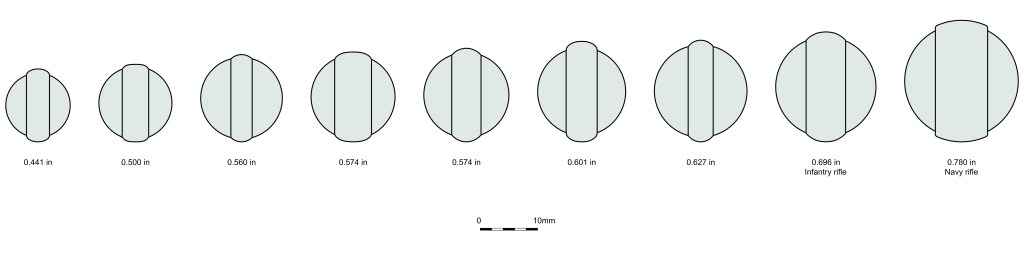
This illustration shows the variety of sizes and shapes of the commercial belted balls, against the service Infantry and Navy balls on the right (for details on the service belted balls, click here).
Belted ball, fired
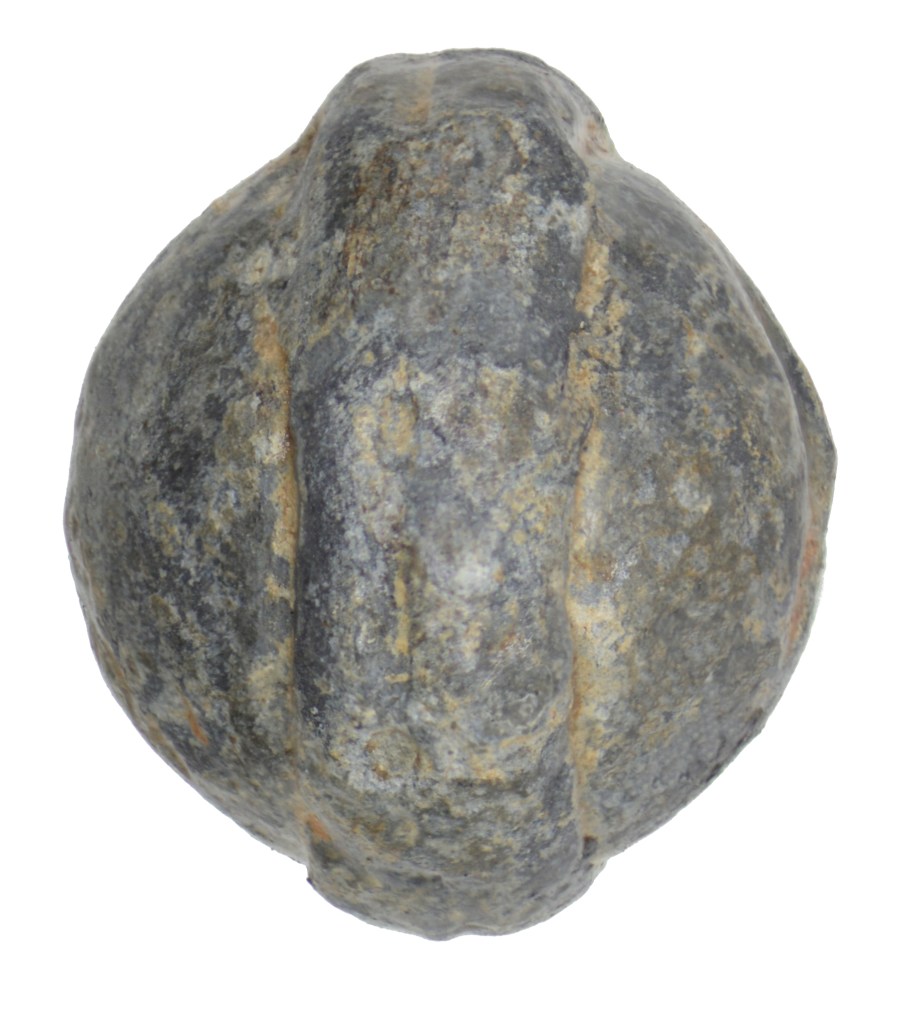
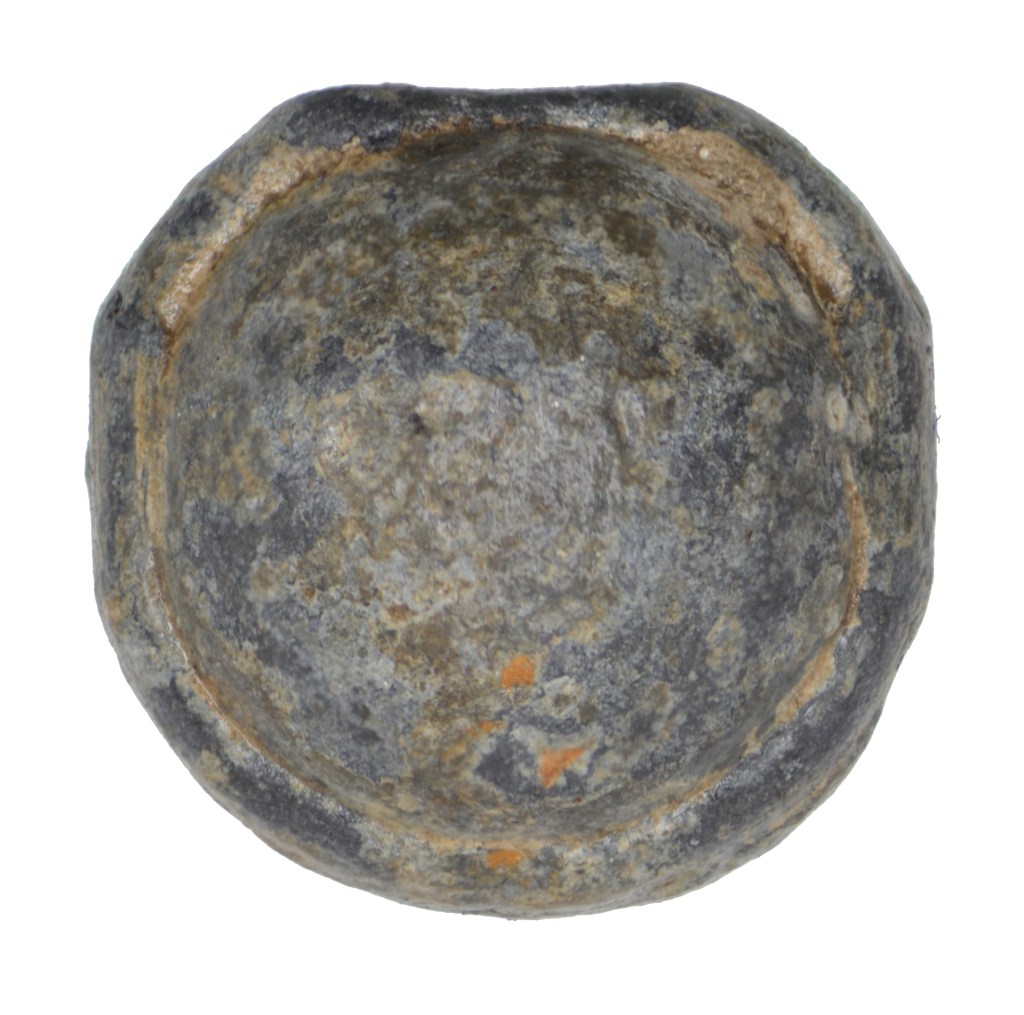
- Weight: 138 gn (8.9 g)
- Diameter across ball: 0.438 in (11.1 mm)
- Diameter across belt: 0.502 in (12.7 mm)
This is the smallest of the belted balls shown here, but it still features the normal group of markings: a ramrod flat at the top (not shown on the left hand image), the bite of the rifling on the two vertical edges on the right hand image, coupled with the set-up across the centre of the ball.
Belted ball, unfired
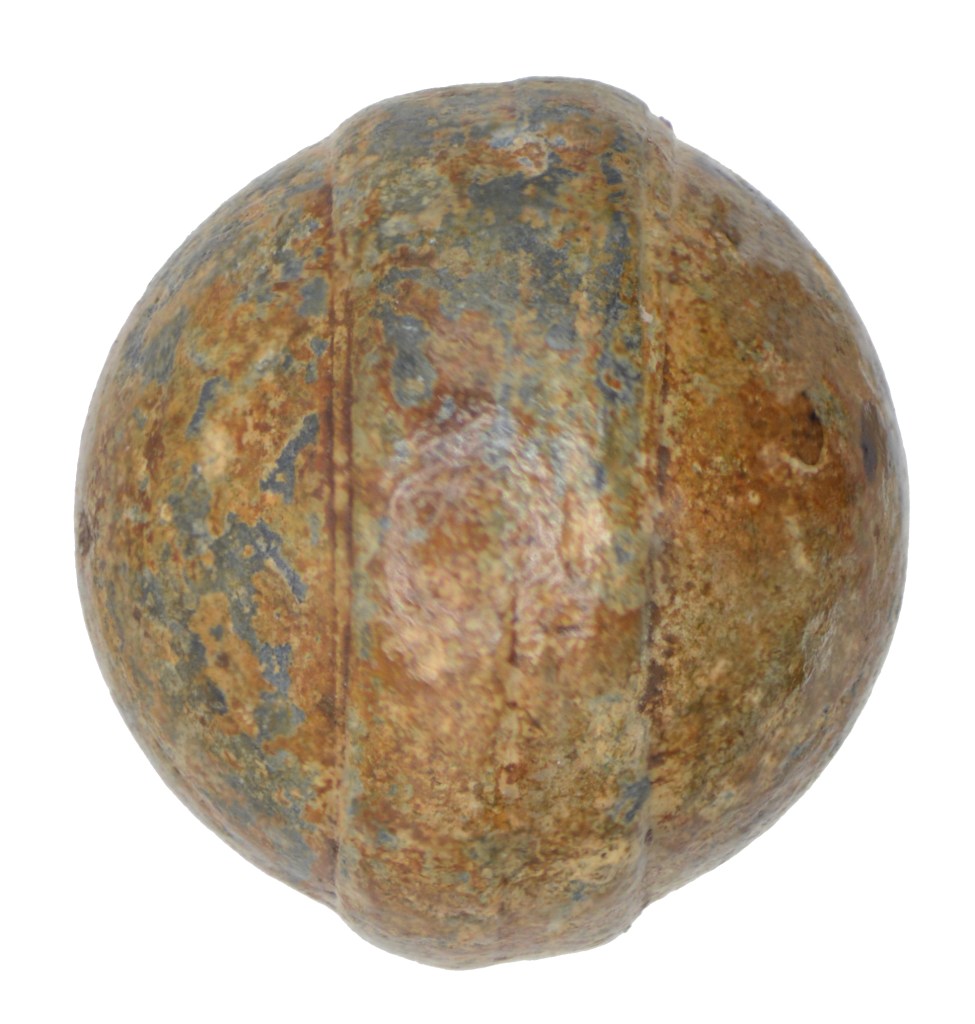
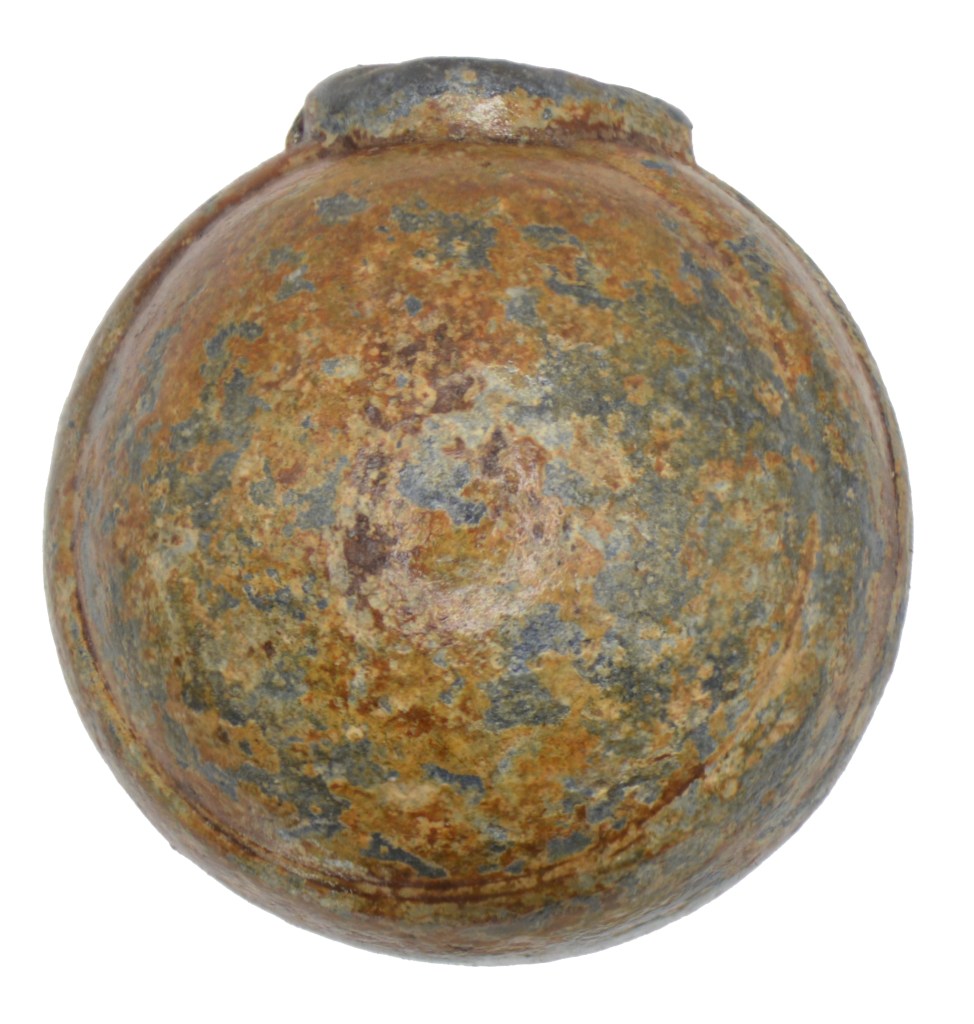
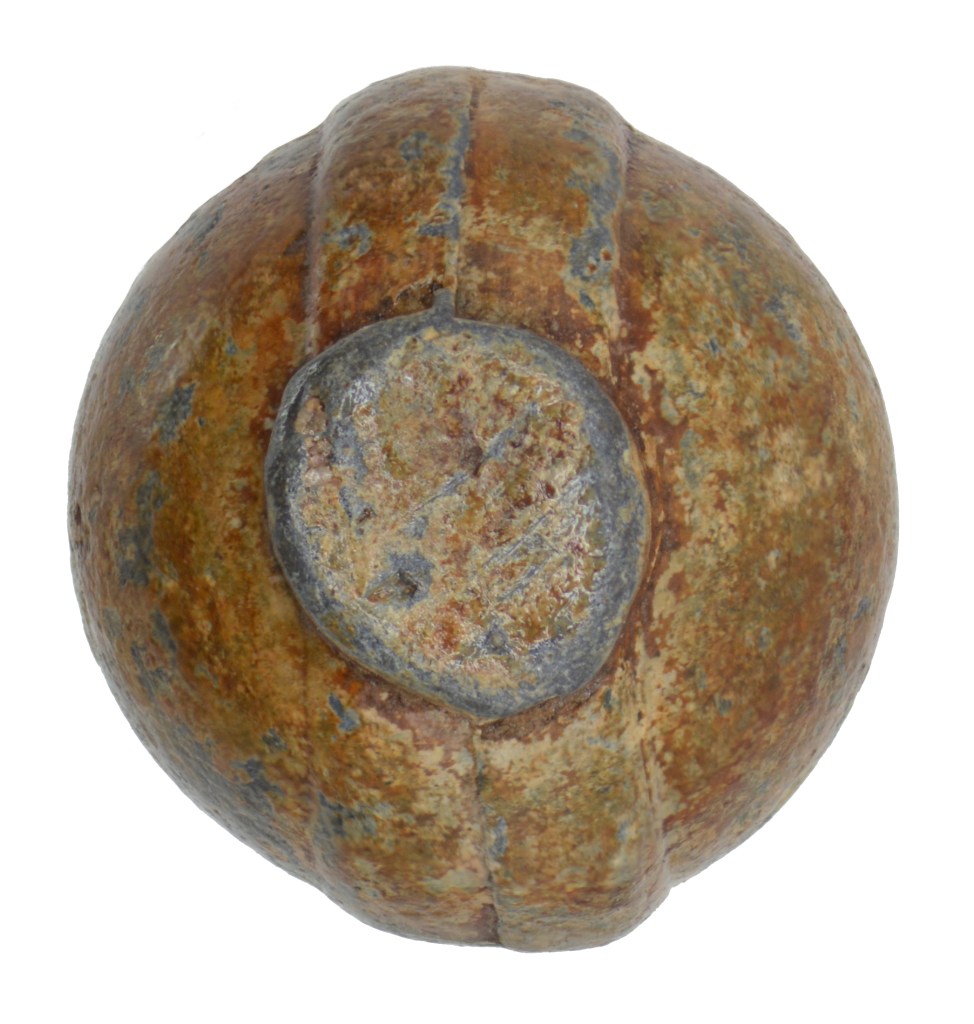
- Weight: 202 gn (13 g)
- Diameter across ball: 0.501 in (12.7 mm)
- Diameter across belt: 0.538 in (13.7 mm)
This small belted ball is unfired and has an unusually large sprue remaining.
Belted ball, fired
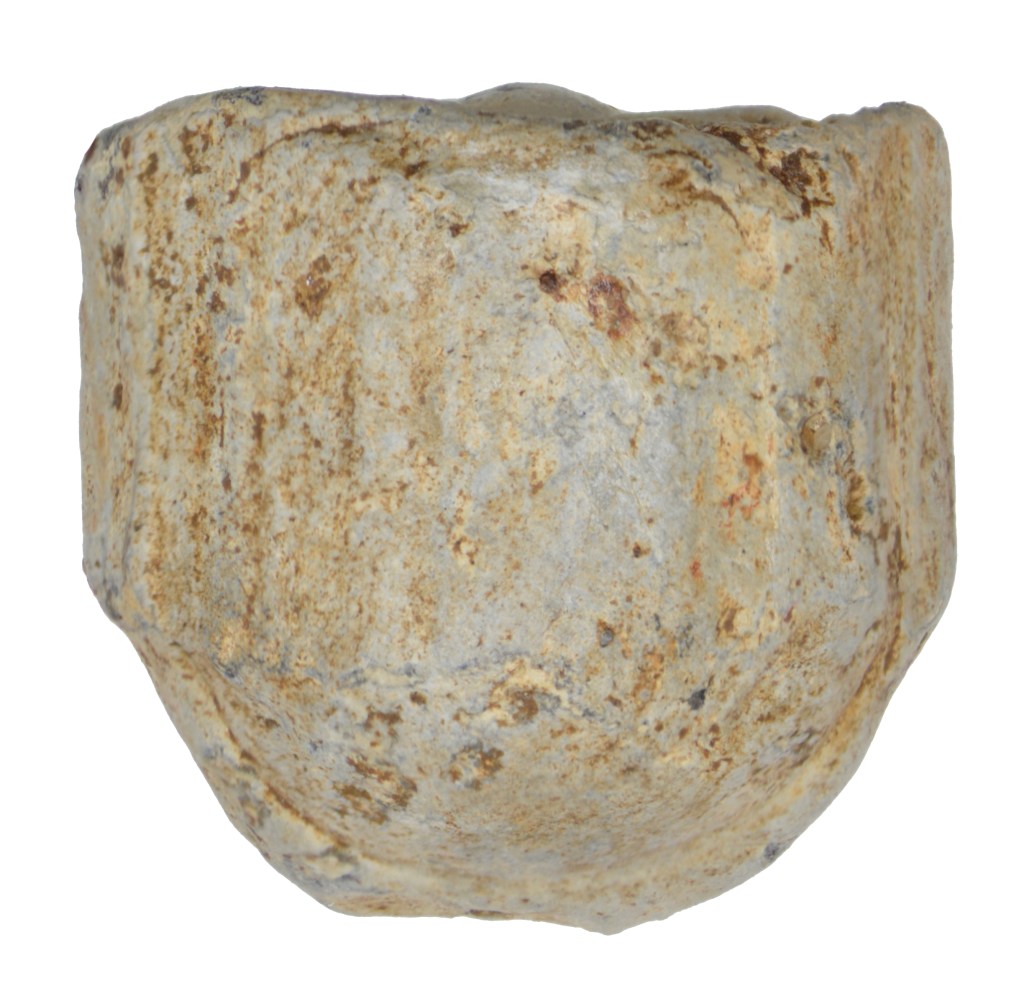
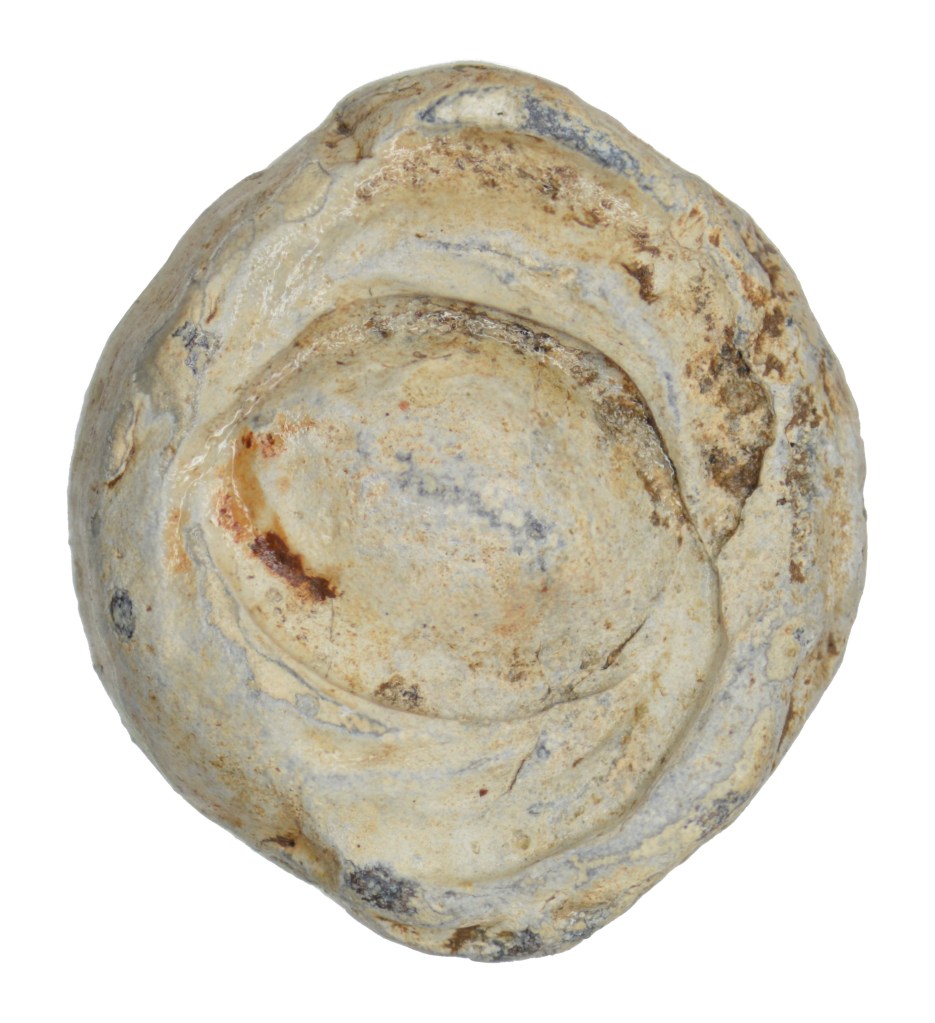
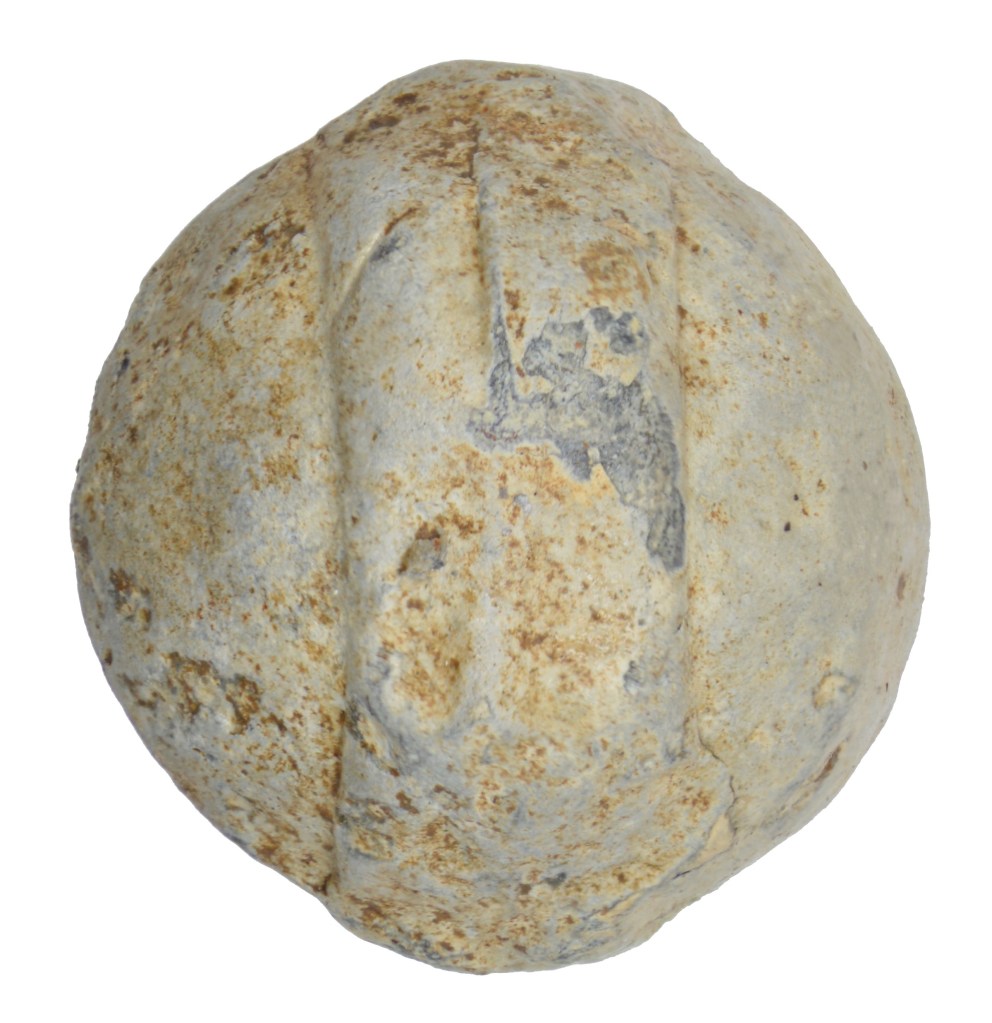
- Weight: 330 gn (21.4 g)
- Diameter across ball: 0.557 in (14.2 mm)
- Diameter across belt: 0.624 in (15.9 mm)
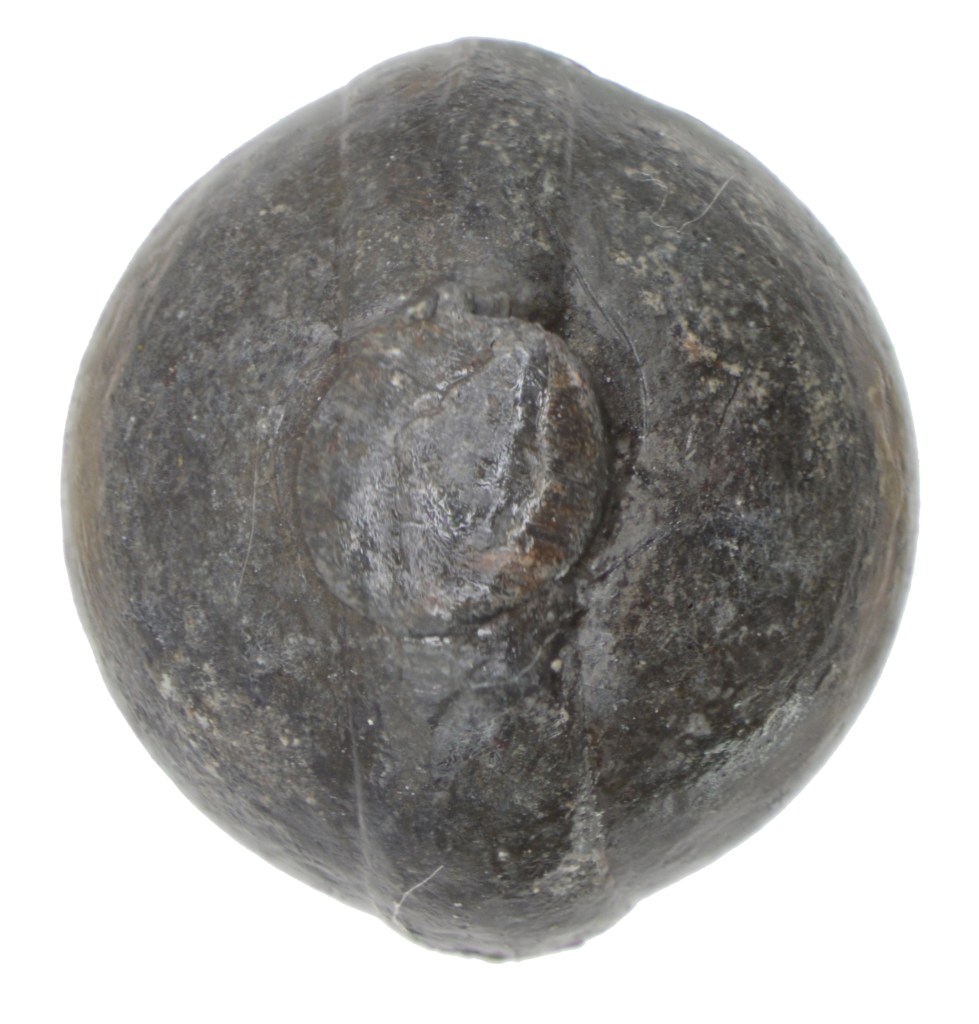
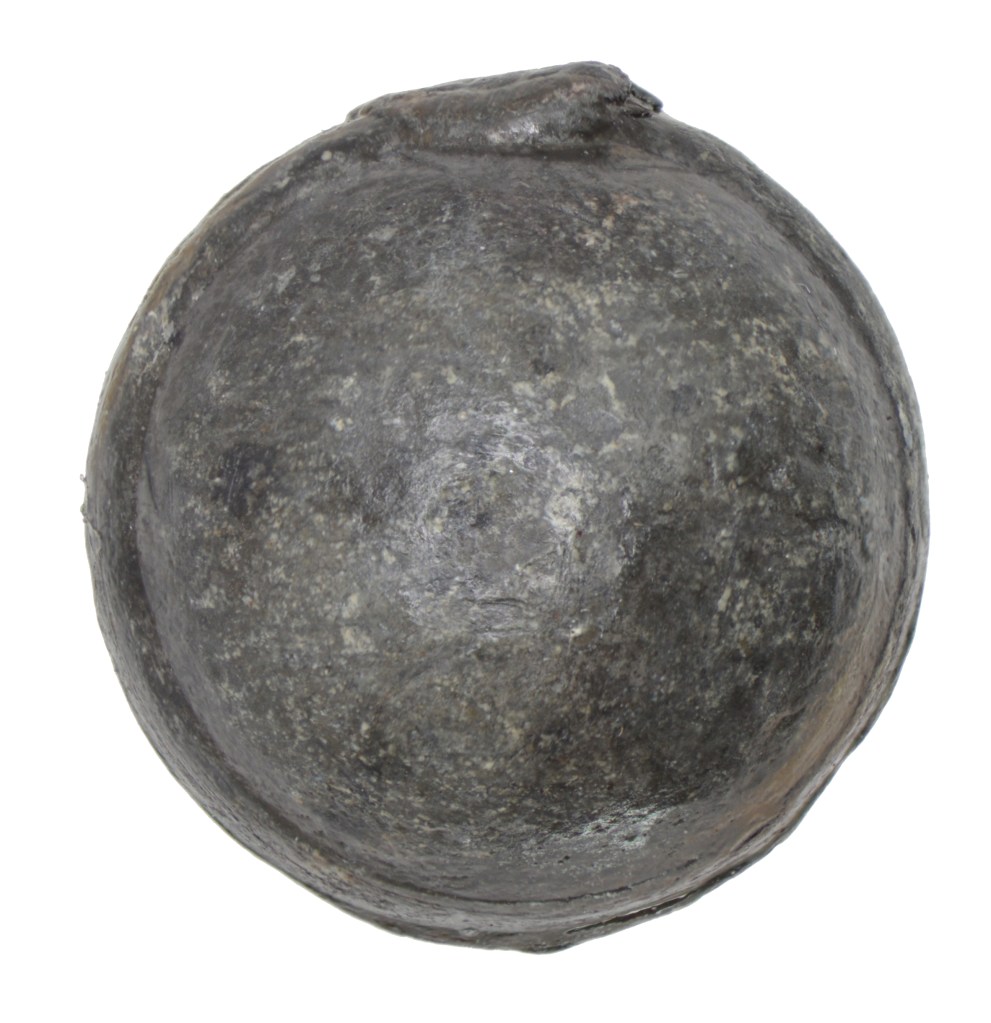
This poor ball has been extremely heavily rammed home, due to either a fouled barrel or perhaps being slightly oversized. The flat top in the left hand image is entirely from the ramrod. The vertical sides show how this ball has expanded against the sides of the bore through both ramming and set-up. The central image shows the overlain repeated ramrod strikes. The base of the ball shows the original shape and just visible in the centre is the nipped sprue, from casting. The diameter of the ball is also the calibre of the bore, due to the full set-up.
Belted ball, unfired
- Weight: 279 gn (18.1 g)
- Diameter across ball: 0.559 in (14.2 mm)
- Diameter across belt: 0.602 in (15.4 mm)
Another ball with a prominent sprue. This would not be a problem if the ball was inserted into the barrel with the sprue facing down or up, whereby it would not interfere with the rifling.
Belted ball, fired
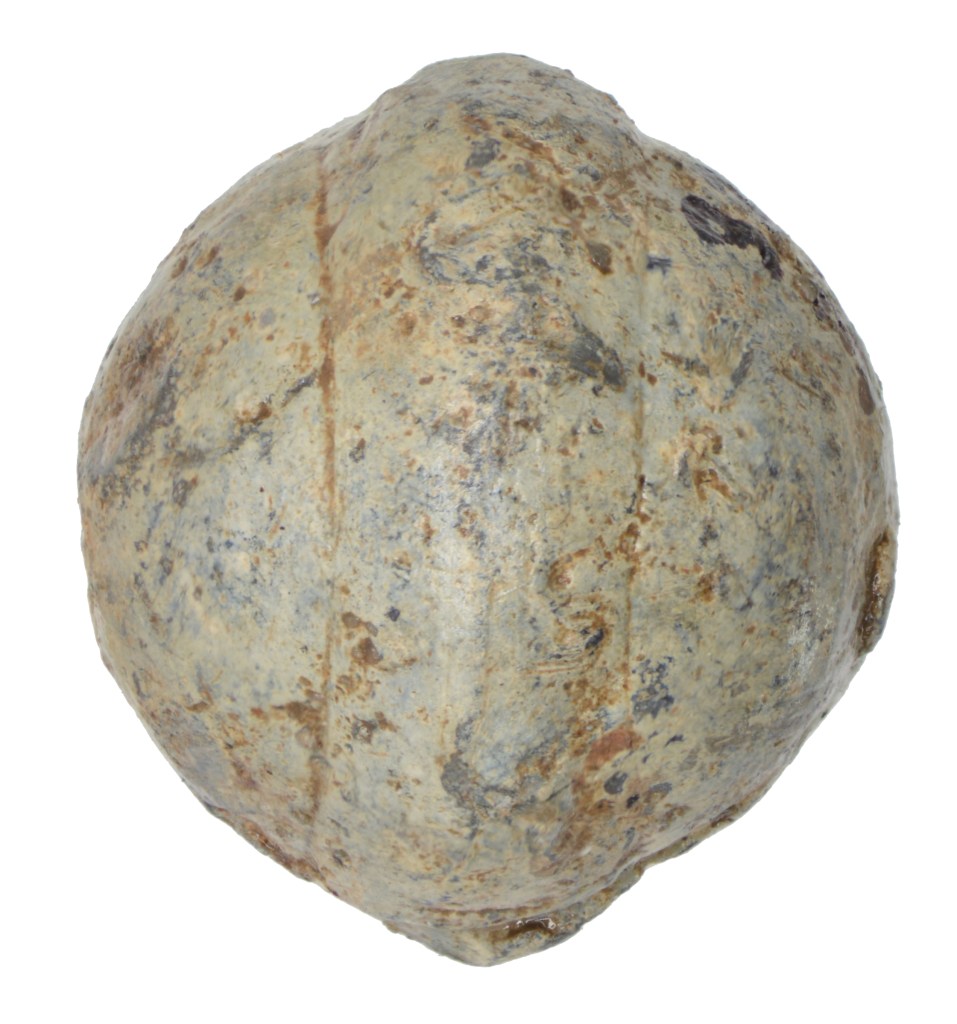
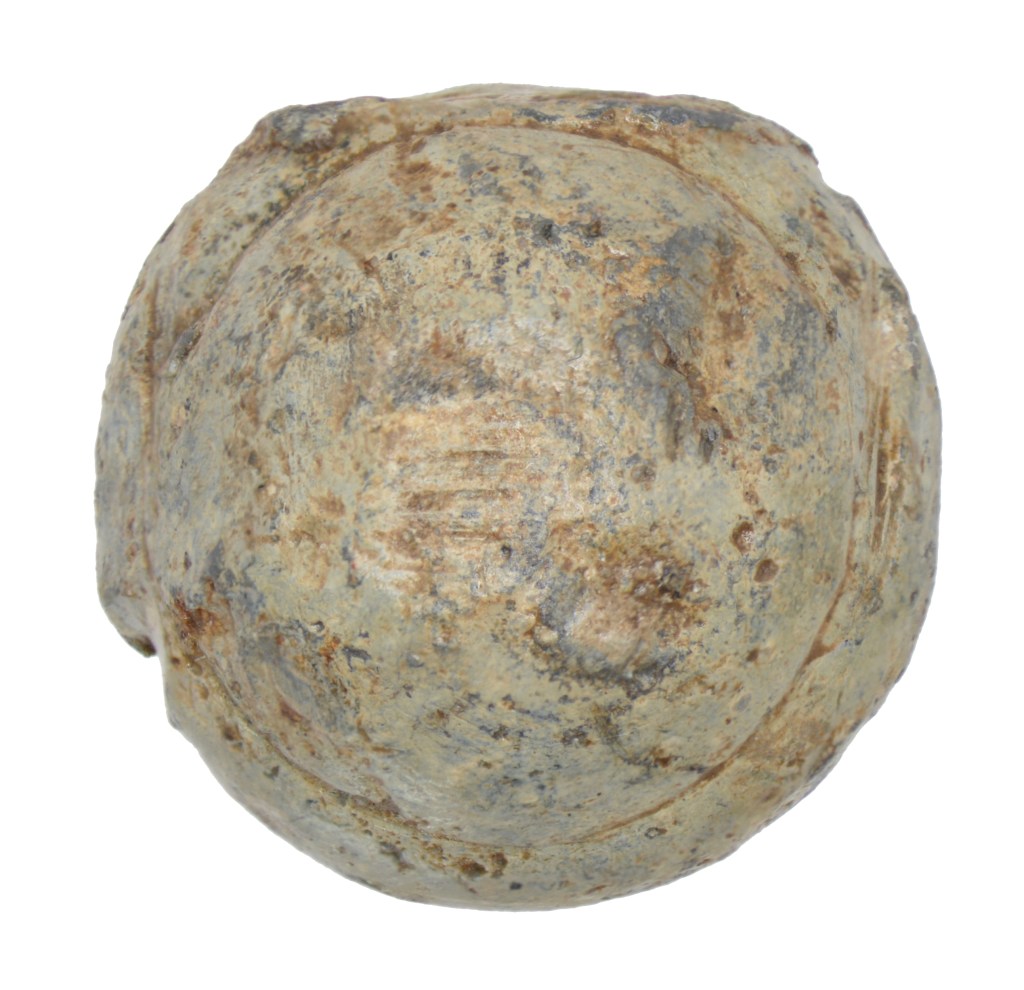
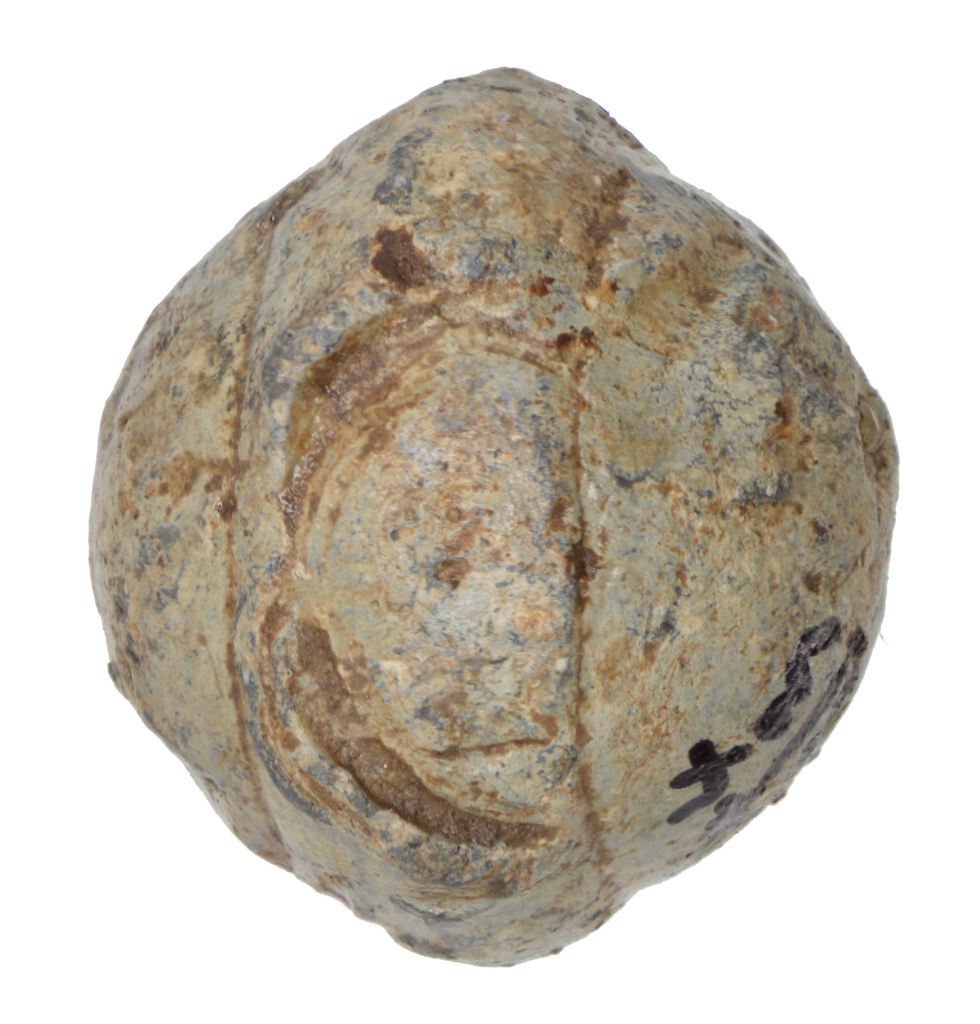
- Weight: 302 gn (19.5 g)
- Diameter across ball: 0.577 in (14.6 mm)
- Diameter across belt: 0.630 in (16 mm)
Another example showing the heavy ramming needed to seat the shot.
Belted ball, fired
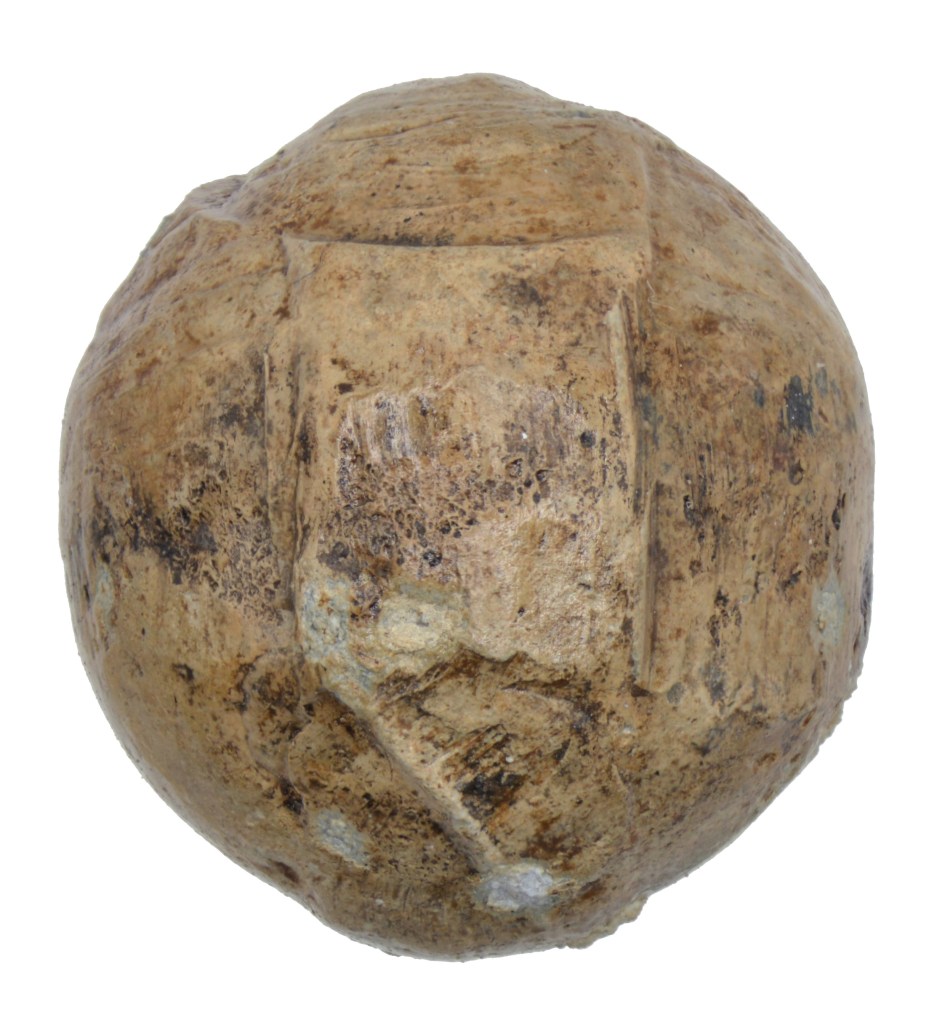
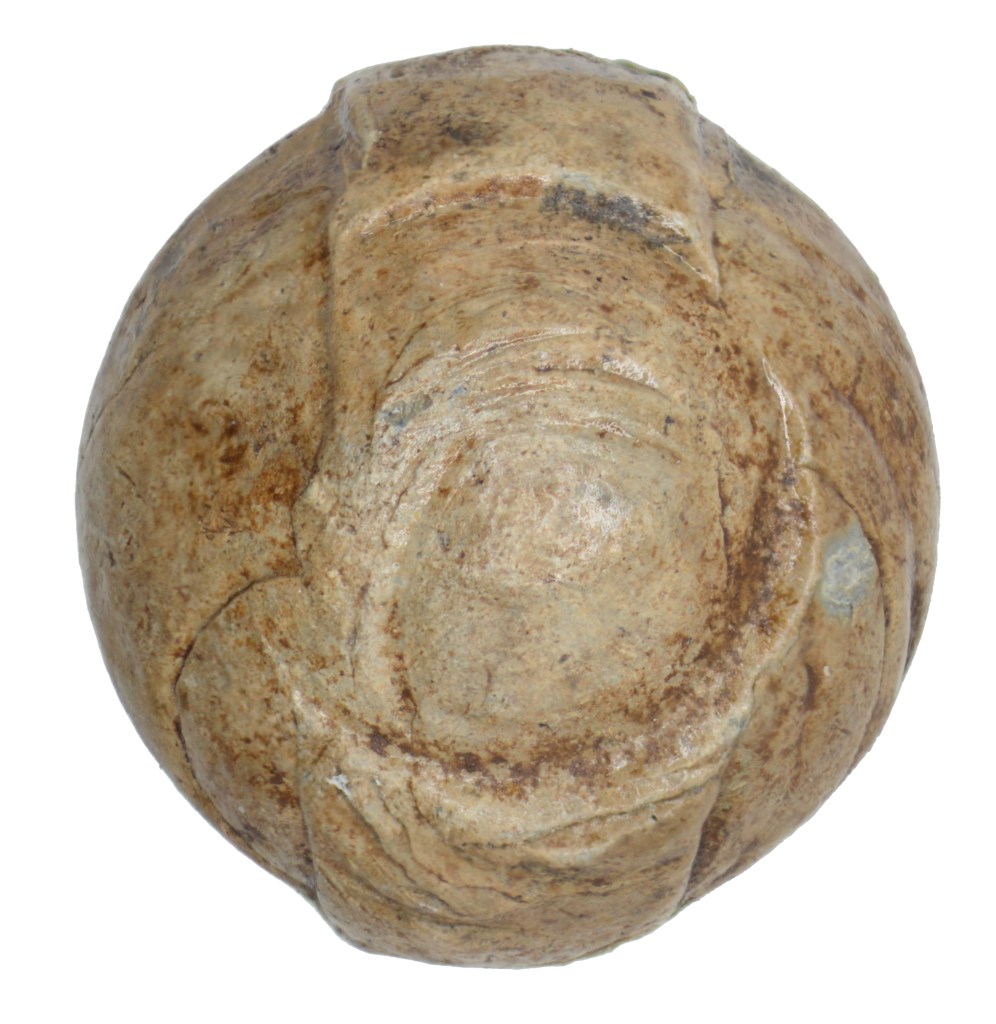
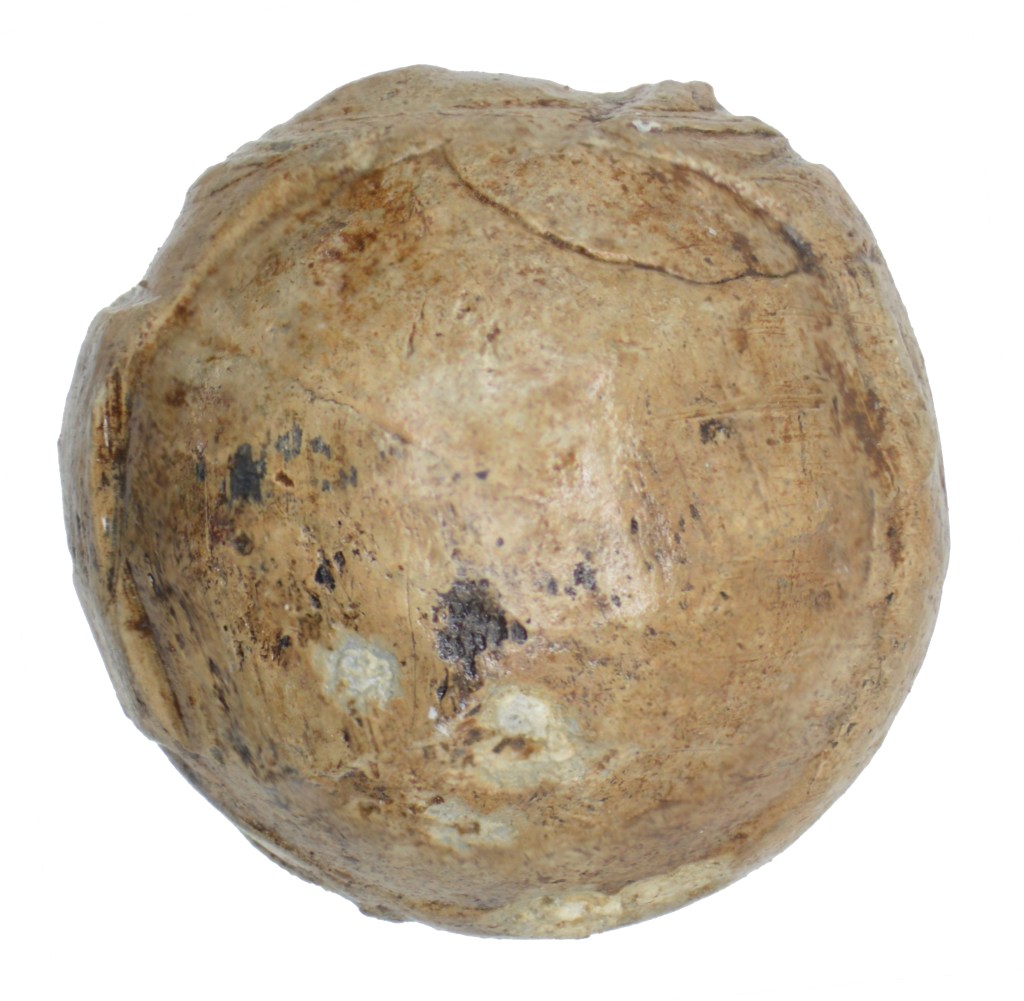
- Weight: 308 gn (20 g)
- Diameter across ball: 0.574 in (14.6 mm)
- Diameter across belt: 0.613 in (15.6 mm)
This is a superb belted ball, covered in marks. The far left image shows the side view, with the heavy ramrod damage at the top. The rifling is visible on the belt (in the centre of the image), set-up is visible (as the vertical side on the right side of the ball) and the nipped sprue, from casting is visible near the base. The central image shows the top of the projectile and the multiple ramrod impressions (overlying one another) necessary to seat the shot in position. The ramrod has obliterated the belt in this area. The right hand image shows the side view, with the bite of the rifling visible on the left hand edge.
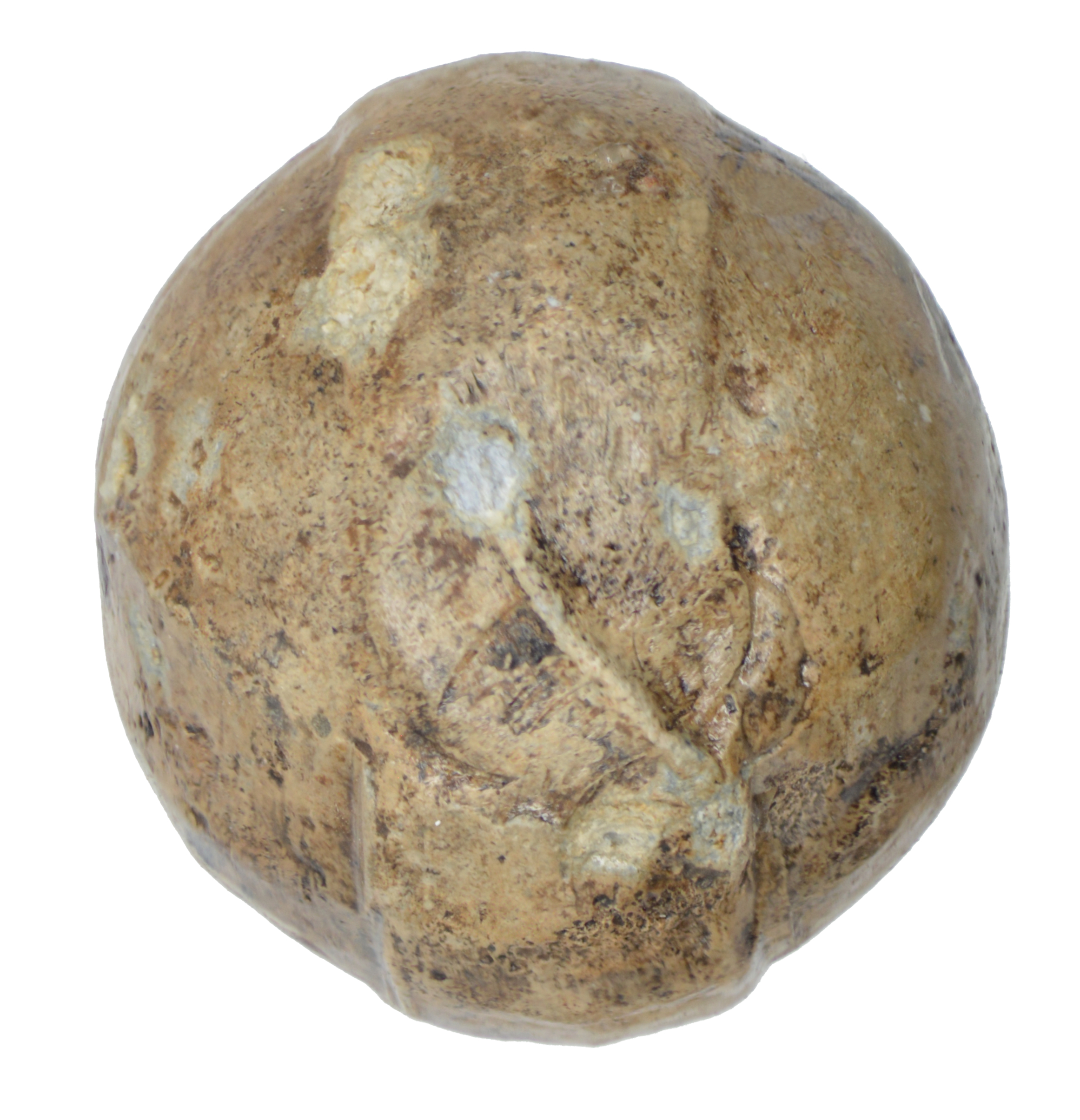
This image shows the sprue and seam from cating in detail. The sprue, located on the belt, has been very neatly nipped with pliers. The seam runs along the belt
Belted ball, fired
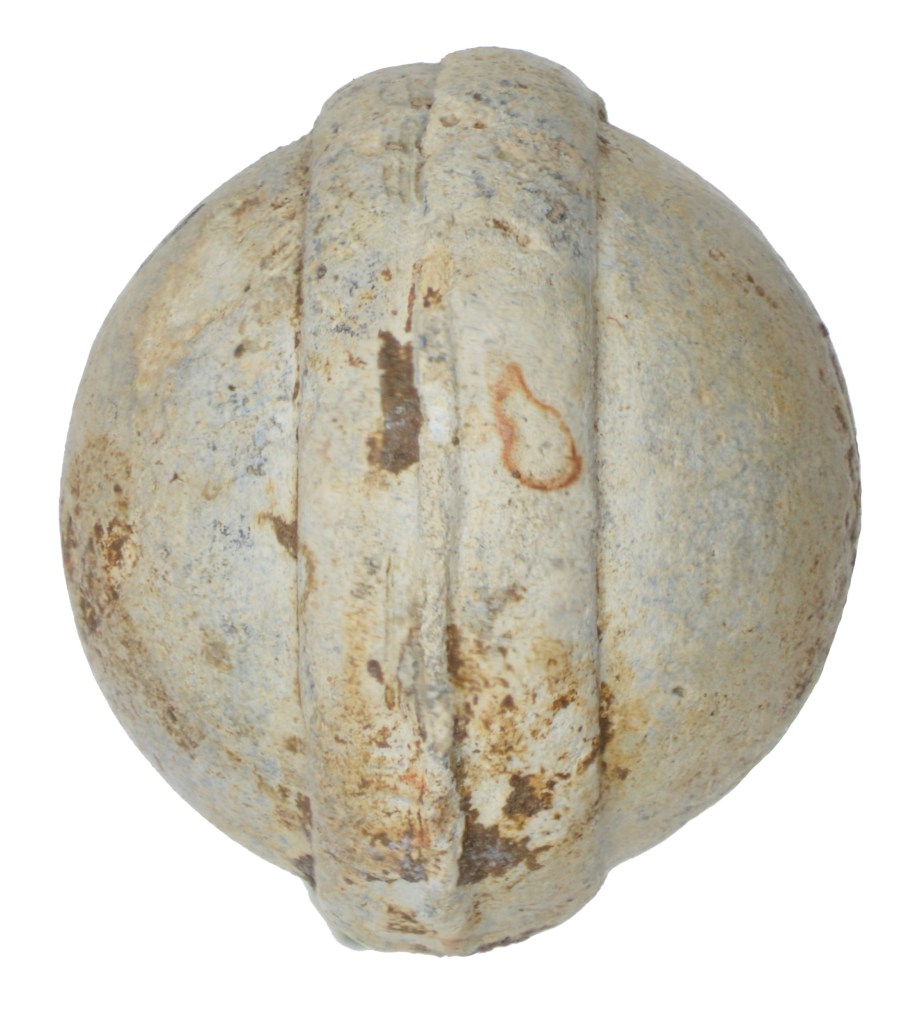
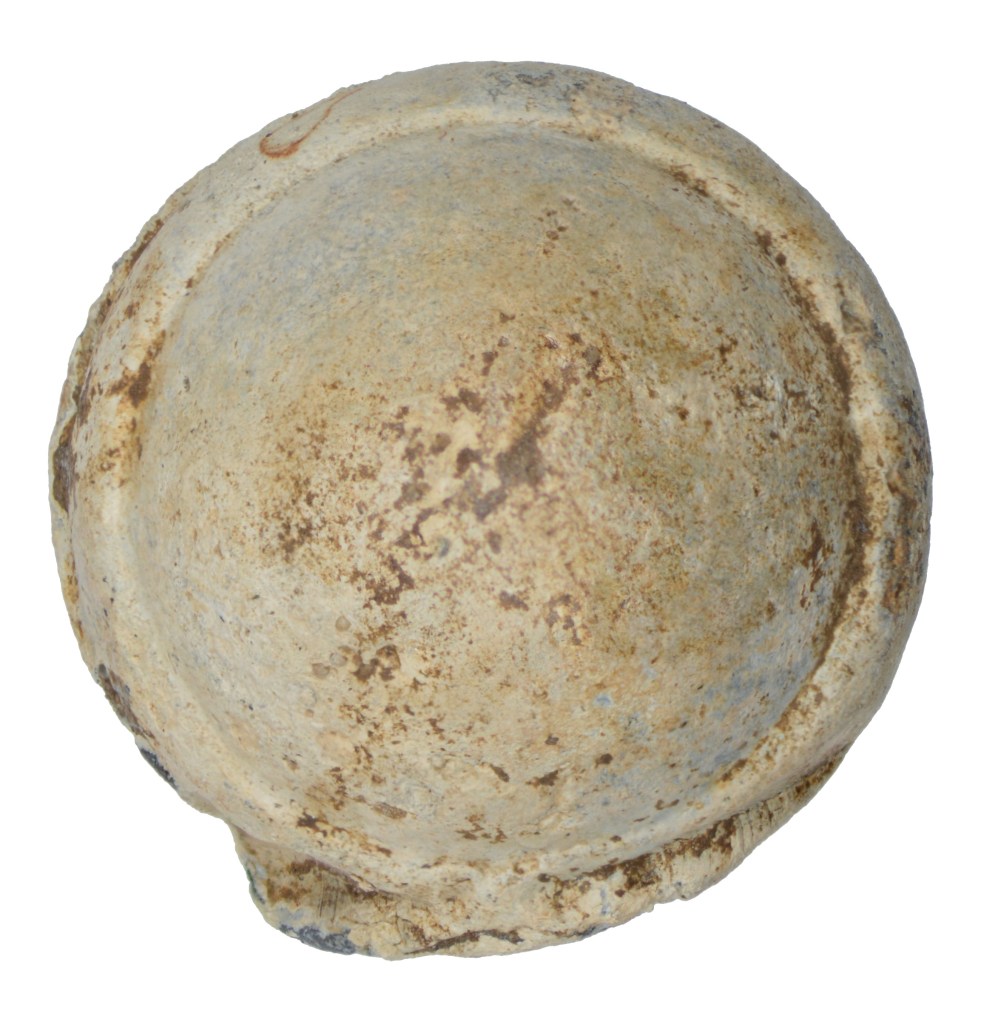
- Weight: 347 gn (22.5 g)
- Diameter across ball: 0.601 in (15.3 mm)
- Diameter across belt: 0.690 in (17.5 mm)
Apart from seam, sprue and a bit of impact damage, this ball has got off very lightly in terms of markings. The ball may have been patched and the bore had enough windage to allow an easy passage down the barrel during loading (there are no ramrod marks). Note the slightly misaligned mould half at the top of the belt in the first image.
Belted ball, fired
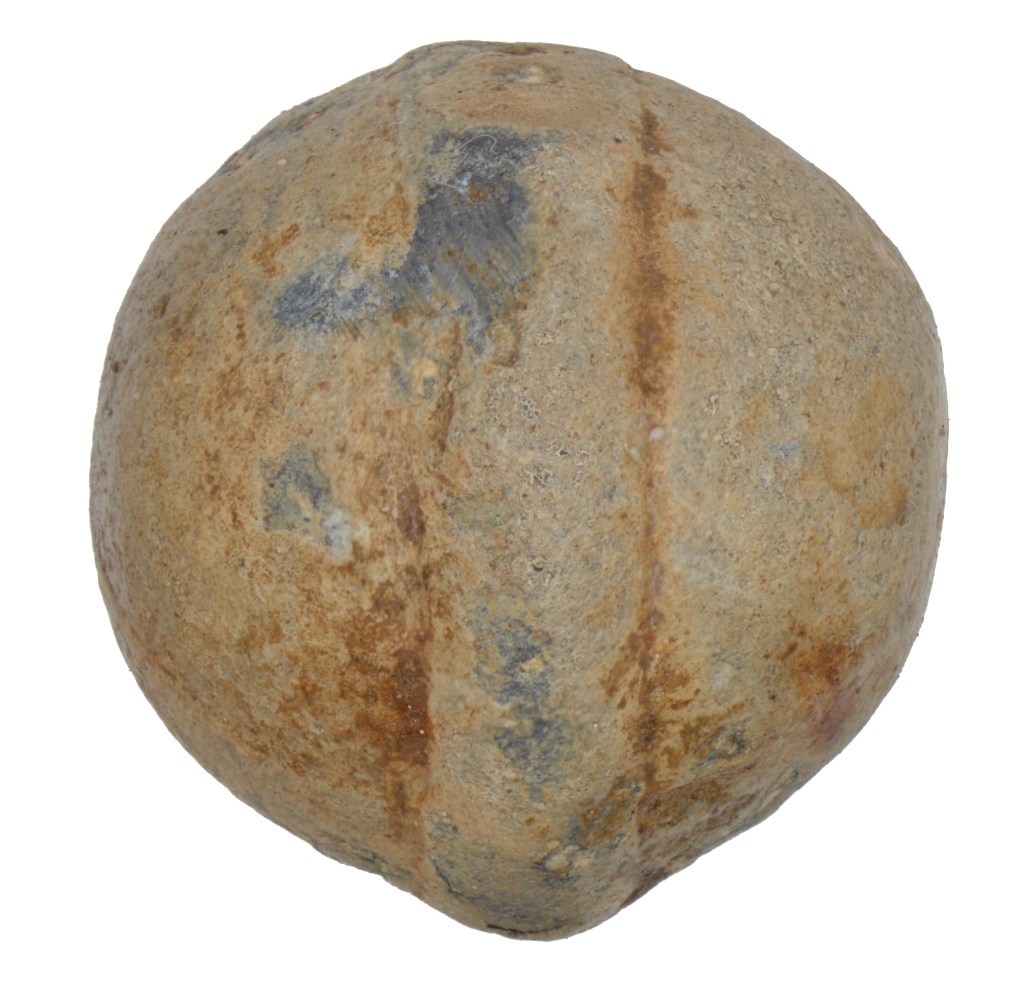
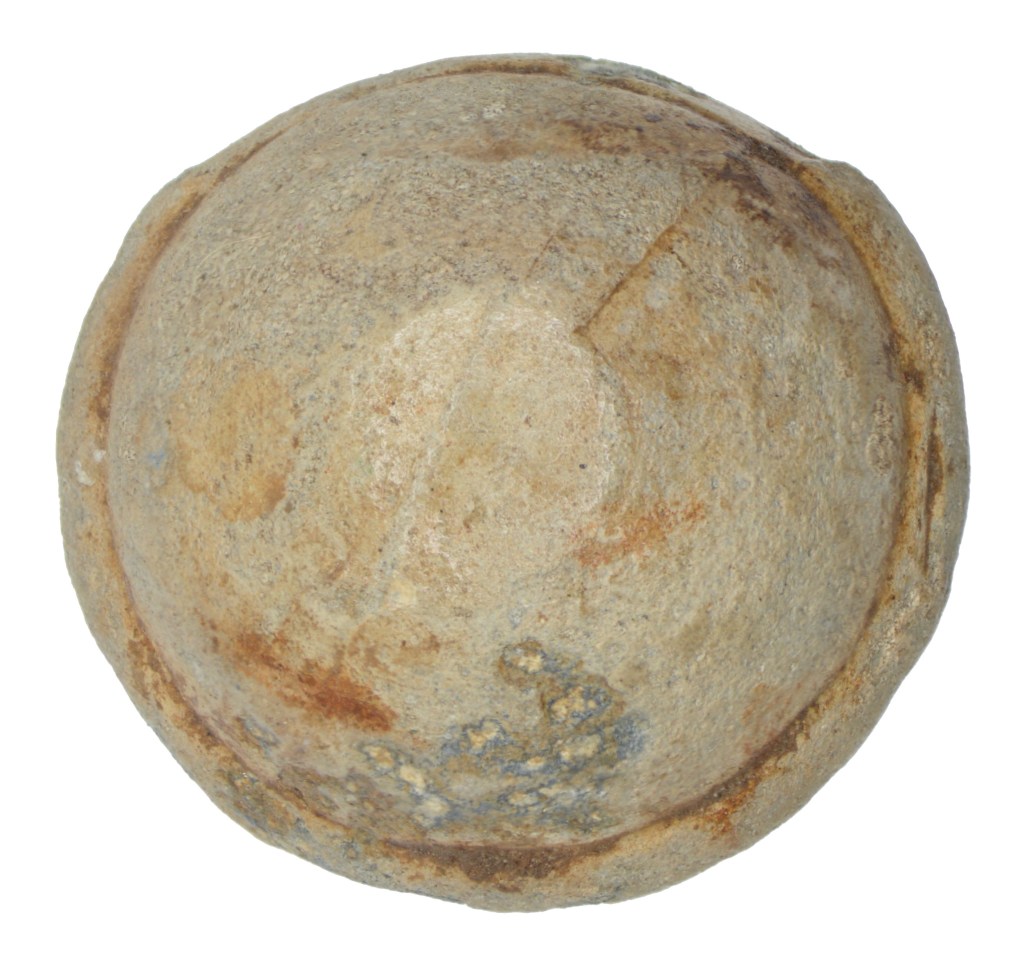
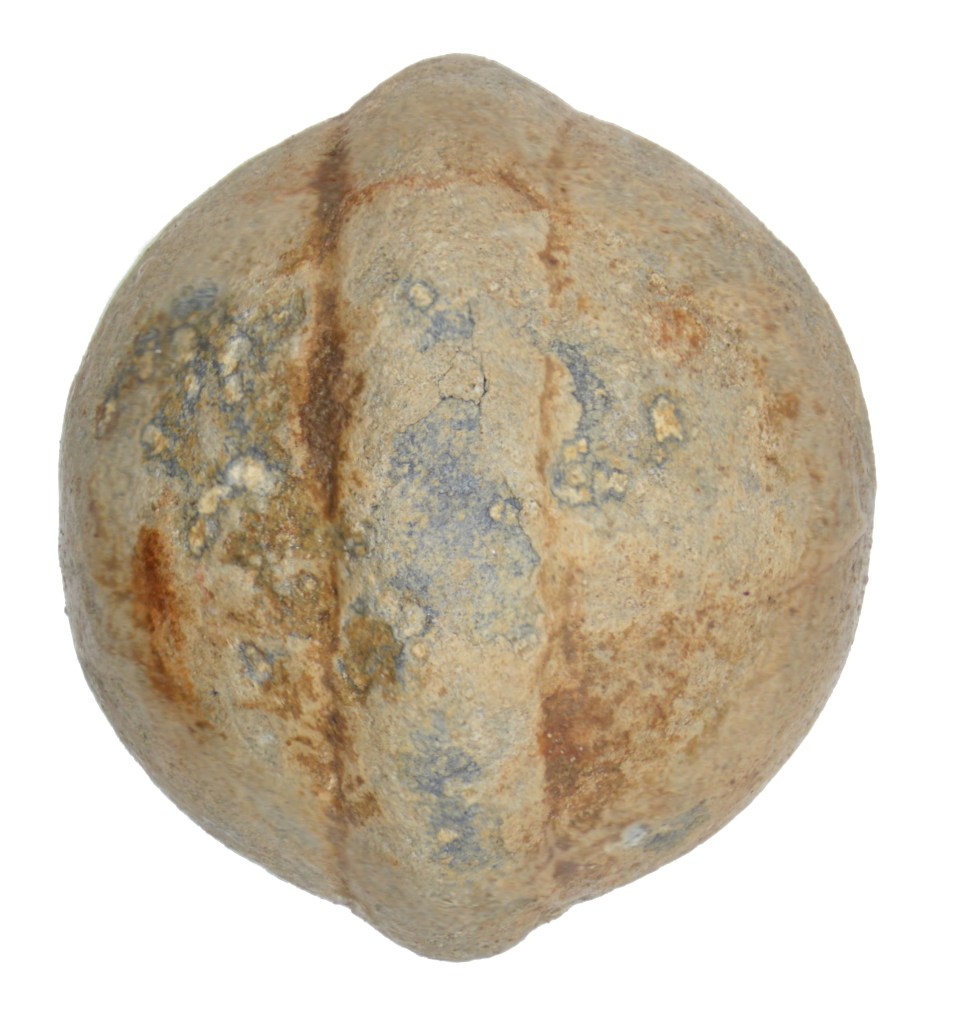
- Weight: 377 gn (24.4 g)
- Diameter across ball: 0.627 in (15.9 mm)
- Diameter across belt: 0.700 in (17.8 mm)
This ball has a noticeably thinner belt than any of the others (including the service versions) which is also fully rounded in section, where it meets the ball. Perhaps it is an early commercial variety or perhaps just characteristic of a specific manufacturer. The ramrod strike has flattened the top of the ball, visible in the left and central image. The central image also shows the bite of the rifling, particularly on the right hand side (as a vertical line on the belt), as well as the sprue and seam from casting (running at a 45 degree angle to the top right). The seam dissects the belt, rather than running along it, as in the varieties above on this page. The sprue has been very neatly nipped with rounded pliers.
Belted ball, fired
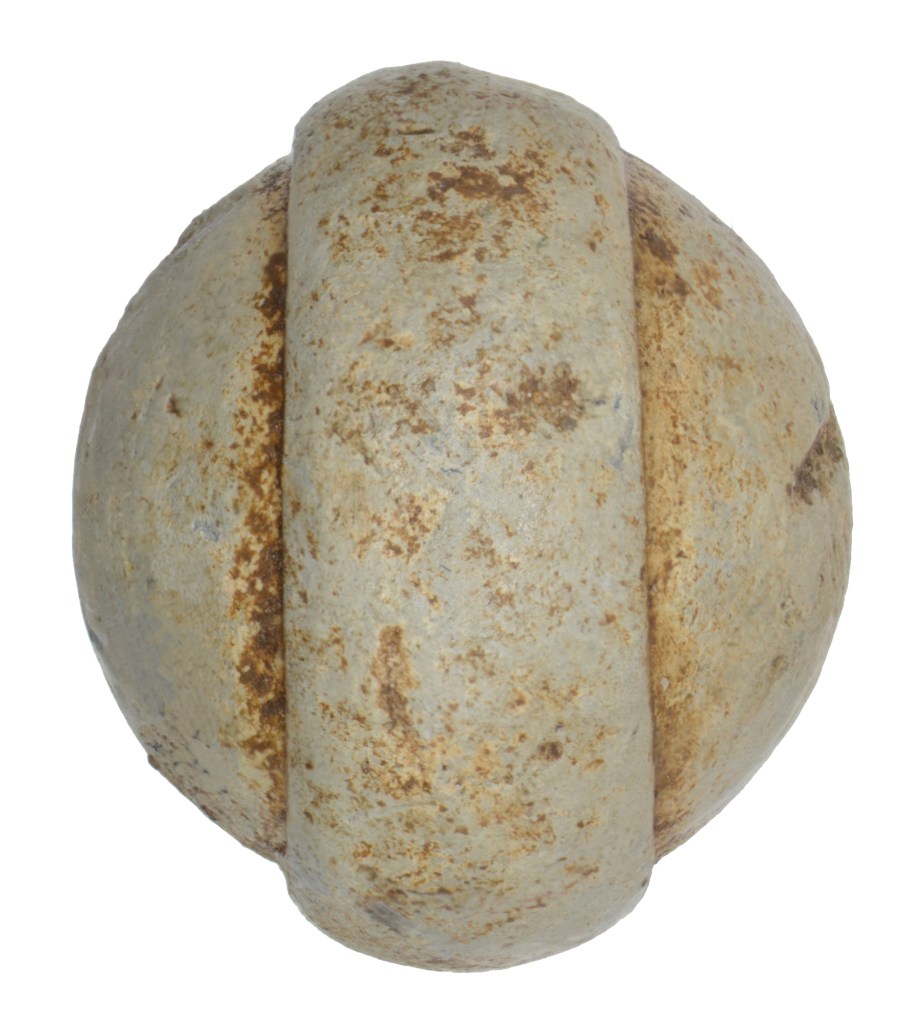
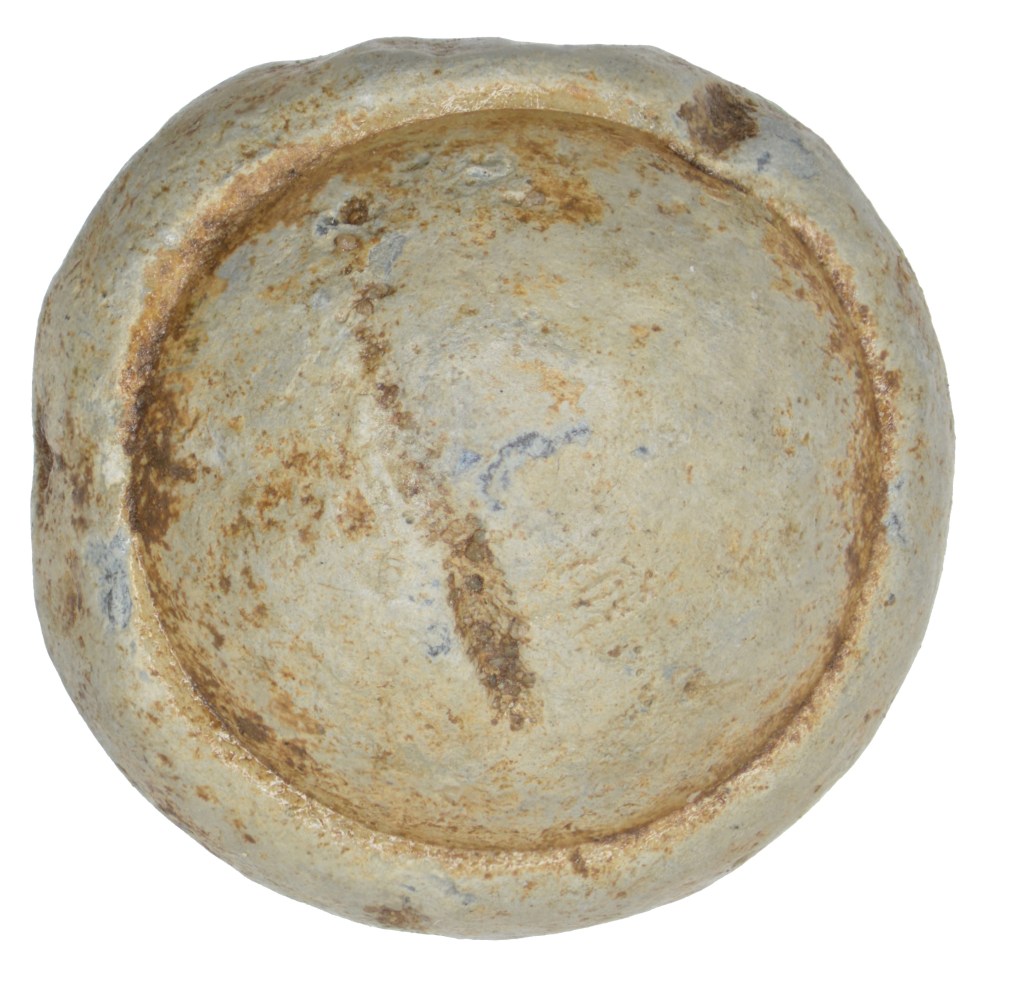
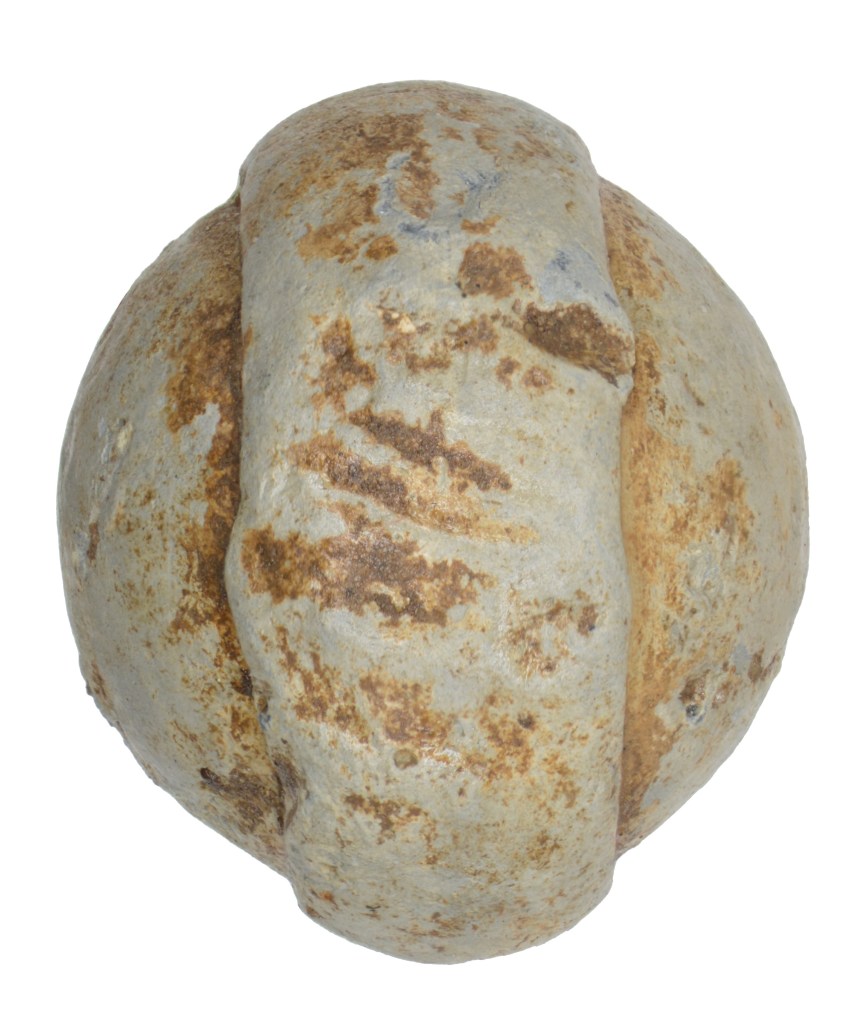
- Weight: 471 gn (30.5 g)
- Diameter across ball: 0.635 in (16.1 mm)
- Diameter across belt: 0.746 in (18.9 mm)
Ramrod flattening and rifle bite marks are prominent on this ball.
Belted balls
