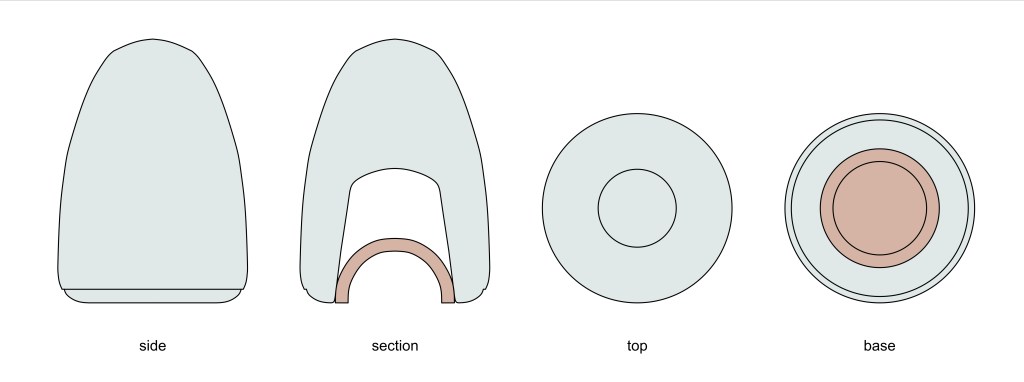
The original bullet for the P51 was conoidal in shape, a curious form for a bullet, essentially meaning it has potential to tip slightly in the barrel, and to spin off centre on engaging with the rifling. These 1st pattern bullets are not recorded as having been made by compression (Anderson set his bullet compression machine in time for the 2nd pattern) and are likely to have had a two stage formation sequence. The Artizan magazine of November 1856 (referenced in The English Cartridge, page 60), suggested bullets were cast in moulds and then compressed on a fly-press, to iron out the irregularities inherent in casting. Certainly, some of the bullets exhibit signs of a casting seam, on the outer edge, but the seam is not visible in the base. The likely explanation is that cast seam was squeezed out of existence by the press.
Official weight and dimensions (information from Remarks on Rifle Practice Chiefly Extracted from Report of Experiments with Small Atms, 1852).
- Weight: 680 gn
- Diameter: 0.690 in
- Length: 1.030 in
1st pattern P51, unfired
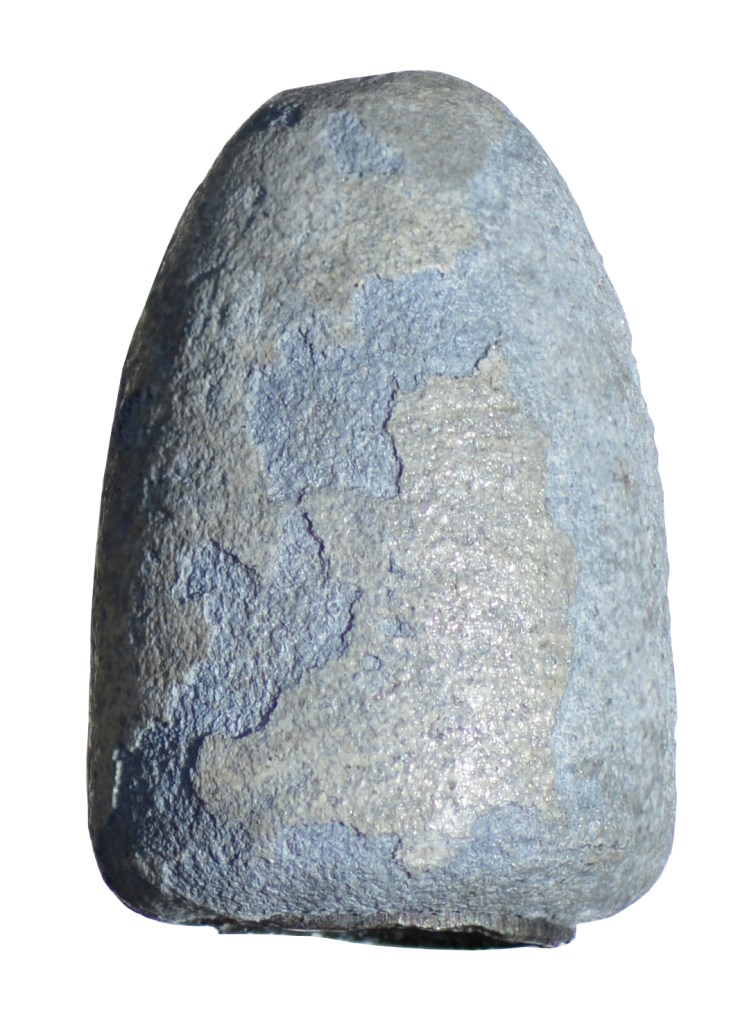
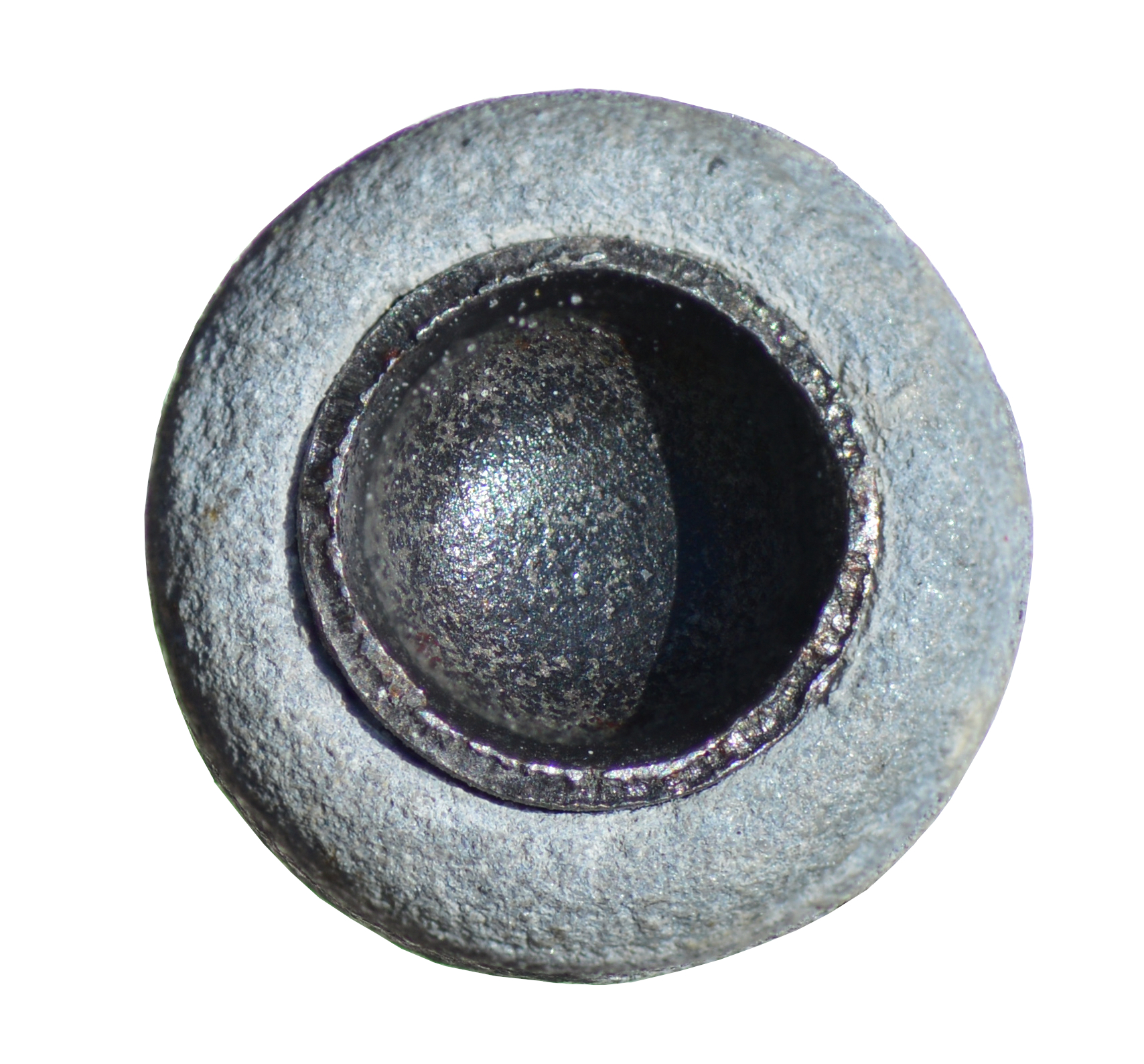
- Weight (with cup): 657 gn (42.5 g)
- Weight (without cup): 630 gn (40.8 g)
- Diameter: 0.693 in (17.6 mm)
- Length: 1.004 in (25.5 mm)
This unfired example has unfortunately suffered from some corrosion, perhaps from a reaction to the lubricant or poor storage. The cup, however is in perfect condition. The rim of the cup appears quite rough in its finished state.
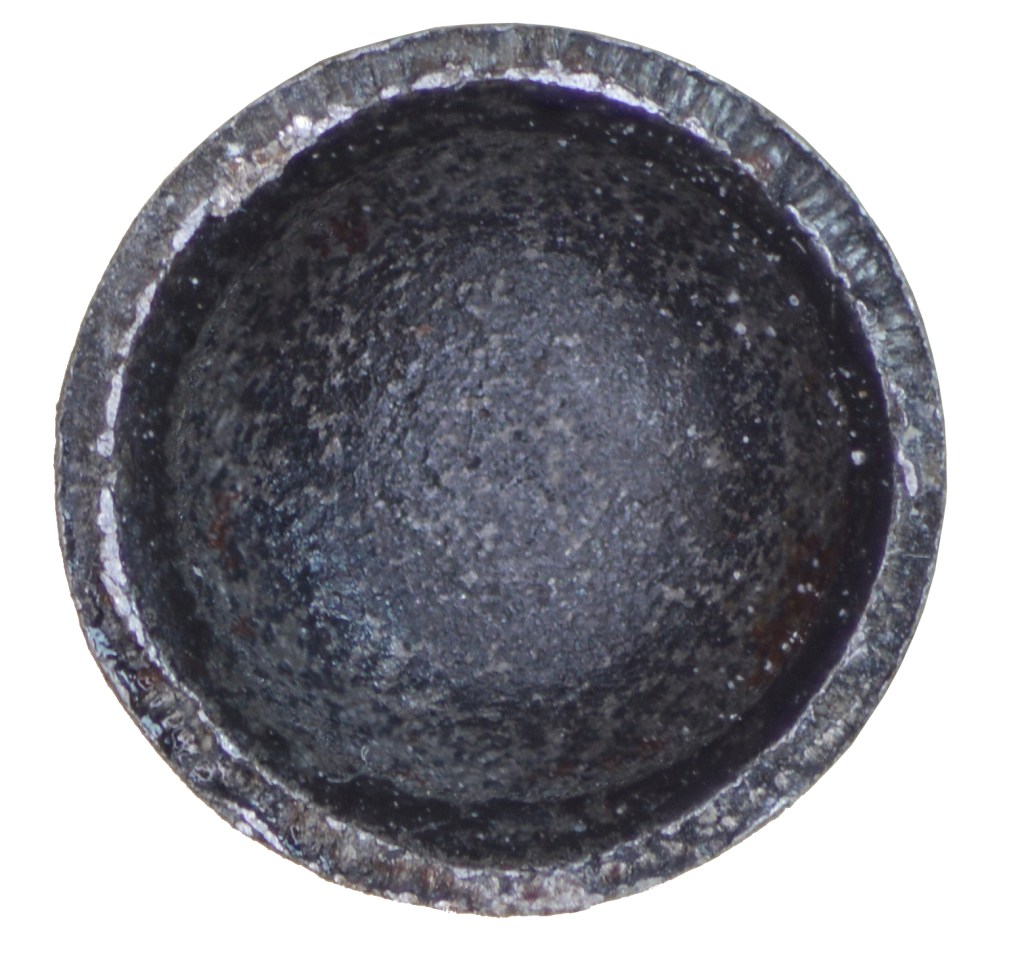
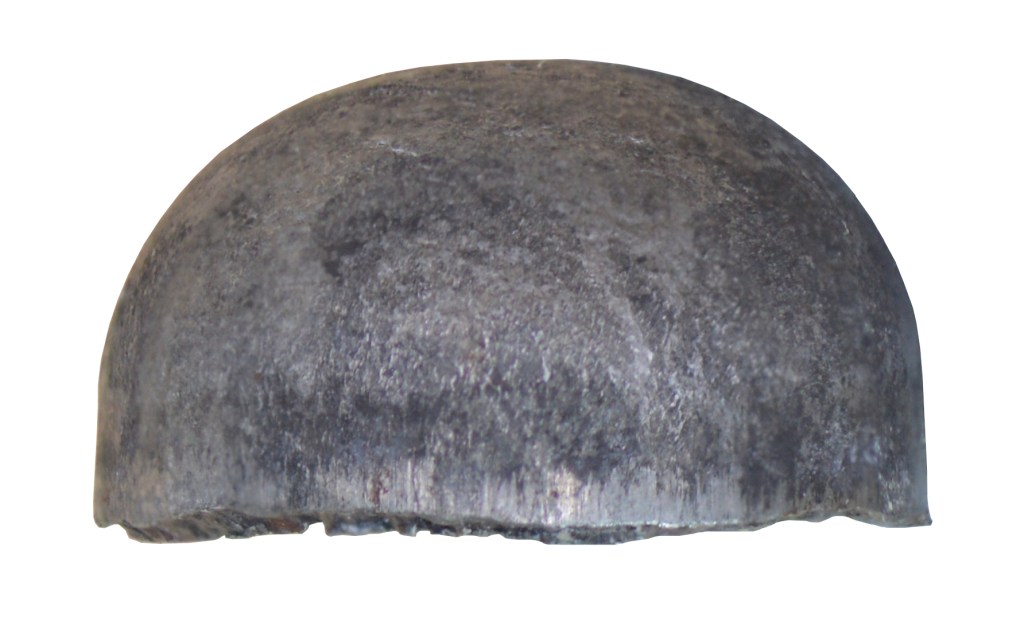
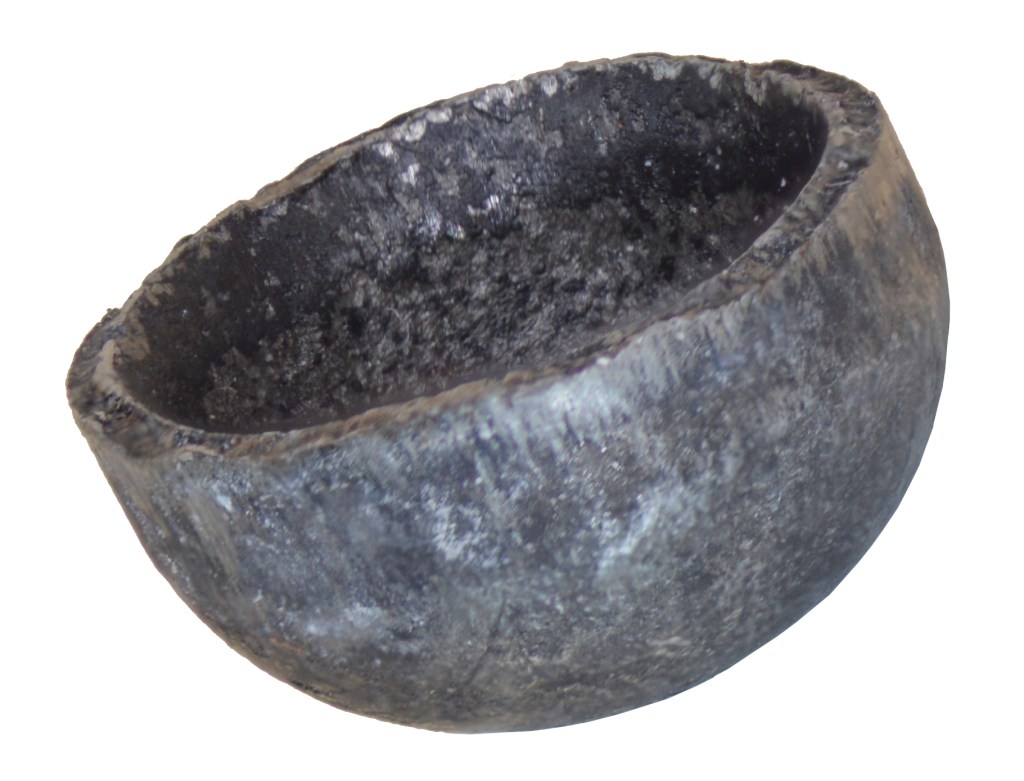
- Weight: 27 gn (8.8 g)
- Diameter: 0.450 in (11.4 mm)
- Height: 0.251 in (6.4 mm)
1st pattern P51, fired
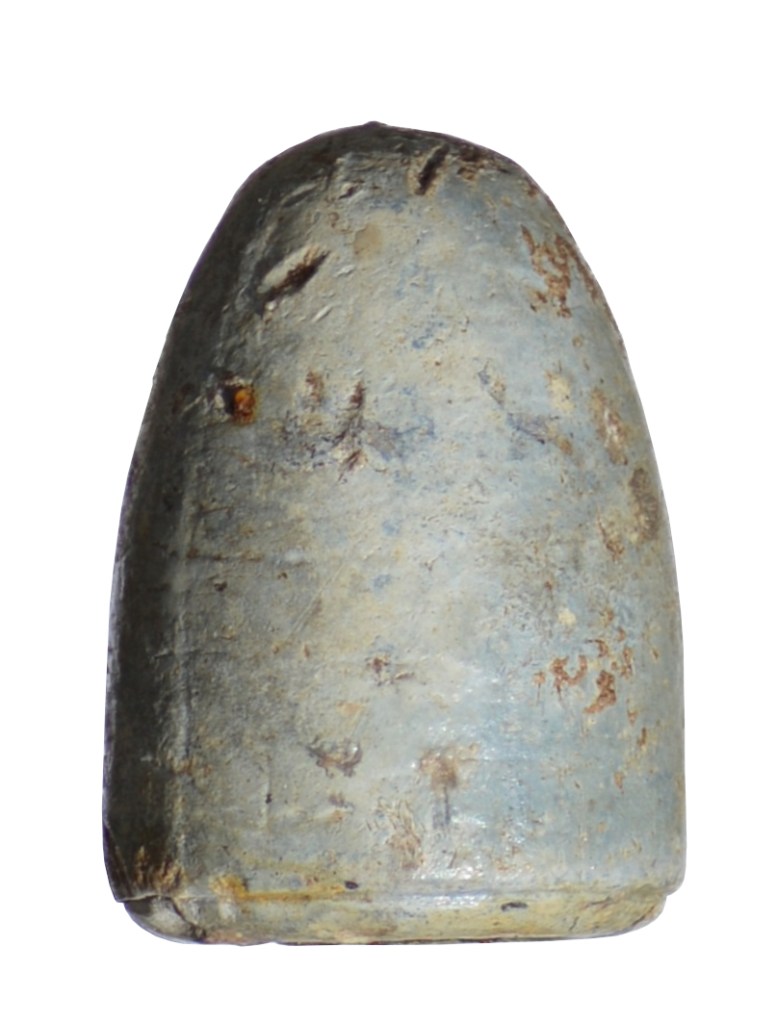
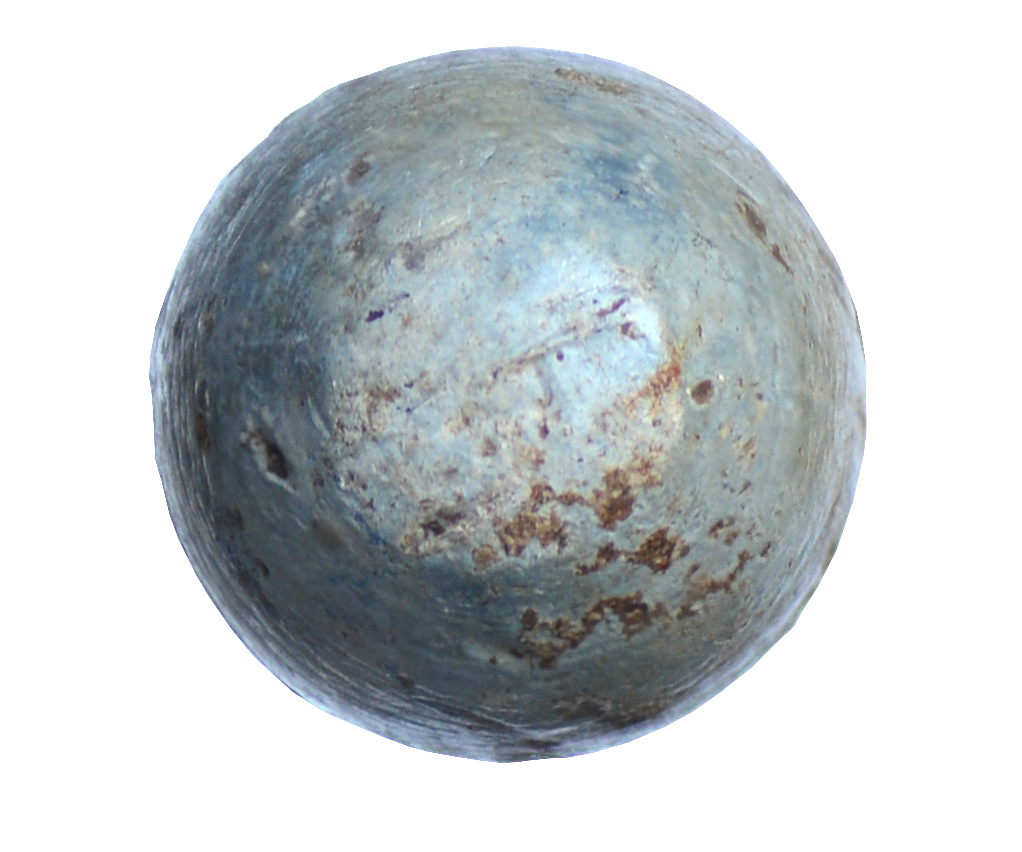
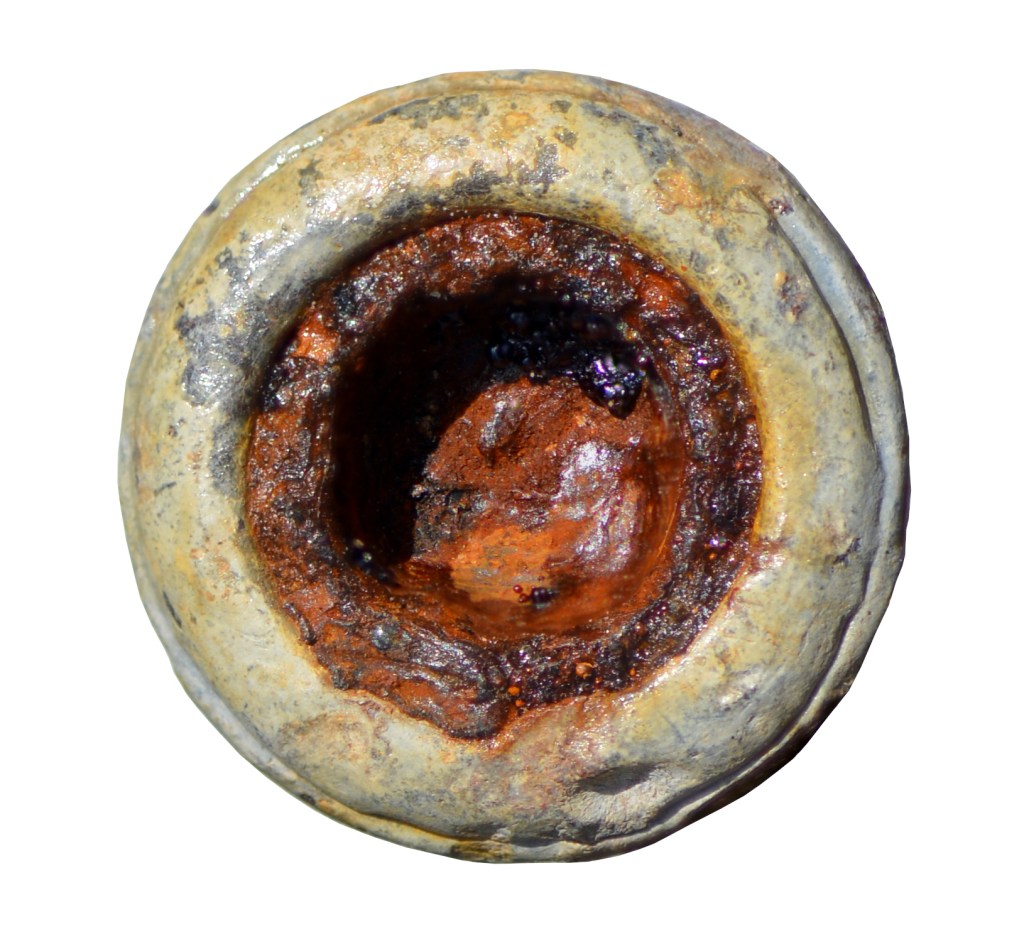
- Weight (with cup): 680 gn (44 g)
- Diameter: 0.697 in (17.7 mm)
- Length: 0.994 in (25.3 mm)
Note what appears to be a casting seam on the left of the side view of this bullet. The seam does not continue onto the base, perhaps explained by subsequent compression in a fly-press. The ridge around the base would appear to have been created by this fly-press process.
1st pattern P51, fired
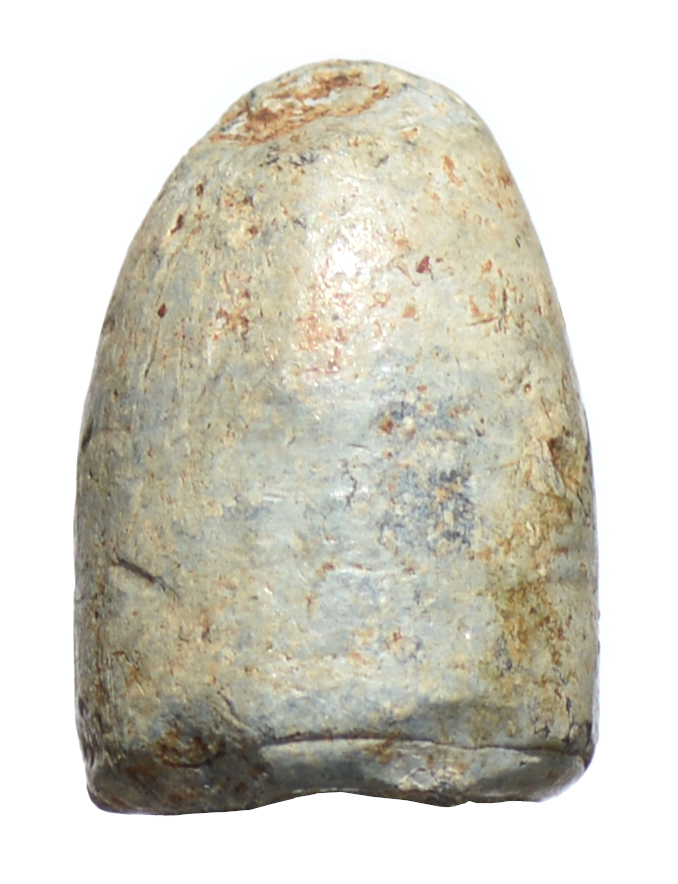
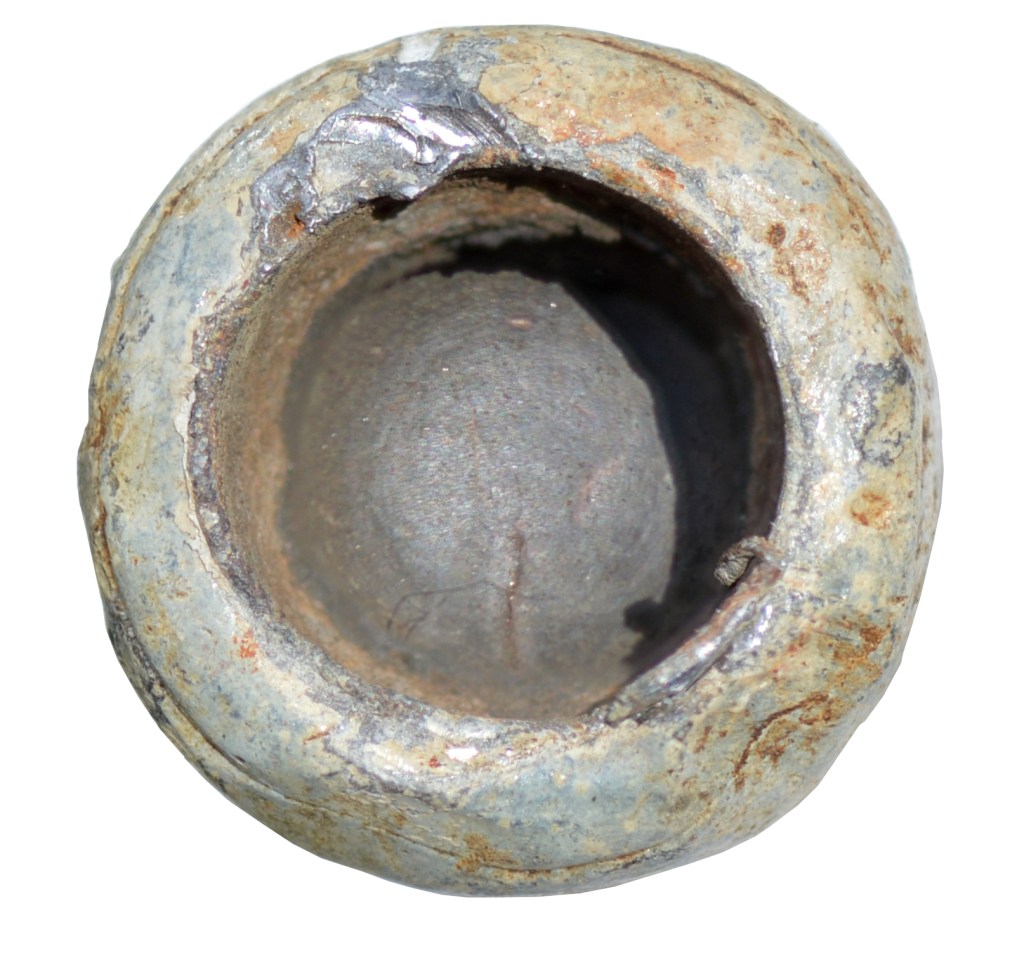
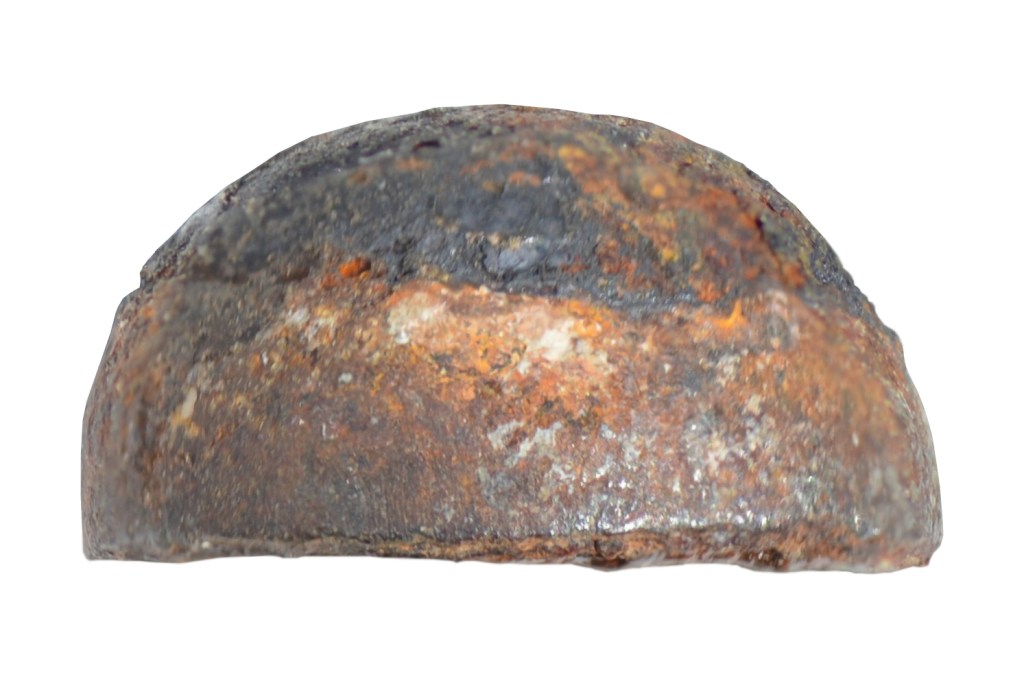
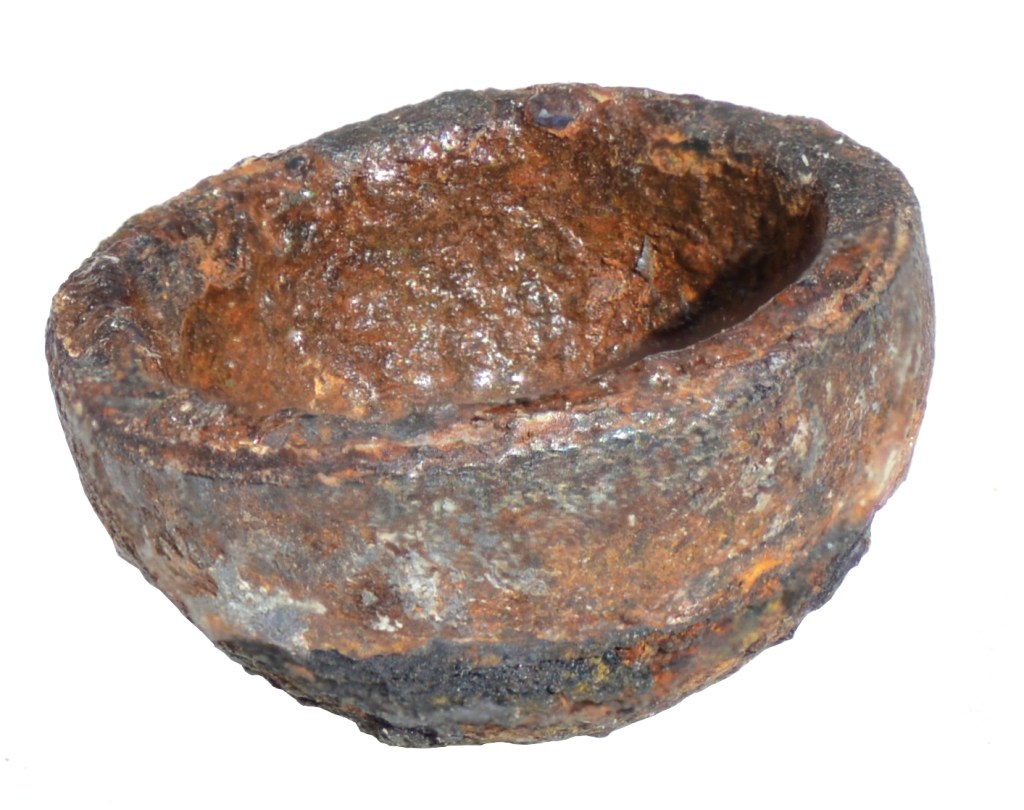
- Weight (without cup): 650 gn (42.1 g)
- Diameter: 0.711 in (18.1 mm)
- Length: 0.968 in (24.6 mm)
- Weight of cup: 23 gn (1.5 g)
- Diameter of cup: 0.447 in (11.4 mm)
- Height of cup: 0.240 in (6.1 mm)
The slight step in the base cavity was caused by the cup forcing its way forwards on ignition of the powder charge.
1st pattern conoidal, iron cup 1851
2nd pattern cylindro-conoidal, reduced diameter, iron cup 1854
3rd pattern, cylindro-conoidal, reduced diameter, wood/clay plug 1861
