The Colt 0.360 in revolver was the first official revolver in British service, orders placed from 1854 (privately purchased revolvers were common during the Crimean War, however). The bullet for the Colt 0.360 revolver is particularly distinctive, with two deep cannelures and a heeled base. As a percussion revolver, the bullet was loaded into the front of the cylinder in skin cartridges, a percussion cap placed on the rear of the cylinder igniting the cartridge. An integral rammer was used to seat the bullet in place and this generally leaves a circular mark around the nose of the bullet.
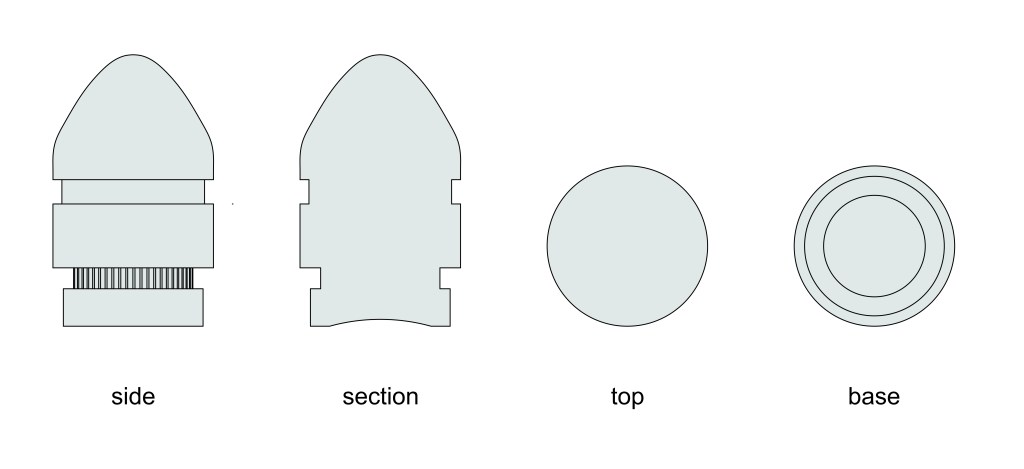
The List of Changes, 7th Nov 1863 (no. 857) seems to refer to the Colt revolver as being 84 gauge, which translates to a 0.380 in diameter bore. The bullet is also shown as this size in the accompanying illustration. The Colt factory in London, where the revolvers for British service were manufactured, were made in four varieties: the Navy revolver (calibre 0.360 in) and three ‘pocket’ revolvers (of 0.310 in calibre). 0.360 in calibre equates as to between 96 and 98 gauge. The LoC rather confusingly makes no distinction between the projectile dimensions and that of the revolver bore. The latter, of course, was smaller in diameter than the projectile, so that the bullet would be forced into the rifling: the revolver therefore had a bore of 0.360 in, the bullet a diameter of 0.380 in. The Colt cartridge in the 1863 illustration from the LoC shows a skin cartridge, a form patented in 1856. Prior to this the powder for the Colt revolver may have been poured into the chamber separately to the insertion of the projectile. The type of projectile used prior to 1863 is not clear.
Official weight and dimensions (information from List of Changes no 857, 1863).
- Weight: 135 gn (8.7 g)
- Diameter: 0.380 in (9.6 mm)
- Length: 0.612 in (15.5 mm)
Colt 0.360 percussion revolver, fired
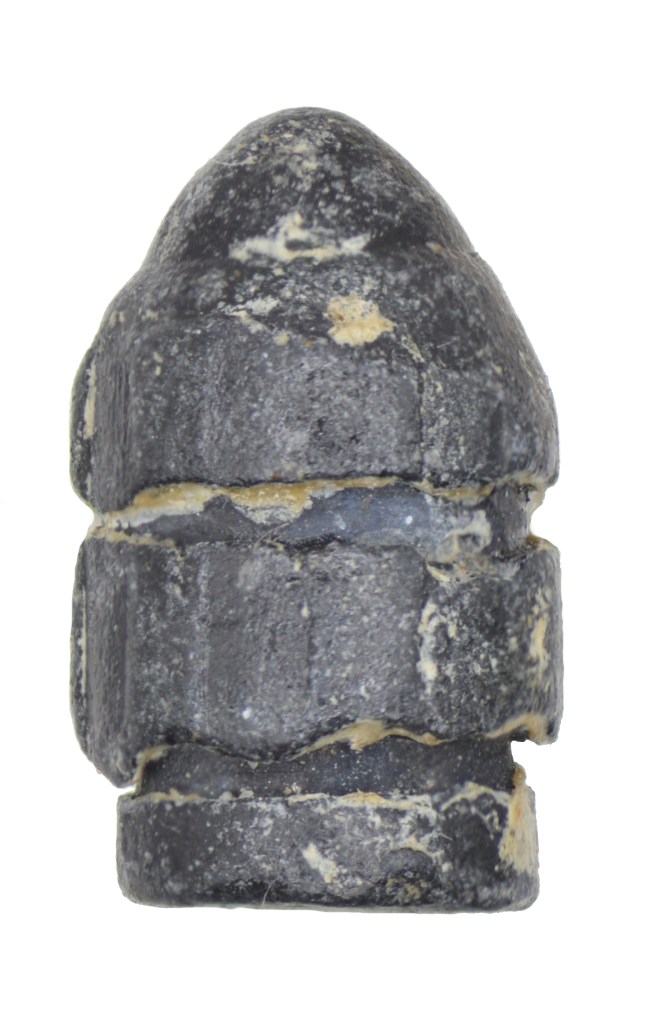
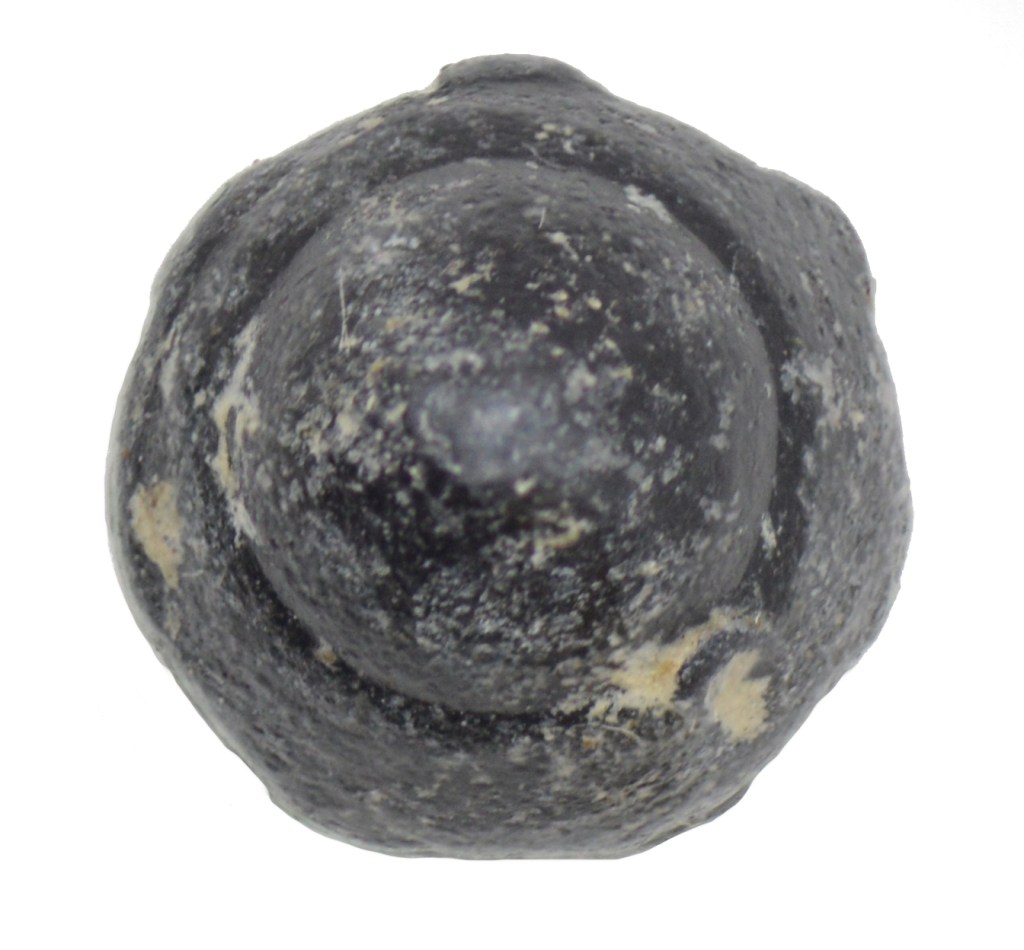
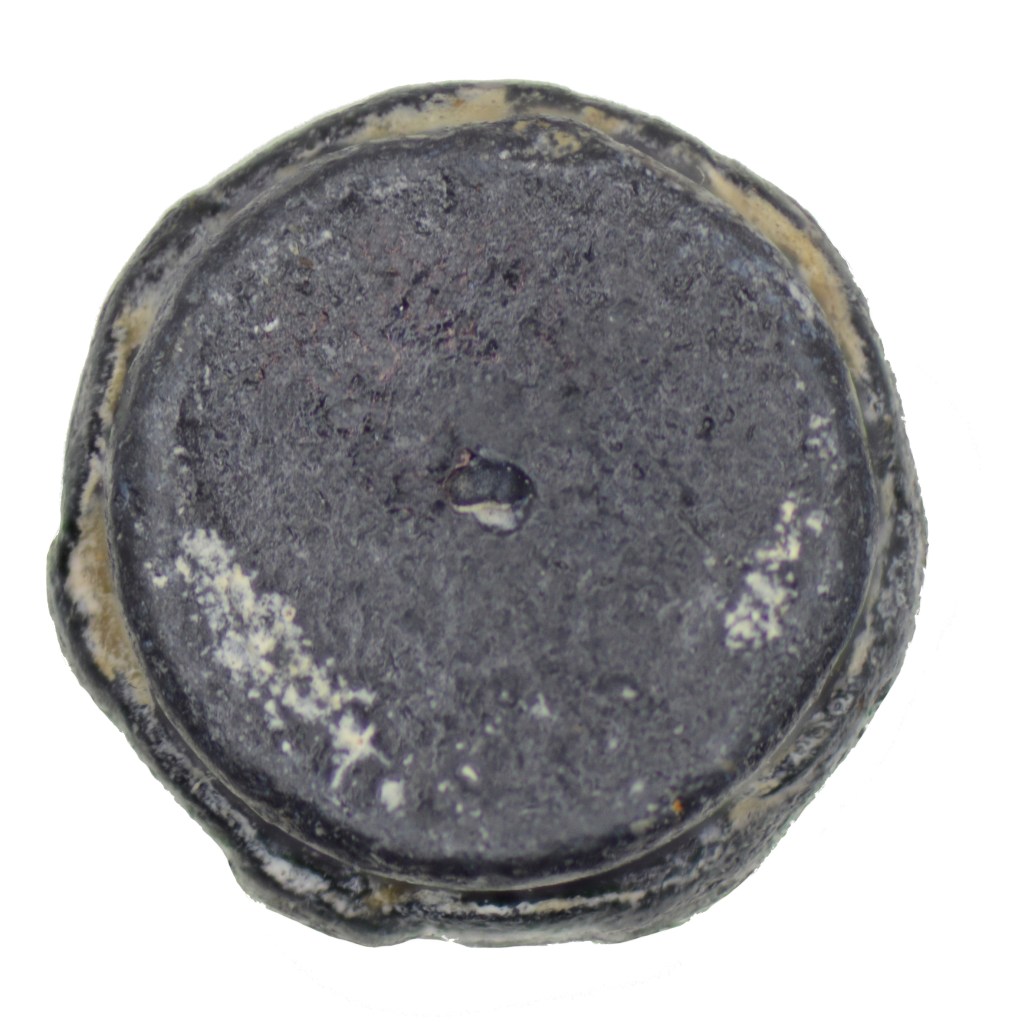
Weight and dimensions:
- Weight: 129 gn (8.4 g)
- Diameter: 0.372 in (9.5 mm)
- Length: 0.605 in (15.4 mm)
The effect of the 0.380 diameter bullet in the 0.36o in diameter bore can be seen here clearly. The rub-back has reached over into the cannelures and the whole bullet has been transformed (in plan view) into a heptagon. Measuring across the rifling grooves on the bullet is difficult, due to the asymmetrical nature of seven groove rifling. However, the measurement comes out at 0.364 in, broadly the diameter of the bore. The Colt Navy revolver features an integral loading lever, to ‘ram’ the bullets into position in the cylinder. The circle around the top of the bullet is the result of this action.
Colt 0.360 percussion revolver, fired
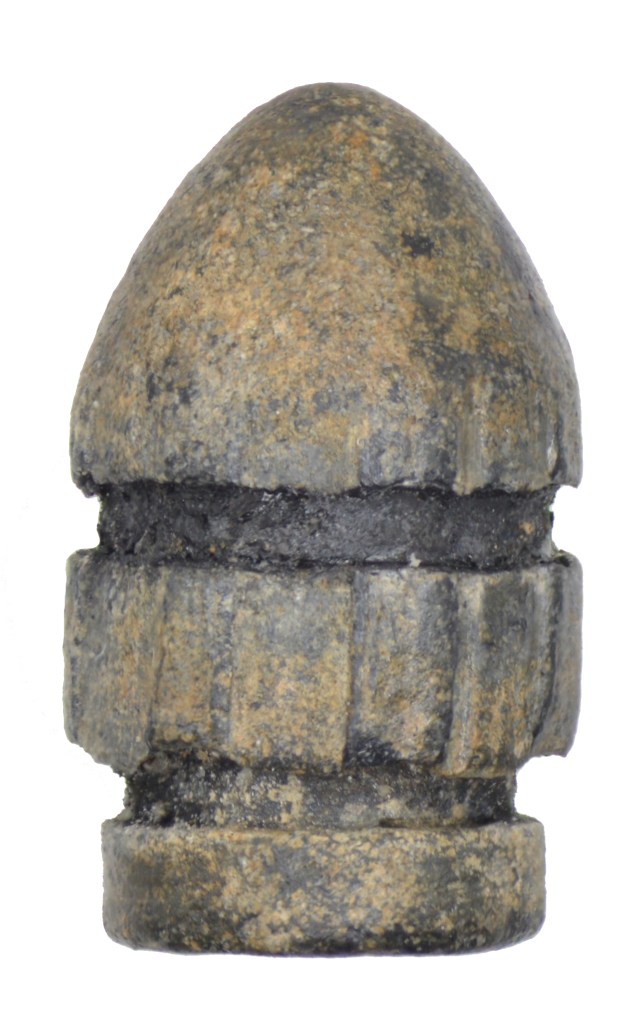
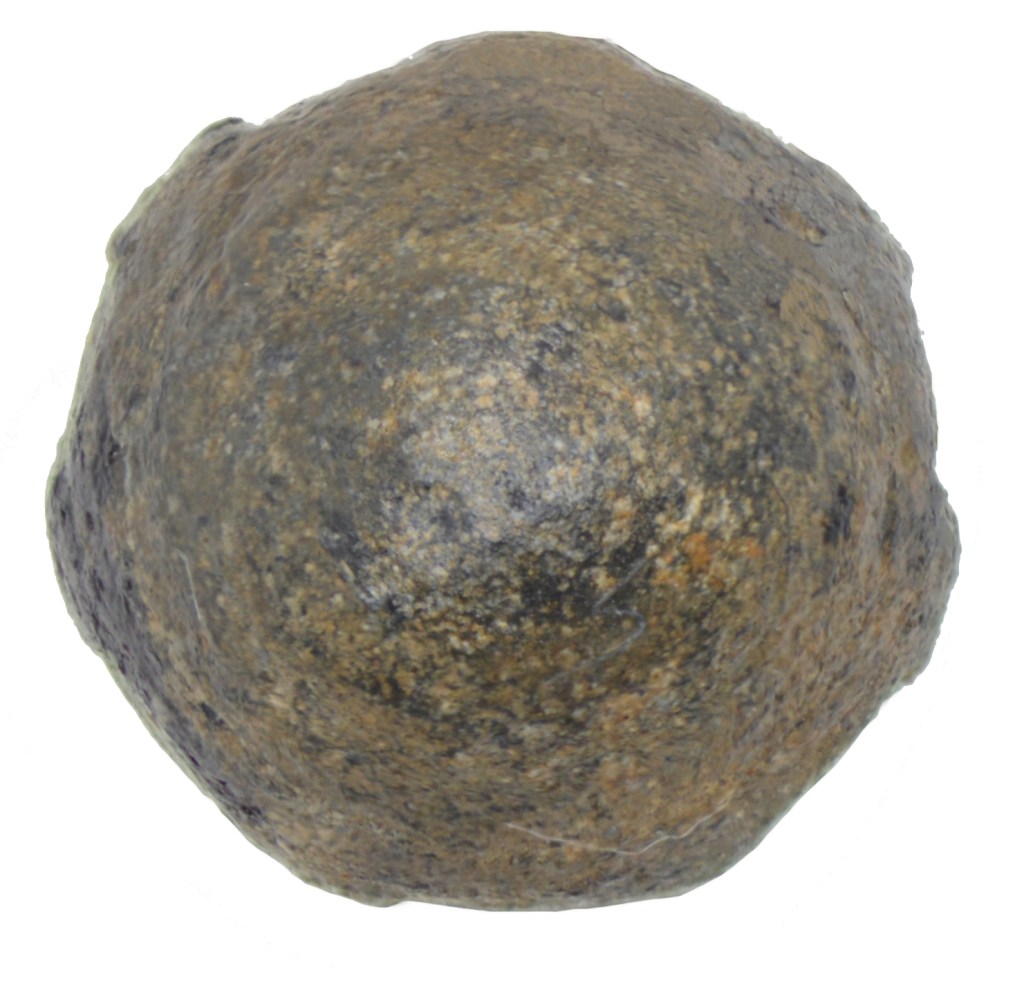
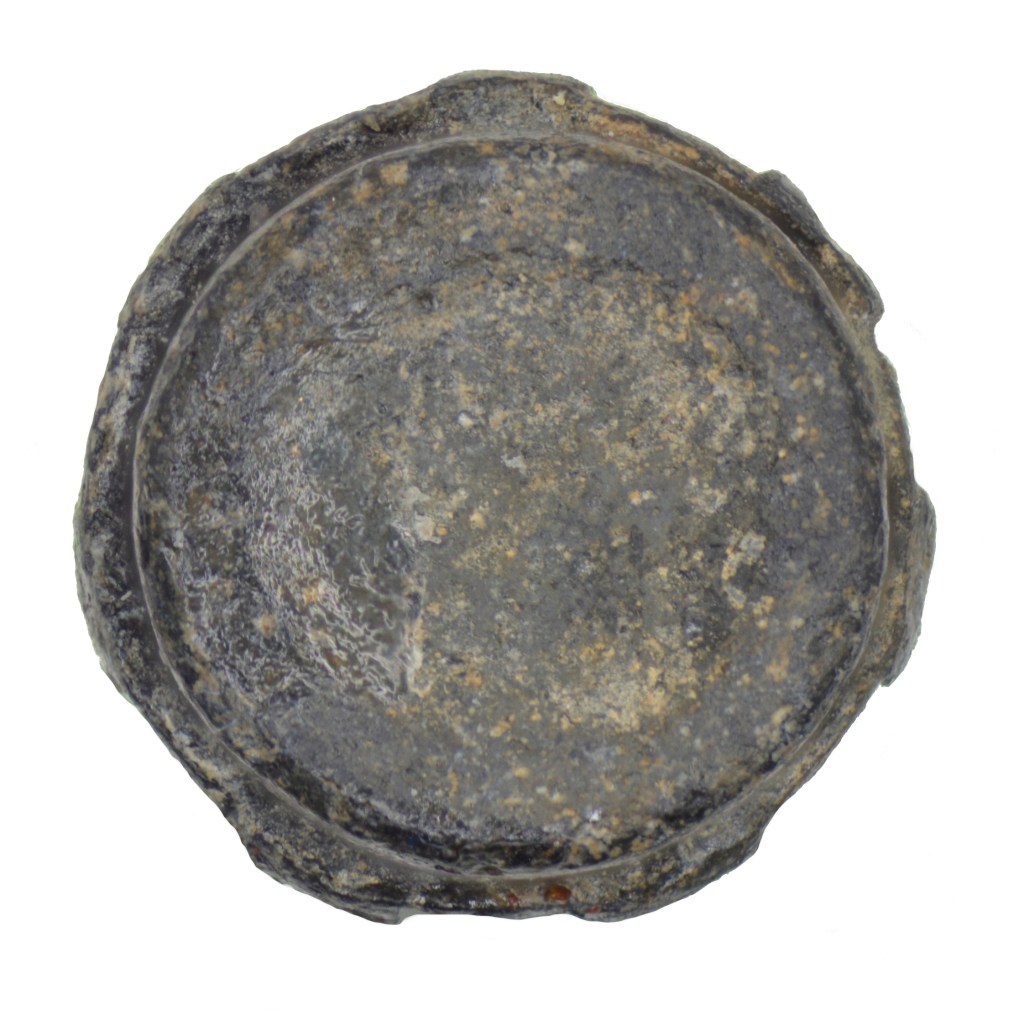
- Weight: 131 gn (8.5 g)
- Diameter: 0.371 in (9.4 mm)
- Length: 0.615 in (15.7 mm)
The loading lever mark is much less apparent on this example, but it is still present. The lower cannelure is knurled, though this is not visible in the photograph.
Colt percussion revolver
