The Whitworth bullets shown here are not those adopted for trials by the British military, so must therefore be considered commercially produced varietes. The military versions can be seen here.
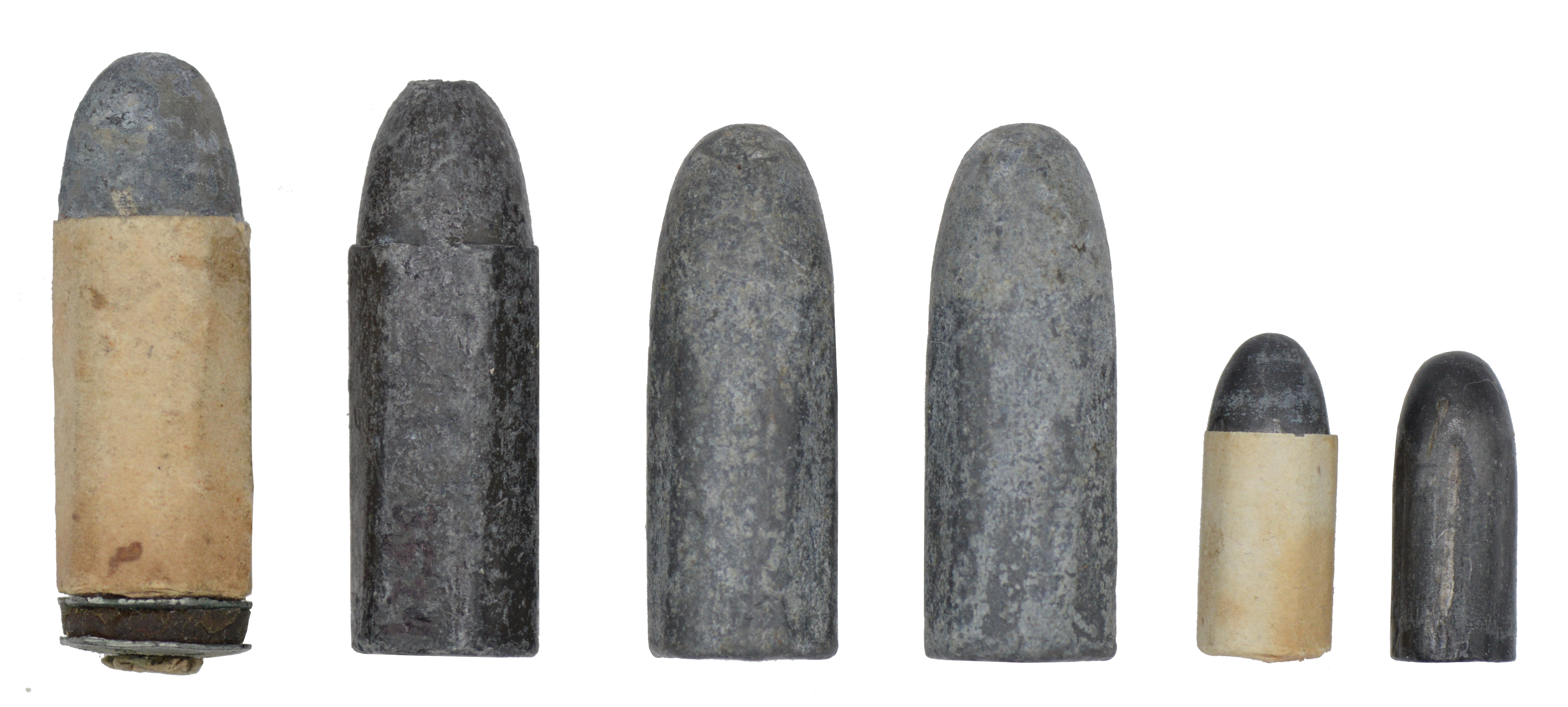
The projectiles are all of the mechanical fit type, featuring 6 facets. The most interesting of this group is that on the far left, shown in detail below. Second from left, the bullet has ‘shoulders’ at the top of the facets. The two in the centre have flat bases. The smallest two, on the right (0.294 in across the facets), might not be true Whitworth projectiles, but if that is the case, they are highly derivative.
Whitworth patch bullet, unfired
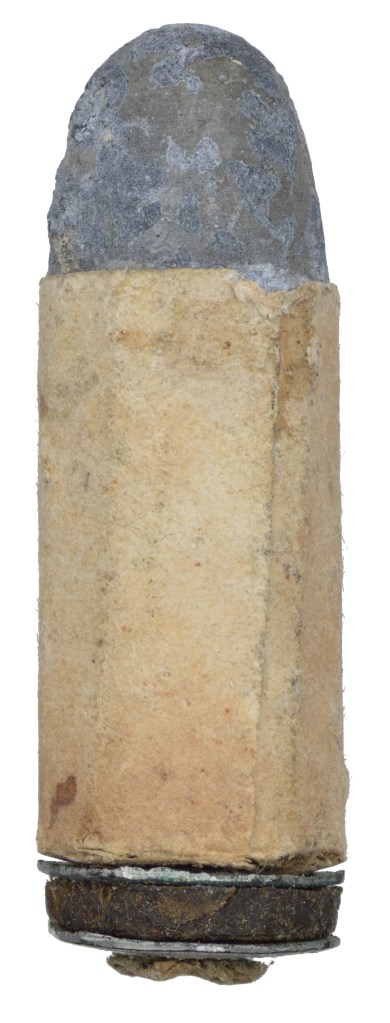
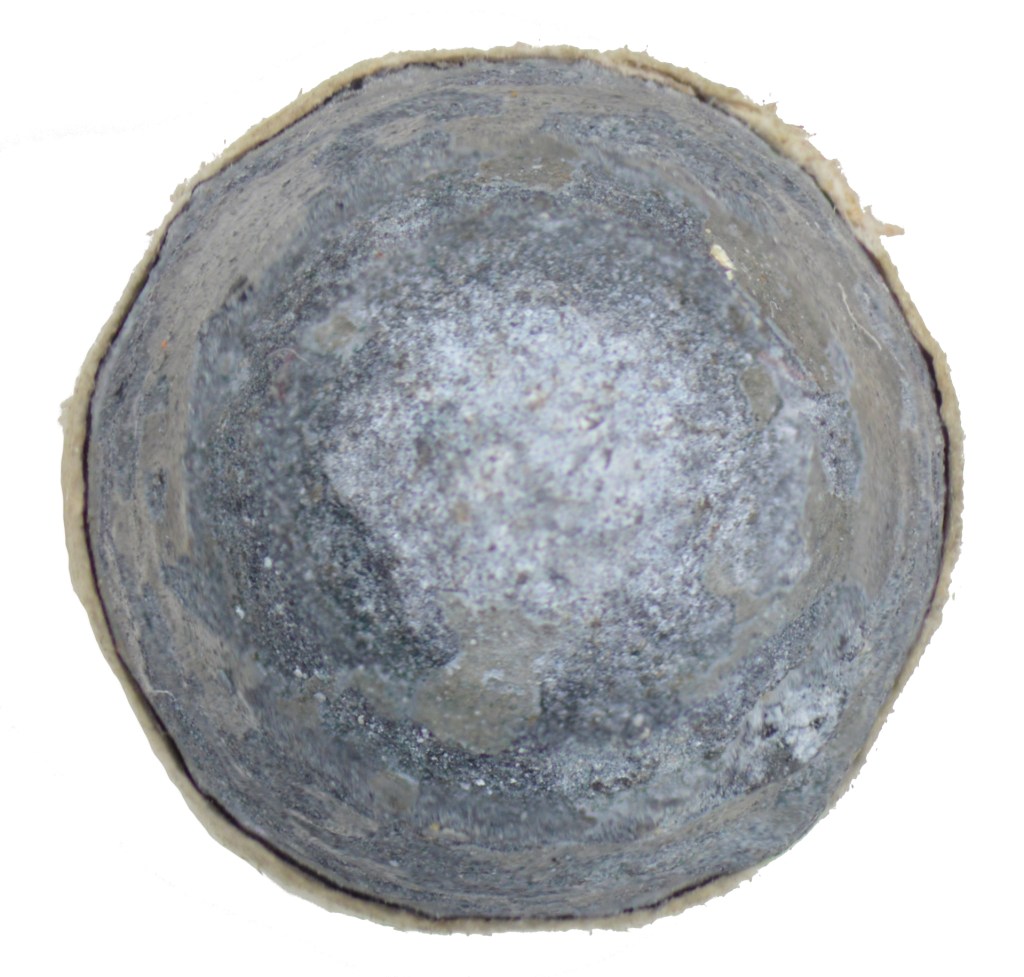
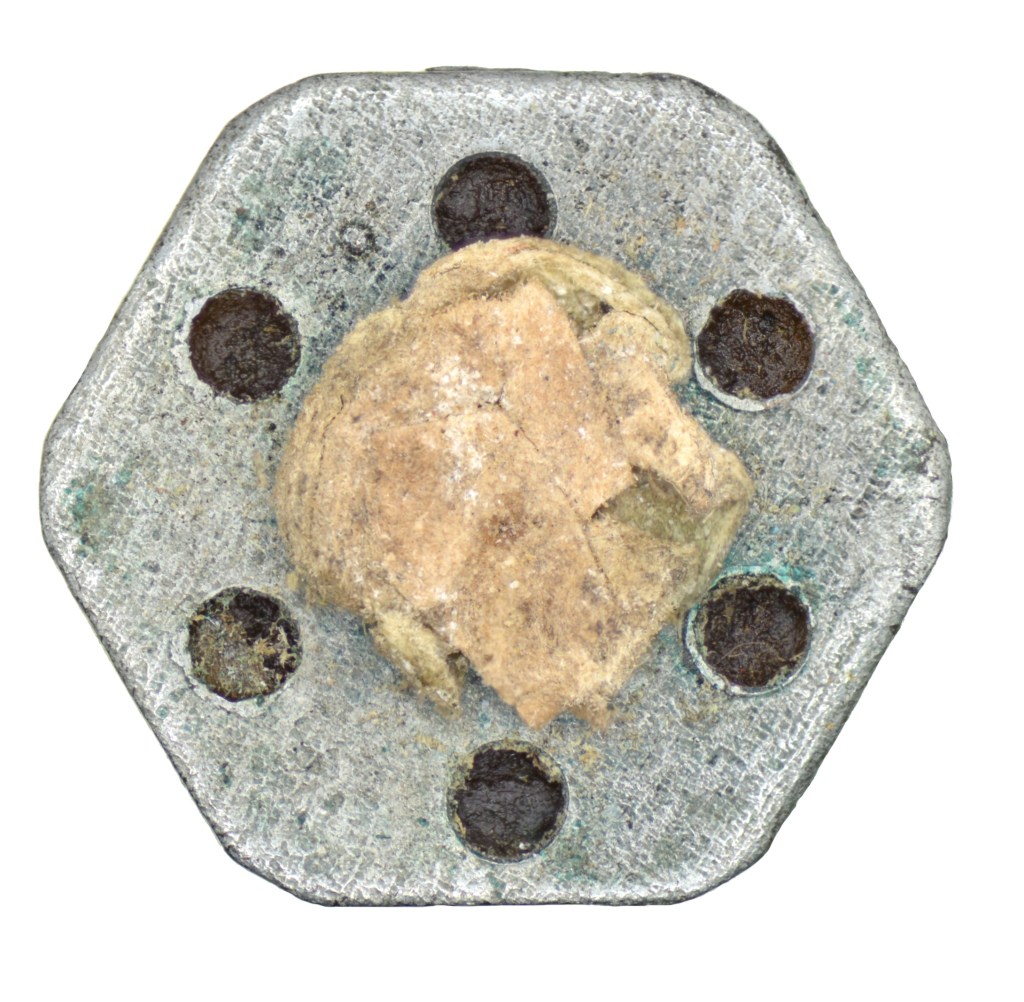
- Weight:
- Diameter across facets: 0.453 in (11.5 mm)
- Diameter across ridges between facets: 0.489 in (12.4 mm)
- Length: 1.312 in (33.3 mm)
- Thickness of composite wad: 0.118 in (3 mm)
The Whitworth rifle was remarkably accurate (so much so it was the rifle chosen for Queen Victoria to operate when she fired the first shot at the inaugural meeting of the National Rifle Association at Wimbledon Common in 1860) but was prone to rapid fouling of the barrel. A scraper was later added to the ram rod, to remove fouling, but it seems this unfired bullet has been fitted with an ingenious method of cleaning the bore. The felt wad at the base (common to most Whitworth bullets) has here been sandwiched between two light metal plates, also hexagonal in shape. These will scrape the barrel on loading and on discharge, alleviating the problem. Clever it might be, but it was no doubt an expensive bullet to produce, being made up of so many composite parts.
Belted balls
Whitworth bullets (commercial production)
