After the experience in the Crimean War, where 1st pattern bullets were being manufactured in dies above and below the recommended size tolerance, the 2nd pattern bullets were marked with an identifier, to trace bullets back to specific machines. Therefore, most P53 bullets (apart from the 1st pattern P53 and some commercially produced varieties) feature a number or letter stamped in the base cavity, which provides information on where the bullets were manufactured. The Royal Arsenal, Woolwich was the main manufacturer of military ammunition and used the Anderson bullet press to create highly uniform projectiles. An article in the November 1856 edition of the Artizan magazine describes four separate bullet dies working within one overall machine at the works. This is repeated in Arthur B. Hawes’ publication Rifle Ammunition, in 1859, wherein the description runs ‘four complete bullet machines on one square frame’. Each die featured its own number, engraved on the bullet punch and along with the broad arrows (signifying Woolwich manufacture), these were imparted to the bullet during pressing, in an embossed form. It will therefore be seen that the numeric stamps in the base cavity of the bullets refer to one of the four machines in use. Rifle Ammunition was published just as the 4th pattern P53 bullet was beginning production, so it would seem safe to suggest that there were only four machines in use during manufacture of the 1st, 2nd and 3rd pattern bullets. However, the evidence from the bullets themselves appears to contradict this: there is a 2nd pattern iron cup bullet shown below (the type only produced in 1855) on which there is a number ‘6’ stamp, suggesting there were at least six machines, but more likely eight (given the description of four per frame) in operation in 1855. There are also examples of 3rd pattern bullets, which ceased production in 1859, with stamps of numbers ‘5’, ‘6’, ‘7’ and ‘8’. This suggests that there were two complete Anderson presses, each with four dies, running from at least 1855. Some of the bullets regularly feature a dot as well as a number, to the left, right, above or below.
Stamp 1
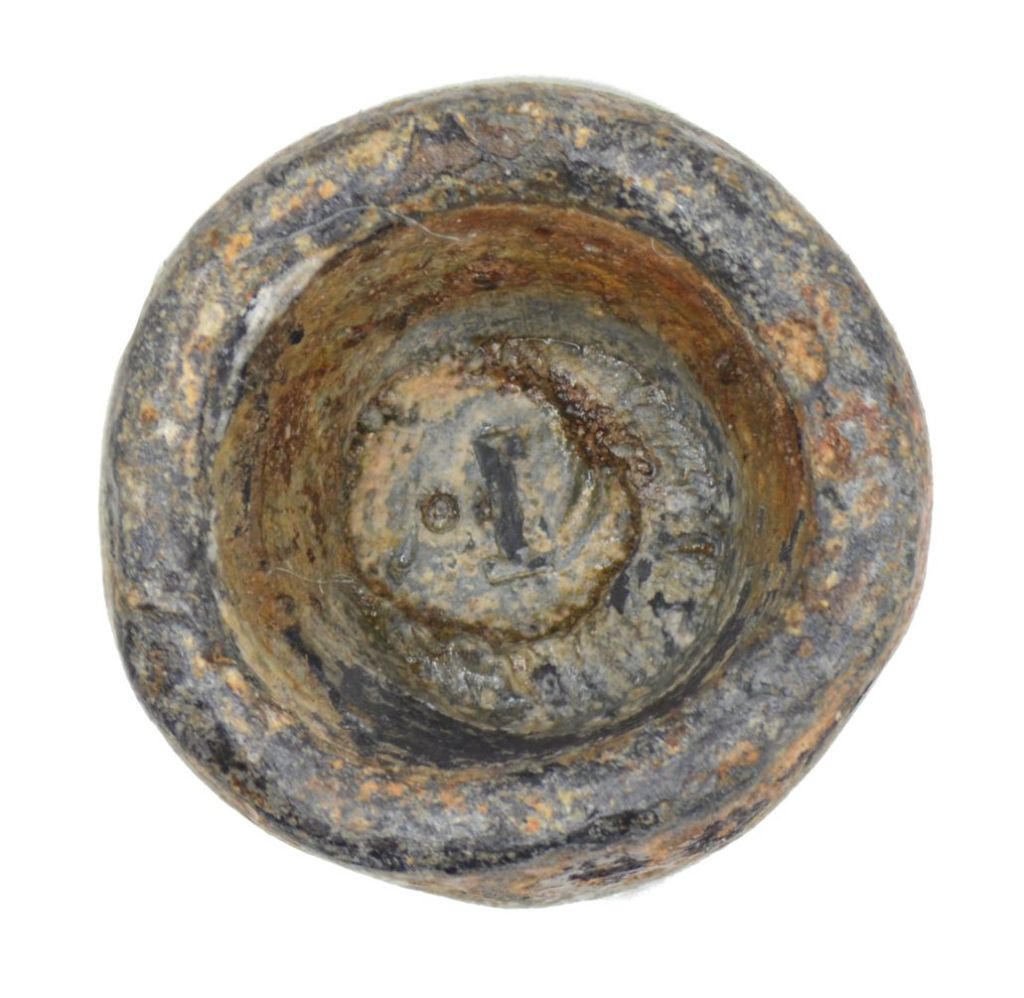
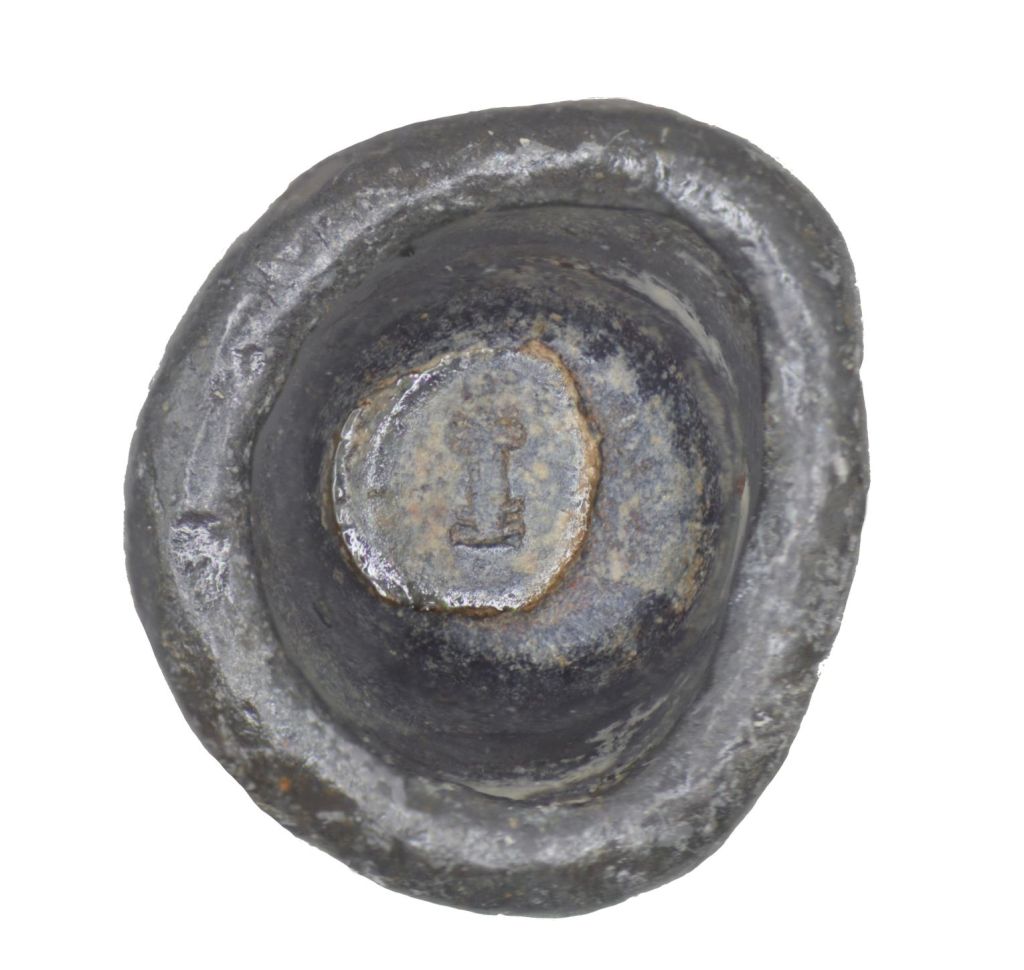
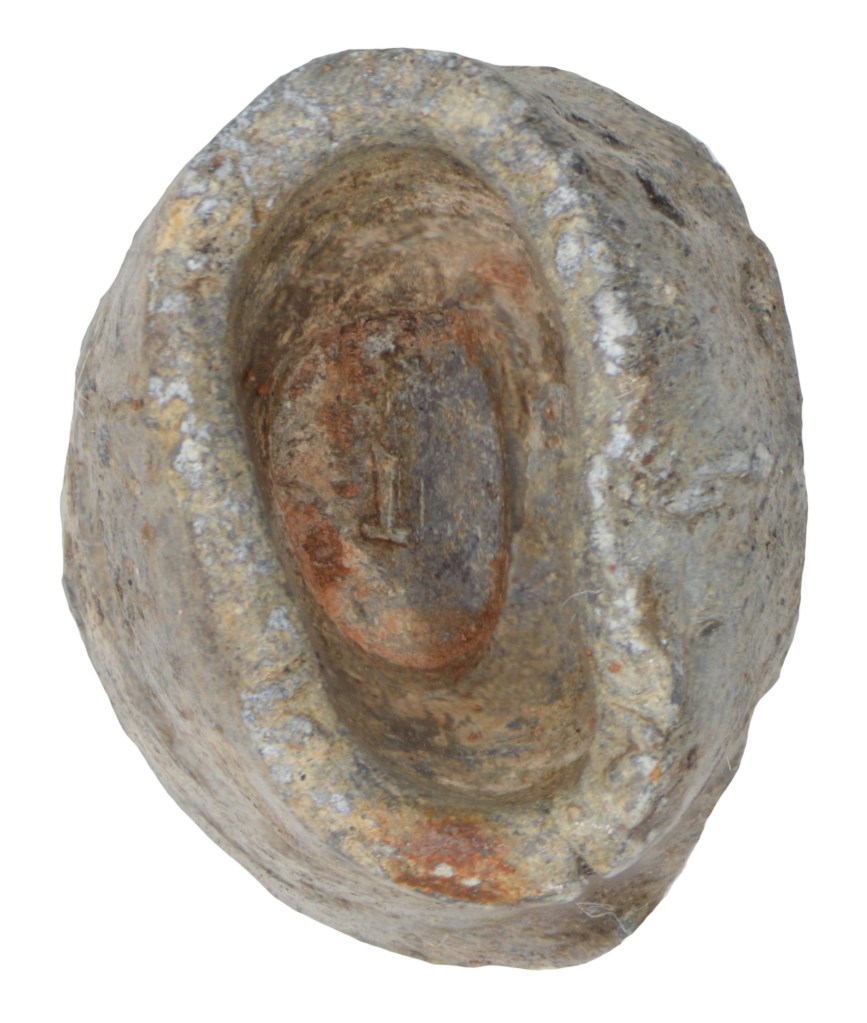
The ‘.1’ stamp on the left may be in reverse. The ‘I’ stamp in the middle has appears to have a double serif at the base.
Stamp 2
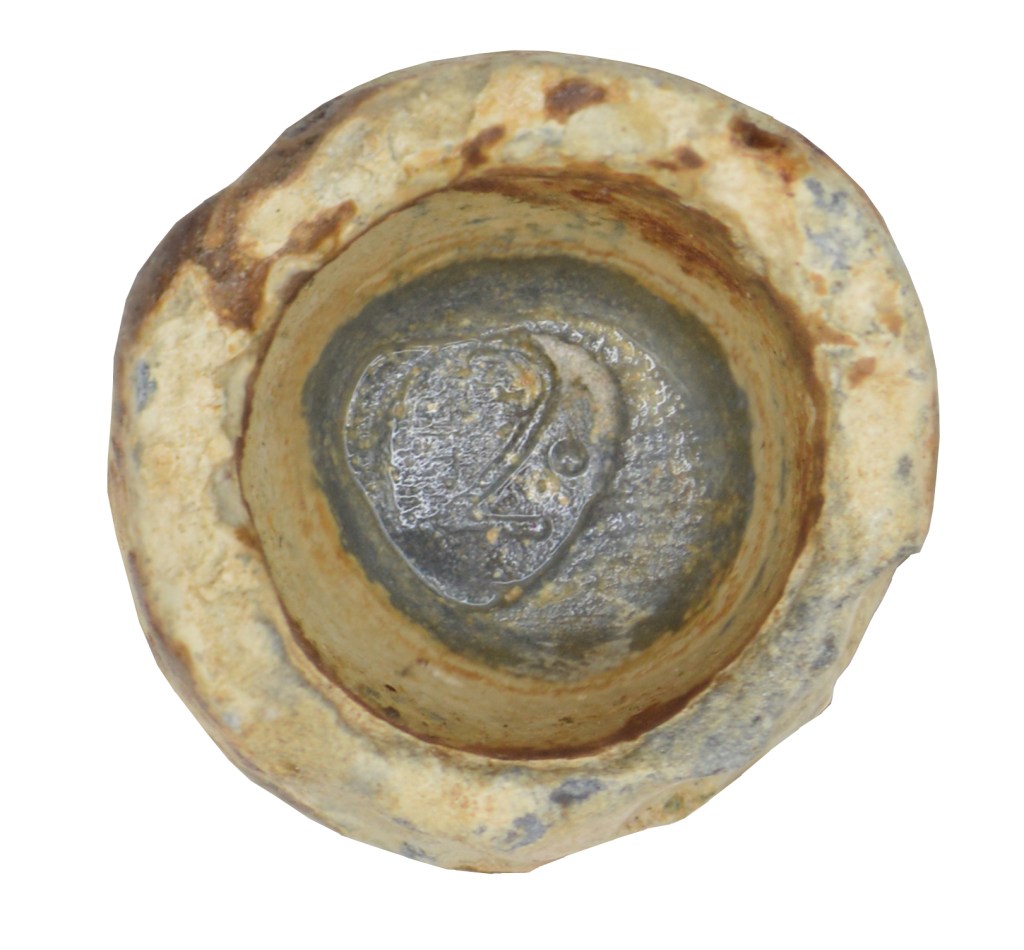
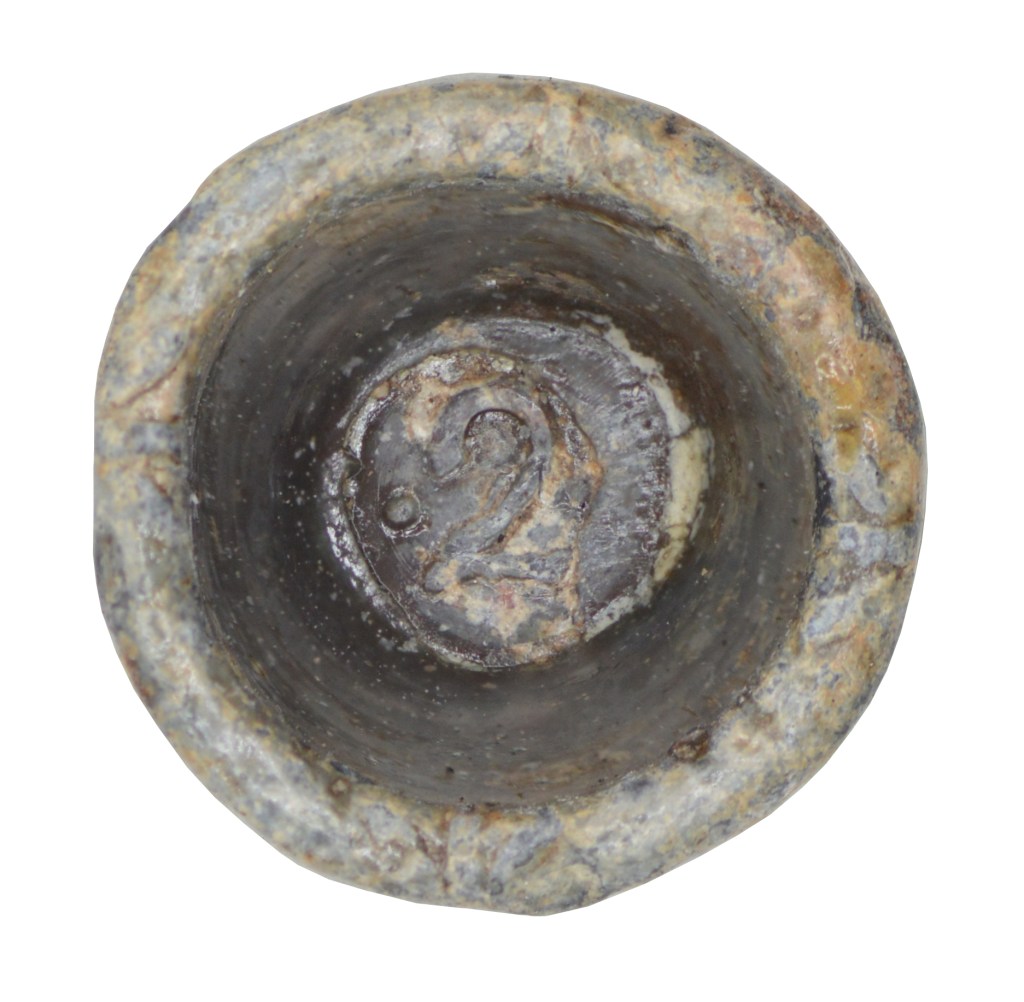
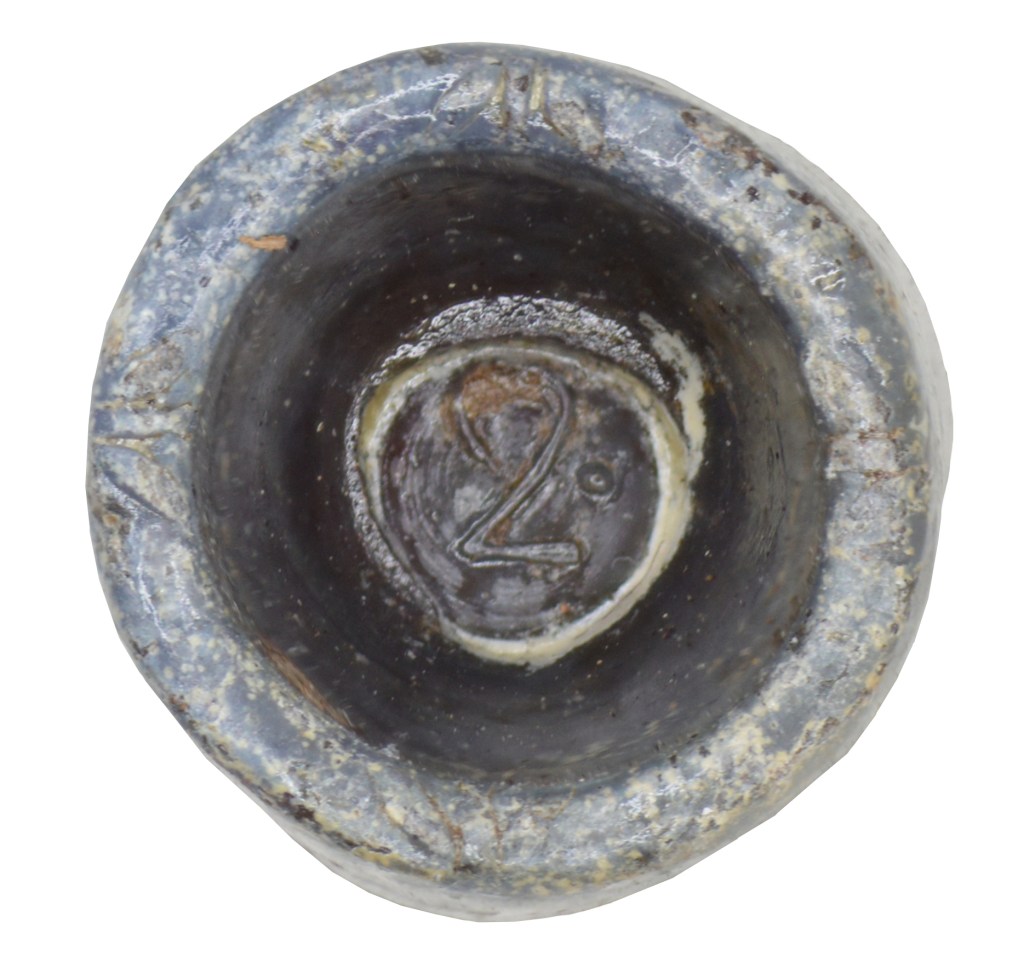
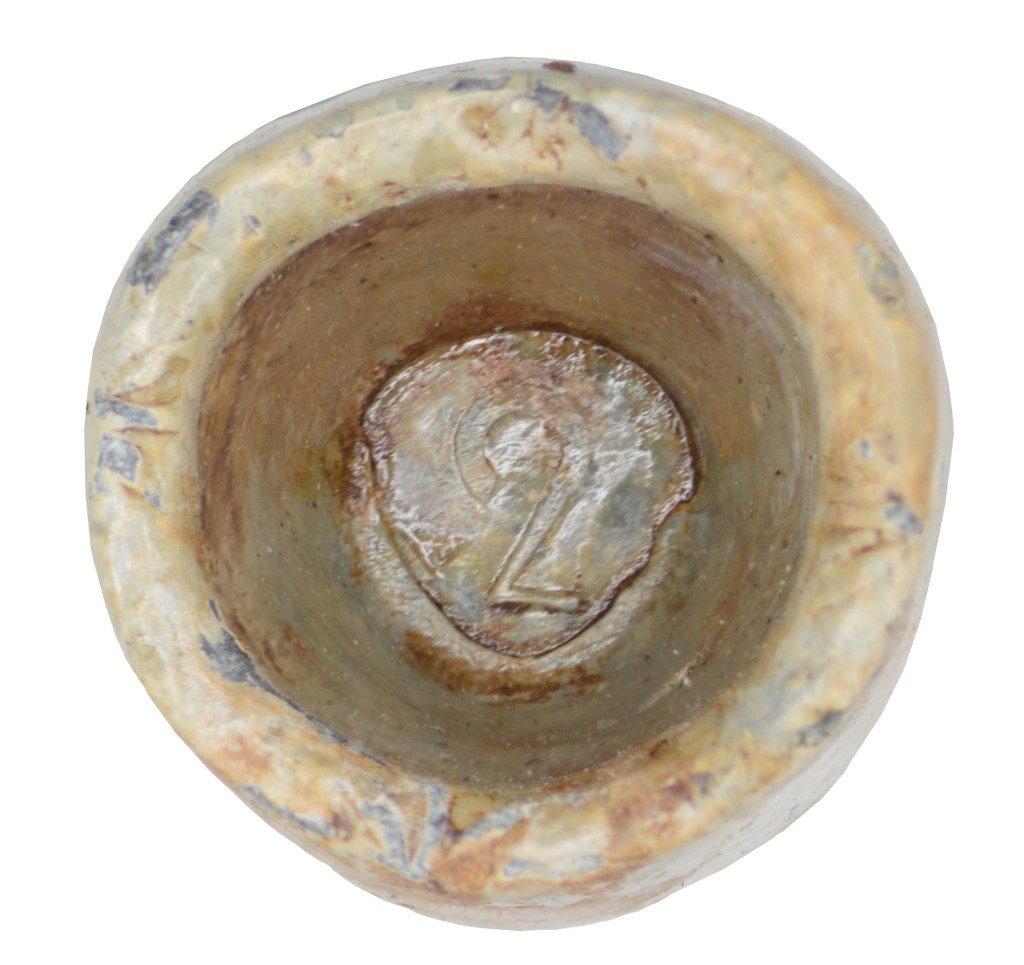
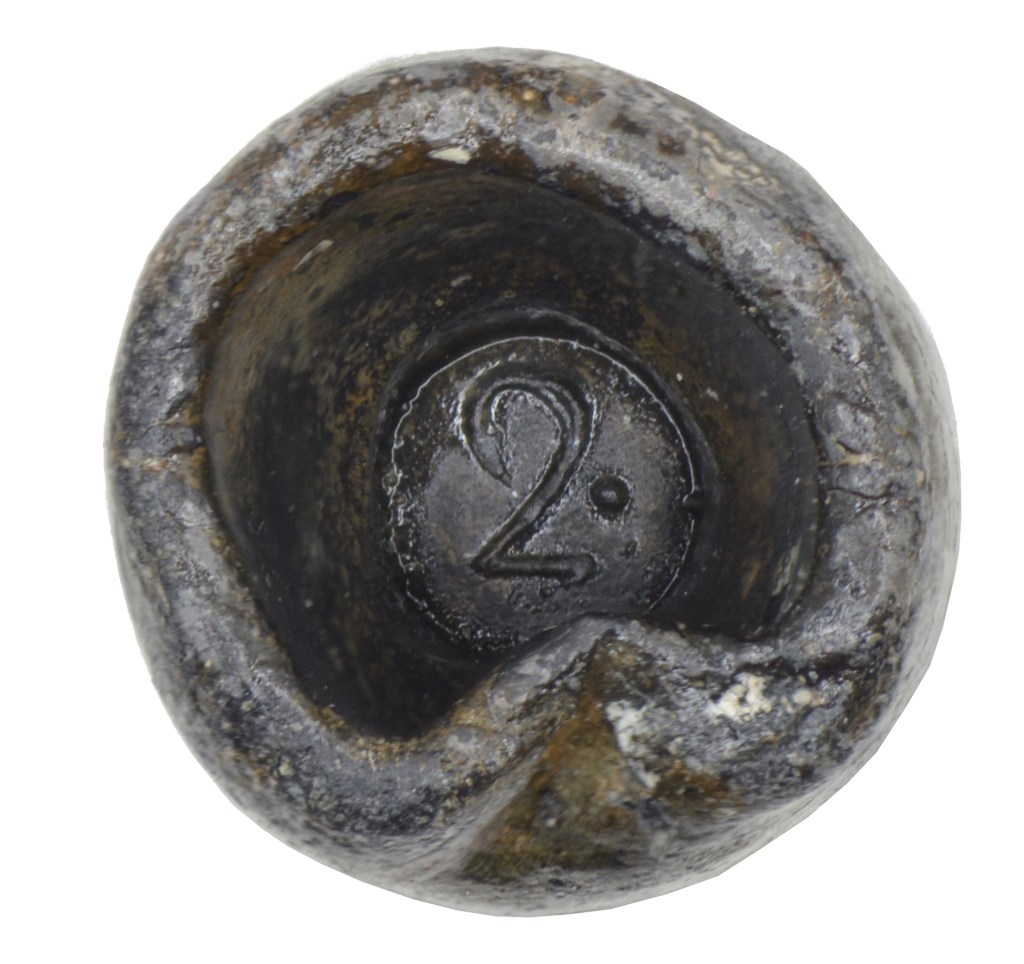
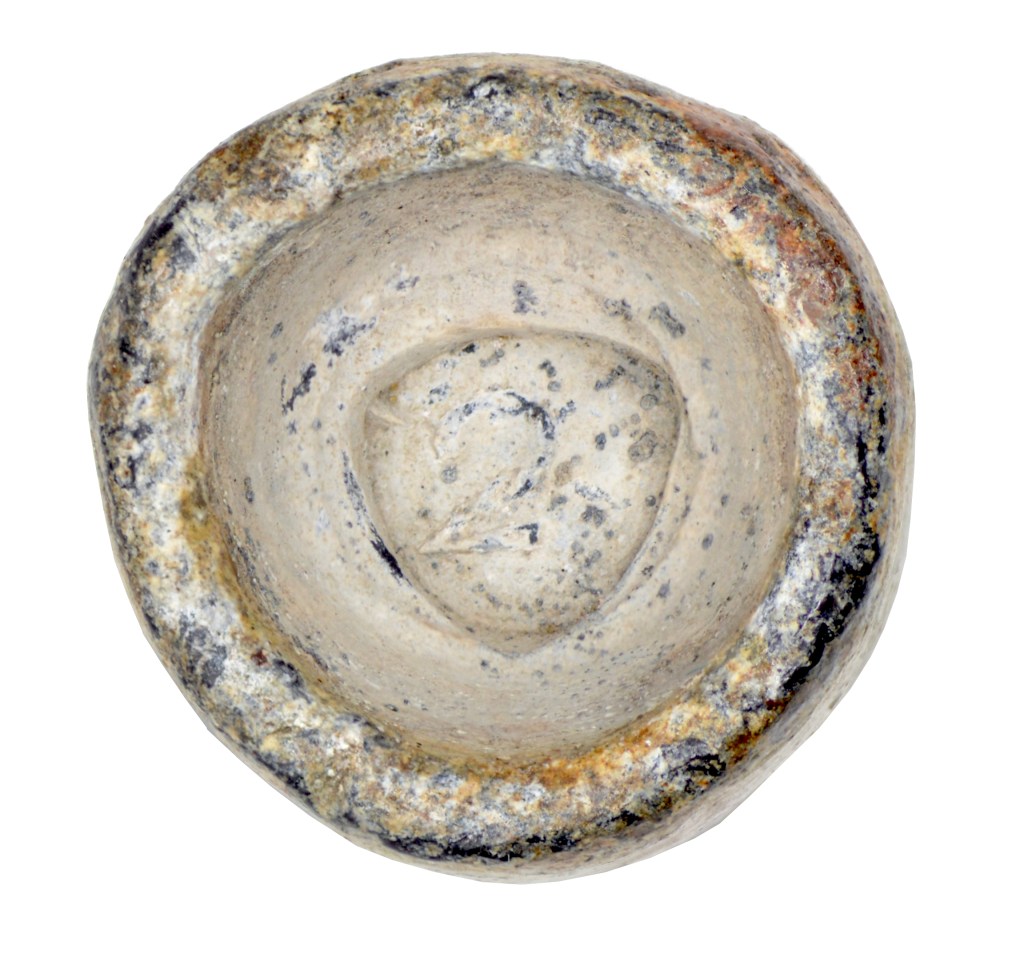
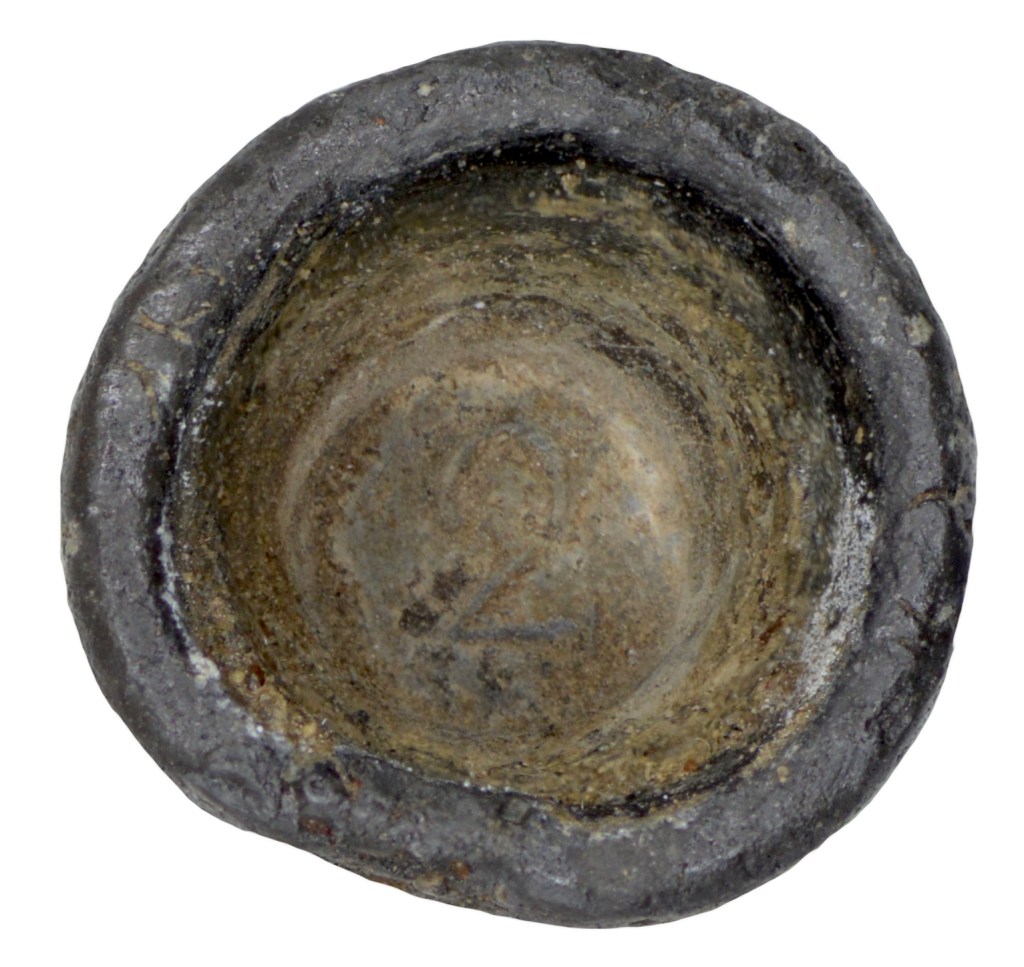
These are 2nd and 4th pattern bullets.
Stamp 3
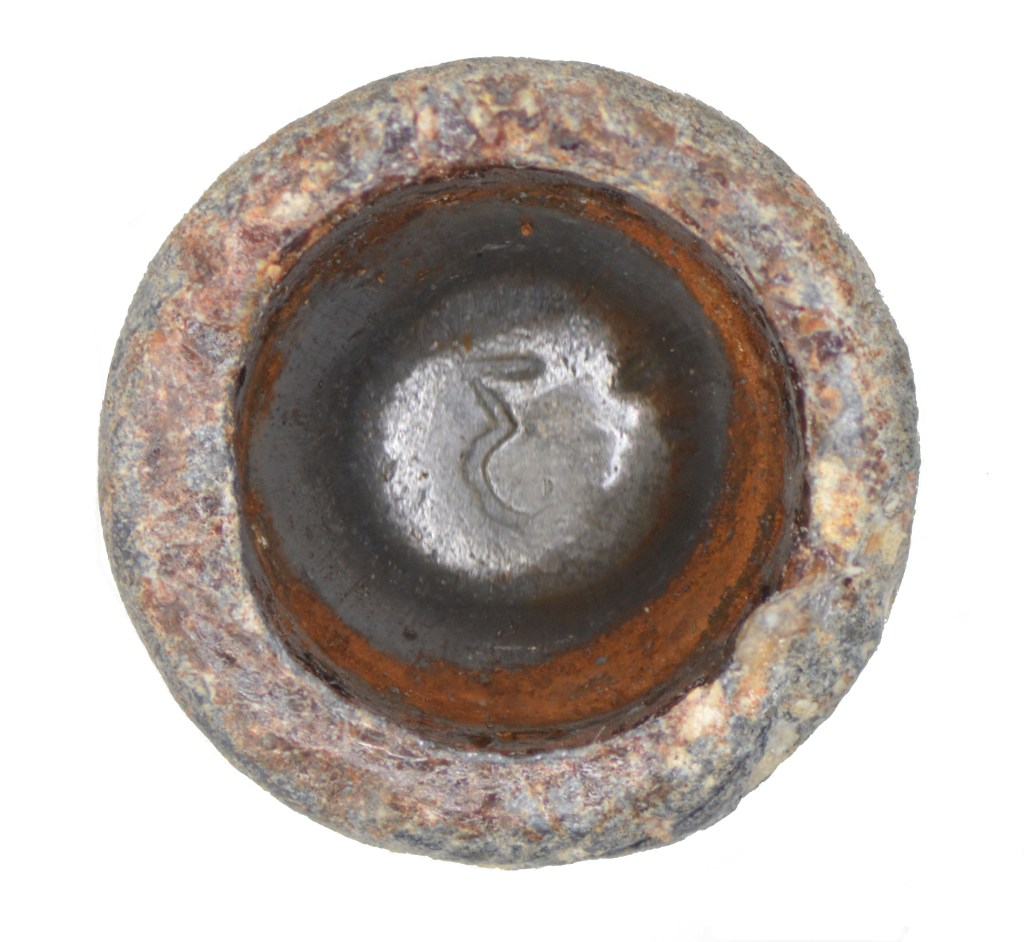
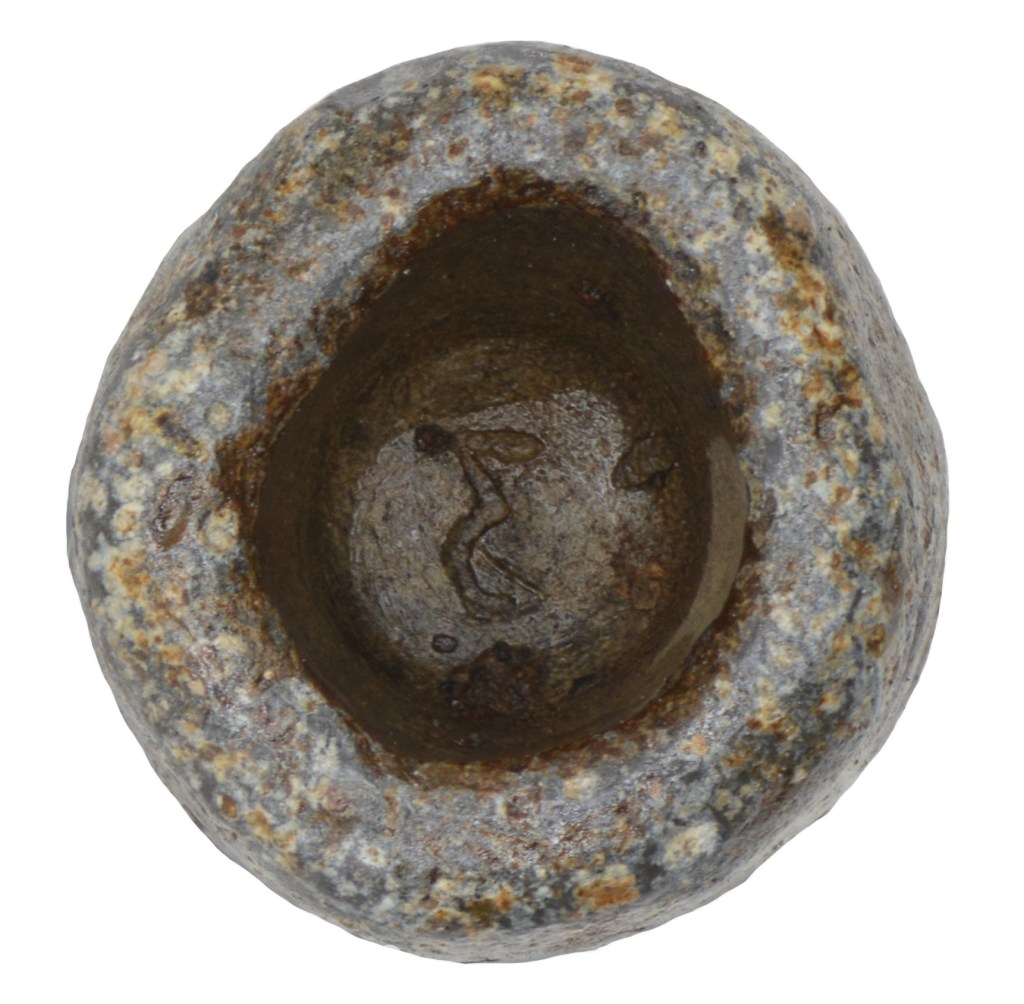
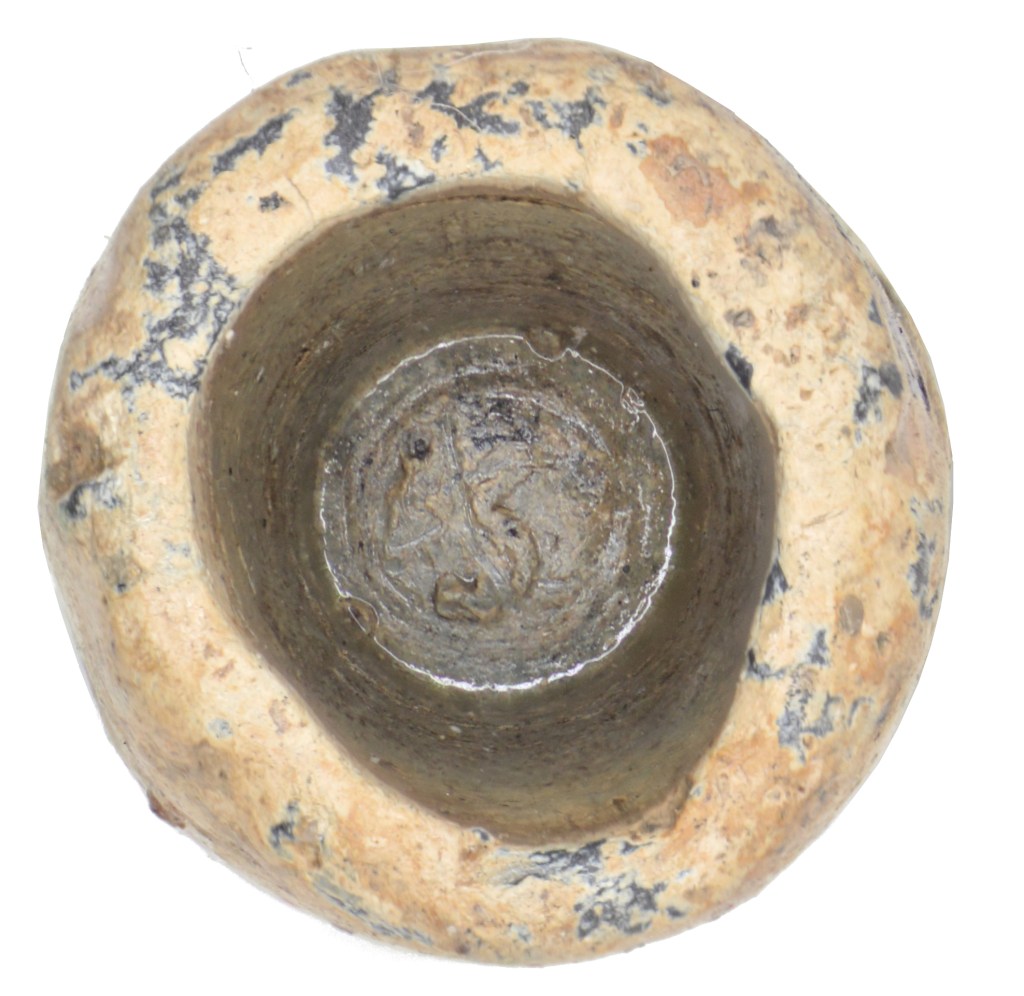
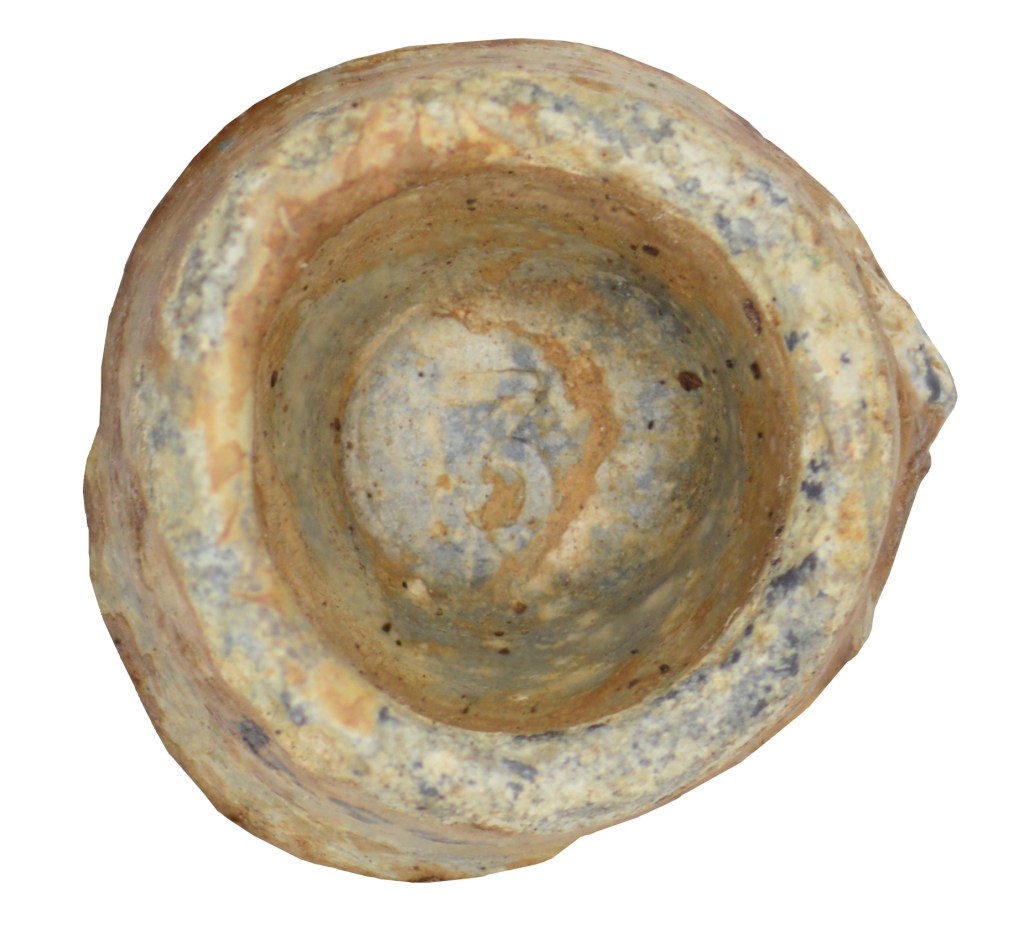
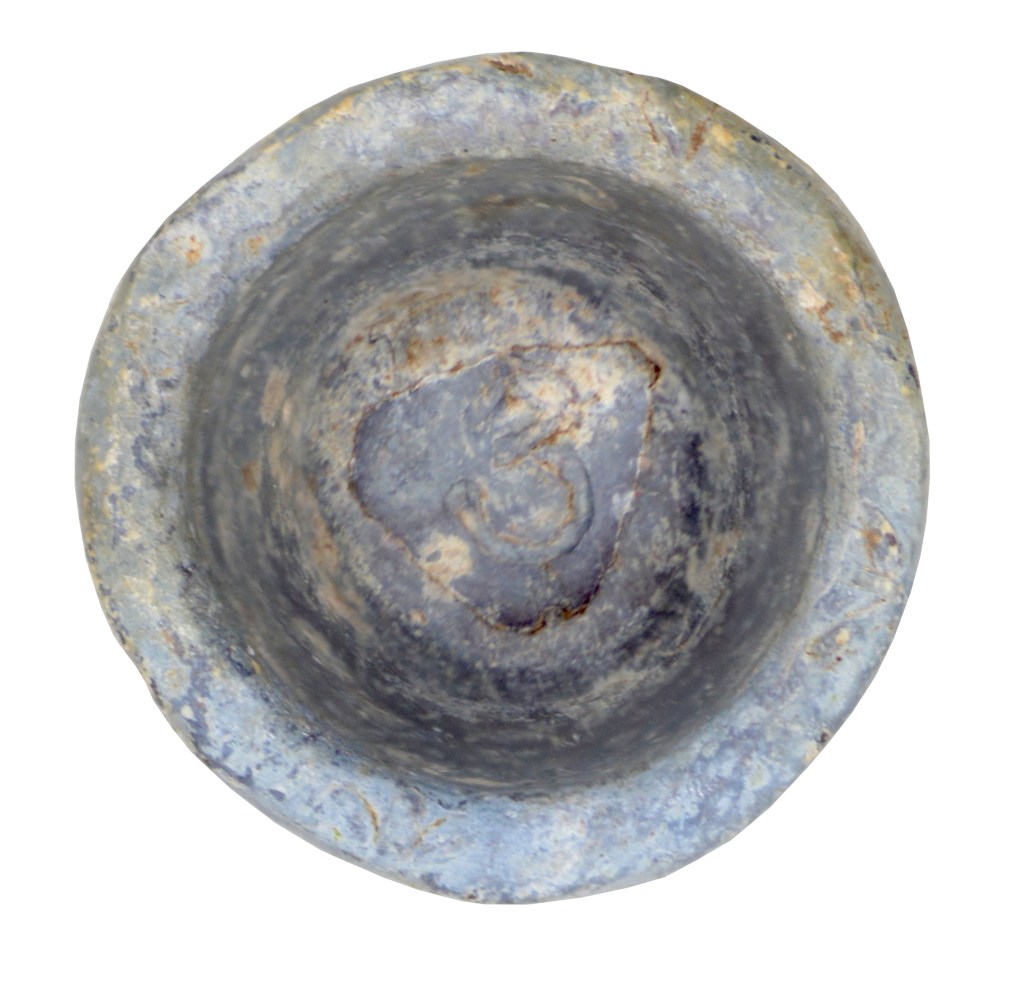
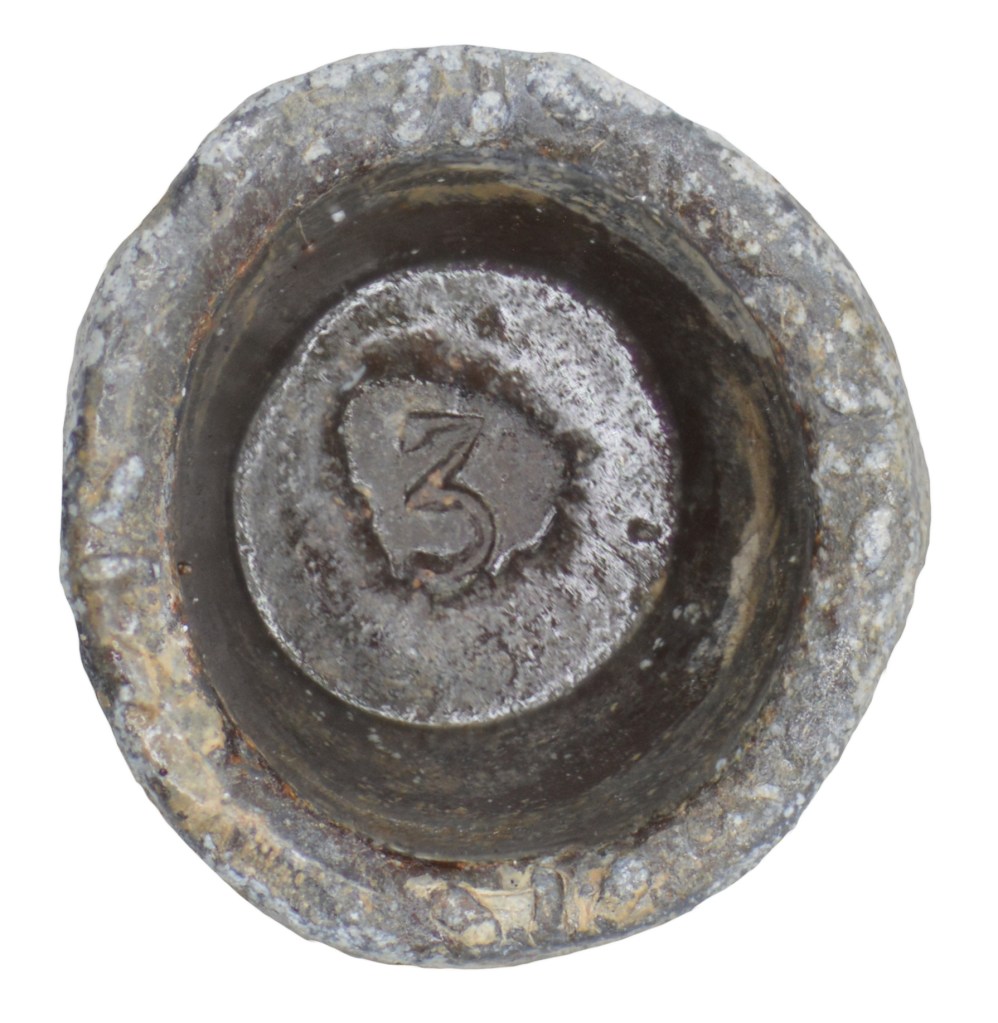
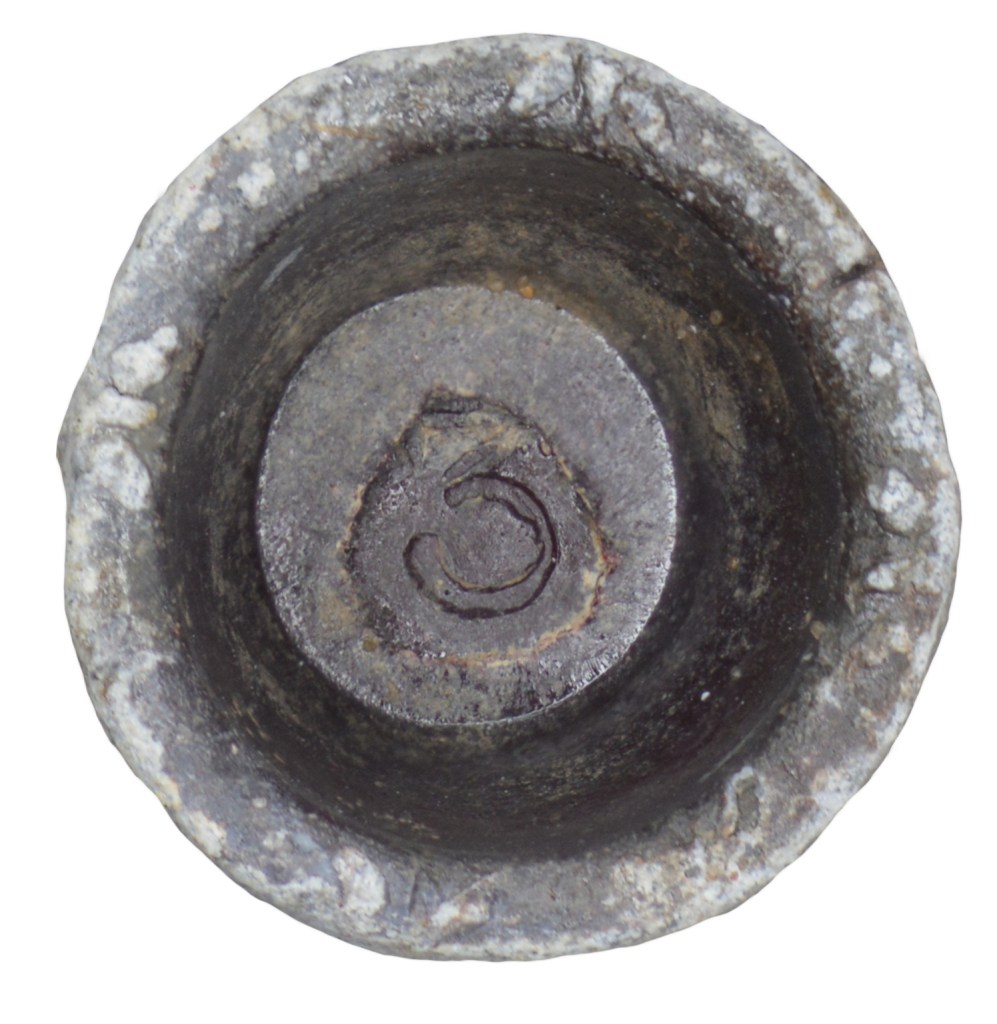
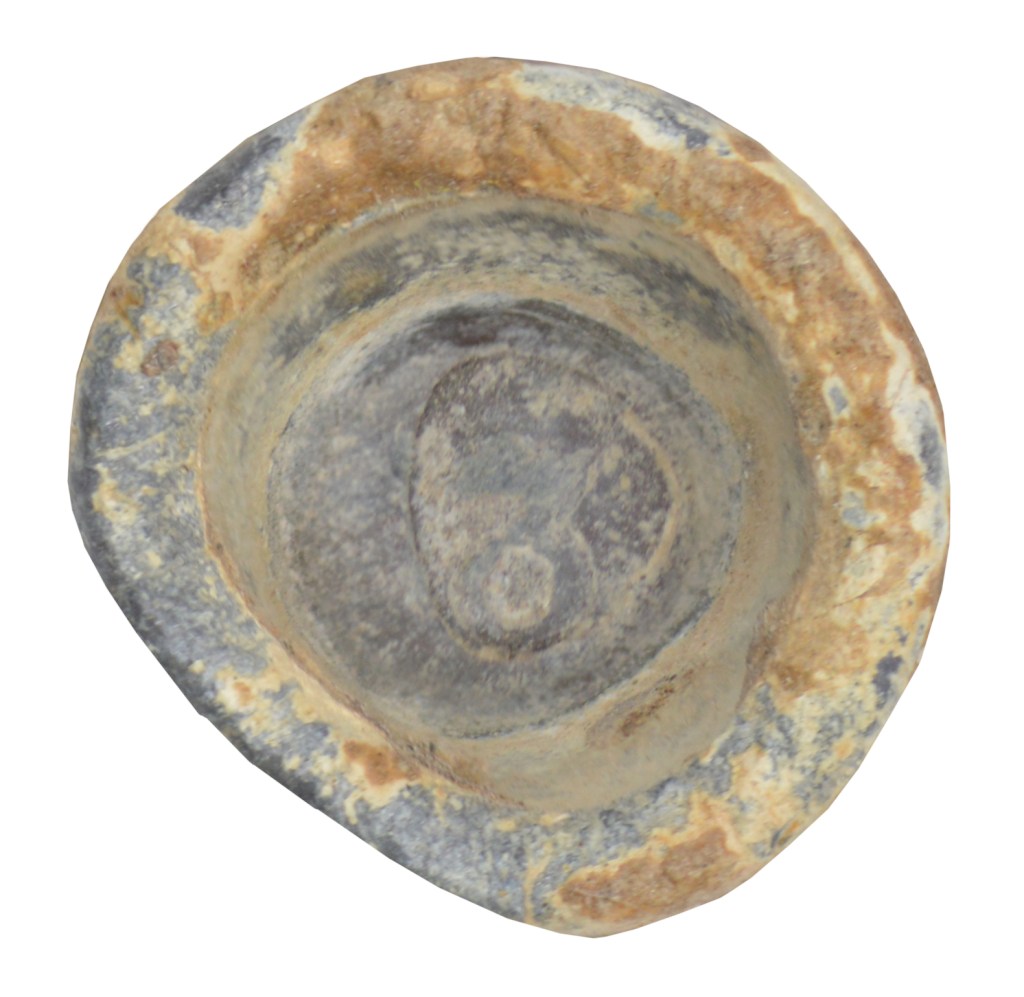
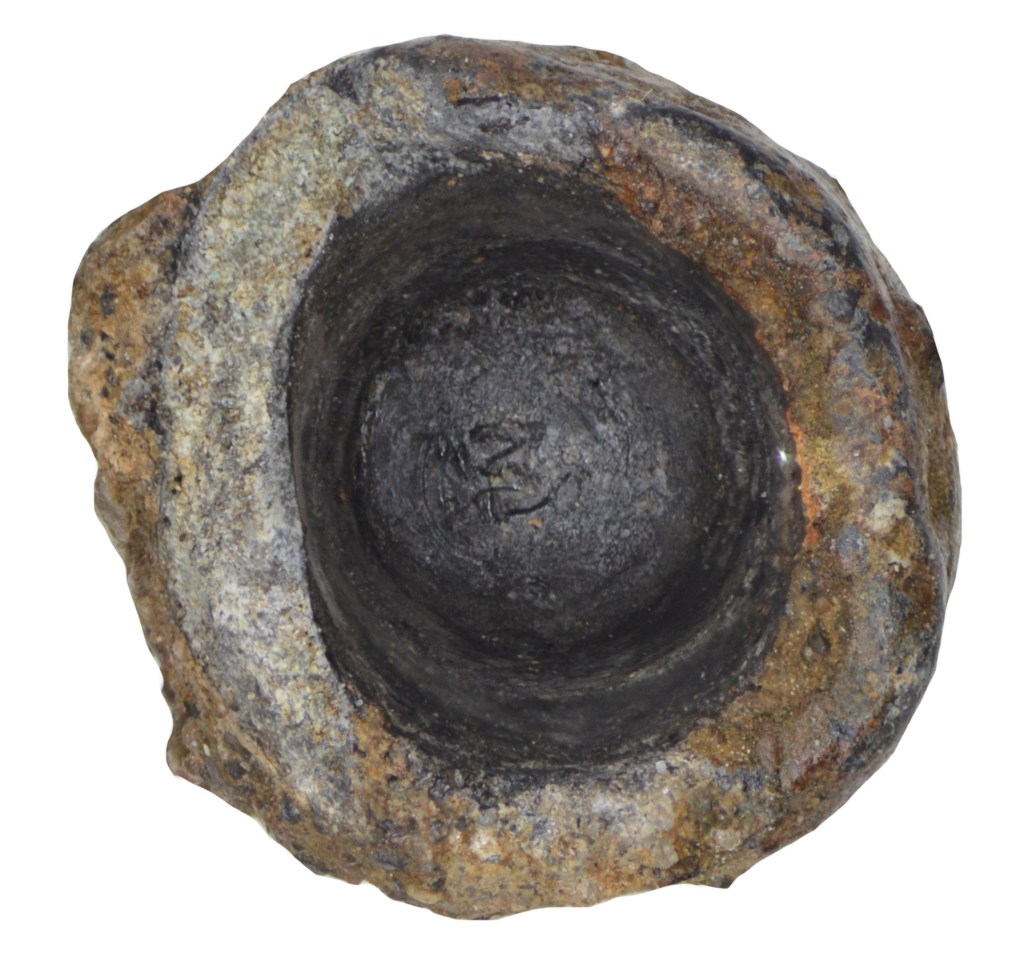
2nd pattern and 4th pattern bullets. Note the ‘3’ on the top left and top centre are shown in reverse (these are similar but not from the same punch). The number on the punch would have needed to be engraved in reverse and the error here is that it was engraved in regular, rather than reverse script.
Stamp 4
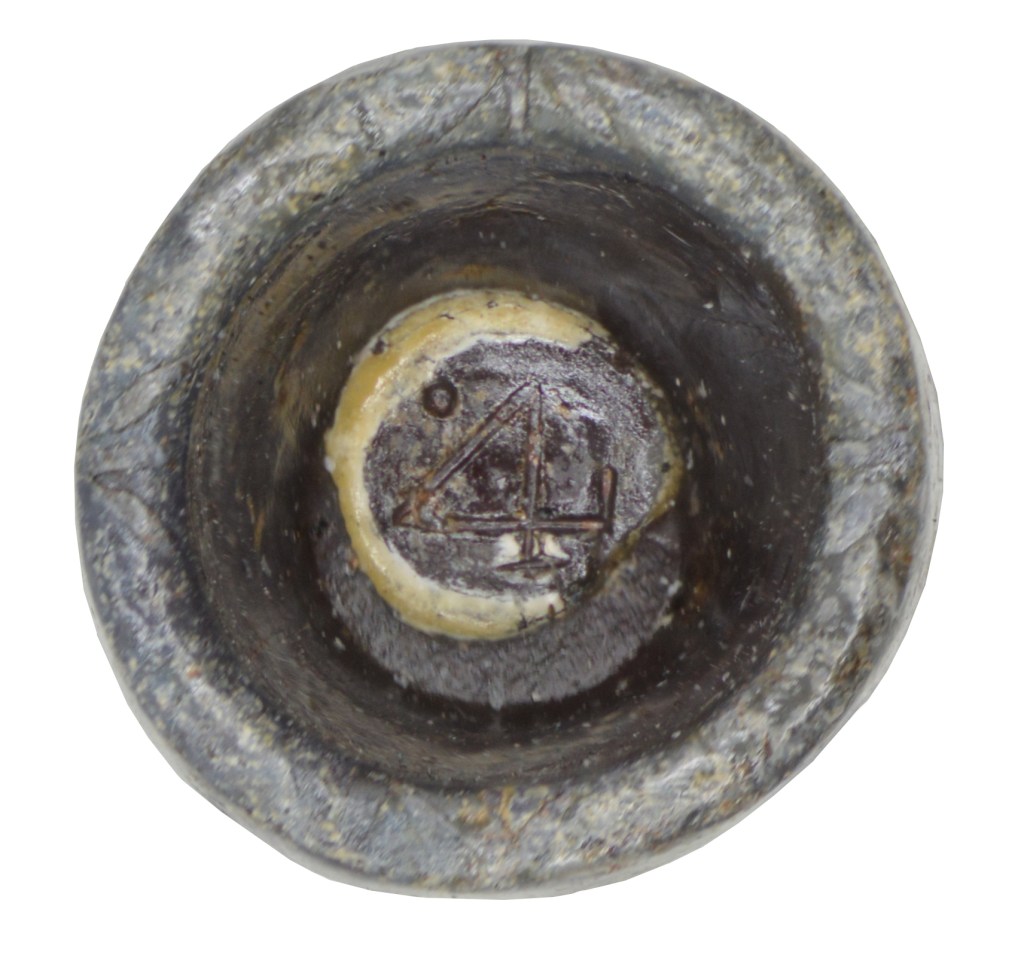
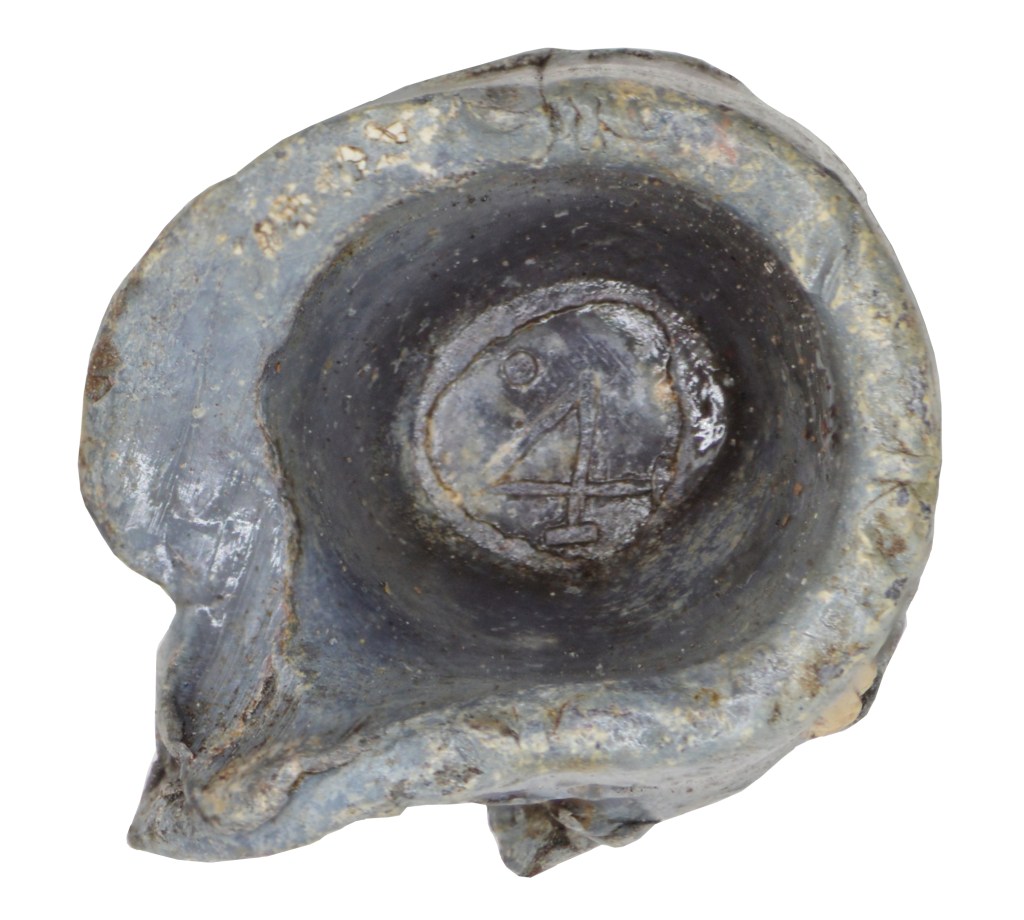
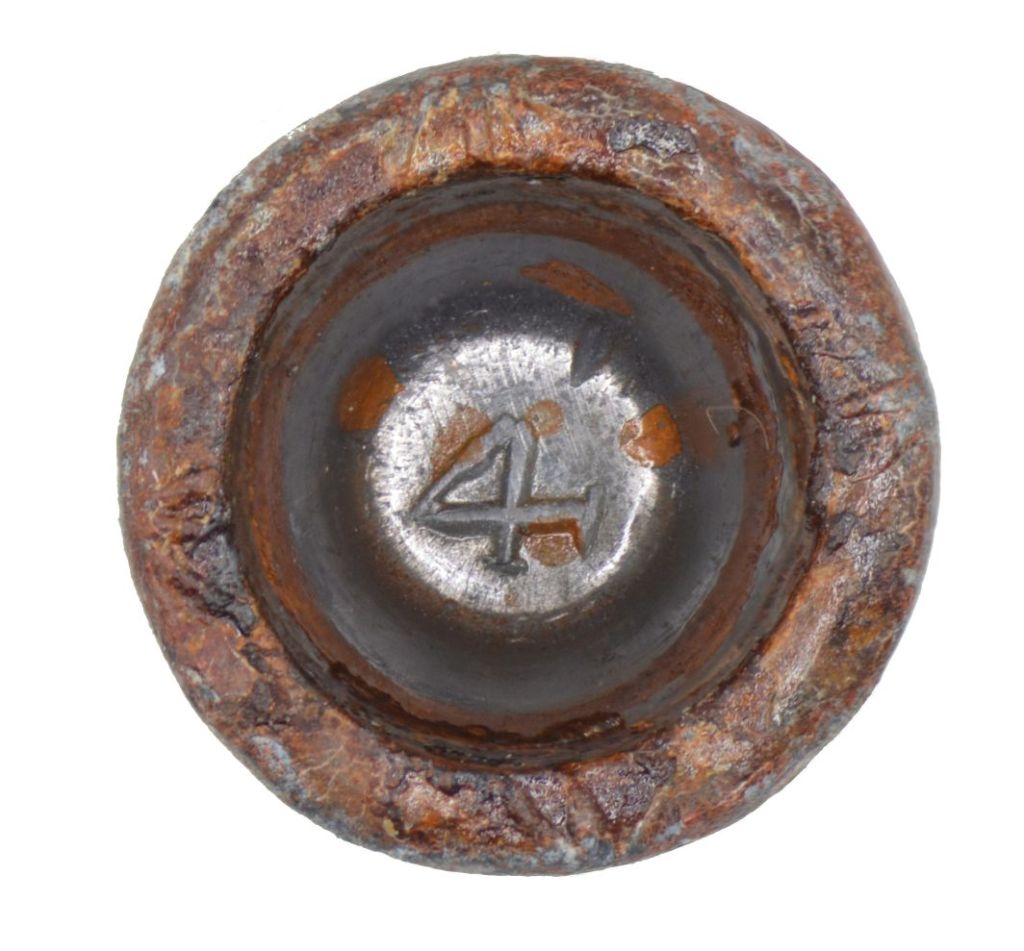
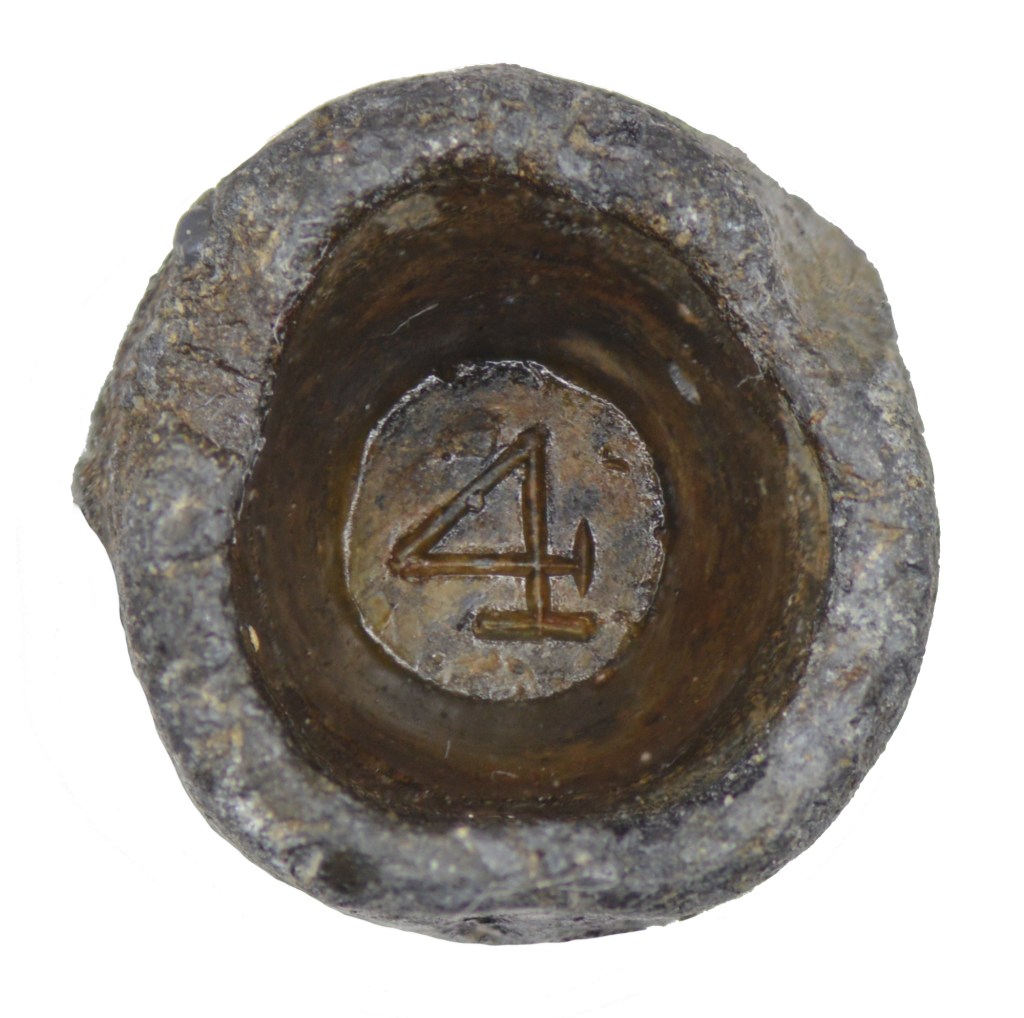
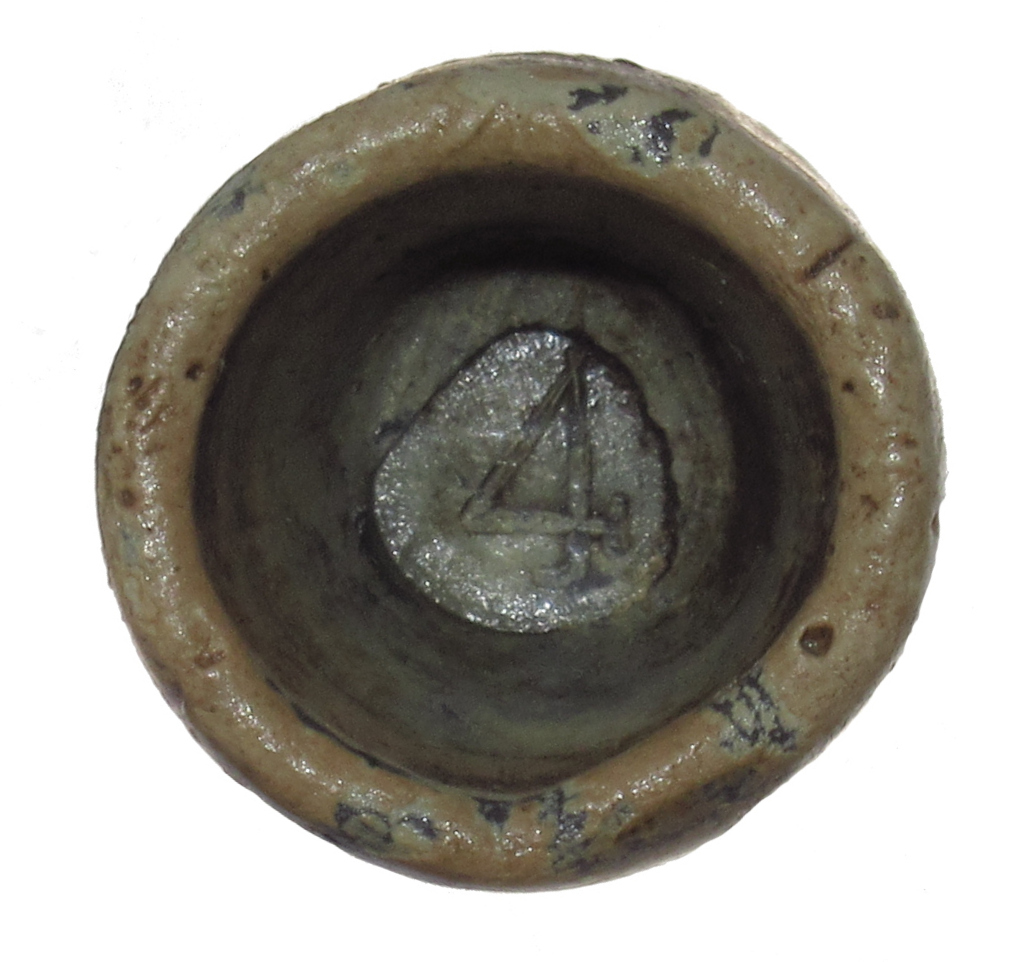
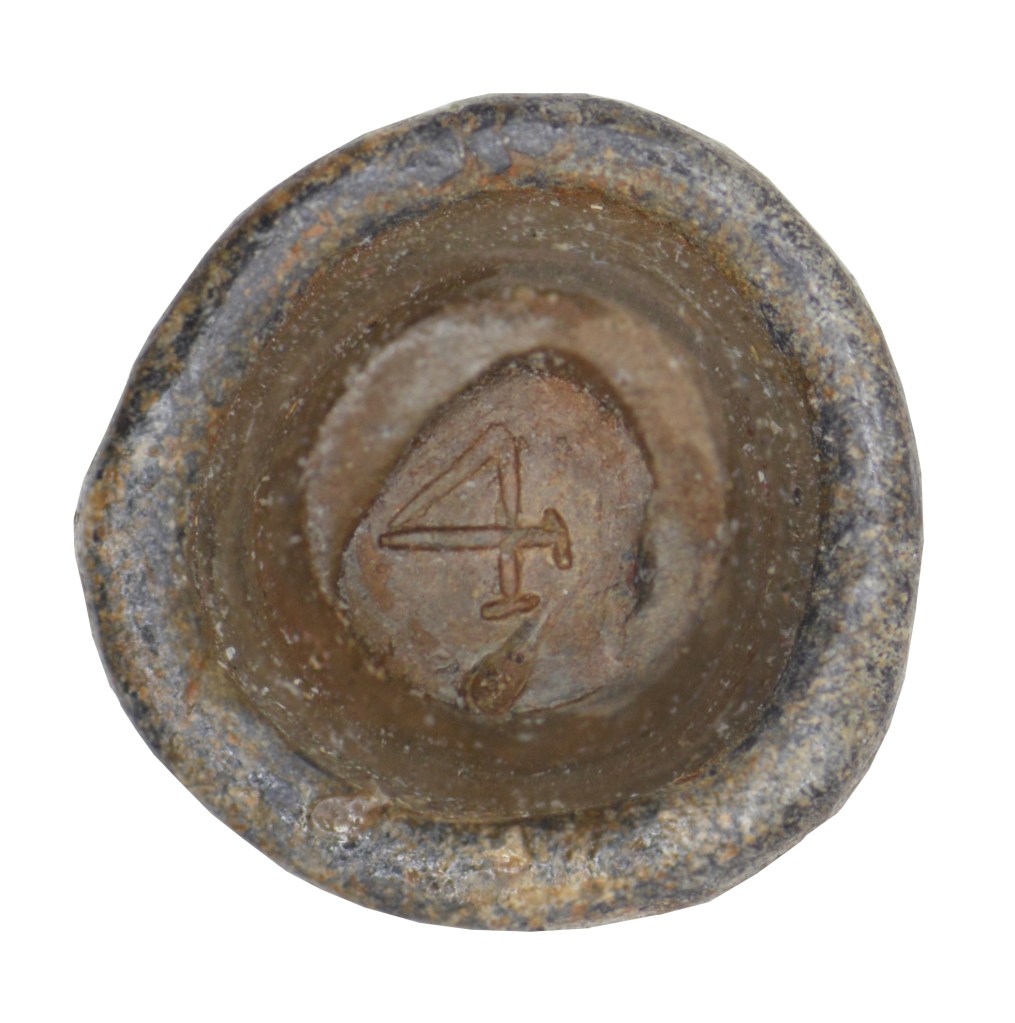
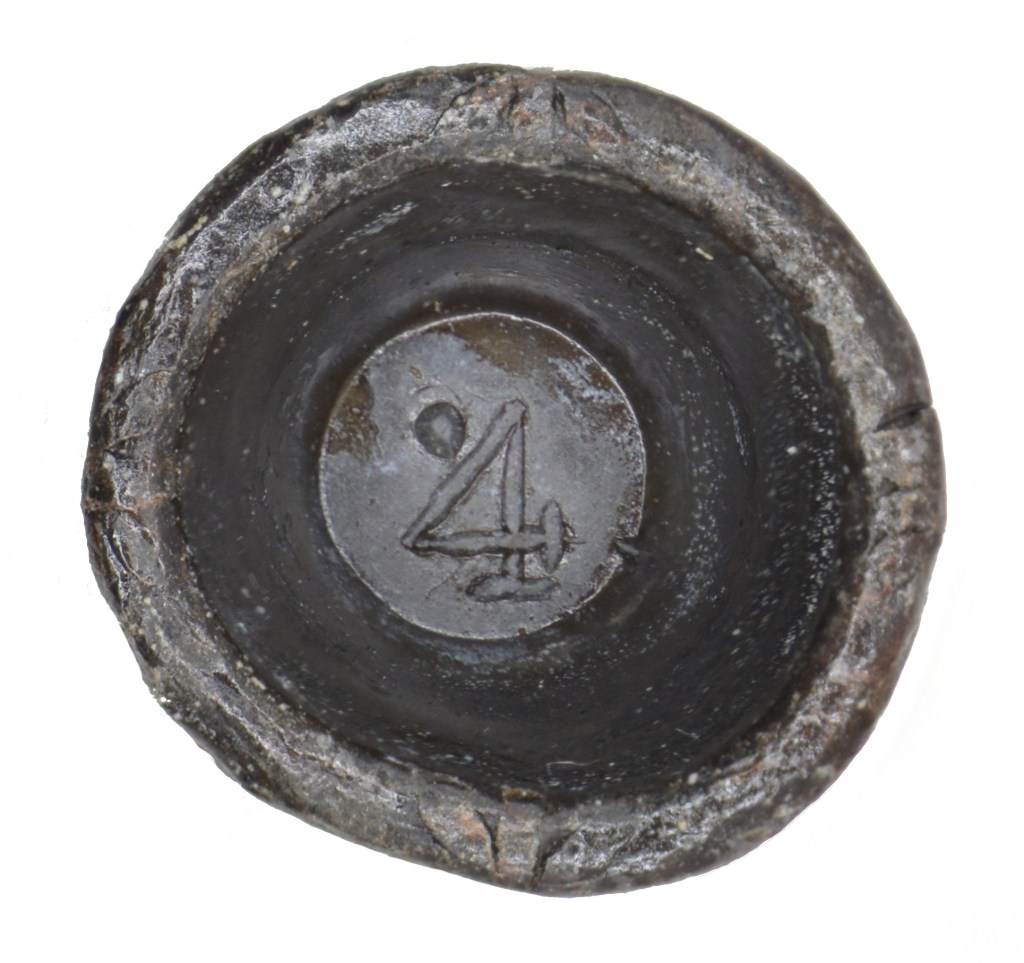
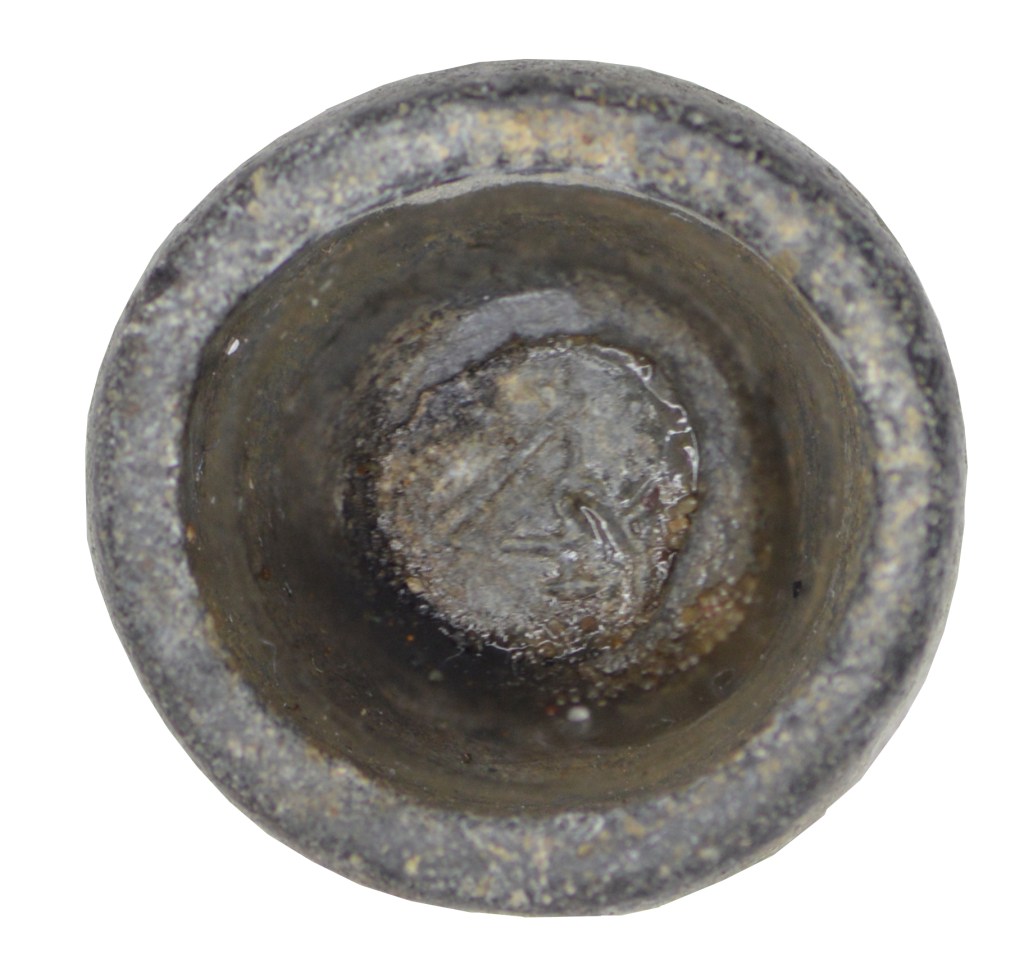
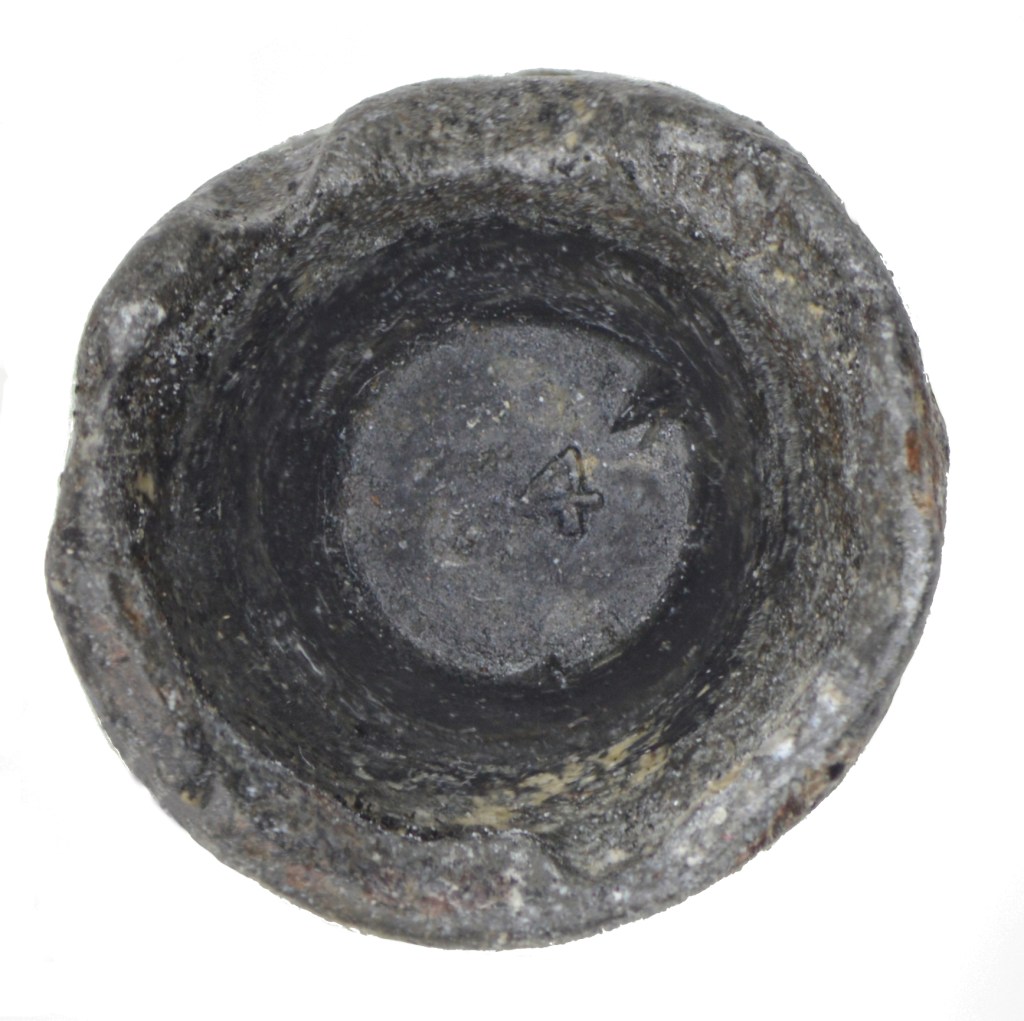
A variety of number 4 die punches from 2nd, 3rd and 4th pattern bullets. The final two of which are of an unusually small type and feature a typeface rather than hand carved numbers.
Stamp 5
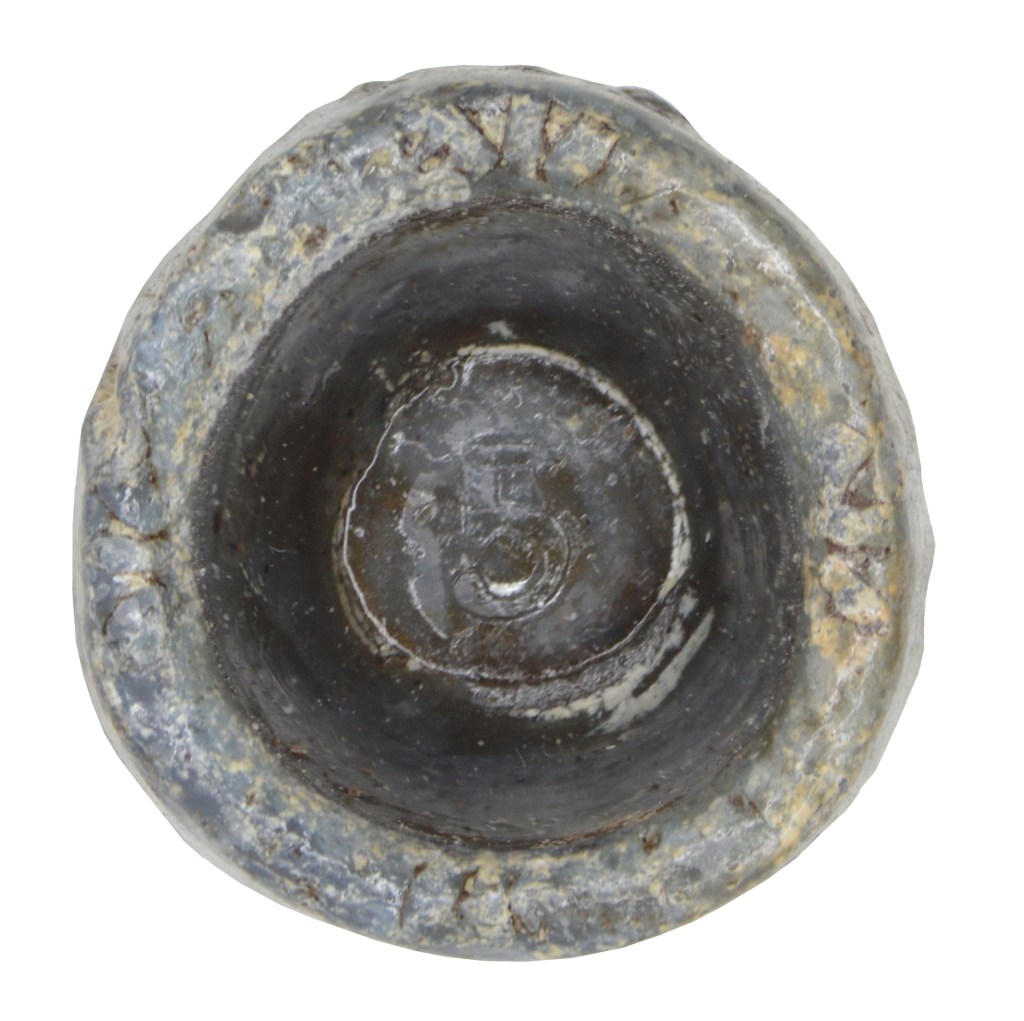
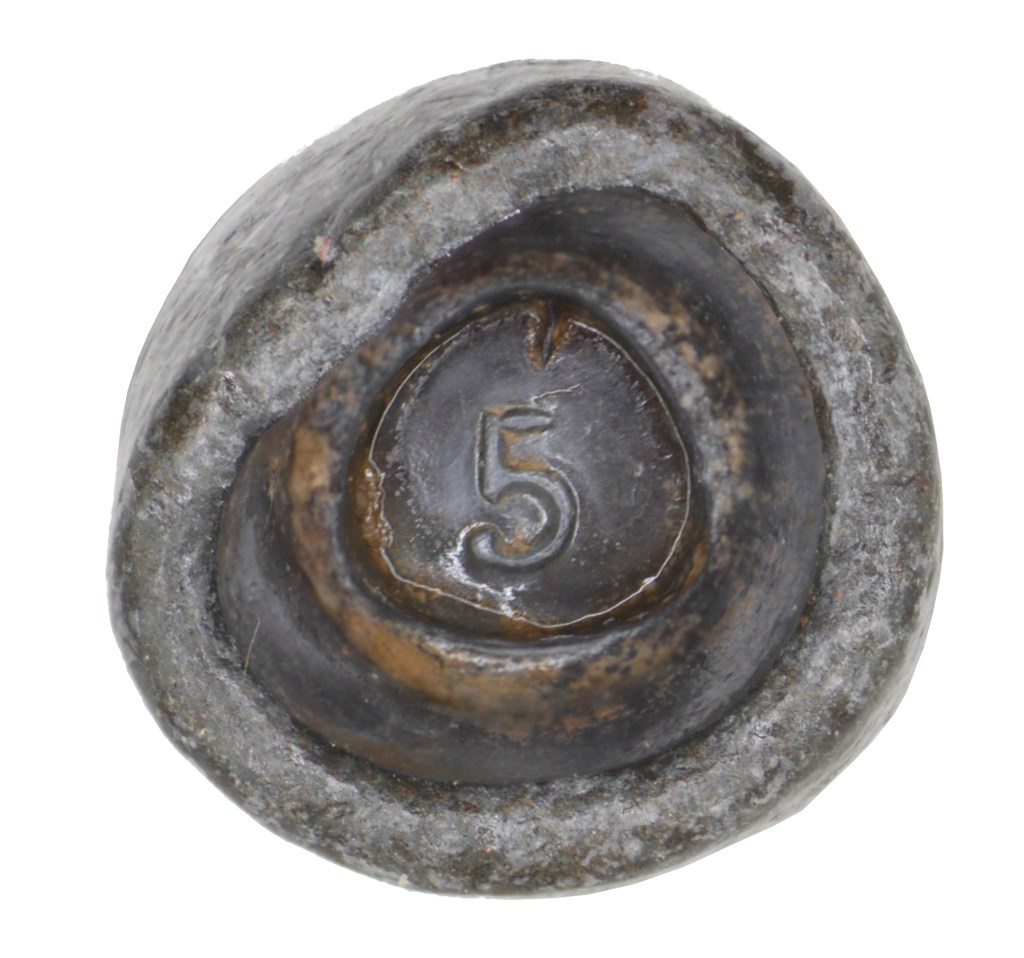
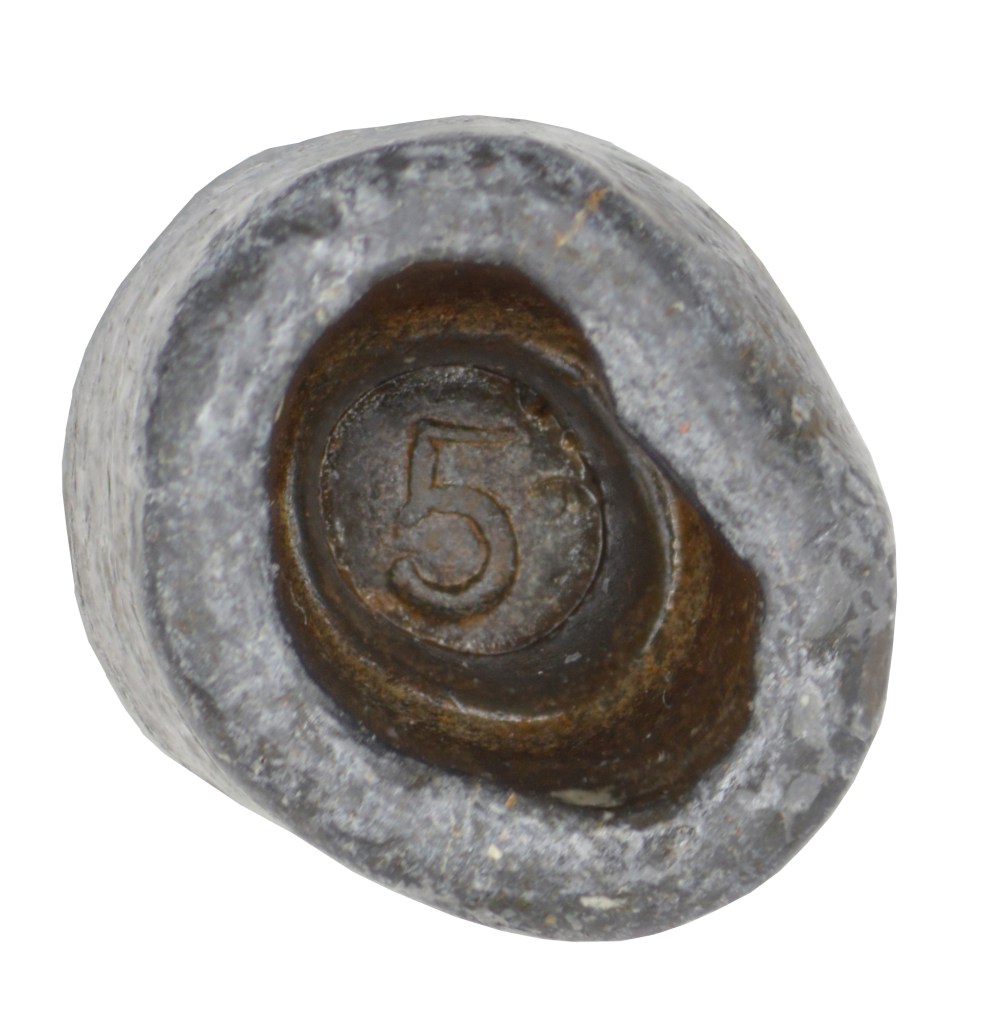
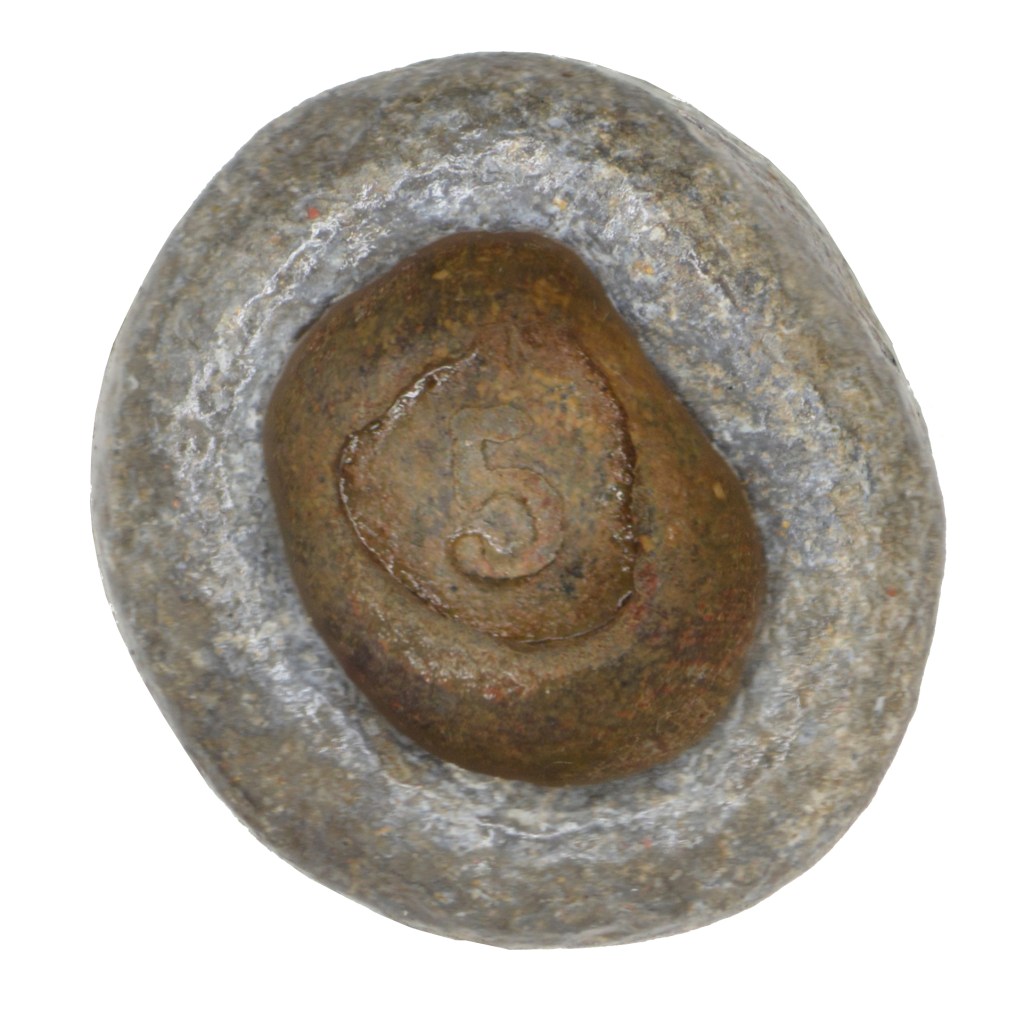
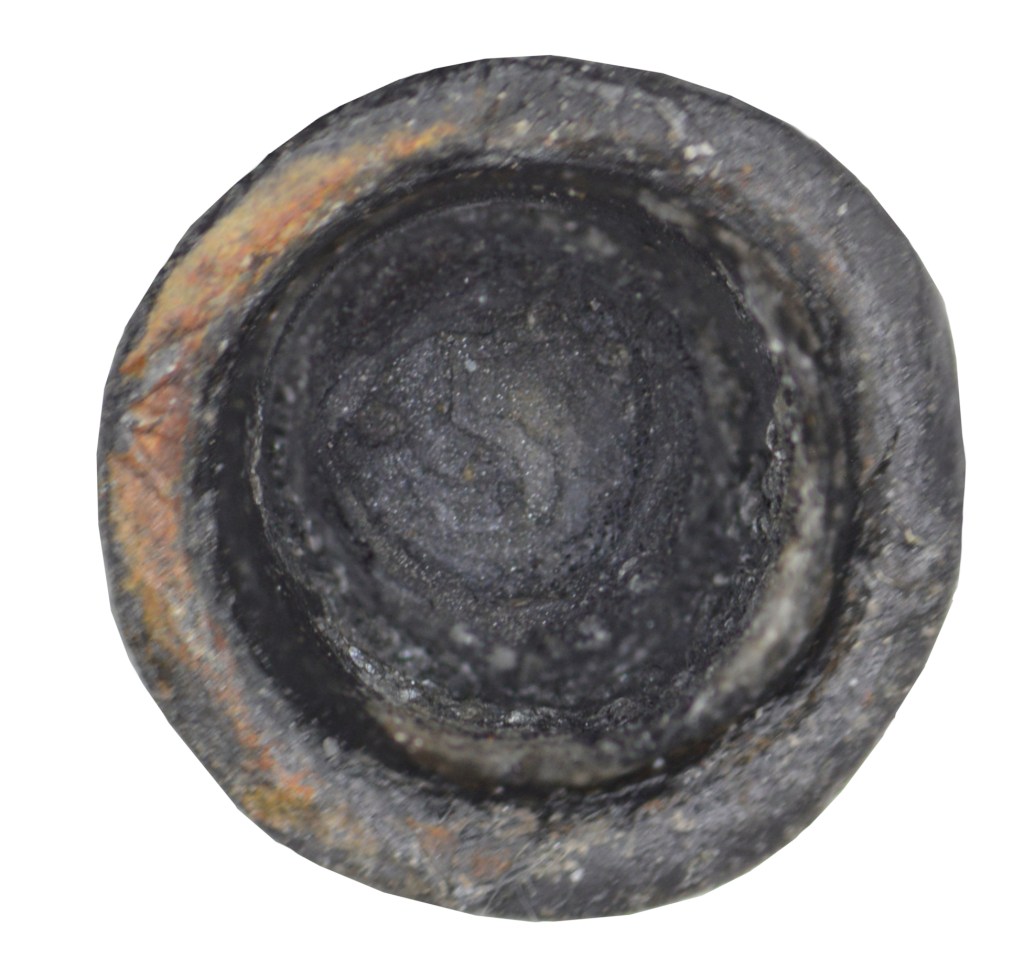
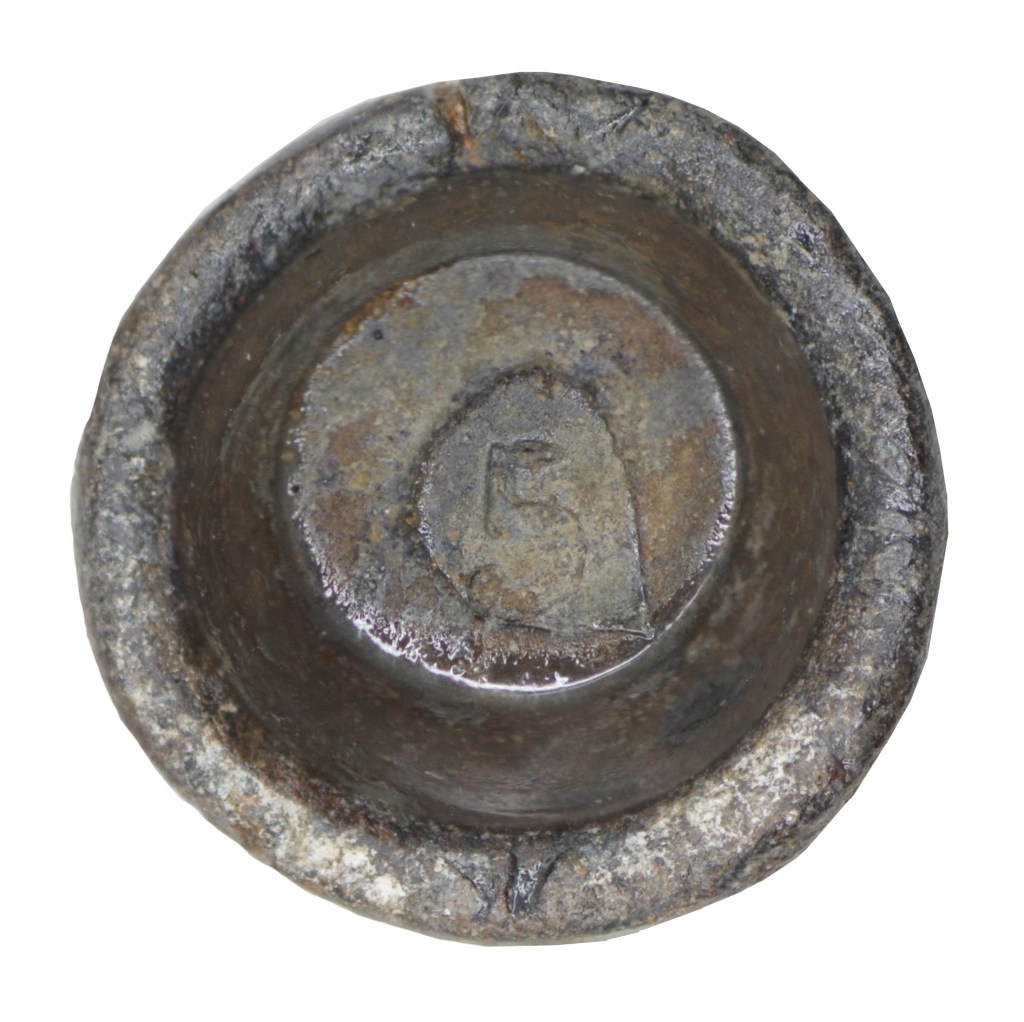
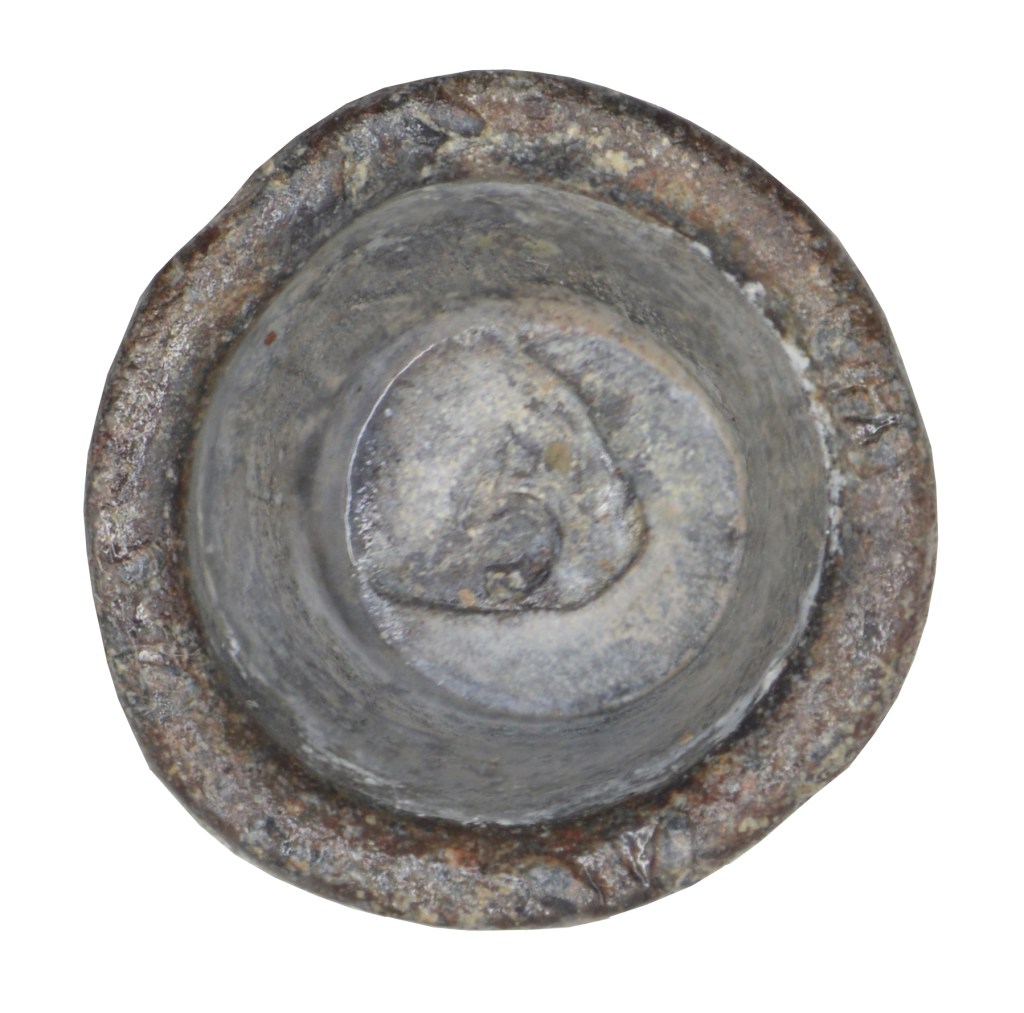
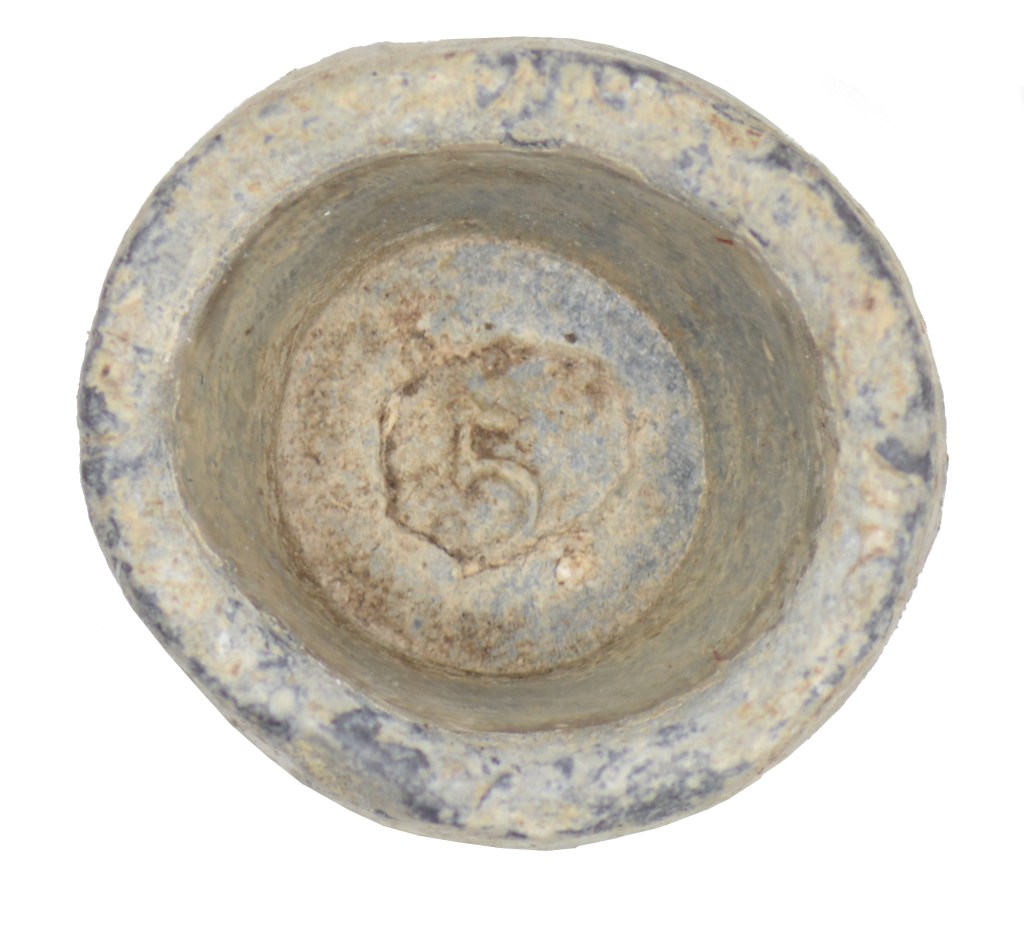
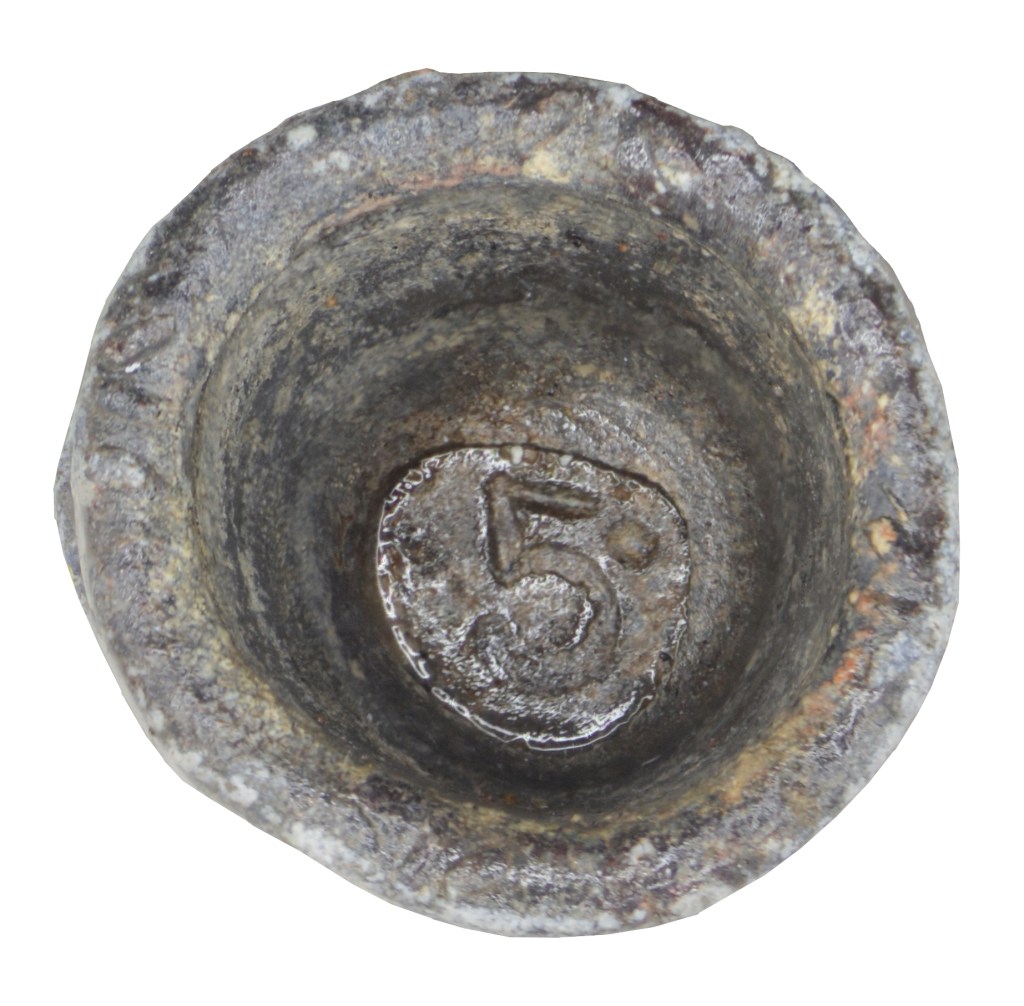
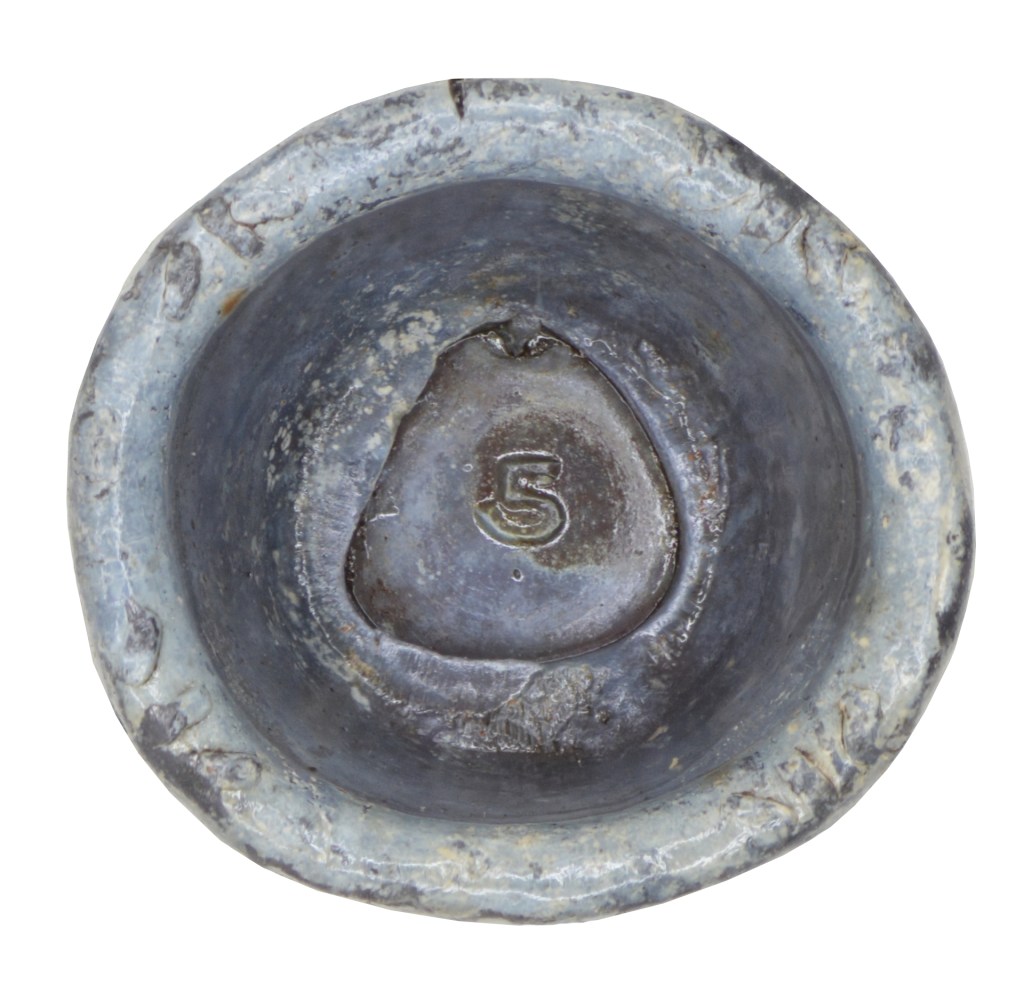
These ‘5’ stamps are all from 3rd and 4th pattern bullets.
Stamp 6
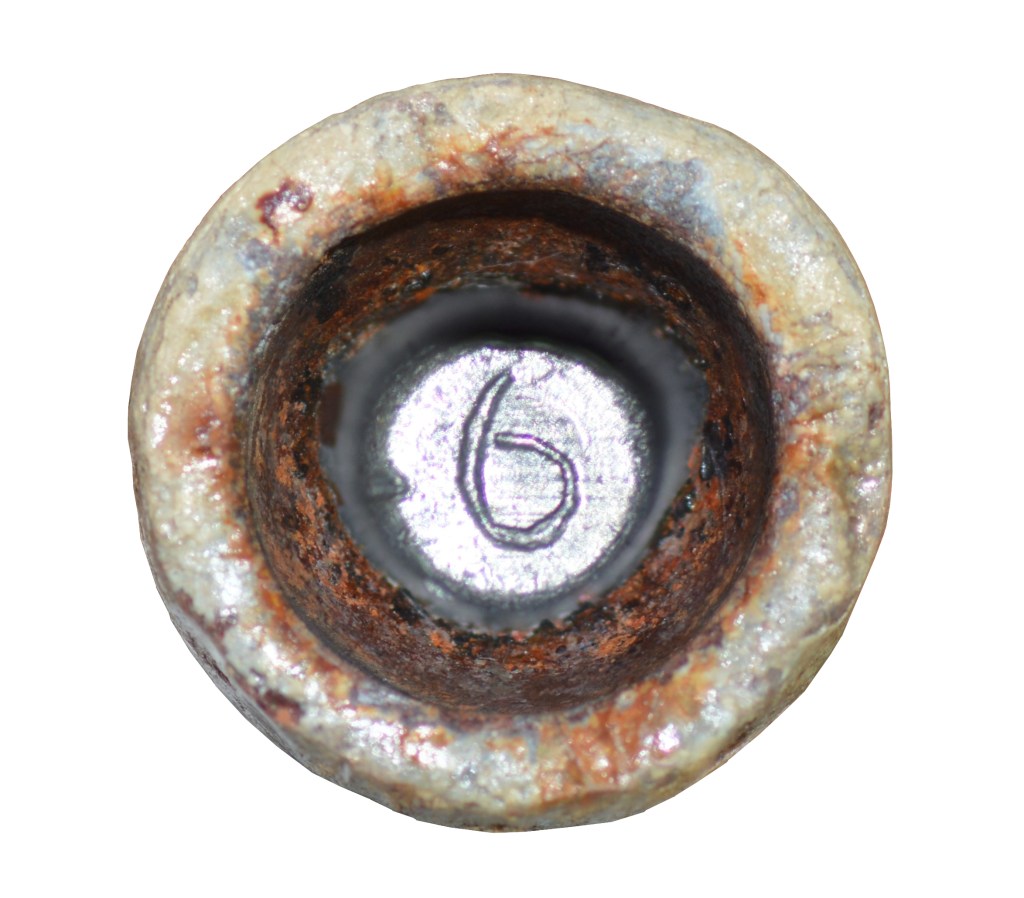
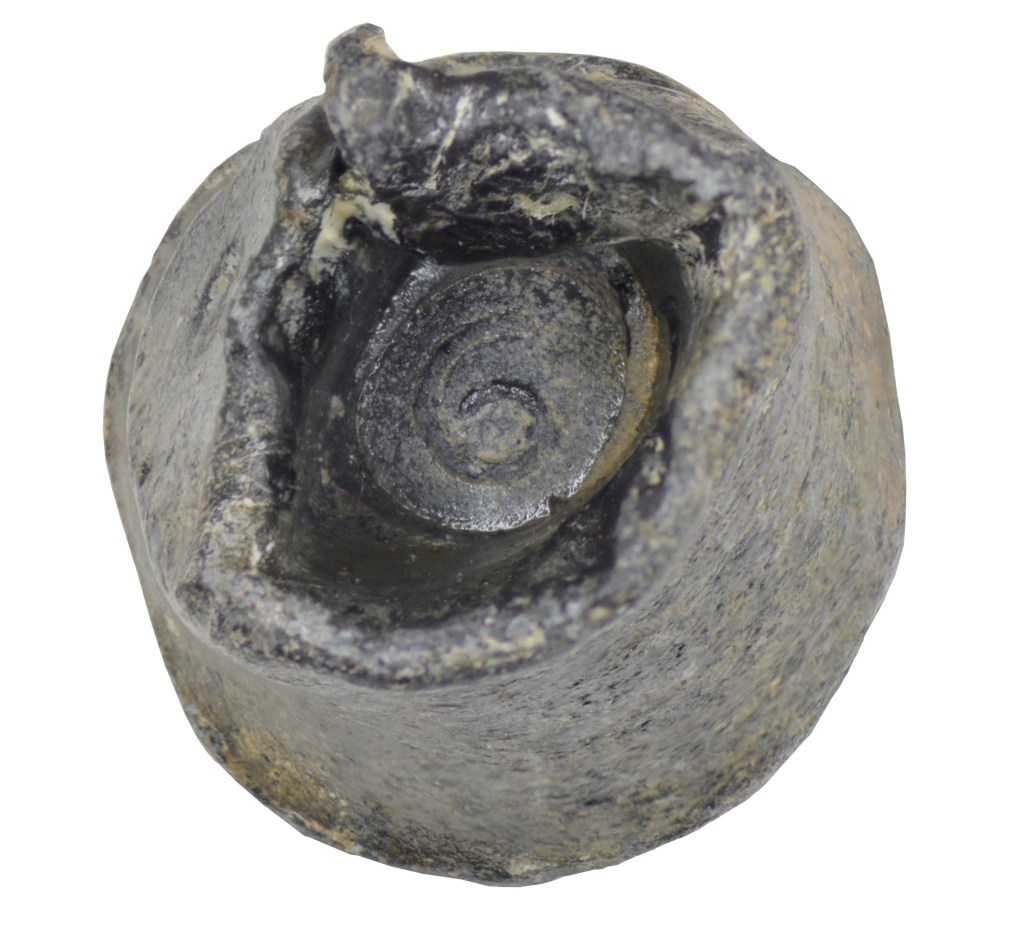
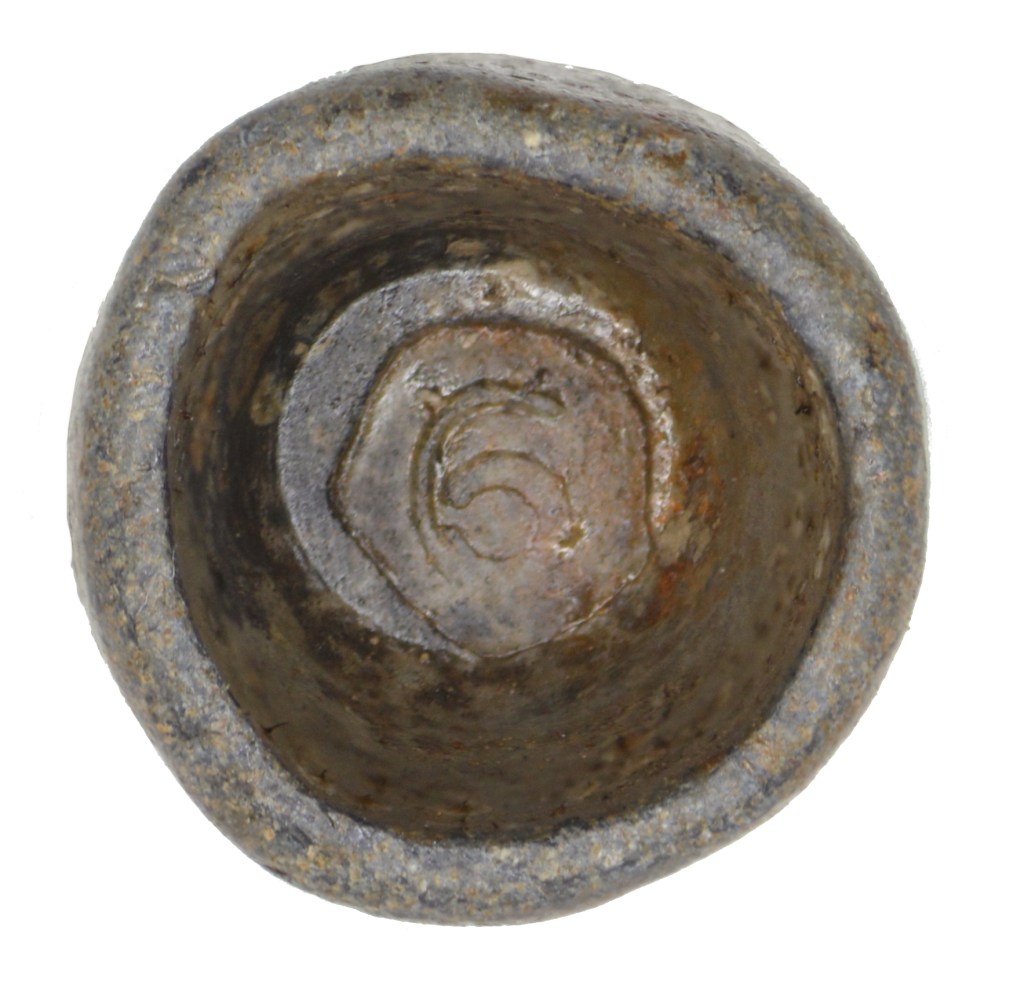
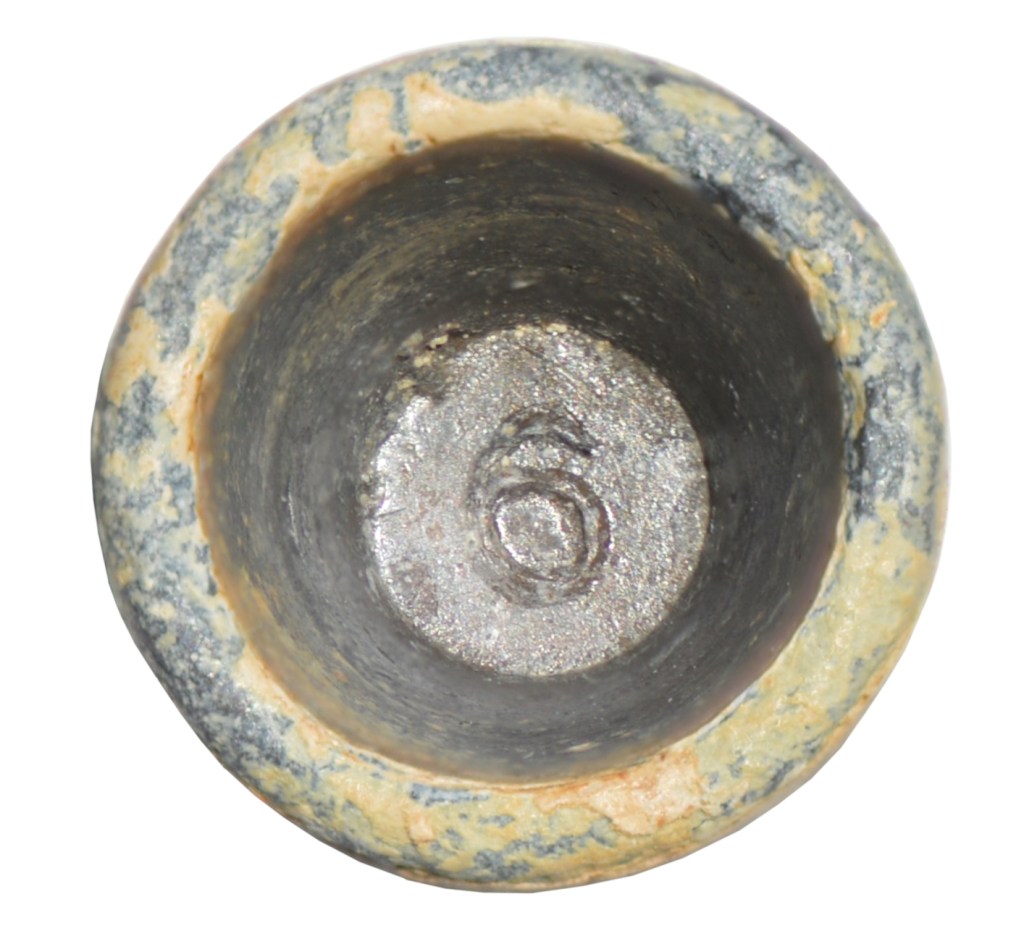
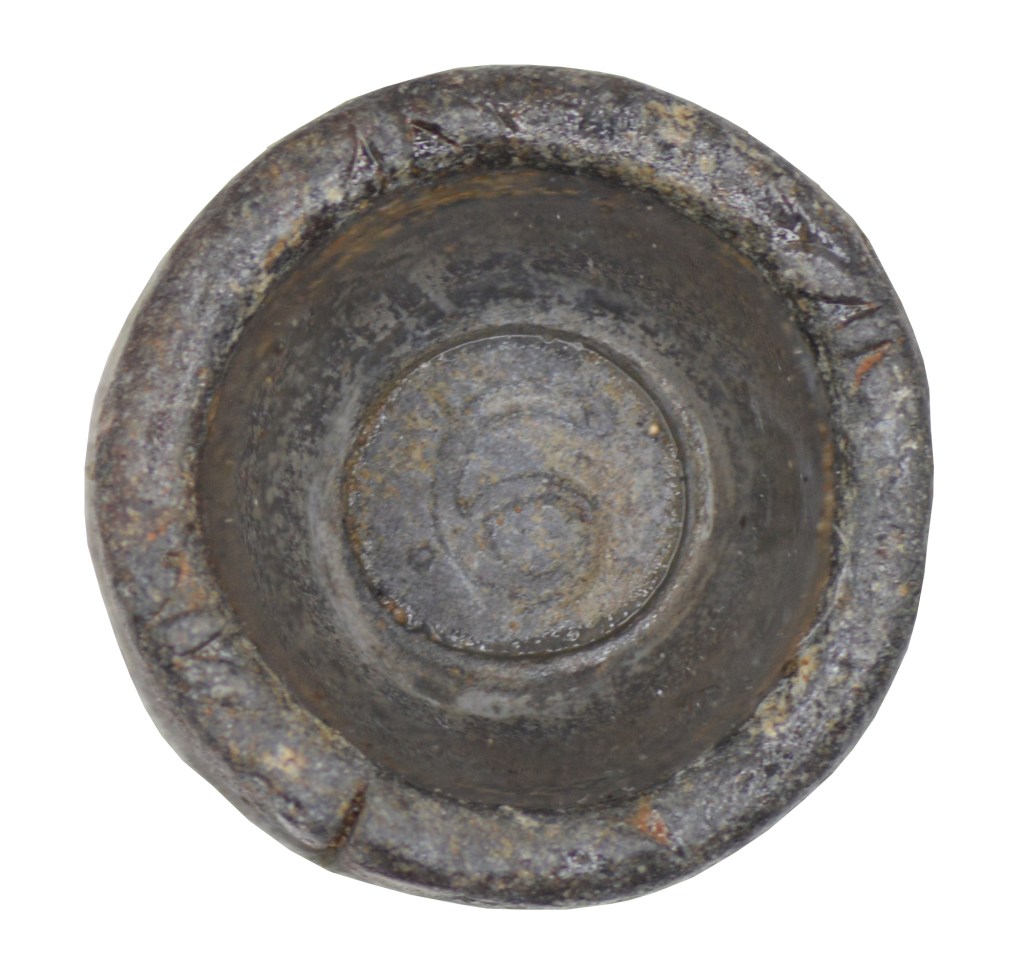
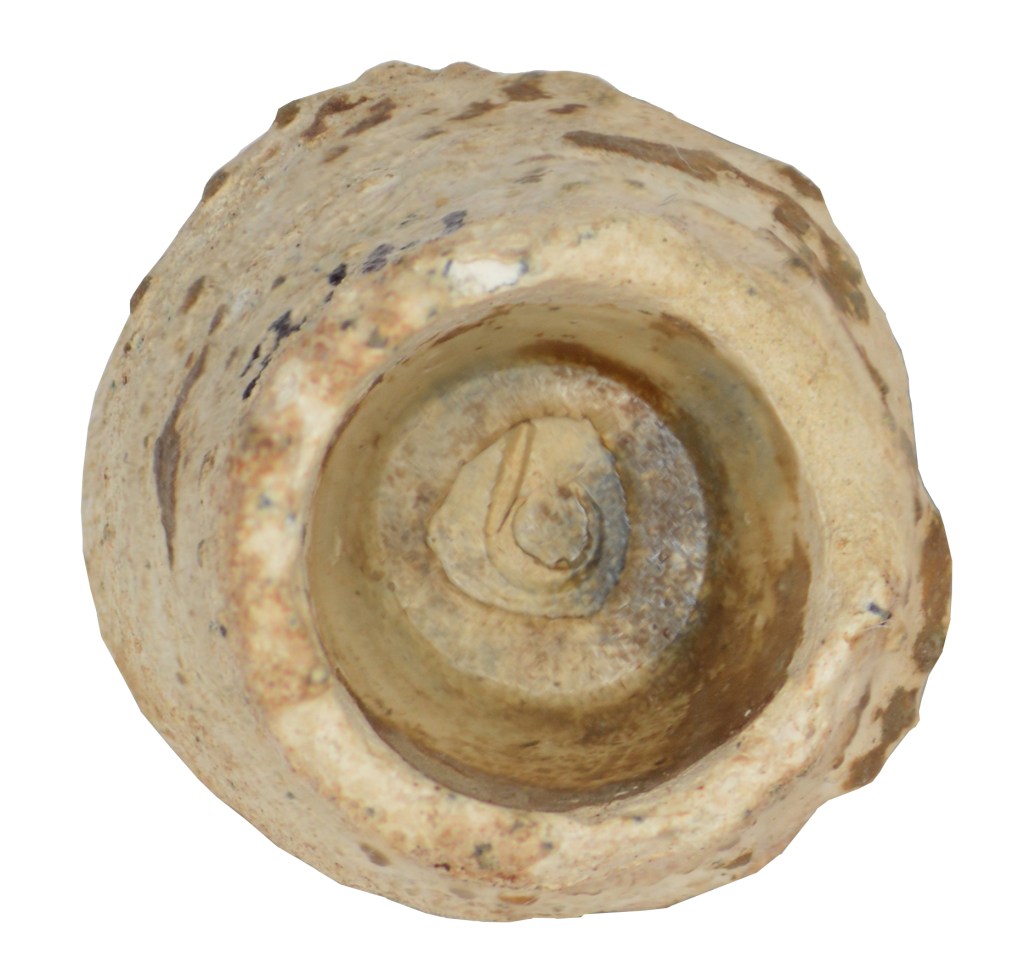
These ‘6’ stamps come from 2nd, 3rd and 4th pattern bullets and are all from different dies. Notice how the stamp on the right top row appears to have been originally a ‘c’ shape stamp, onto which has been the thinner, top formation of the ‘6’.
Stamp 7
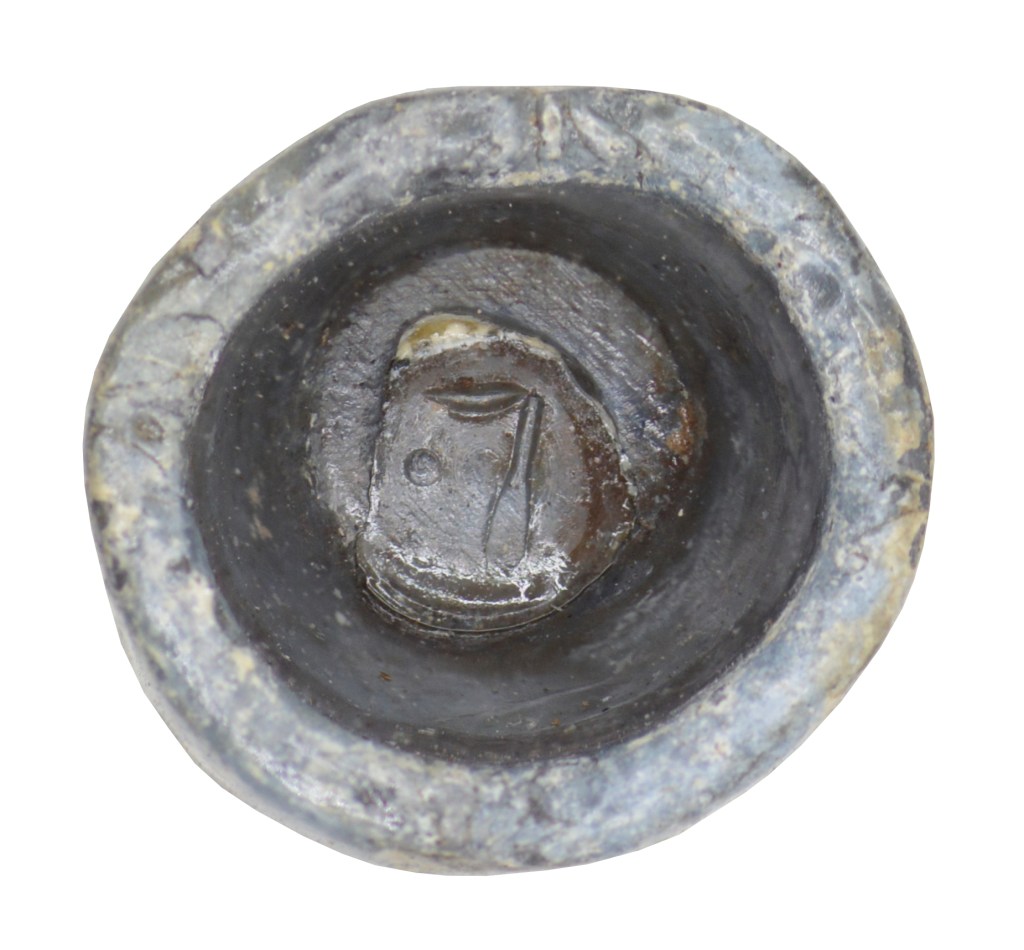
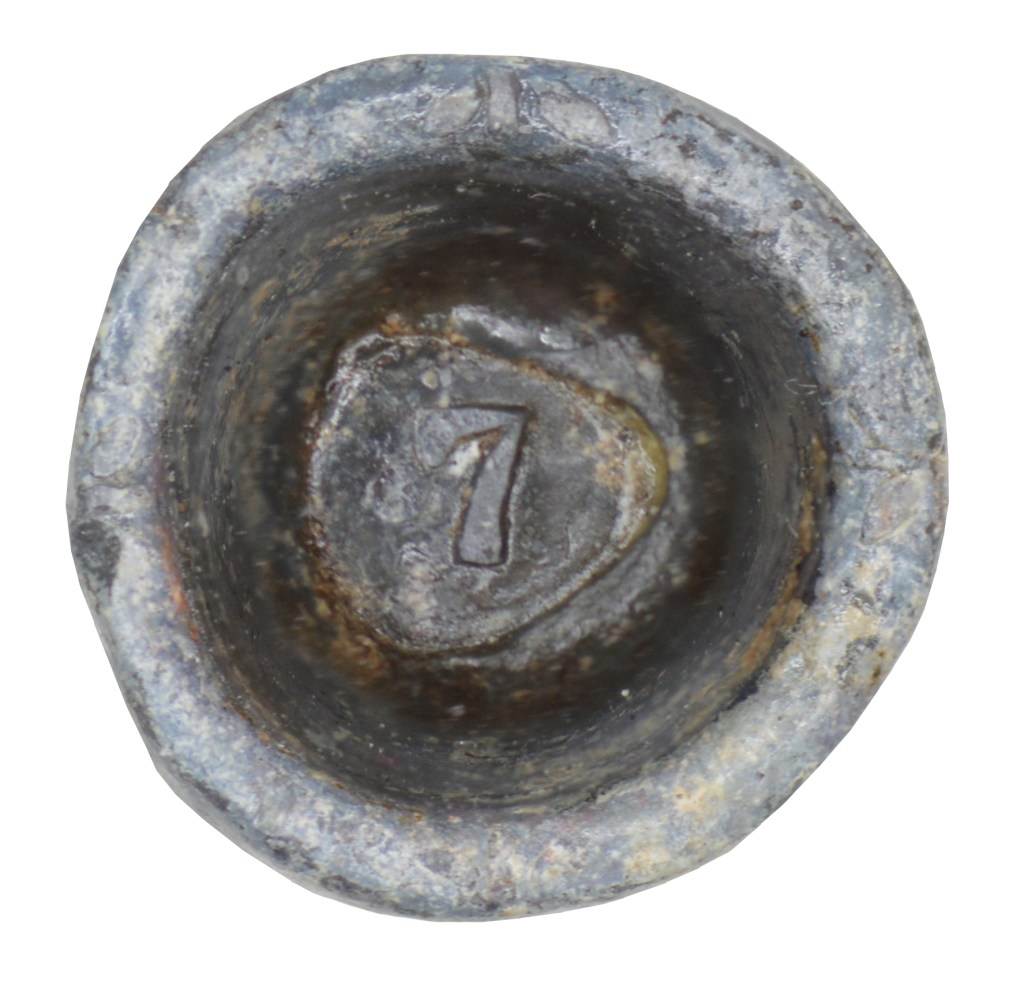
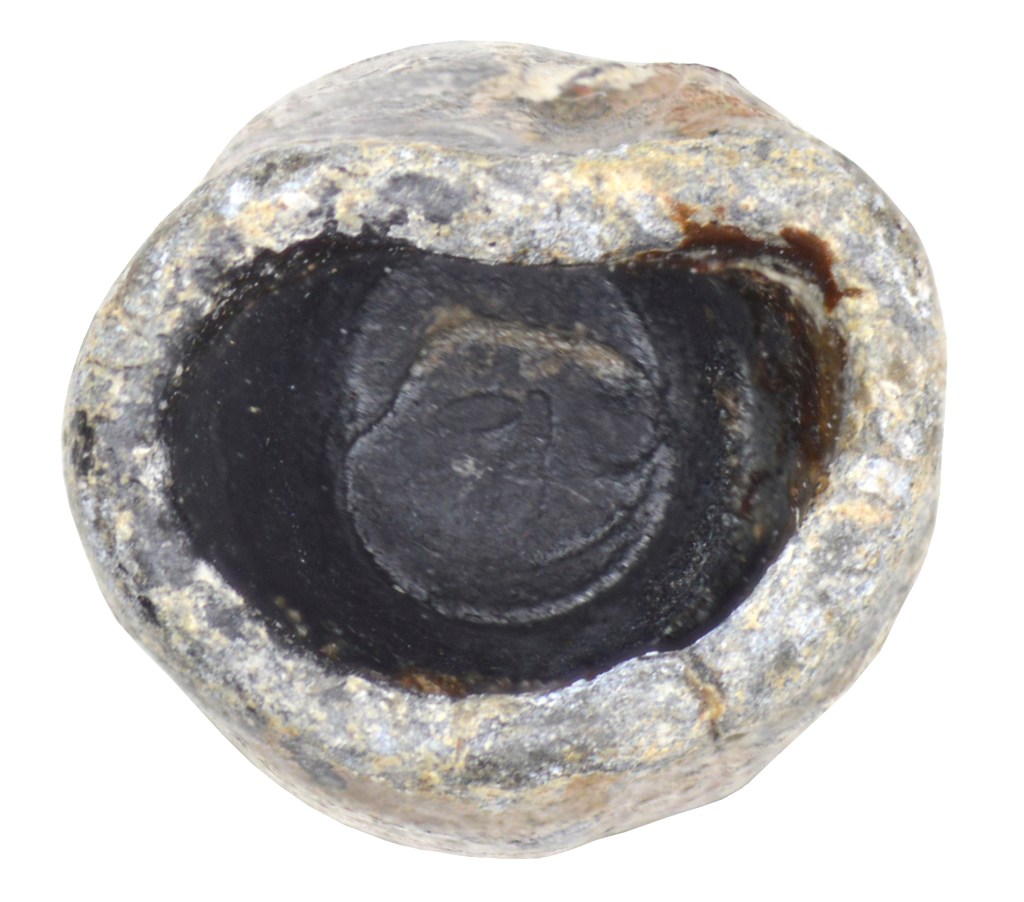
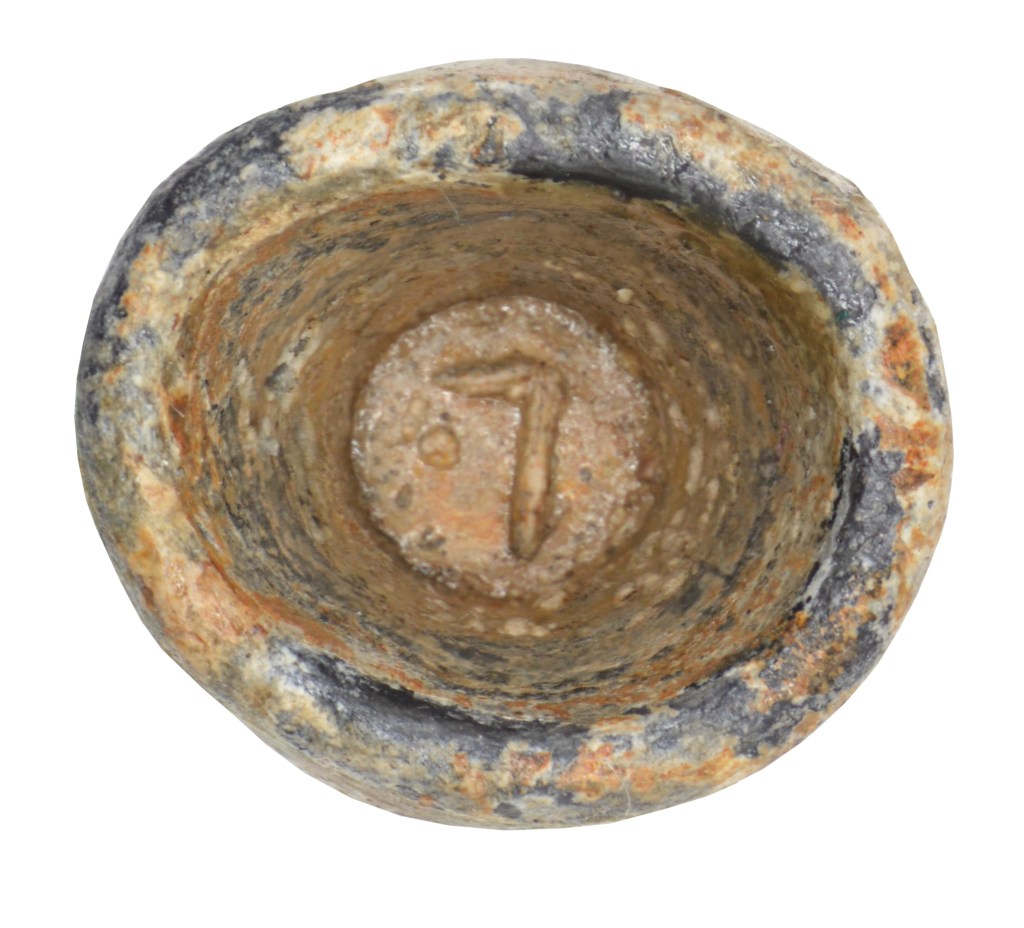
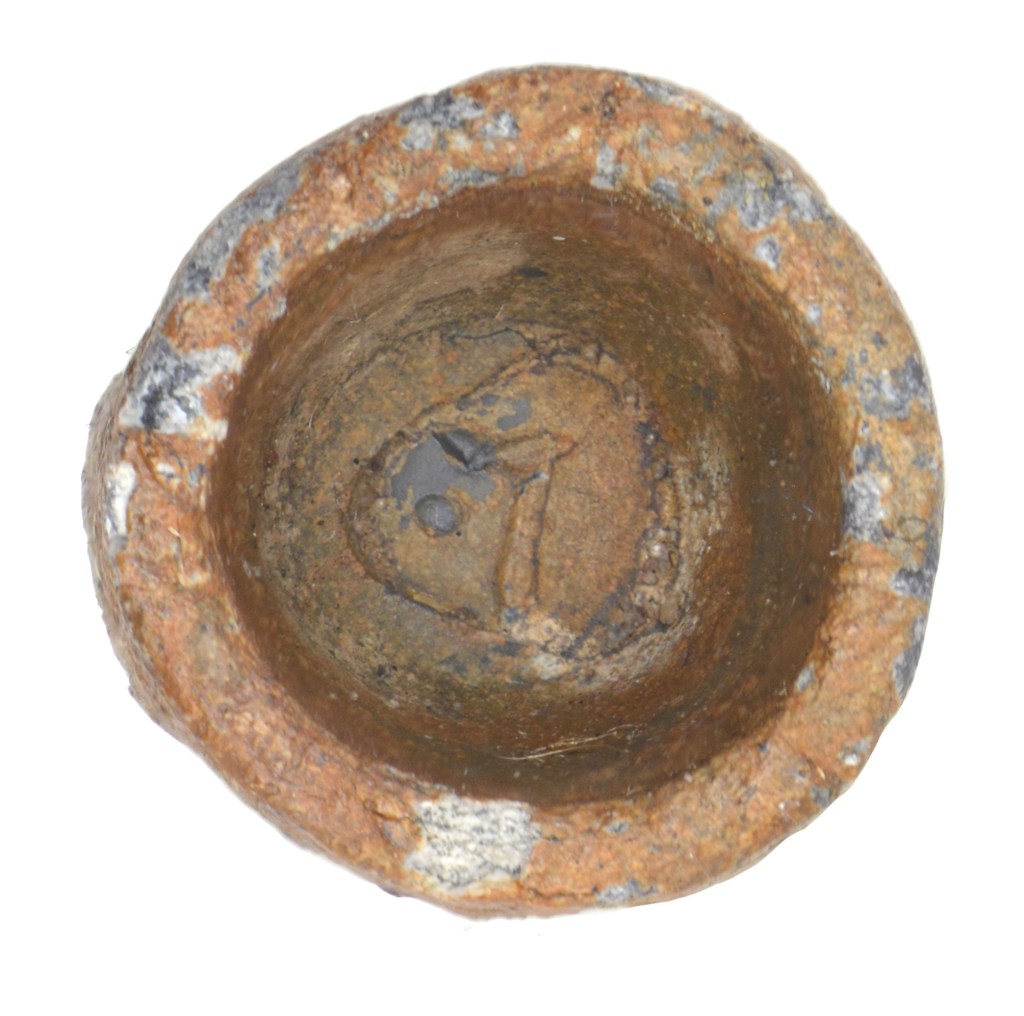
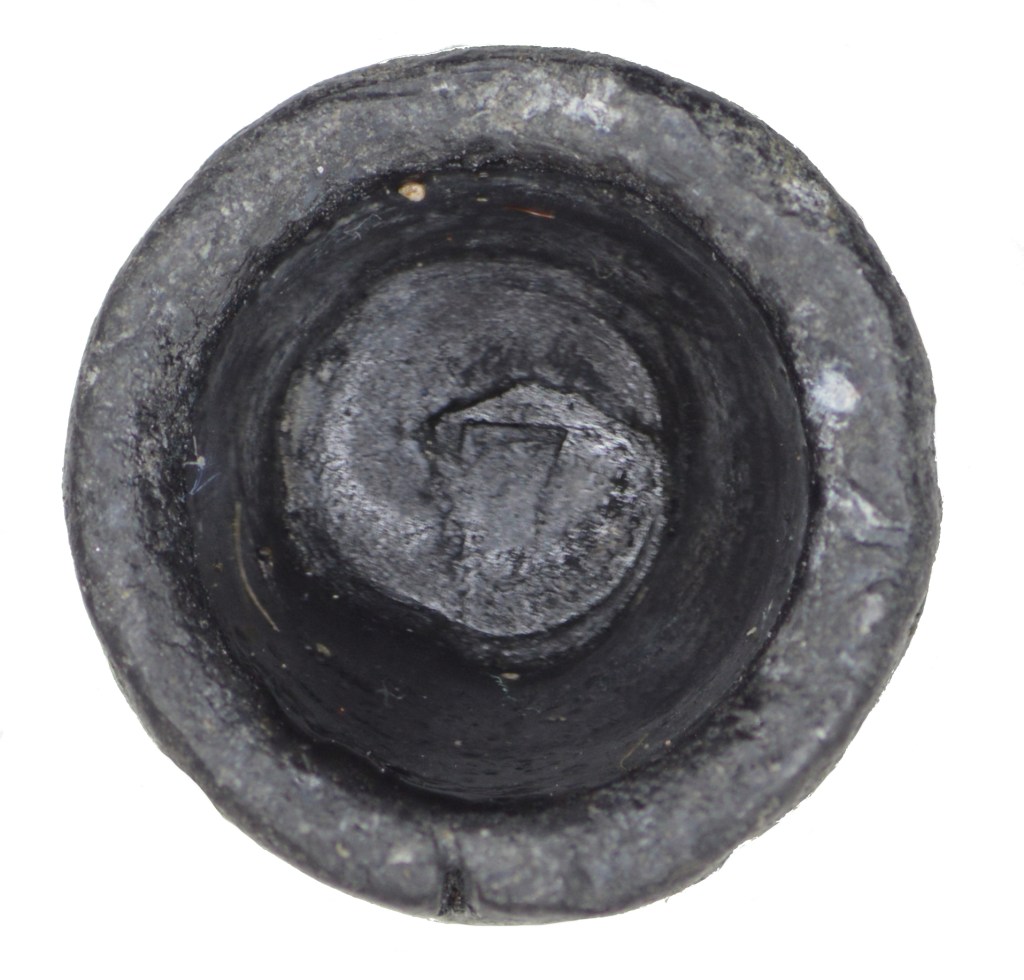
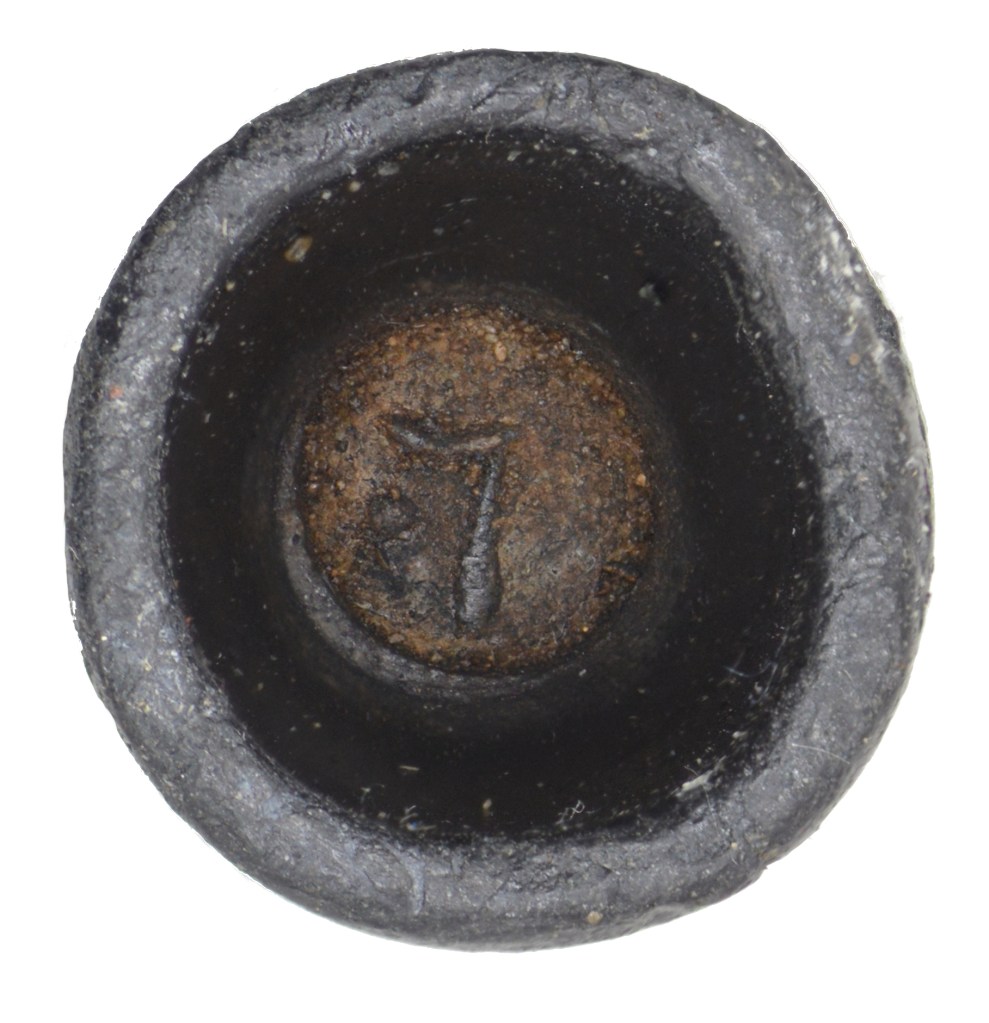
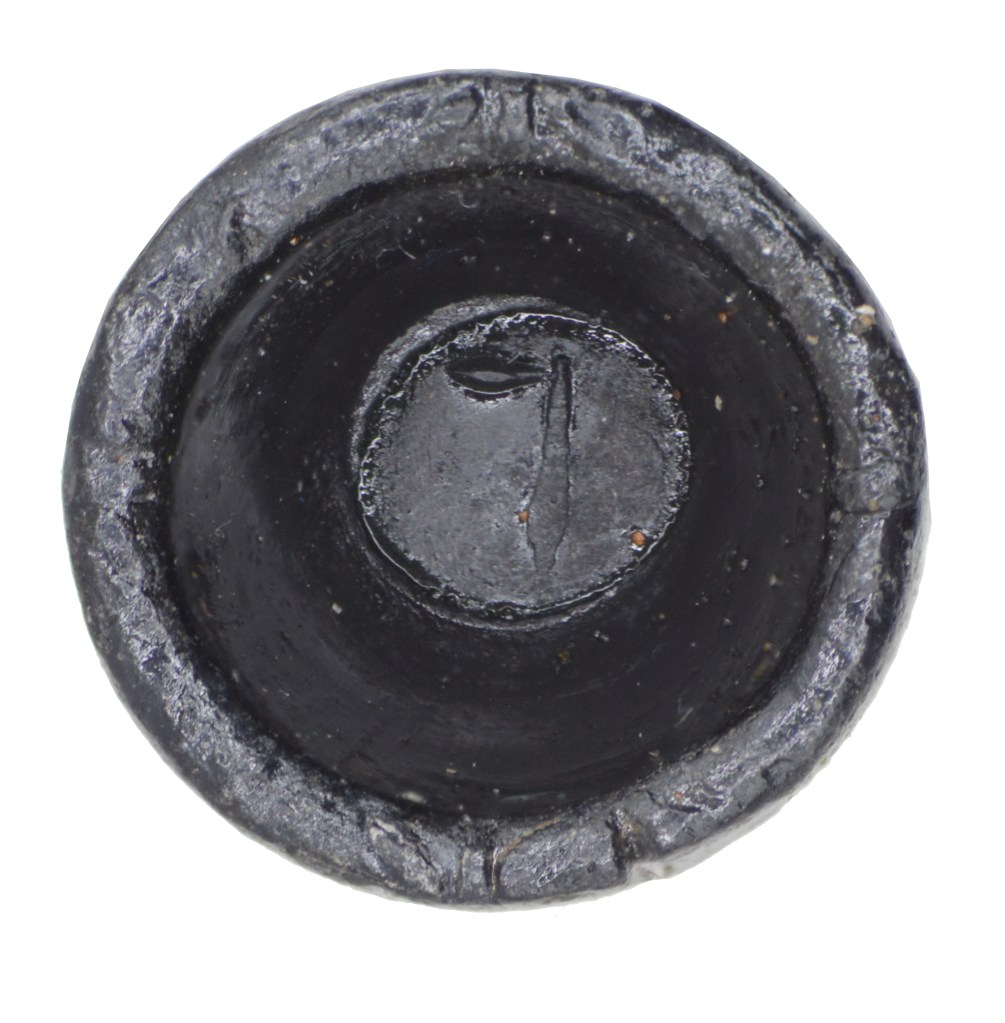
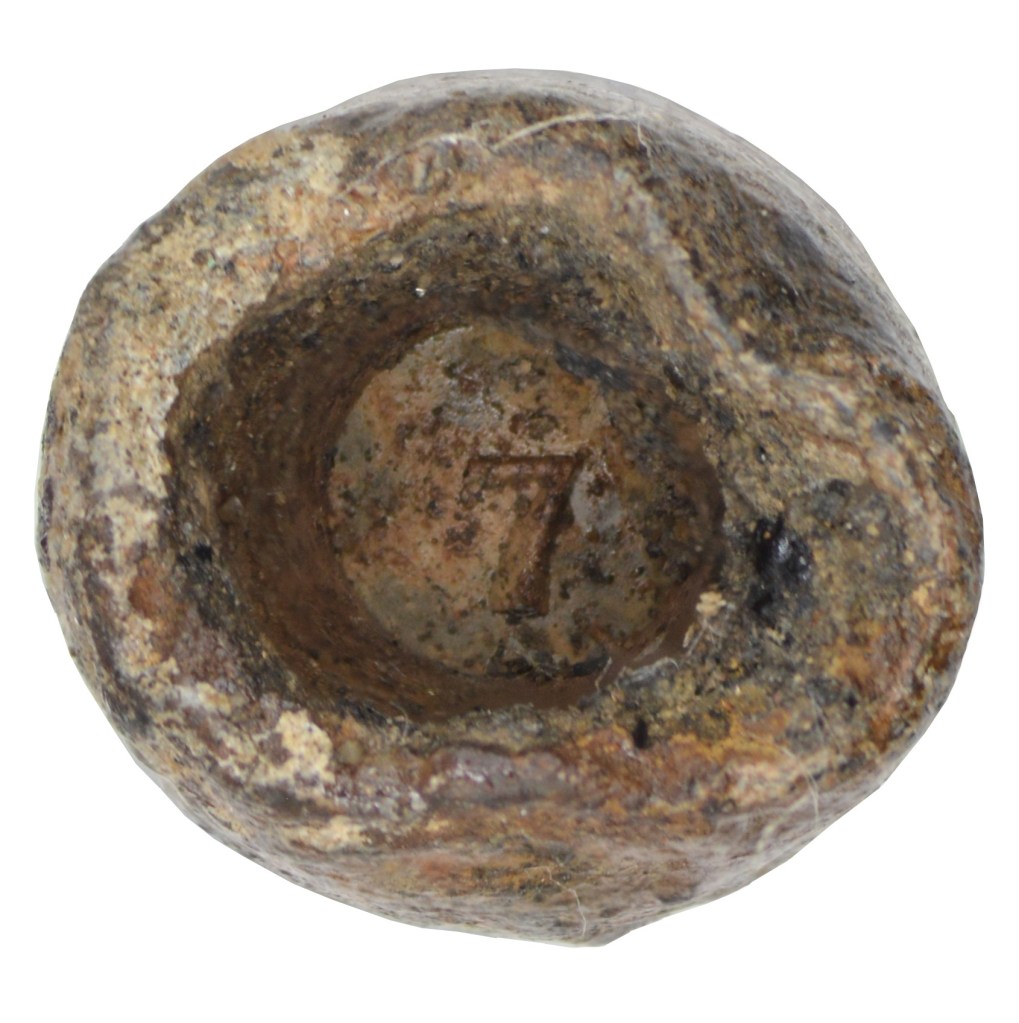
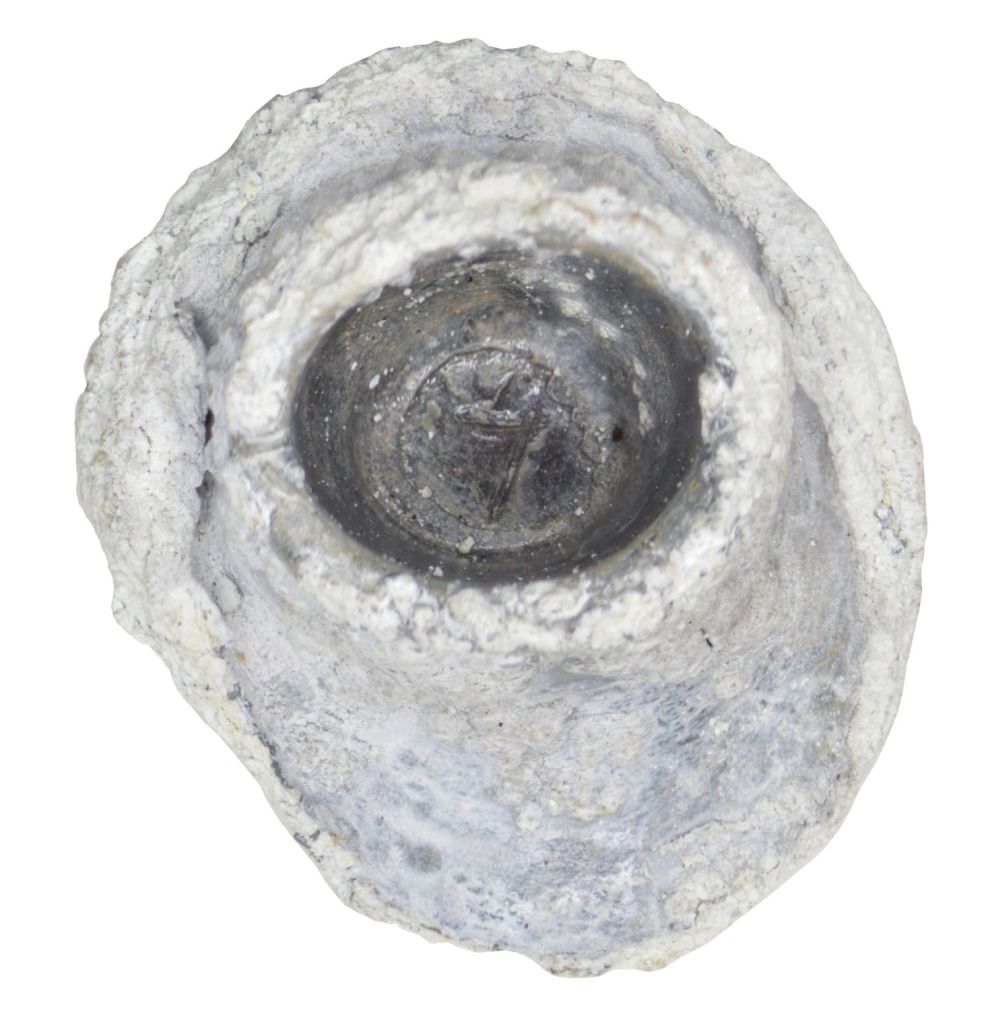
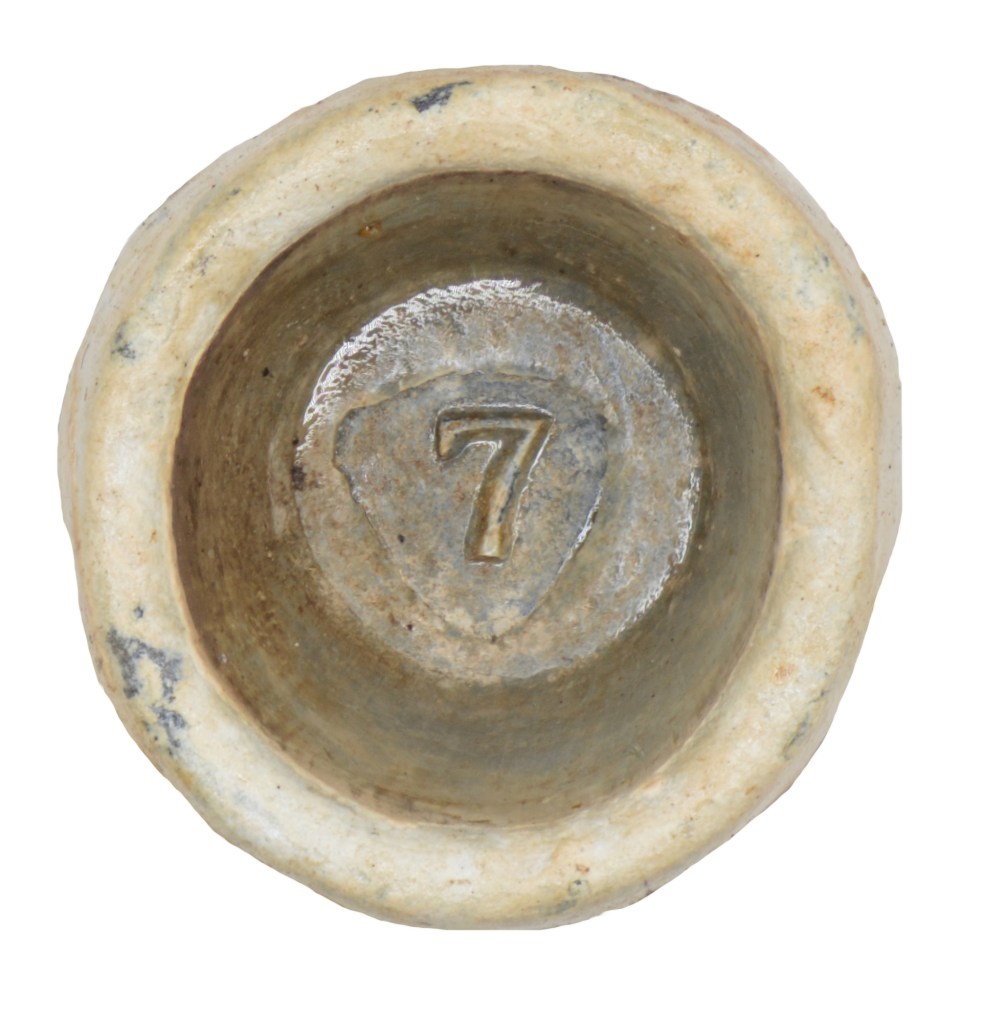
Some of these 3rd and 4th pattern bullets look as though they are stamped with an ‘L’. While ‘L’ was a stamp for the commercially produced P53 bullets made by E. and A. Ludlow, some of these bullets also exhibit the broad arrows on the rim, indicating Woolwich manufacture. The first three on the top row do not have visible broad arrow, while the remaining two do. Some are ‘.7’ while others are merely ‘7’. However, some the ‘7’s look very similar
Stamp 8
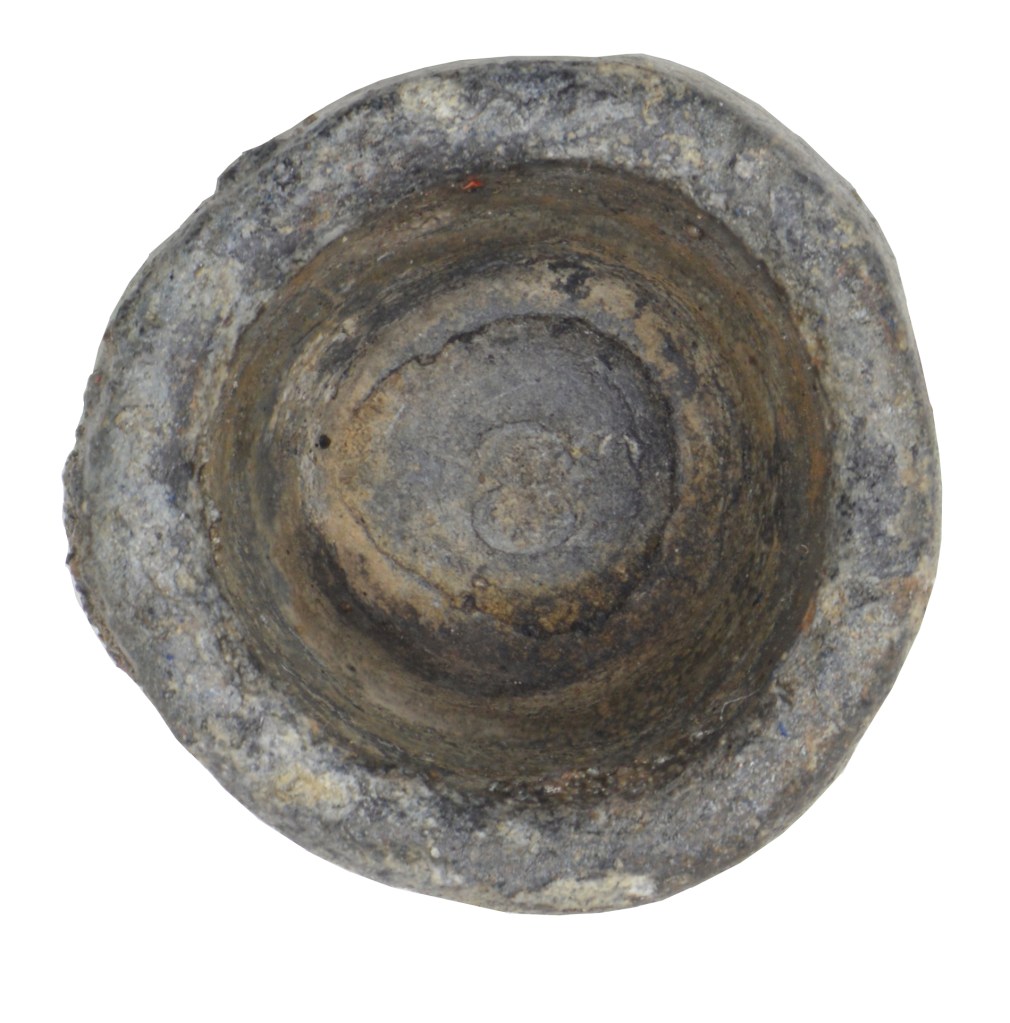
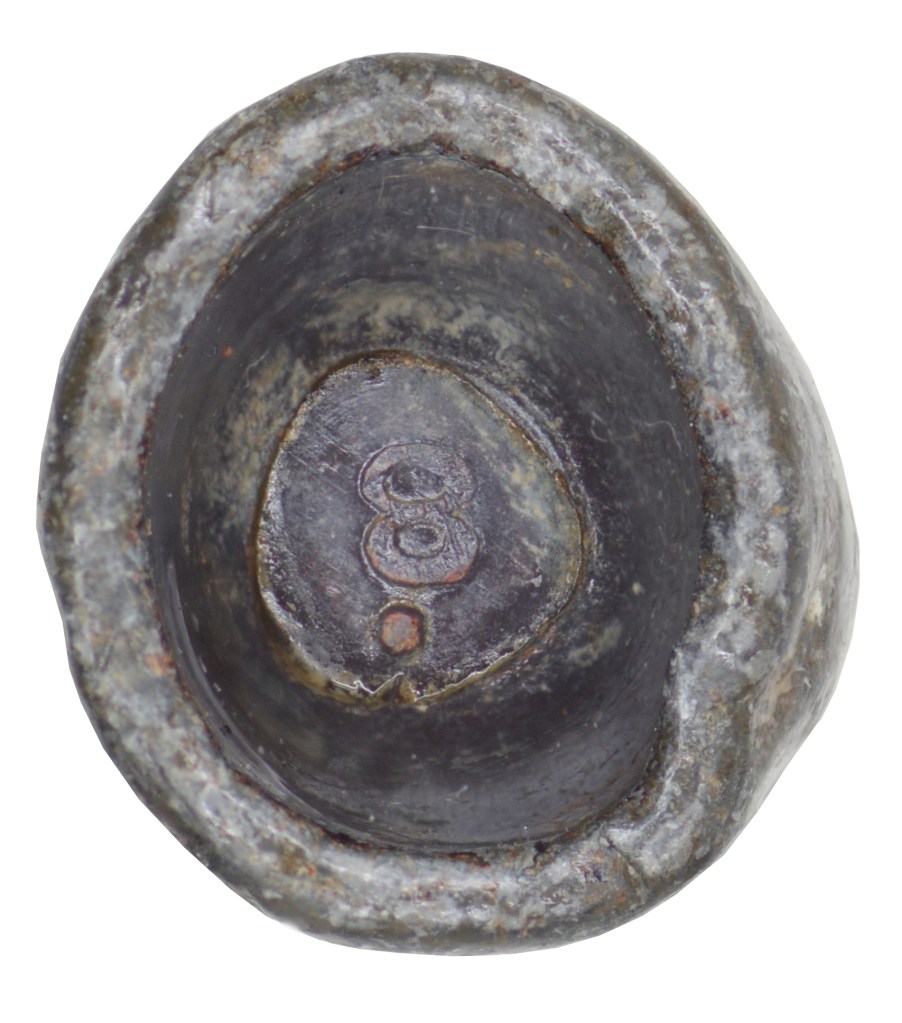
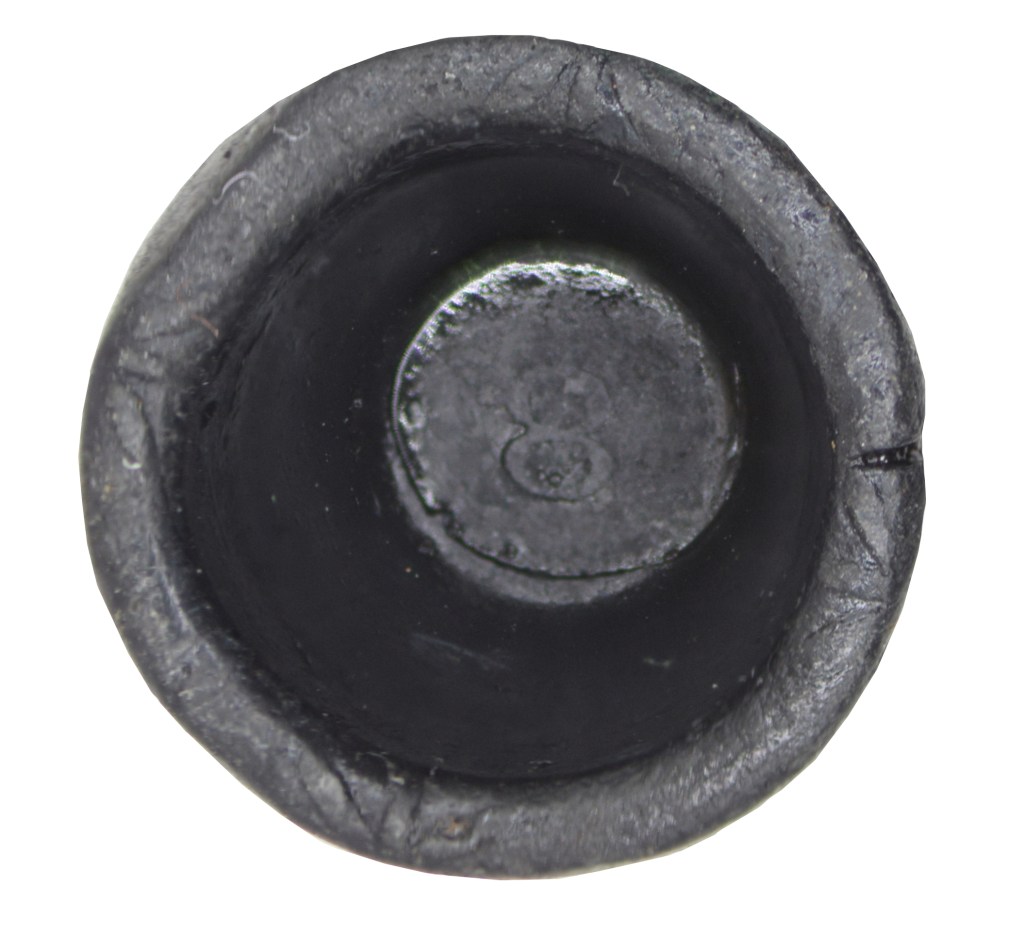
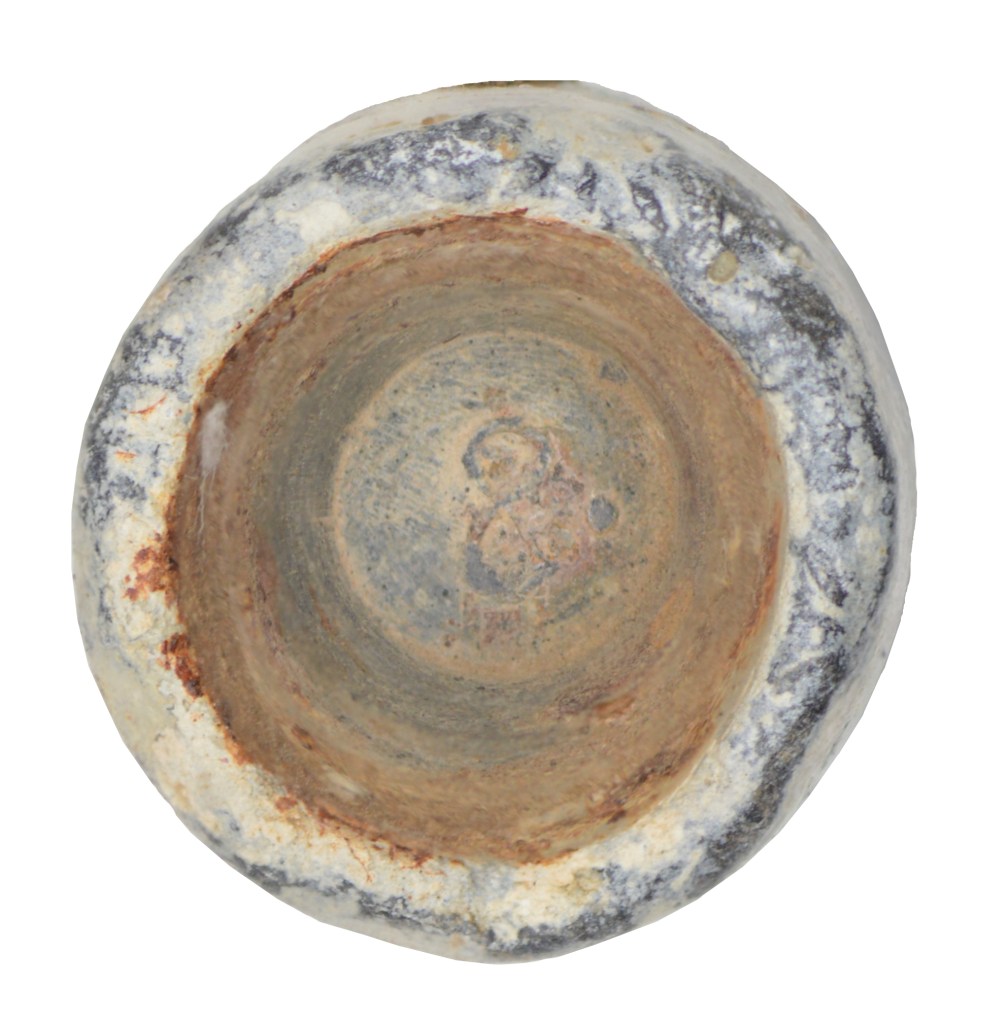
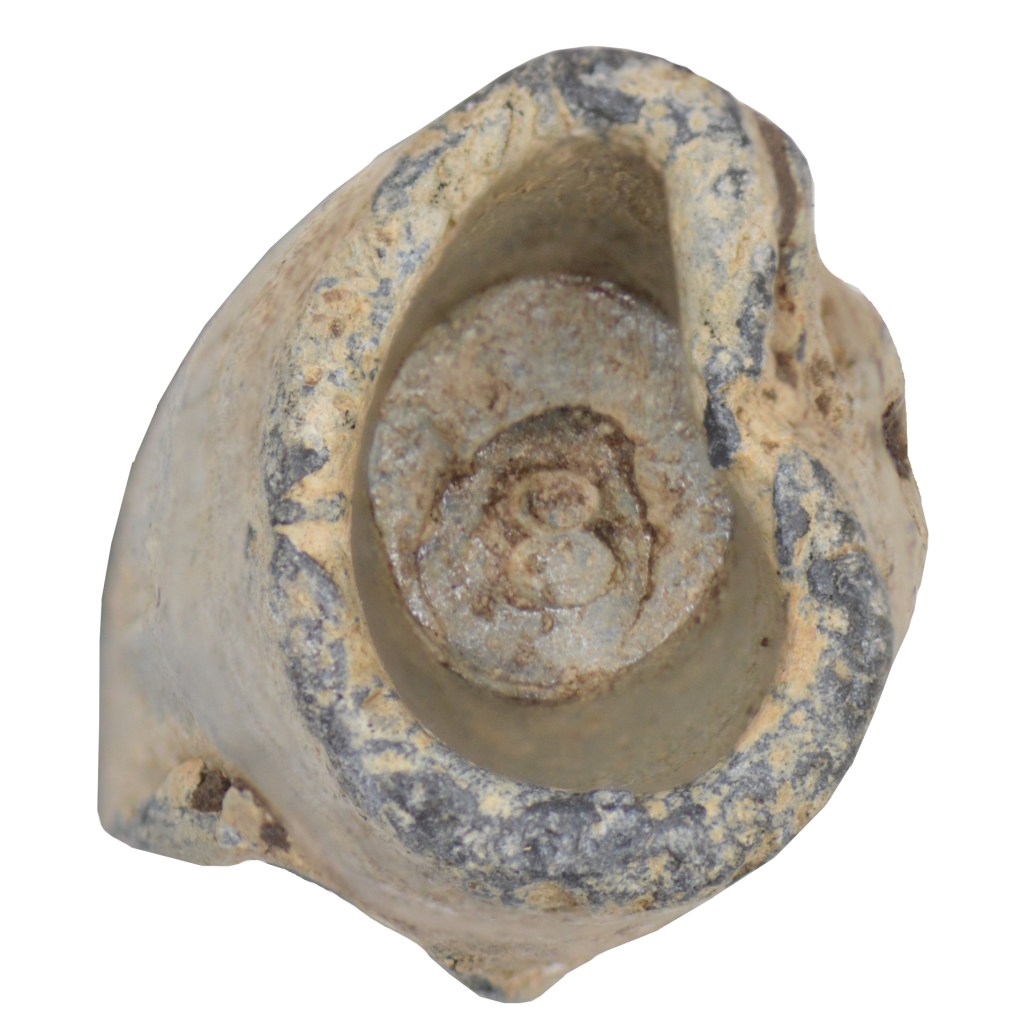
The ‘8’s are a lot more regular is size, with the exception of the 4th shown here. The are a mixture of 3rd and 4th pattern bullets.
‘c’ stamps
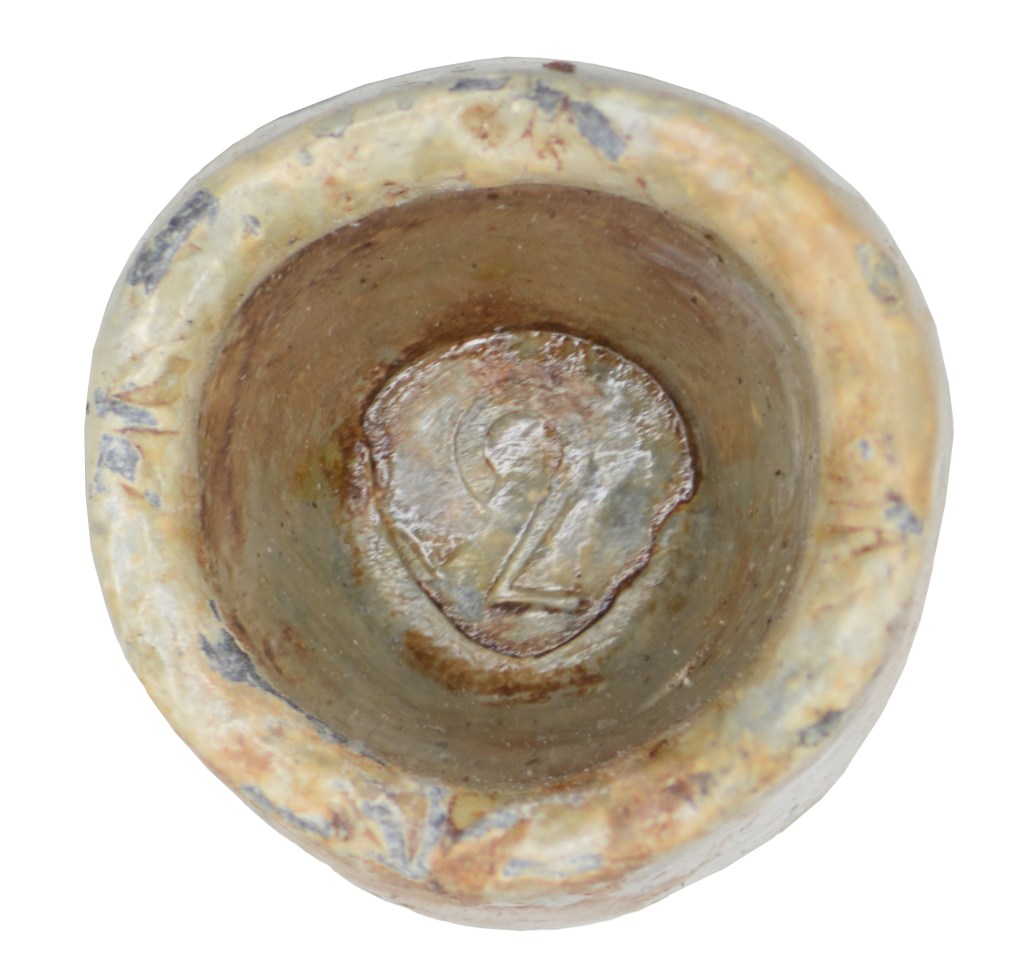
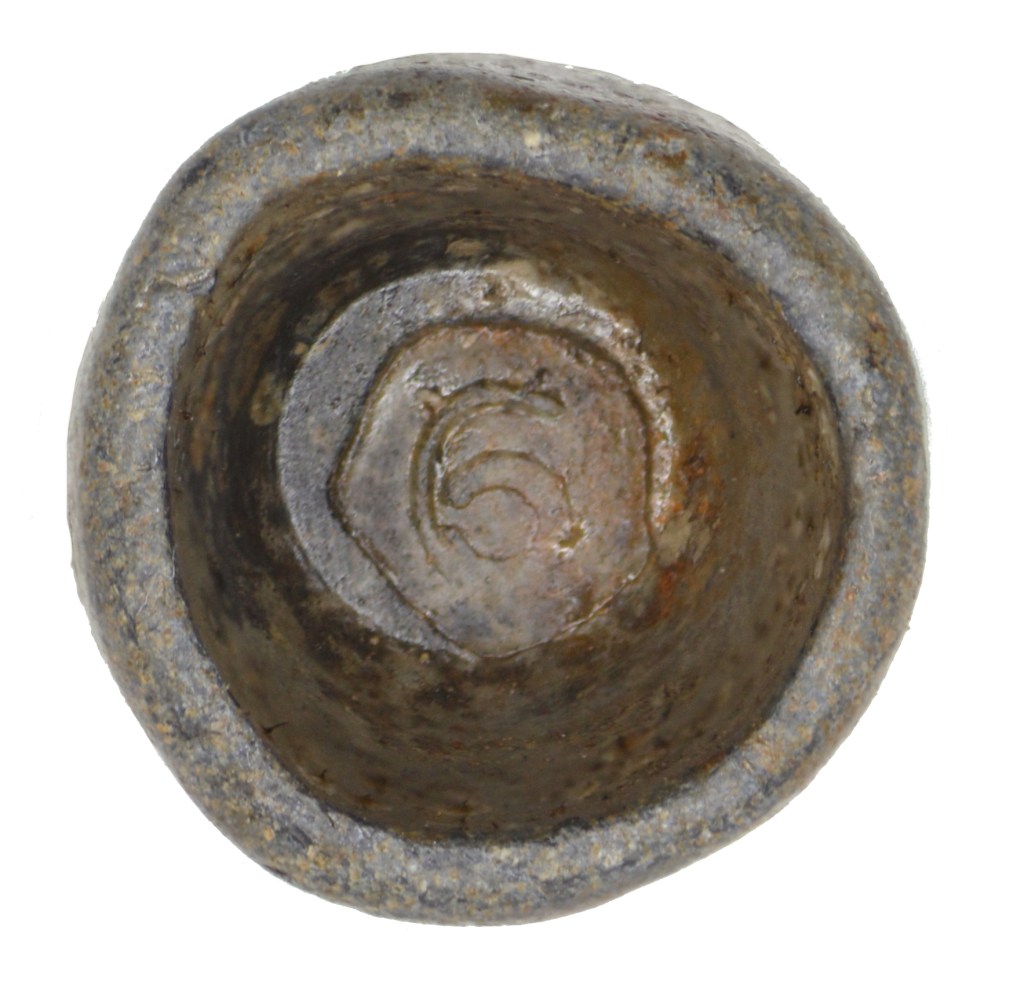
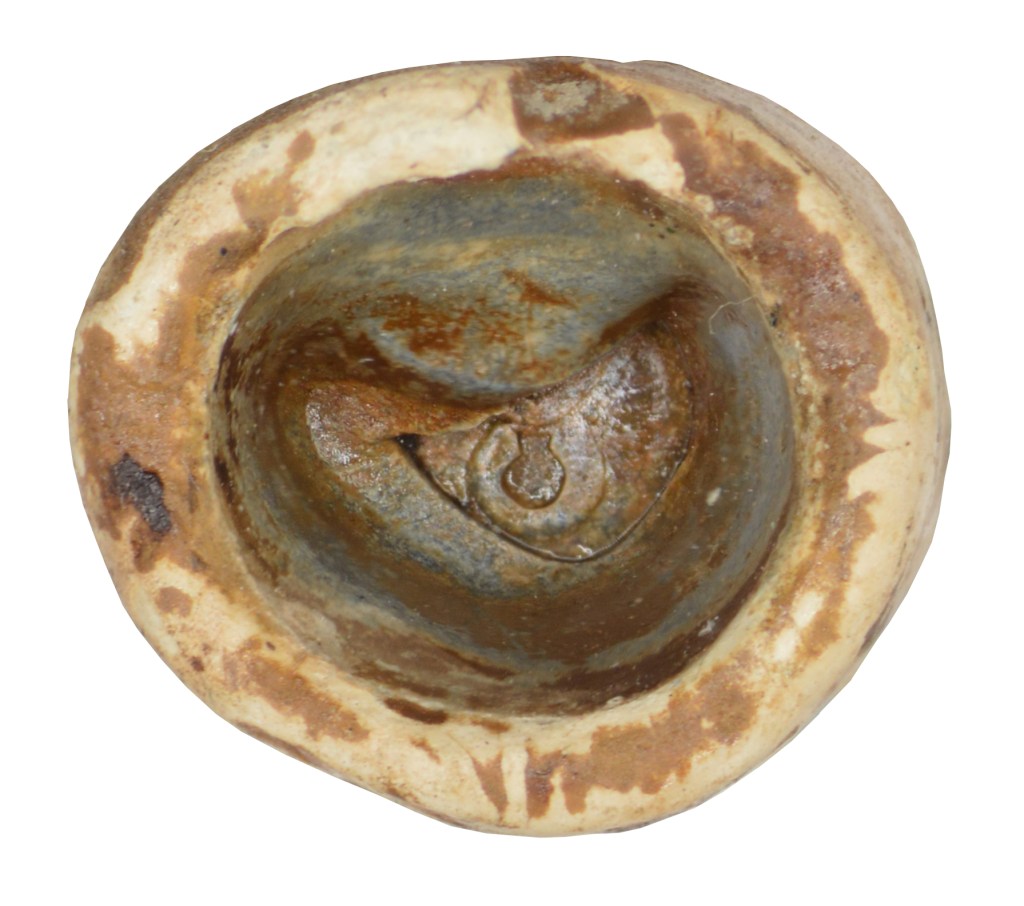
Two of these stamps have been shown in the numeric group section, but are repeated here due to the method in which they were formed. It appears that an initial ‘c’ shaped stamp was expanded upon, to form the ‘2’ and the ‘6’ here. The third stamp is partially obscured by the wooden/clay plug forward movement, but just visible is another of the ‘c’ stamps, possibly the remains of a ‘3’, ‘5’, ‘6’ or ‘8’.
Unusual stamps
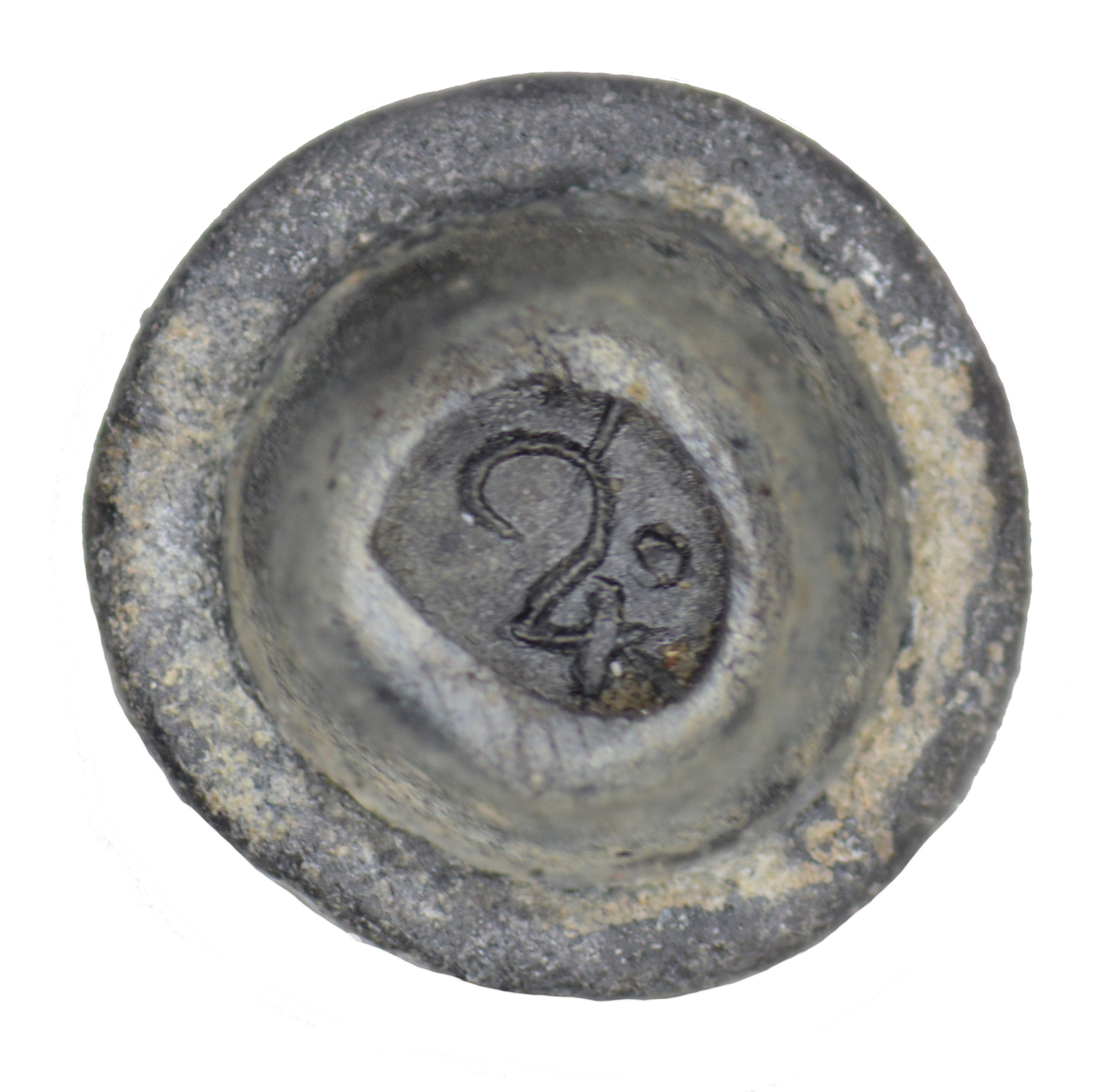
This is a great stamp, part ‘2’ and part ‘4’, but which came first?
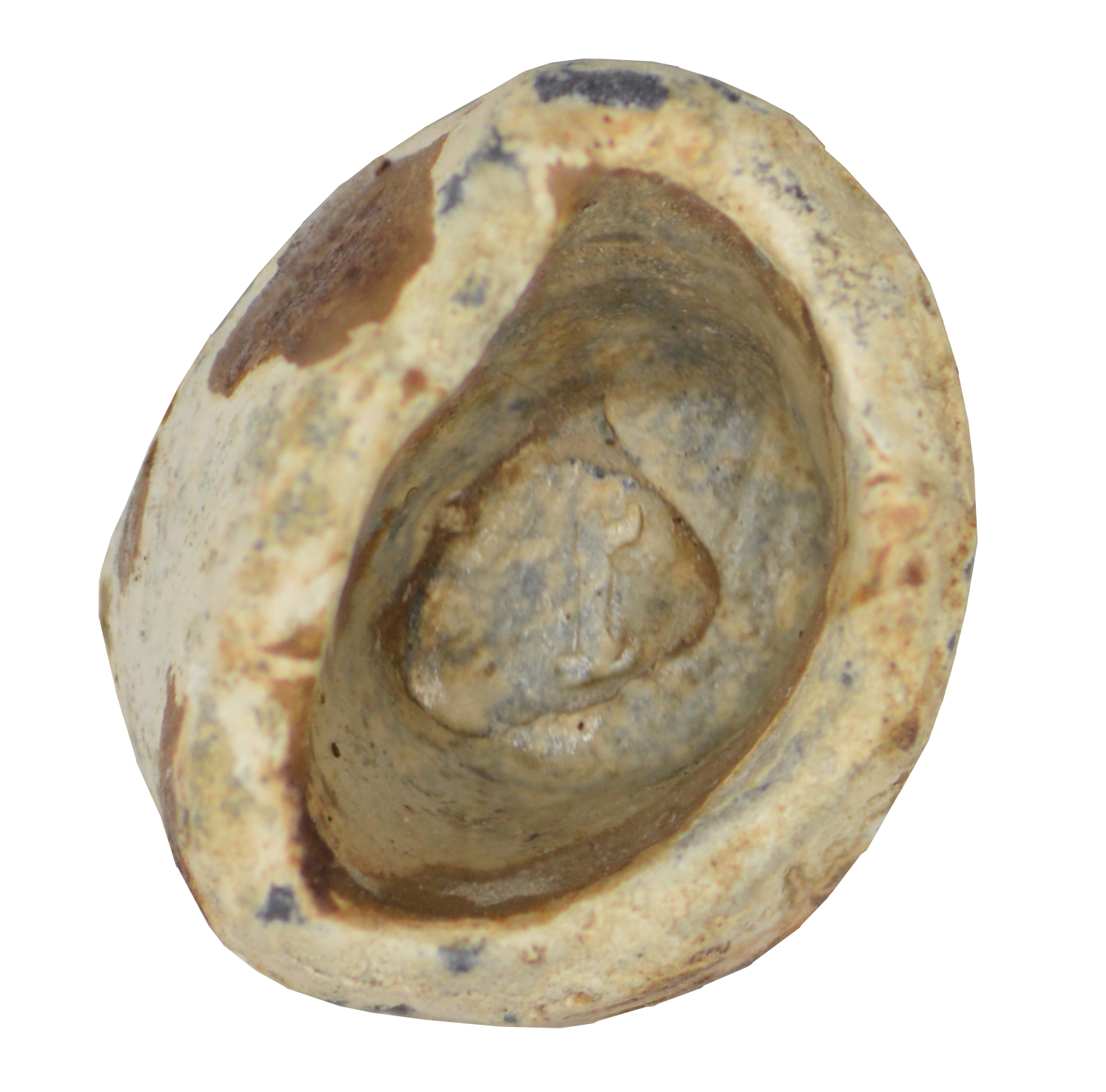
This one is unusual, but could be a fragmentary ‘4’, partially erased by the wooden plug.
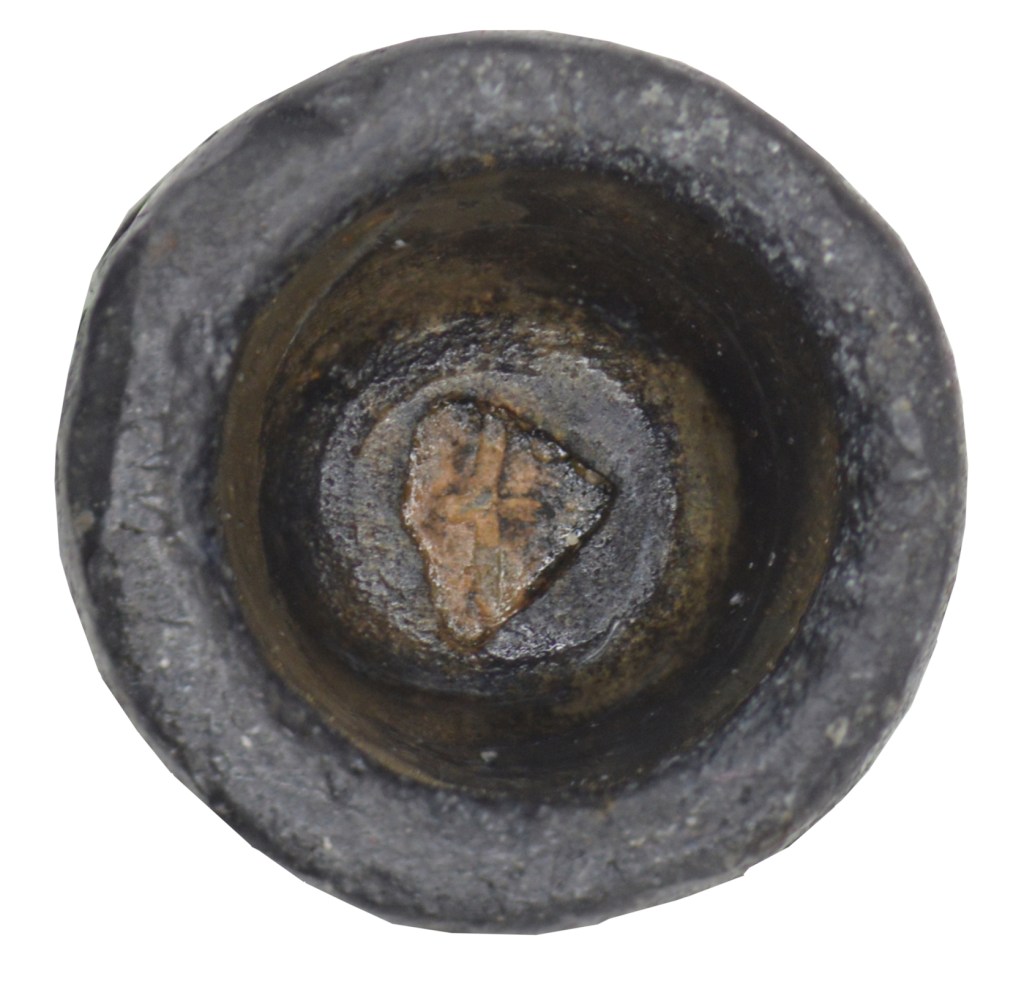
This could also be a ‘4’ stamp, obscured by the wooden plug movement, but the stems of the cross shape appear to end before the edge of the boundary of the obscured area.
’57’ stamps
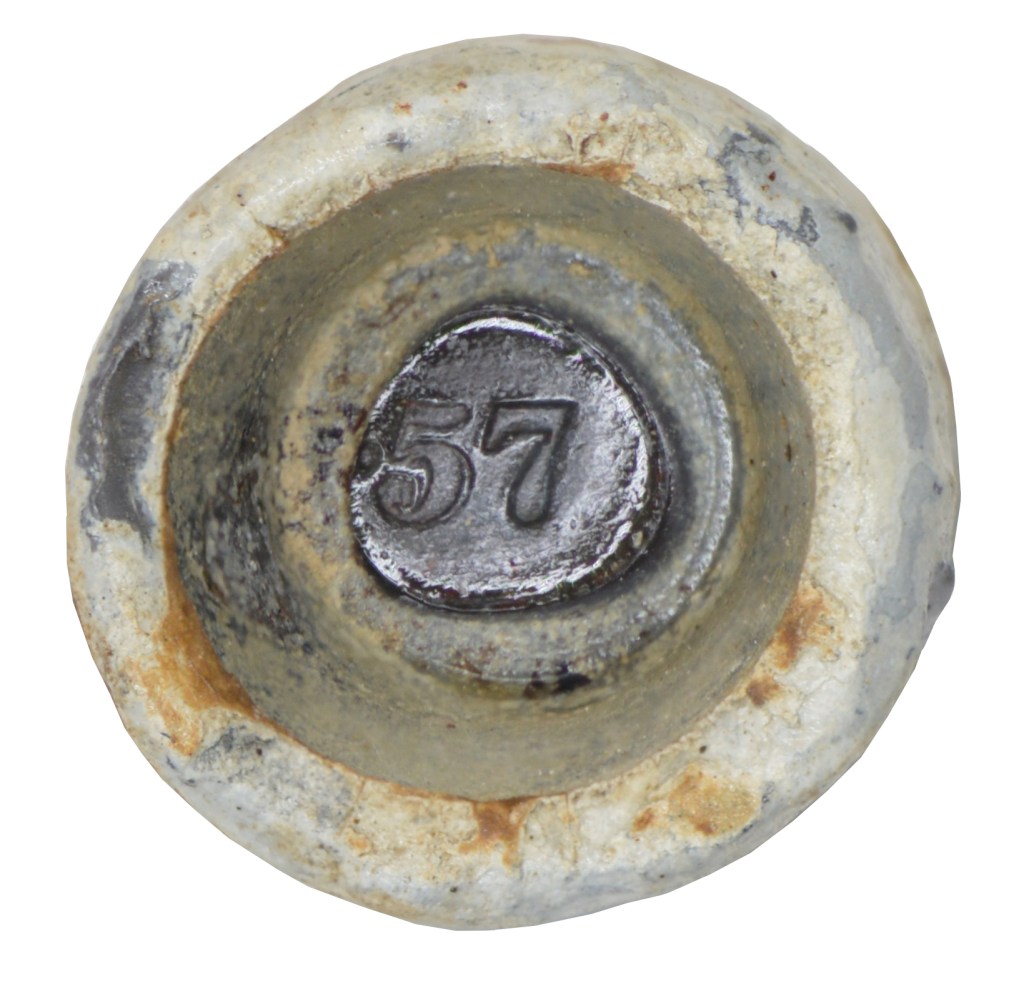
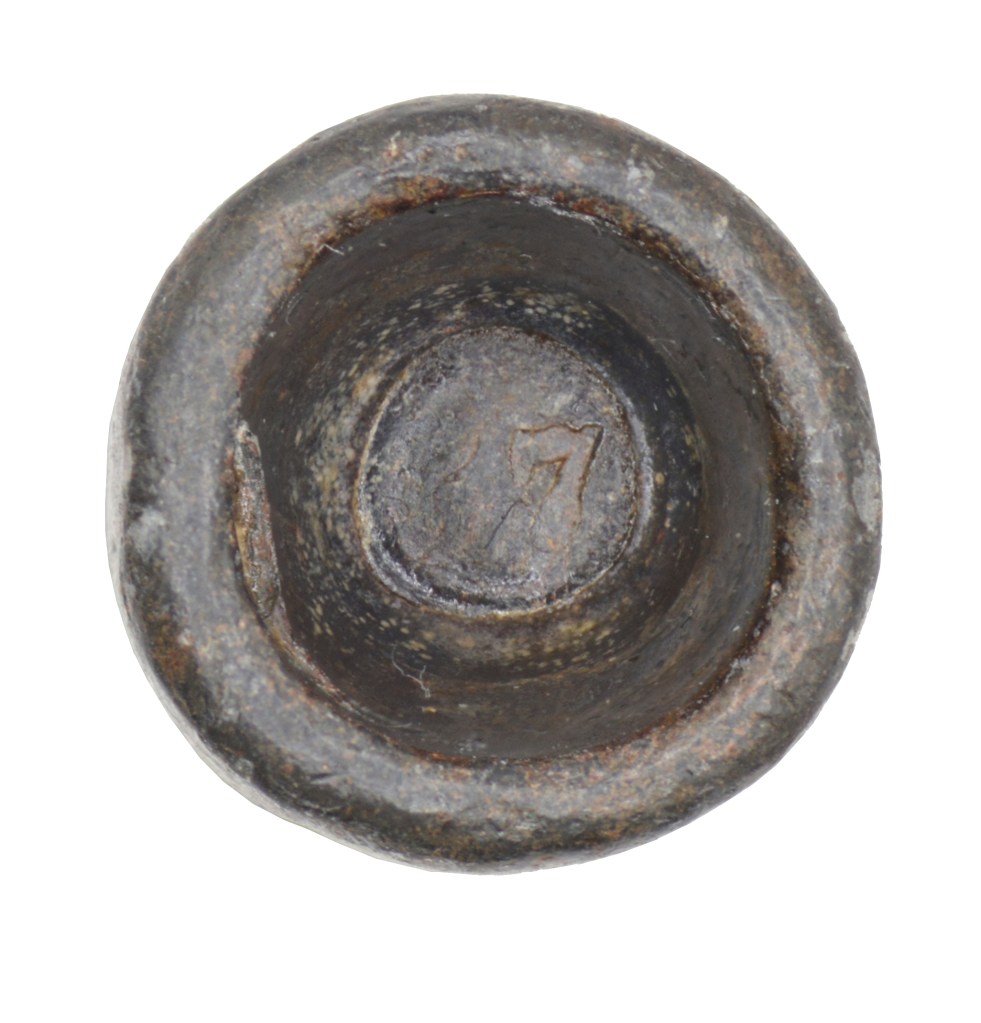
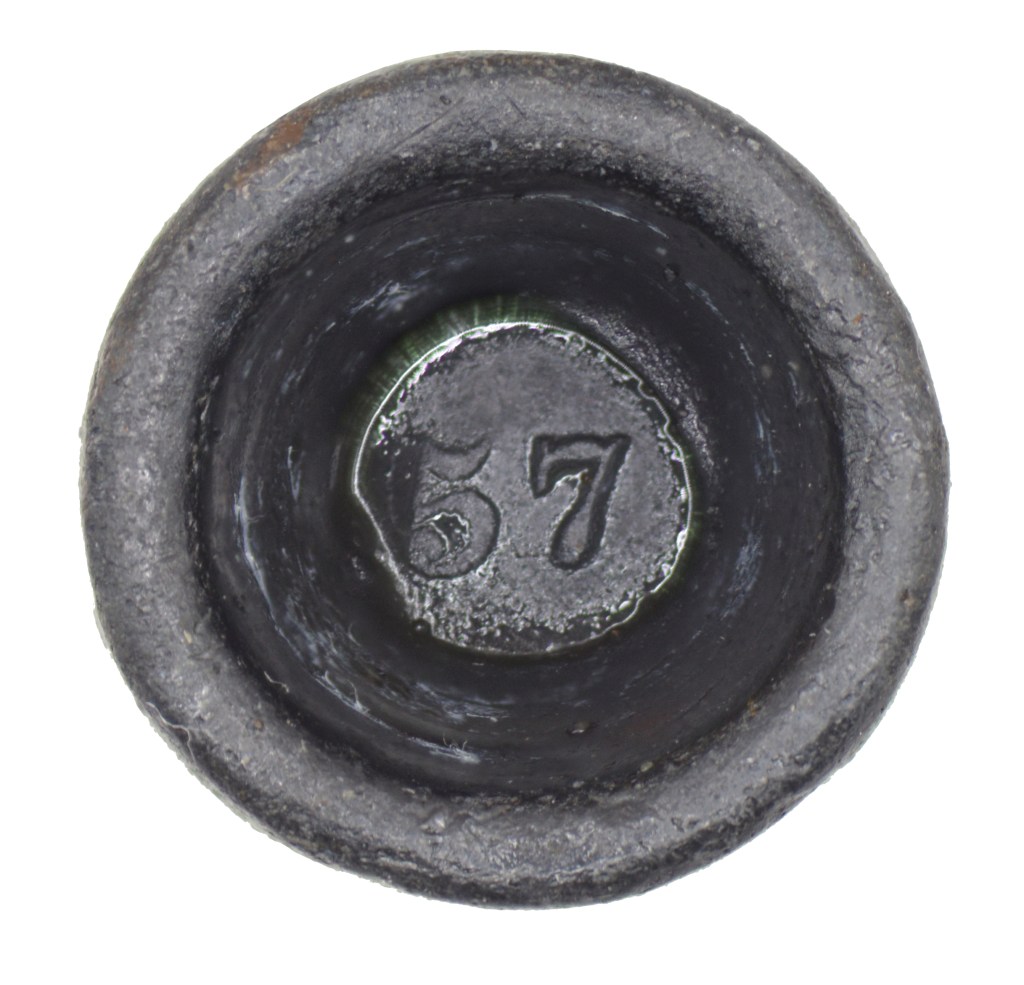
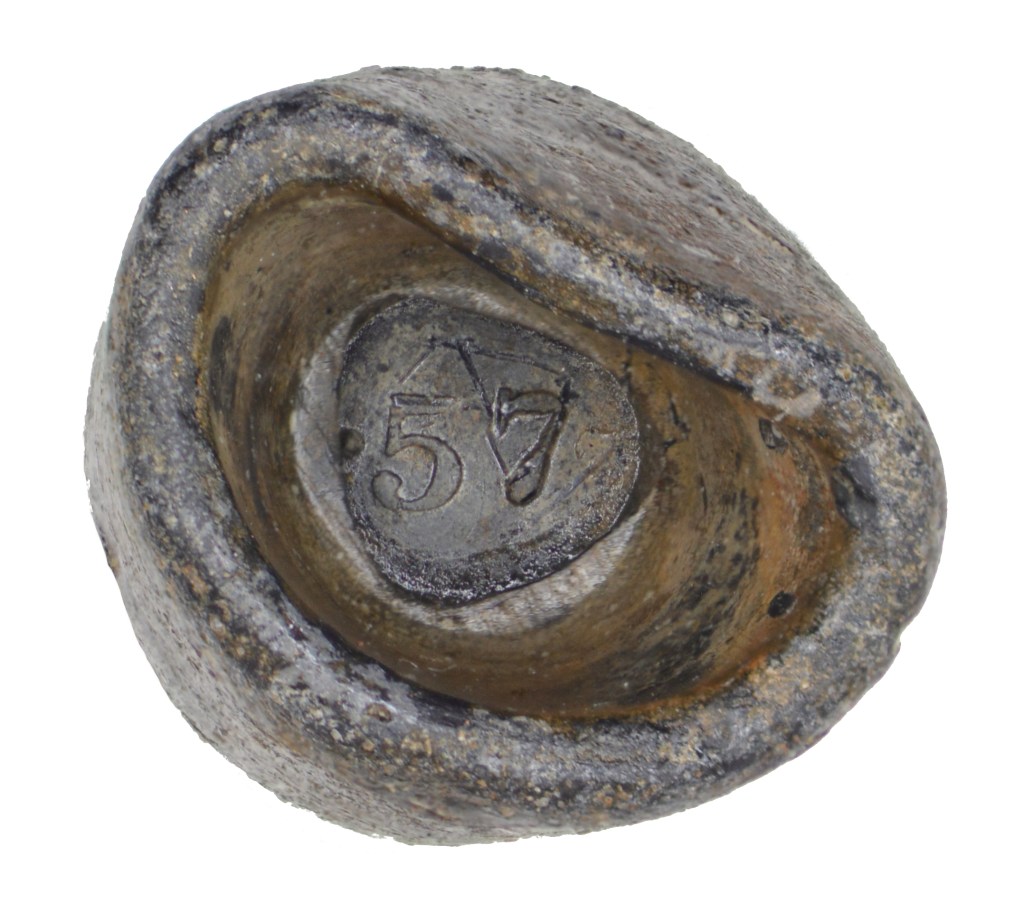
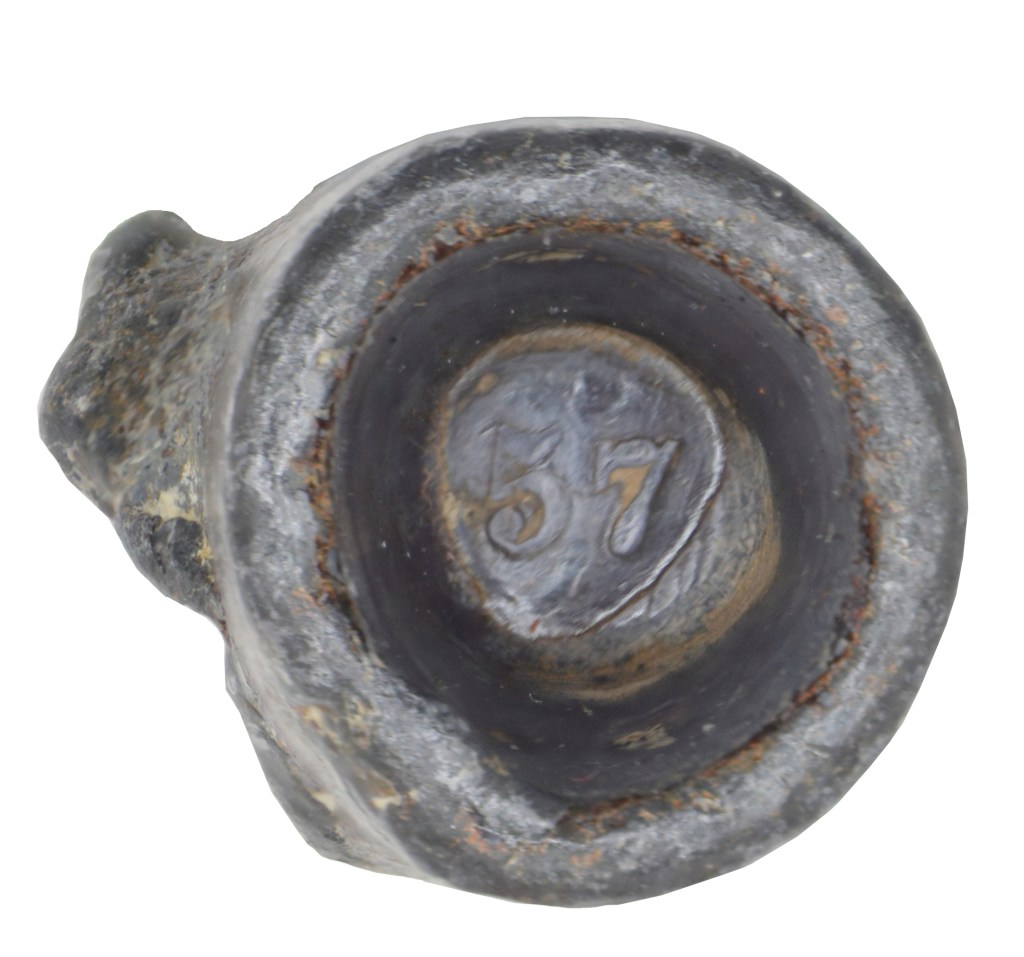
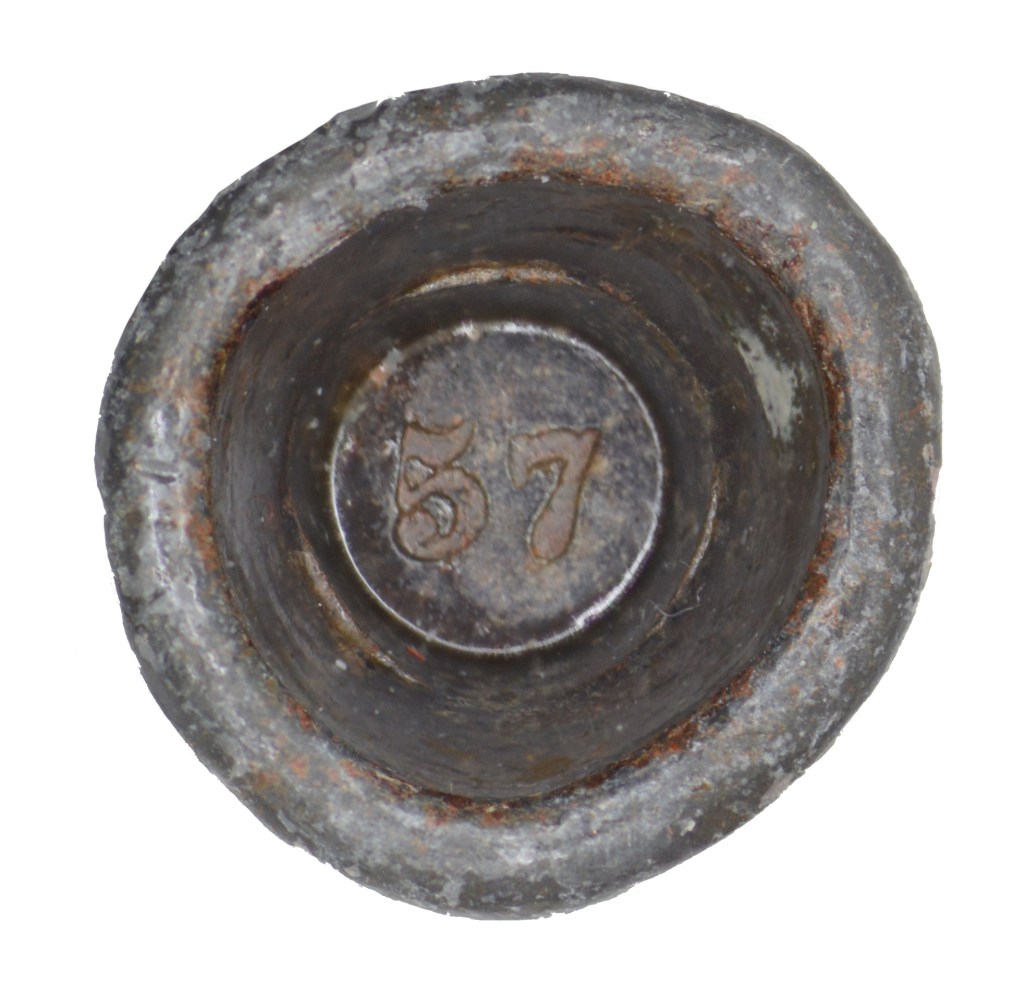
Eley Bros. used the ’57’ and ‘.57′ stamp to indicate their manufacture of the 3rd pattern P53 bullets. They also produced 4th pattern bullets with the ’55’ and ‘.55’ stamps.
‘P’ stamp
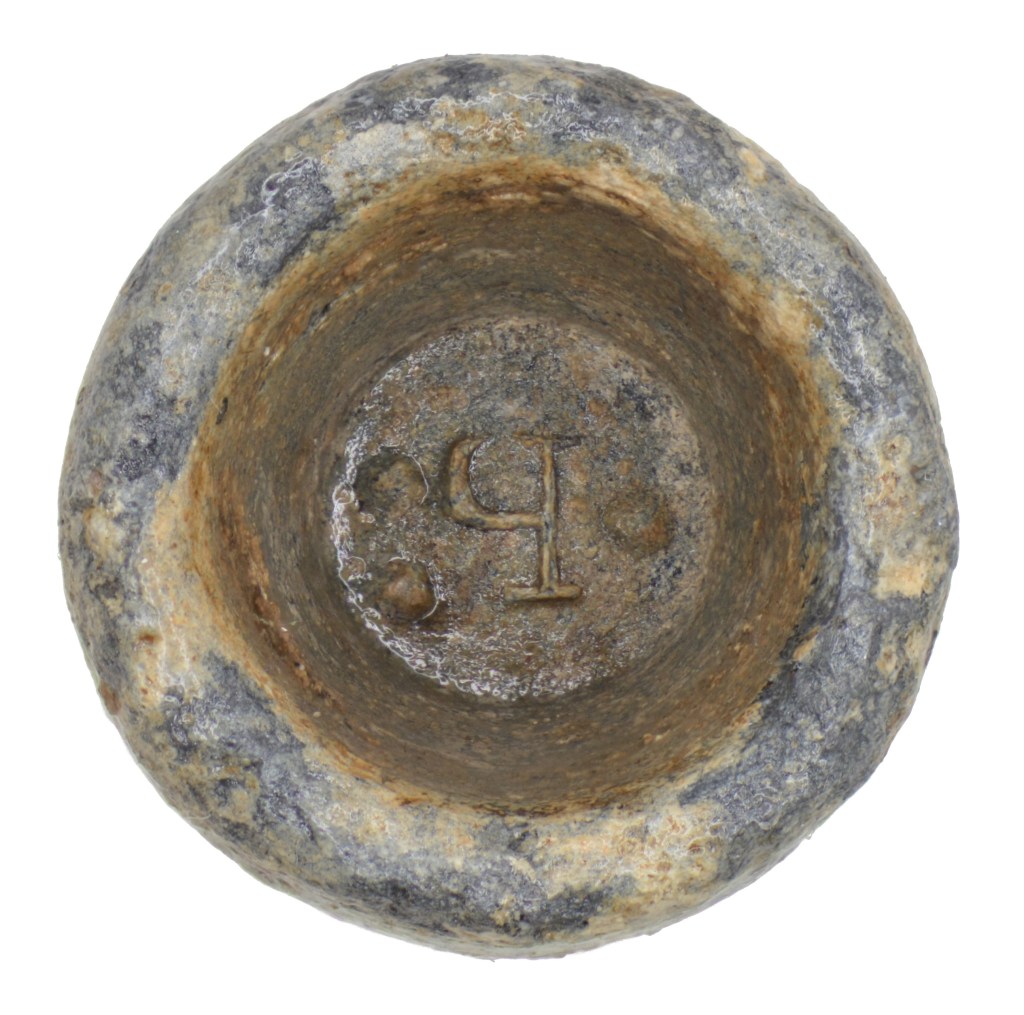
This nice ‘P’ (with possible dot on the right) is shown in reverse, one of the occasional quirks of the P53 stamp system. The P bullets were manufactured by William Pursall, approximately from 1860 to 1864, at which point George Kynoch took over the company.
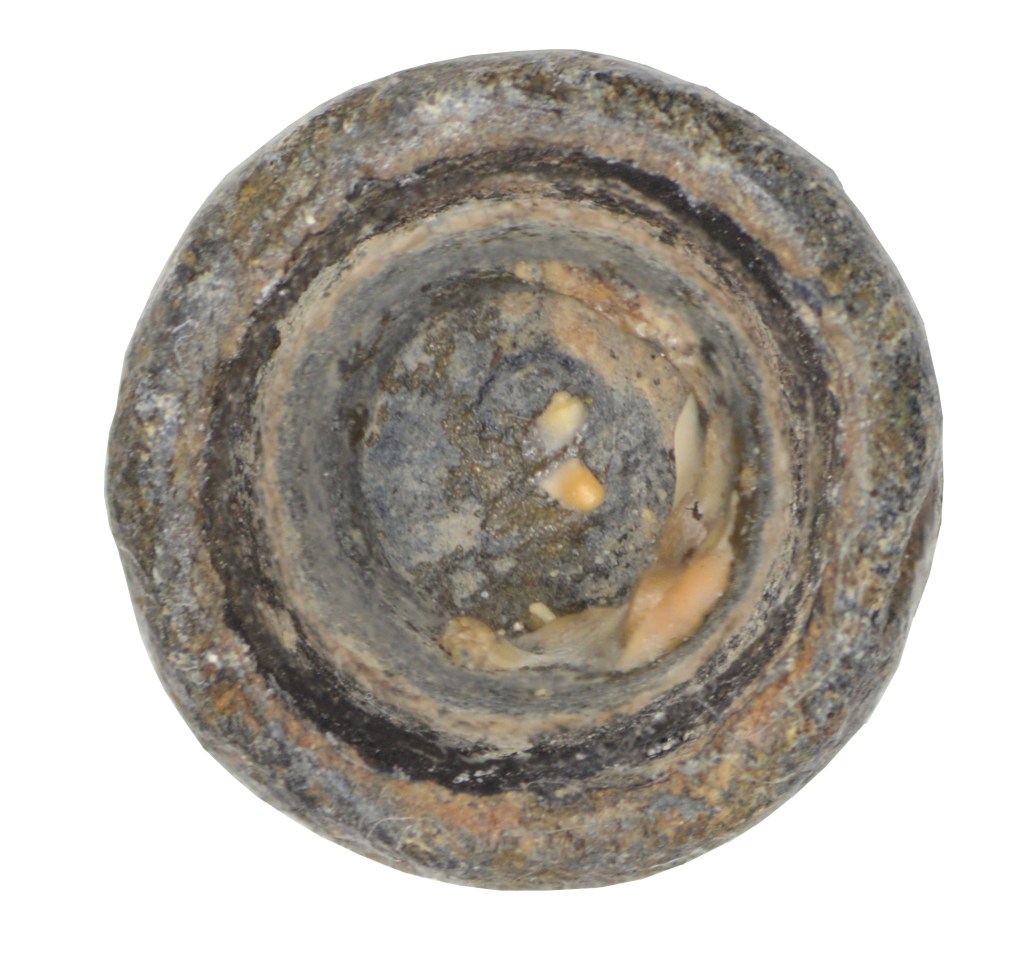
Mould marks
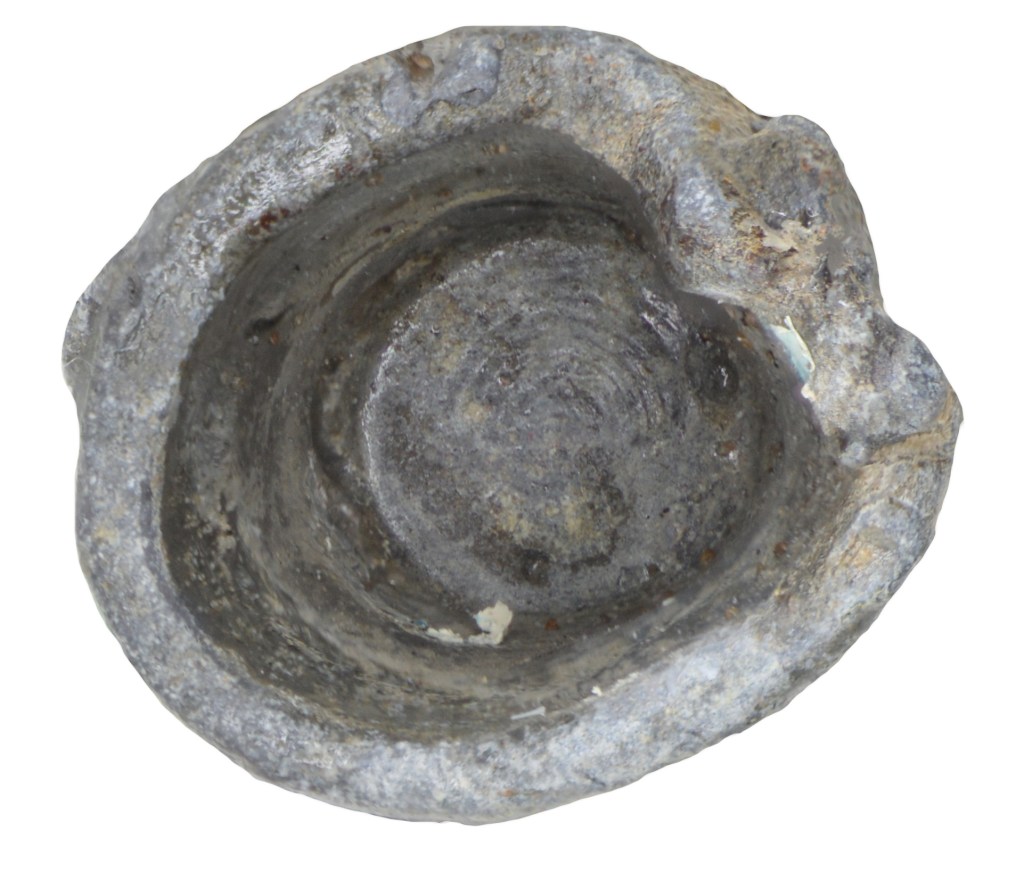
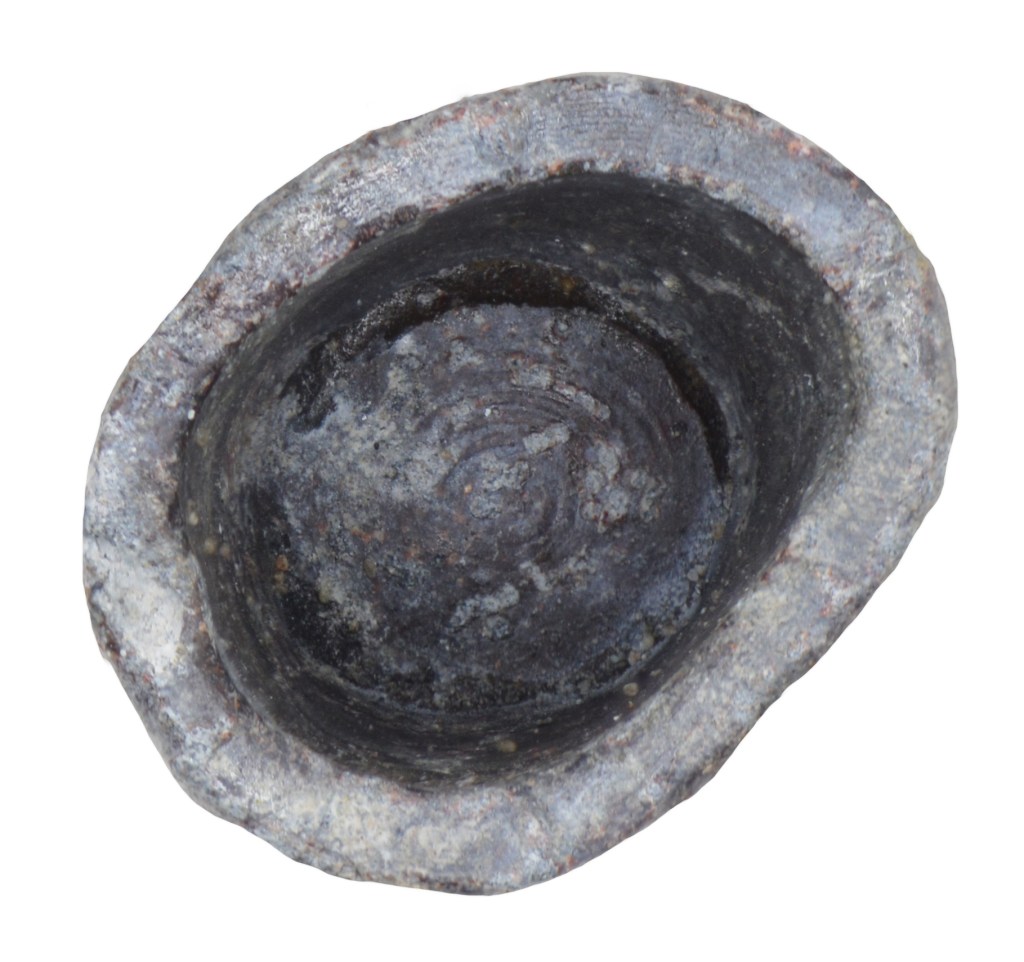
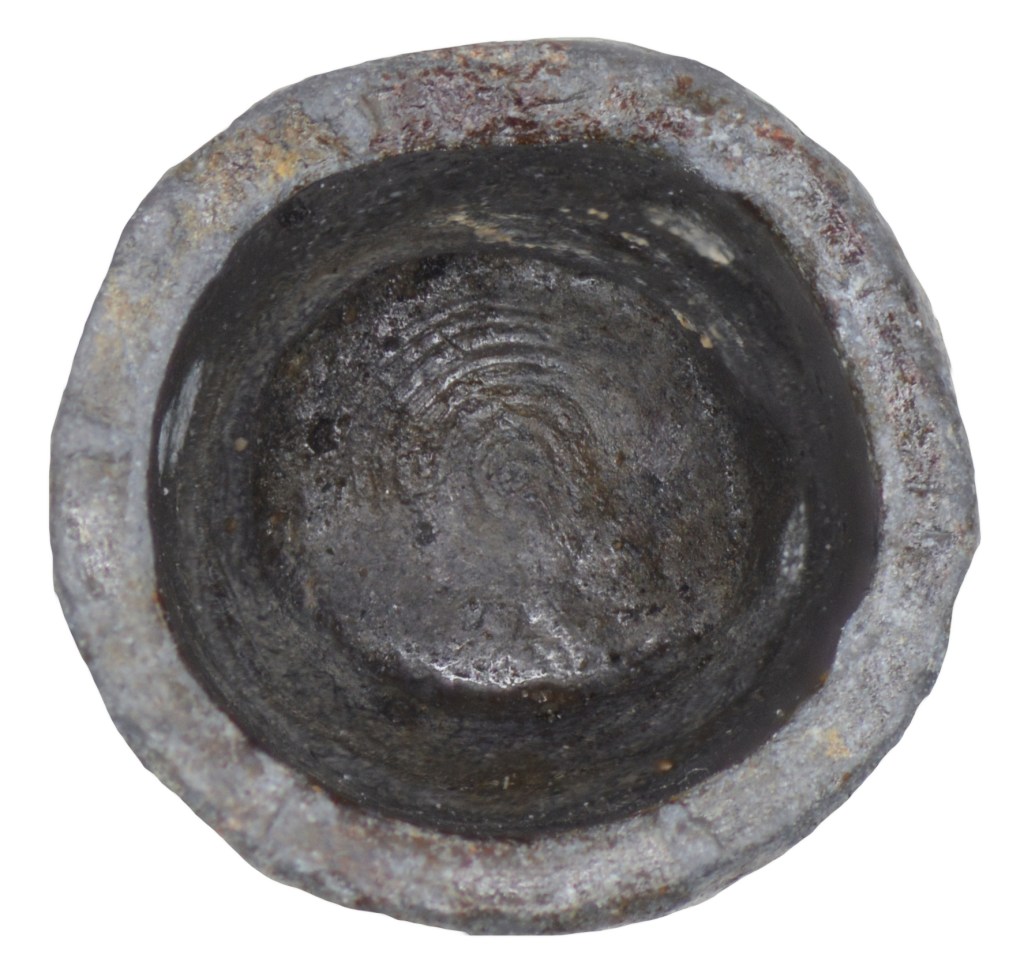
These concentric circles are quite pronounced, but rather than stamps, they are cuts made in the mould in which this bullet was cast. The mould was created with the use of a rotating cherry, and it is that drill that created these rings. The rings are also visible on the rim of the cavity. There is no evidence of a wooden plug or iron cup being used in these bullets, which supports the fact that they were cast and not factory made.
4th pattern reduced diameter and wooden/clay plug 1859
base cavity stamps
